


![[Marketing] Questao Topo - deslogado](https://storage.estuda.com.br/banners/0_6b7ebee90b03af1c560c73bb8bcce34a_banner_deslogado_70_dias.png)
Questões de Inglês
19.971 Questões
Questão 36 80961
UNITAU Medicina 2013
Assinale a alternativa CORRETA.
According to the text:
I. President Dilma Roussef started her speech asking for equal rights and opportunities for women.
II. President Dilma Roussef criticized the money policies of “industrial world central banks” that damage the emerging markets.
III. President Dilma Roussef said the monetary policy is the only answer to cure the growing unemployment, rising poverty, and the despair that affects the world population.
Questão 32 80957
UNITAU Medicina 2013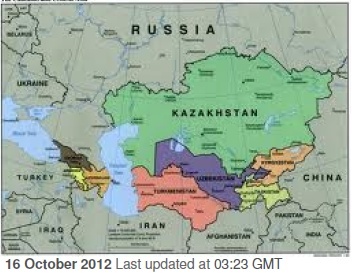
Doctors and nurses forced to pick cotton
By Ibrat Safo and William Kremer
BBC World Service
After some international clothing firms such as H&M, Adidas and Marks and Spencer boycotted cotton from Uzbekistan in protest at the use of child labour, this year most Uzbek children are able to get on with their schoolwork. But office workers, nurses and even surgeons are being forced into the fields instead.
Malvina, a nurse at a clinic in Tashkent, is angry.
"I am almost 50 years old and I've got asthma. We had to pick a lot of cotton, all by hand - and we were not paid anything!"
She has just returned from a 15-day stint picking cotton with other health professionals in rural Uzbekistan. It was hard toil and no-one was spared, whatever their seniority.
"Some people phoned our surgeon, who was with us in the fields”.
"They would say things like: 'You operated on me a week ago. I've got a temperature - what shall I do?'"
Uzbekistan is one of the world's main producers of cotton and the crop is a mainstay of its economy. The government controls production and enforces Soviet-style quotas to get the harvest off the fields as quickly as possible.
A history of using child and forced labour at harvest time has led to a number of retailers - including H&M, Marks and Spencer and Tesco - to pledge to source their cotton from elsewhere.
In response, earlier this year Uzbekistan's Prime Minister Shavkat Mirziyayev issued a decree banning children from working in the cotton fields. Yet many adults, including teachers, cleaners and office workers, are still forced to return to the land during October and November.
This year, like last year, medical staff have been ordered to join them. There are reports of patients in towns being turned away because their doctor is "in cotton".
The BBC is not allowed to report from Uzbekistan, but Malvina - not her real name - told us that since last year, Tashkent's authorities have required every district to contribute 330 medical staff.
There followed a bad-tempered meeting at her clinic to decide who would do the work. Unfortunately for Malvina, it became clear that having asthma wasn't enough to get out of the chore.
"It seemed that everybody had something - back pain or high blood pressure or whatever. And when the head doctor heard this list of illnesses she said: 'Stop it! I don't want to hear any more. Everybody is
going apart from pregnant women and those nursing babies.'"
Anyone who refused to go would be dismissed, she said.
Malvina says that the workers were woken up at 04:00 in the morning and had to walk for more than an hour before starting work. They finished around 18:00 in the evening.
"We had to pick 60kg of cotton each. If we didn't hit that target, then we had to buy the rest from locals,"
she says.
Malvina and her colleagues from the clinic were supposed to be put up in a school, but there wasn't
enough space. In the end they rented their own accommodation. To wash they had to pay another fee to
use a local bathhouse.
For many Uzbeks, the cotton season presents an unpredictable burden. A college lecturer from
Samarqand region, who did not wish to reveal his name, told us he was too ill to pick cotton this year.
"I had to find a labourer and pay him $100 to pick cotton for me," he says. "Then the college principal
withheld my monthly salary, saying it was going to be used to feed and house the labourers - so I lost
another $200."
But he is happy that schoolchildren are being spared this year and can carry on with their education.
The decree banning child labour does appear to have had some effect. Yelena Urlayeva, an activist who
travels across the country every year to document abuses, has noted a few incidents where children
have been drafted in to make up a shortfall.
The Uzbek authorities have so far refused to discuss cotton-picking with the BBC, but a website close to
the government recently denied the presence of any children among this year's cotton-pickers.
Under the terms of the decree, a "child" is anyone under the school-leaving age of 15. Students over this
age are still bussed out to help with the harvest, and all colleges and universities have closed their doors
as usual. For Urlayeva, these pickers are also too young.
"They are still children, and some of them get sick because the conditions are so harsh. It gets very cold
and the food is just not good enough." She says that parents who try to remove sick children from the
harvest are threatened with their expulsion from college.
One of the organisers of the boycott, the pressure group Responsible Sourcing Network, says the Uzbek
government has not yet done enough.
"What we were asking for in order to lift the boycott was for the Uzbek government to invite an ILO
[International Labour Organization] mission, to monitor the situation in the field," says Cotton Programme
Manager Valentina Gurney. "Despite our insistence, this has not happened."
Forced labour is found in a number of countries around the world, but it is only in Uzbekistan that it is
orchestrated by the government, Gurney says.
Vestibular UNITAU 2013 24
According to the International Cotton Advisory Committee, Uzbekistan accounts for about 4% of world
cotton production, and 10% of world cotton exports. At the same time cotton accounts for about 45% of
Uzbekistan's total exports.
For decades "white gold" has been important culturally too.
Uzbeks are encouraged from a young age to look forward to the time of year known simply as "pahta" -
cotton. The harvest is an opportunity for them to contribute to their nation's prosperity.
For Malvina, there is the certainty of further cotton-picking "opportunities" in the future. Her workplace
has signed an agreement with the farm for the next five years.
Malvina spoke to Outlook on the BBC World Service. Listen back to the interview via iPlayer or browse
the Outlook podcast archive.
http://www.bbc.co.uk/news/magazine-19931639
Tick the alternative which contains an INCORRECT statement in relation to the text:
Questão 31 80956
UNITAU Medicina 2013
Doctors and nurses forced to pick cotton
By Ibrat Safo and William Kremer
BBC World Service
After some international clothing firms such as H&M, Adidas and Marks and Spencer boycotted cotton from Uzbekistan in protest at the use of child labour, this year most Uzbek children are able to get on with their schoolwork. But office workers, nurses and even surgeons are being forced into the fields instead.
Malvina, a nurse at a clinic in Tashkent, is angry.
"I am almost 50 years old and I've got asthma. We had to pick a lot of cotton, all by hand - and we were not paid anything!"
She has just returned from a 15-day stint picking cotton with other health professionals in rural Uzbekistan. It was hard toil and no-one was spared, whatever their seniority.
"Some people phoned our surgeon, who was with us in the fields”.
"They would say things like: 'You operated on me a week ago. I've got a temperature - what shall I do?'"
Uzbekistan is one of the world's main producers of cotton and the crop is a mainstay of its economy. The government controls production and enforces Soviet-style quotas to get the harvest off the fields as quickly as possible.
A history of using child and forced labour at harvest time has led to a number of retailers - including H&M, Marks and Spencer and Tesco - to pledge to source their cotton from elsewhere.
In response, earlier this year Uzbekistan's Prime Minister Shavkat Mirziyayev issued a decree banning children from working in the cotton fields. Yet many adults, including teachers, cleaners and office workers, are still forced to return to the land during October and November.
This year, like last year, medical staff have been ordered to join them. There are reports of patients in towns being turned away because their doctor is "in cotton".
The BBC is not allowed to report from Uzbekistan, but Malvina - not her real name - told us that since last year, Tashkent's authorities have required every district to contribute 330 medical staff.
There followed a bad-tempered meeting at her clinic to decide who would do the work. Unfortunately for Malvina, it became clear that having asthma wasn't enough to get out of the chore.
"It seemed that everybody had something - back pain or high blood pressure or whatever. And when the head doctor heard this list of illnesses she said: 'Stop it! I don't want to hear any more. Everybody is
going apart from pregnant women and those nursing babies.'"
Anyone who refused to go would be dismissed, she said.
Malvina says that the workers were woken up at 04:00 in the morning and had to walk for more than an hour before starting work. They finished around 18:00 in the evening.
"We had to pick 60kg of cotton each. If we didn't hit that target, then we had to buy the rest from locals,"
she says.
Malvina and her colleagues from the clinic were supposed to be put up in a school, but there wasn't
enough space. In the end they rented their own accommodation. To wash they had to pay another fee to
use a local bathhouse.
For many Uzbeks, the cotton season presents an unpredictable burden. A college lecturer from
Samarqand region, who did not wish to reveal his name, told us he was too ill to pick cotton this year.
"I had to find a labourer and pay him $100 to pick cotton for me," he says. "Then the college principal
withheld my monthly salary, saying it was going to be used to feed and house the labourers - so I lost
another $200."
But he is happy that schoolchildren are being spared this year and can carry on with their education.
The decree banning child labour does appear to have had some effect. Yelena Urlayeva, an activist who
travels across the country every year to document abuses, has noted a few incidents where children
have been drafted in to make up a shortfall.
The Uzbek authorities have so far refused to discuss cotton-picking with the BBC, but a website close to
the government recently denied the presence of any children among this year's cotton-pickers.
Under the terms of the decree, a "child" is anyone under the school-leaving age of 15. Students over this
age are still bussed out to help with the harvest, and all colleges and universities have closed their doors
as usual. For Urlayeva, these pickers are also too young.
"They are still children, and some of them get sick because the conditions are so harsh. It gets very cold
and the food is just not good enough." She says that parents who try to remove sick children from the
harvest are threatened with their expulsion from college.
One of the organisers of the boycott, the pressure group Responsible Sourcing Network, says the Uzbek
government has not yet done enough.
"What we were asking for in order to lift the boycott was for the Uzbek government to invite an ILO
[International Labour Organization] mission, to monitor the situation in the field," says Cotton Programme
Manager Valentina Gurney. "Despite our insistence, this has not happened."
Forced labour is found in a number of countries around the world, but it is only in Uzbekistan that it is
orchestrated by the government, Gurney says.
Vestibular UNITAU 2013 24
According to the International Cotton Advisory Committee, Uzbekistan accounts for about 4% of world
cotton production, and 10% of world cotton exports. At the same time cotton accounts for about 45% of
Uzbekistan's total exports.
For decades "white gold" has been important culturally too.
Uzbeks are encouraged from a young age to look forward to the time of year known simply as "pahta" -
cotton. The harvest is an opportunity for them to contribute to their nation's prosperity.
For Malvina, there is the certainty of further cotton-picking "opportunities" in the future. Her workplace
has signed an agreement with the farm for the next five years.
Malvina spoke to Outlook on the BBC World Service. Listen back to the interview via iPlayer or browse
the Outlook podcast archive.
http://www.bbc.co.uk/news/magazine-19931639
Tick the alternative which does not contain an appropriate synonym for the word in bold typeface in the sentence below:
“Uzbekistan is one of the world\'s main producers of cotton and the crop is a mainstay of its economy. The government controls production and enforces Soviet-style quotas to get the harvest off the fields as quickly as possible.”
Questão 17 75794
FDF 2013Brazil: Slum campaign on human rights ahead of police operation
5 November 2012
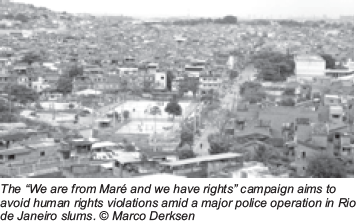
Tens of thousands of residents in one of Rio de Janeiro's biggest favelas are being targeted by Amnesty International and NGO partners to ensure they know their human rights ahead of a police operation to retake the area from armed criminal= gangs.
Beginning on 6 November, Amnesty International and local NGOs Redes de Desenvolvimento da Maré and Observatório de Favelas will distribute some 50,000 information packs to people living in slums in the Maré area of the Brazilian city. The campaign – “We are from Maré and we have rights” – is aimed at avoiding the kinds of human rights violations that have taken place during similar recent operations when Police Pacification Units (Unidade de Polícia Pacificadora, UPP) moved into Rio's favelas.
“We want to break with the notion that anything goes because there's a 'war' against organized crime – this includes putting an end to violating the rights of residents of the communities where the UPPs move in,” said Átila Roque, Amnesty International's Brazil Director. “Police operations to pacify high-crime areas can only be justified if they can guarantee the rights of all citizens, startingwith the slum-dwellers.”
The information packs that are being distributed by the NGOs include information on the slum-dwellers' rights and duties if they are approached by police officers – in the street or at home.Asign included in the pack lists police actions deemed unacceptable – including entering homes without a warrant, discriminating against individuals on any basis, or putting the lives of residents at risk by using firearms in densely populated areas.
The organizations recognize that Rio de Janeiro's police have a duty to carry out their jobs, but urge them to treat Maré residents with respect and civility. The campaign is part ongoing efforts by civil society groups to work together with Rio de Janeiro's slumdwellers to improve awareness about human rights. “The purpose of the campaign is to empower people in the favelas so they can play their part of in ensuring their own safety and that of their neighbours,” said Eliana Silva, Director of Redes de Desenvolvimento da Maré.
The federal and state governments have been working together to “pacify” high-crime areas in Rio de Janeiro's favelas, with the aim of installing 40 UPPs in high-crime areas by 2014. Besides bringing law and order to areas previously under the control of criminal gangs and militias – in some cases for upwards of two decades – the programme aims to bring much-needed social services to some of the city's most impoverished areas.
The Maré area – made up of 16 separate favelas – is home to 130,000 people, making it more populous than 80 per cent of Brazilian cities. “Our basic assumption is that the city should be for everyone. We can't tolerate a police officer treating residents differently on the basis of their colour, sexual preference, physical appearance or social class – whether it's in Maré or in better-off areas of the city,” said Jaílson Silva, Coordinator-General of Observatório de Favelas. “We want people to take ownership of the city and be aware of their rights as a first step towards everyone being able to circulate freely with security, beginning in their own neighbourhoods.”
www.amnesty.org/en/news/brazil-slum-campaign-human-rightsahead-police-operation-2012-11-05
According to Jaílson Silva,
Questão 19 50919
UCS Vestibular de verão 2013Talking trash
[1] “I do not understand”, said Miguel, scratching his head. “We have just got through figuring out what to put in
the garbage that we were not supposed to before, and now they are telling me it is all wrong.”
Miguel´s perplexity is understandable – he is a maintenance man at a midtown Manhattan residential building.
It has been barely a year since the city of New York declared that it was ending the recycling of plastic and glass.
[5] Prior to the announcement, city residents were supposed to separate plastic and glass from their trash and place
them in two separate blue bags to be picked up once a week for recycling. Then in 2002, New York´s businessman
turned mayor, Michael Bloomberg, declared that even though recycling might be good for the environment, it was bad
for the city´s budget. The cost of sorting, picking up and processing the reusables were much greater than the
benefits, he explained.
[10] But the mayor has an open mind. When contractors offered the city prices that made recycling cheaper, he
accepted. It seems that ending recycling did not actually plug the hole in the city budget, while it did help widen the
hole in the ozone layer. So, from July 1st, the city decided that plastic was to be recycled again. Glass could still be
thrown out, but only until next April, when it too would join the ranks of the recyclable.
So you can imagine Miguel´s perplexity. Four times a day he rides the service elevator from floor to floor,
[15] emptying the blue and green recycling bins where residents dump their metal and newspaper which continued to be
recycled. Some residents, whether out of green convictions or sheer habit, dropped plastic and glass into the bins
too, as they had done until last year.
It was Miguel´s job to separate them from the newspaper and aluminum cans and add them to the garbage.
Now, suddenly, he has been told to preserve the plastic and to junk the glass, but only for nine months more.
[20] “What do they want?” he said desperately. “Next you will need a college degree to be a handy-man in New
York.”
He is not exaggerating. The city is rather strict about the kinds of plastic it is willing to recycle. Bottles and
jugs? Fine. The thin plastic containers in which supermarkets sell blueberries? Maybe. No one really knows. Those
modest little yogurt containers – they are garbage. But how exactly can you tell? Miguel has no idea and neither has
[25] his boss, whose bulletin board still shows last year´s rules.
My advice to Miguel was Gandhian in its simplicity: when in doubt, recycle. But how? The noisy garbage trucks
that wake up the city´s residents at 5:30 a.m. will not be picking up recyclables. The city has announced it will
organize a regular collection twice a month, but those rounds will not start till August. Miguel has been told a recycling
truck will come around each week till then, but he has no idea on what days.
[30] Even the supermarkets are confused. To encourage recycling, they used to charge a five-cent deposit on
every plastic or glass bottle, which they were supposed to refund when you returned the bottle. When the policy was
changed last year, my neighborhood supermarket continued charging the deposits while refusing to accept the empty
bottles back. This was bad news for the homeless, who were the only New Yorkers to actually profit from recycling:
they would wheel in shopping carts full of bottles retrieved from the trash to claim the deposit money they had not
[35] paid themselves. Now the homeless will be back in business again. Provided they wait to try to return glass.
(Speak Up, p. 44-45, June 2004. – Texto adaptado, publicado originalmente na revista Newsweek Inc., 2003.)
Segundo o texto, é correto afirmar que, logo após anunciadas as novas medidas,
Questão 17 50917
UCS Vestibular de verão 2013Talking trash
[1] “I do not understand”, said Miguel, scratching his head. “We have just got through figuring out what to put in
the garbage that we were not supposed to before, and now they are telling me it is all wrong.”
Miguel´s perplexity is understandable – he is a maintenance man at a midtown Manhattan residential building.
It has been barely a year since the city of New York declared that it was ending the recycling of plastic and glass.
[5] Prior to the announcement, city residents were supposed to separate plastic and glass from their trash and place
them in two separate blue bags to be picked up once a week for recycling. Then in 2002, New York´s businessman
turned mayor, Michael Bloomberg, declared that even though recycling might be good for the environment, it was bad
for the city´s budget. The cost of sorting, picking up and processing the reusables were much greater than the
benefits, he explained.
[10] But the mayor has an open mind. When contractors offered the city prices that made recycling cheaper, he
accepted. It seems that ending recycling did not actually plug the hole in the city budget, while it did help widen the
hole in the ozone layer. So, from July 1st, the city decided that plastic was to be recycled again. Glass could still be
thrown out, but only until next April, when it too would join the ranks of the recyclable.
So you can imagine Miguel´s perplexity. Four times a day he rides the service elevator from floor to floor,
[15] emptying the blue and green recycling bins where residents dump their metal and newspaper which continued to be
recycled. Some residents, whether out of green convictions or sheer habit, dropped plastic and glass into the bins
too, as they had done until last year.
It was Miguel´s job to separate them from the newspaper and aluminum cans and add them to the garbage.
Now, suddenly, he has been told to preserve the plastic and to junk the glass, but only for nine months more.
[20] “What do they want?” he said desperately. “Next you will need a college degree to be a handy-man in New
York.”
He is not exaggerating. The city is rather strict about the kinds of plastic it is willing to recycle. Bottles and
jugs? Fine. The thin plastic containers in which supermarkets sell blueberries? Maybe. No one really knows. Those
modest little yogurt containers – they are garbage. But how exactly can you tell? Miguel has no idea and neither has
[25] his boss, whose bulletin board still shows last year´s rules.
My advice to Miguel was Gandhian in its simplicity: when in doubt, recycle. But how? The noisy garbage trucks
that wake up the city´s residents at 5:30 a.m. will not be picking up recyclables. The city has announced it will
organize a regular collection twice a month, but those rounds will not start till August. Miguel has been told a recycling
truck will come around each week till then, but he has no idea on what days.
[30] Even the supermarkets are confused. To encourage recycling, they used to charge a five-cent deposit on
every plastic or glass bottle, which they were supposed to refund when you returned the bottle. When the policy was
changed last year, my neighborhood supermarket continued charging the deposits while refusing to accept the empty
bottles back. This was bad news for the homeless, who were the only New Yorkers to actually profit from recycling:
they would wheel in shopping carts full of bottles retrieved from the trash to claim the deposit money they had not
[35] paid themselves. Now the homeless will be back in business again. Provided they wait to try to return glass.
(Speak Up, p. 44-45, June 2004. – Texto adaptado, publicado originalmente na revista Newsweek Inc., 2003.)
Analise a veracidade (V) ou a falsidade (F) das proposições abaixo, com base no texto.
( ) Miguel costuma fazer a coleta do lixo reciclável uma vez ao dia.
( ) O autor sugeriu a Miguel que optasse pela reciclagem, quando em dúvida.
( ) Miguel decidiu fazer um curso sobre processos de reciclagem.
Assinale a alternativa que preeenche corretamente os parênteses, de cima para baixo.
06