


![[Marketing] Questao Topo - deslogado](https://storage.estuda.com.br/banners/0_6b7ebee90b03af1c560c73bb8bcce34a_banner_deslogado_70_dias.png)
Questões de Inglês
19.971 Questões
Questão 58 86470
UNIFOR 1ª Fase 2013/1New York City’s Sandy Disaster: A Meteorological 9/11?
by Michael Daly Oct 30, 2012 2:00 AM EDT
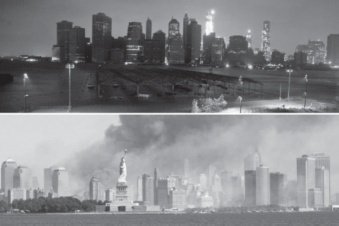
The mysterious whistling sound1 on high turned eerie when the source proved to be the hurricane’s winds gusting through the exposed steel of the nearly complete Freedom Tower at ground zero.
And with that noise came a conscious thought that had until then been a jangling edginess2 whose own source was not immediately clear. The thought was this: could it possibly be that 10/29 proves to be in any sense the meteorological equivalent of 9/11? Would disaster strike us again?
The anxiety increased as the storm drew closer and the city approached the hour that Mayor Michael Bloomberg warned would be the worst.
An added feeling of being trapped came as the closures were extended from the subway to the bridges and tunnels, and people were advised to stay inside. Where we had once stood spellbound by the sight of the burning towers, we now listened to the unholy roar of the wind. Windows and doors rattled, and sirens wailed in the gathering night.
Only this time the sirens were not converging toward one place. They were going in all directions, and to hear them was to imagine dire emergencies3 of every kind, everywhere.
If 9/11 was about what we saw, then 10/29 was about what we heard. And even when we cannot fully believe what our eyes behold, they are far better than our ears at gauging the true magnitude of a threat.
Hearing can tell us that something is getting closer and that it is awesomely big and getting bigger, but it cannot tell us exactly how frightened we should be.
Is that wind just noise, or could it tear off the roof, or maybe send something crashing through the window, or drive the water of the harbor up over the floodwalls? Was that last gust4 as loud as it could get? What was that loud bang5? That crash? Is that why yet another siren has begun to wail? Are those two other sirens going there also? No, wait, they’re going the other way. Something else must have happened. But what?
All that was certain was that New York’s firefighters and cops and paramedics would do everything they could to help whoever needed them.
O objetivo principal de Michael Daly no texto ‘New York City’s Sandy Disaster’ foi:
Questão 57 86469
UNIFOR 1ª Fase 2013/1Leia as sentenças e marque a opção correta .
1A Pollution is a form of contamination that often results from human activity.
1B Pollution is a form of contamination often resulting from human activity.
2A A moon is a natural satellite which orbits around a planet.
2B A moon is a natural satellite orbiting around a planet.
3A A depression is a serious economic downturn that originates from a variety of factors, including overexpansion of commerce, industry, or agriculture, back failures, or war.
3B A depression is a serious economic downturn originating from a variety of factors, including overexpansion of commerce, industry, or agriculture, bank failures, or war.
4A A parliament is a national governing body which has the highest level of legislative power within a state.
4B A parliament is a national governing body with having the highest level of legislative power within the state.
Questão 56 86468
UNIFOR 1ª Fase 2013/1Leia os versos da música “Fly me to the Moon”, de autoria de Bart Howard, e indique a classe gramatical dos pronomes em negrito marcados com a mesma numeração.
Fly me1 to the moon and let me1 play among the stars
Let me1 see what spring is like on Jupiter and Mars
In other words, hold my2 hand
In other words, Darling kiss me1!
Fill my2 heart with song and let me1 sing for ever more
You3 are all I3 long for, all I3 worship and adore
In other words, please be true
In other words, I3 love you1
Questão 55 86467
UNIFOR 1ª Fase 2013/1SO YOU WANT TO BE A TECHNICAL INSTALLATION ENGINEER?
1 ______ The pay’s not bad and there are opportunities for overtime if you want.
3 ______ I like being out and about not stuck in an office, and this job involves a lot of travelling. I also like the contact with customers.
2 ______ Planning the job, especially in older buildings. It’s important to work out1 the best routes of the pipes, ducts and cables involved as this can affect the cost of the work considerably. the contact with customers.
4 ______ I work for a company which installs central heating and air- conditioning systems. We do everything: planning, installing, testing, and commissioning.
5 ______Get the highest qualifications you can when you’re at college. It’s better to do it at that stage in life than try to catch up2 later. Keep up3 your professional training when you’re in the job. Move to a company large enough to offer good promotion prospects.
6 ______When you switch on4 and it all works perfectly.
7 ______Working in confined spaces, for example under floors or in roof spaces where there isn’t a lot of headroom.
8 ______Five years.
Combine as respostas acima com as perguntas abaixo. Em seguida selecione a opção que indique a combinação correta .
A What’s the worst thing about the job?
B What does your work involve?
C How long have you worked there?
D What advice would you give students entering your profession?
E Why did you choose this job?
F What’s the best thing about the job?
G What’s the biggest challenge of your job?
H What’s the salary like?
Questão 60 86406
UNIFOR Medicina 2013/1New York City’s Sandy Disaster: A Meteorological 9/11?
by Michael Daly Oct 30, 2012 2:00 AM EDT
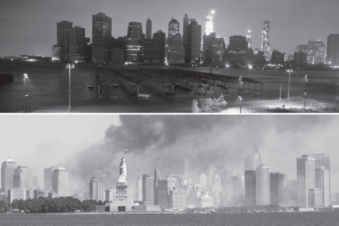
The mysterious whistling sound1 on high turned eerie when the source proved to be the hurricane’s winds gusting through the exposed steel of the nearly complete Freedom Tower at ground zero.
And with that noise came a conscious thought that had until then been a jangling edginess2 whose own source was not immediately clear. The thought was this: could it possibly be that 10/29 proves to be in any sense the meteorological equivalent of 9/11? Would disaster strike us again?
The anxiety increased as the storm drew closer and the city approached the hour that Mayor Michael Bloomberg warned would be the worst.
An added feeling of being trapped came as the closures were extended from the subway to the bridges and tunnels, and people were advised to stay inside. Where we had once stood spellbound by the sight of the burning towers, we now listened to the unholy roar of the wind. Windows and doors rattled, and sirens wailed in the gathering night.
Only this time the sirens were not converging toward one place. They were going in all directions, and to hear them was to imagine dire emergencies3 of every kind, everywhere.
If 9/11 was about what we saw, then 10/29 was about what we heard. And even when we cannot fully believe what our eyes behold, they are far better than our ears at gauging the true magnitude of a threat.
Hearing can tell us that something is getting closer and that it is awesomely big and getting bigger, but it cannot tell us exactly how frightened we should be.
Is that wind just noise, or could it tear off the roof, or maybe send something crashing through the window, or drive the water of the harbor up over the floodwalls? Was that last gust4 as loud as it could get? What was that loud bang5? That crash? Is that why yet another siren has begun to wail? Are those two other sirens going there also? No, wait, they’re going the other way. Something else must have happened. But what?
All that was certain was that New York’s firefighters and cops and paramedics would do everything they could to help whoever needed them.
As palavras sublinhadas nos grupos nominais abaixo, retirados do texto, significam, respectivamente:
mysterious whistling sound1
jangling edginess2
dire emergencies3
last gust4
loud bang5
Questão 59 86405
UNIFOR Medicina 2013/1New York City’s Sandy Disaster: A Meteorological 9/11?
by Michael Daly Oct 30, 2012 2:00 AM EDT

The mysterious whistling sound1 on high turned eerie when the source proved to be the hurricane’s winds gusting through the exposed steel of the nearly complete Freedom Tower at ground zero.
And with that noise came a conscious thought that had until then been a jangling edginess2 whose own source was not immediately clear. The thought was this: could it possibly be that 10/29 proves to be in any sense the meteorological equivalent of 9/11? Would disaster strike us again?
The anxiety increased as the storm drew closer and the city approached the hour that Mayor Michael Bloomberg warned would be the worst.
An added feeling of being trapped came as the closures were extended from the subway to the bridges and tunnels, and people were advised to stay inside. Where we had once stood spellbound by the sight of the burning towers, we now listened to the unholy roar of the wind. Windows and doors rattled, and sirens wailed in the gathering night.
Only this time the sirens were not converging toward one place. They were going in all directions, and to hear them was to imagine dire emergencies3 of every kind, everywhere.
If 9/11 was about what we saw, then 10/29 was about what we heard. And even when we cannot fully believe what our eyes behold, they are far better than our ears at gauging the true magnitude of a threat.
Hearing can tell us that something is getting closer and that it is awesomely big and getting bigger, but it cannot tell us exactly how frightened we should be.
Is that wind just noise, or could it tear off the roof, or maybe send something crashing through the window, or drive the water of the harbor up over the floodwalls? Was that last gust4 as loud as it could get? What was that loud bang5? That crash? Is that why yet another siren has begun to wail? Are those two other sirens going there also? No, wait, they’re going the other way. Something else must have happened. But what?
All that was certain was that New York’s firefighters and cops and paramedics would do everything they could to help whoever needed them.
O objetivo principal de Michael Daly no texto ‘New York City’s Sandy Disaster’ foi
06