


![[Marketing] Questao Topo - deslogado](https://storage.estuda.com.br/banners/0_6b7ebee90b03af1c560c73bb8bcce34a_banner_deslogado_70_dias.png)
Questões de Inglês
19.971 Questões
Questão 59 98798
IMEPAC Medicina 2013/1Increase in diabetes brings a spike in
related eye disease
Blood vessels can leak into the retina
By Nanci Hellmich
USA Today
The nation‟s rising level of diabetes is driving another health problem: a significant jump in adults with vision problems from a related condition called diabetic retinopathy.
From 2000 and 2010, there was an 89% increase in the number of people with diabetic retinopathy, which affects the tiny blood vessels of the retina. The most severe forms can impair vision if not treated. About 7.7 million people ages 40 and older have diabetic retinopathy, the new estimates say.
The numbers emerge from an analysis, out today, by a group of researchers and sponsored by Prevent Blindness America and the National Eye Institute.
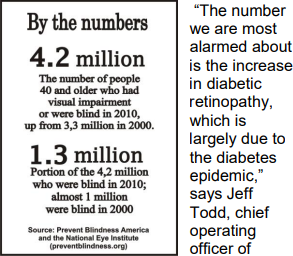
Prevent Blindness America.
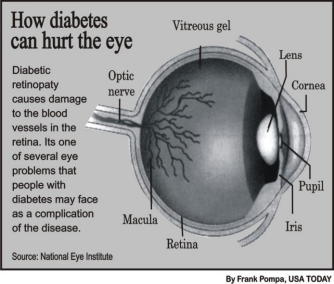
Almost 26 million people in the USA have
diabetes, the Centers for Disease Control
and Prevention says. In diabetic
retinopathy, high blood sugar causes
small blood vessels to swell and leak into
the retina, blurring vision and sometimes
leading to blindness. A government study
in 2008 found that about 4.2 million adults
had the disease, the leading cause of
blindness in adults.
“You can treat and stop progression,”
says Beatriz Muñoz, an associate
professor of ophthalmology at the Wilmer
Eye Institute at Johns Hopkins School of
Medicine in Baltimore. But the disease
can be “asymptomatic,” or without
symptoms: “You may not know you have
it,” she says, “So it‟s important to have
regular eye exams.”
The vision analysis found that overall, the
number of people over 40 with vision
impairment and blindness has increased
23% in the past decade, partly because
of more people with eye conditions such
as cataracts.
Vision impairment is defined as having
worse than 20/40 vision in the better eye
even with glasses. In the USA, people are
typically considered blind with vision of
20/200 or worse in their best eye.
If the trend remains the same, about 13
million in the USA will have visual
impairment or be blind by 2050, the report
says. “The increase we‟re seeing in eye
diseases mirrors the increase in the aging
population,” Todd says.
Estimates for eye conditions:
• 24.3 million people 40 and older have
cataracts, a 19% jump from 2000. A
cataract is a clouding of the eye‟s
clear lens that appears with age.
Surgery is effective in restoring
vision. Muñoz says, but “there is no
clear way to prevent it.”
• 2.7 million people ages 40 and older
have open-angle glaucoma, the most
common form of the disease, up
22%. Glaucoma causes damage to
the optic nerve. Treatments can slow
progression, she says.
• 2.1 million people ages 50 and older
have late age-related macular
degeneration, a 25% increase from
2000. Late AMD is the most severe
form, and treatments can slow
progression and prevent vision loss
for some of the forms, Muñoz says.
USA Today, Wednesday, June 20, 2012, p. 6D.
From the text we learn that in diabetic retinopathy all the following can occur, EXCEPT
Questão 60 98684
IMEPAC Medicina 2013/2CDC reinforces need for appropriate follow-up testing for current infection

Only half of Americans identified as ever having had hepatitis C received follow-up testing showing that they were still infected, according to a Centers for Disease Control and Prevention analysis of data from a multi-area study published today in the CDC report Vital Signs.
"Many people who test positive on an initial hepatitis C test are not receiving the necessary follow-up test to know if their body has cleared the virus or if they are still infected," said CDC Director Tom Frieden, M.D., M.P.H. "Complete testing is critical to ensure that those who are infected receive the care and treatment for hepatitis C that they need in order to prevent liver cancer and other serious and potentially deadly health consequences."
Testing for hepatitis C includes a blood test, called an antibody test, to determine if an individual has ever been infected with the virus. For people with a positive antibody test result, a follow-up test - called an RNA test - should be given to determine whether they are still infected so they can get needed care and treatment.
A small number of people with antibody-positive tests will have cleared the infection on their own, but most people with hepatitis C (about 80 percent) remain infected and can go on to develop significant health problems.
For the Vital Signs study, researchers looked at data from eight areas across the nation funded by CDC to conduct enhanced surveillance for hepatitis C virus infection. Of the hepatitis C cases reported in these areas (i.e., those cases with antibody-positive results), only 51 percent of the cases also included a follow-up (RNA) test result that identified current infection. Without follow-up testing, the other half are likely unaware if they are currently infected and therefore cannot get appropriate medical care.
Data included in this analysis also underscore the severe impact of hepatitis C among baby boomers. In the eight areas studied, 67 percent of all reported cases of current infection were among those born from 1945 through 1965. Deaths among people with hepatitis C also were more common among those born during these years (accounting for 72 percent of all reported deaths).
"Hepatitis C has few noticeable symptoms, and left undiagnosed it threatens the health of far too many Americans - especially baby boomers," said John Ward, M.D., director of CDC's Division of Viral Hepatitis. "Identifying those who are currently infected is important because new effective treatments can cure the infection better than ever before, as well as eliminate the risk of transmission to others."
Overall, approximately 3 million Americans are infected with hepatitis C and up to 3 out of 4 do not know they are infected. The vast majority of those affected are baby boomers, or those born from 1945 through 1965. Left untreated, hepatitis C can cause serious liver damage, including liver cancer. Hepatitis C is a leading cause of liver cancer and the most common indication for liver transplants. In fact, liver cancer is the fastest-rising cause of cancer-related death in the United States. Deaths from hepatitis C have nearly doubled over the past decade, now accounting for more than 15,000 deaths each year.
In light of increasing evidence that many patients are not receiving the follow-up test, as well as recent changes in testing technologies and the availability of new effective treatments for hepatitis C, CDC is issuing updated guidance for health care providers on hepatitis C testing. These guidelines reinforce the recommended process for hepatitis C testing and underscore the importance of providers conducting follow-up RNA testing for all patients with a positive antibody test result in order to help ensure people infected with hepatitis C are properly tested and identified.
CDC recommends that everyone in the United States born from 1945 through 1965 be tested for hepatitis C. CDC also recommends that other populations at increased risk for hepatitis C get tested, including those who received blood transfusions or organ transplants before widespread screening of the blood supply began in 1992, or those who have ever injected drugs.
Text: http://www.medicalnewstoday.com/releases/260283.php; Image: www.google.com/imagens (Accessed on May 9, 2013)
The overall subject of the article is the preoccupation with
Questão 57 98681
IMEPAC Medicina 2013/2CDC reinforces need for appropriate follow-up testing for current infection
Only half of Americans identified as ever having had hepatitis C received follow-up testing showing that they were still infected, according to a Centers for Disease Control and Prevention analysis of data from a multi-area study published today in the CDC report Vital Signs.
"Many people who test positive on an initial hepatitis C test are not receiving the necessary follow-up test to know if their body has cleared the virus or if they are still infected," said CDC Director Tom Frieden, M.D., M.P.H. "Complete testing is critical to ensure that those who are infected receive the care and treatment for hepatitis C that they need in order to prevent liver cancer and other serious and potentially deadly health consequences."
Testing for hepatitis C includes a blood test, called an antibody test, to determine if an individual has ever been infected with the virus. For people with a positive antibody test result, a follow-up test - called an RNA test - should be given to determine whether they are still infected so they can get needed care and treatment.
A small number of people with antibody-positive tests will have cleared the infection on their own, but most people with hepatitis C (about 80 percent) remain infected and can go on to develop significant health problems.
For the Vital Signs study, researchers looked at data from eight areas across the nation funded by CDC to conduct enhanced surveillance for hepatitis C virus infection. Of the hepatitis C cases reported in these areas (i.e., those cases with antibody-positive results), only 51 percent of the cases also included a follow-up (RNA) test result that identified current infection. Without follow-up testing, the other half are likely unaware if they are currently infected and therefore cannot get appropriate medical care.
Data included in this analysis also underscore the severe impact of hepatitis C among baby boomers. In the eight areas studied, 67 percent of all reported cases of current infection were among those born from 1945 through 1965. Deaths among people with hepatitis C also were more common among those born during these years (accounting for 72 percent of all reported deaths).
"Hepatitis C has few noticeable symptoms, and left undiagnosed it threatens the health of far too many Americans - especially baby boomers," said John Ward, M.D., director of CDC's Division of Viral Hepatitis. "Identifying those who are currently infected is important because new effective treatments can cure the infection better than ever before, as well as eliminate the risk of transmission to others."
Overall, approximately 3 million Americans are infected with hepatitis C and up to 3 out of 4 do not know they are infected. The vast majority of those affected are baby boomers, or those born from 1945 through 1965. Left untreated, hepatitis C can cause serious liver damage, including liver cancer. Hepatitis C is a leading cause of liver cancer and the most common indication for liver transplants. In fact, liver cancer is the fastest-rising cause of cancer-related death in the United States. Deaths from hepatitis C have nearly doubled over the past decade, now accounting for more than 15,000 deaths each year.
In light of increasing evidence that many patients are not receiving the follow-up test, as well as recent changes in testing technologies and the availability of new effective treatments for hepatitis C, CDC is issuing updated guidance for health care providers on hepatitis C testing. These guidelines reinforce the recommended process for hepatitis C testing and underscore the importance of providers conducting follow-up RNA testing for all patients with a positive antibody test result in order to help ensure people infected with hepatitis C are properly tested and identified.
CDC recommends that everyone in the United States born from 1945 through 1965 be tested for hepatitis C. CDC also recommends that other populations at increased risk for hepatitis C get tested, including those who received blood transfusions or organ transplants before widespread screening of the blood supply began in 1992, or those who have ever injected drugs.
Text: http://www.medicalnewstoday.com/releases/260283.php; Image: www.google.com/imagens (Accessed on May 9, 2013)
CDC reinforces need for appropriate follow-up
testing for current infection
Only half of Americans identified as ever having had hepatitis C received follow-up testing showing that they were still infected, according to a Centers for Disease Control and Prevention analysis of data from a multi-area study published today in the CDC report Vital Signs.
"Many people who test positive on an initial hepatitis C test are not receiving the necessary follow-up test to know if their body has cleared the virus or if they are still infected," said CDC Director Tom Frieden, M.D., M.P.H. "Complete testing is critical to ensure that those who are infected receive the care and treatment for hepatitis C that they need in order to prevent liver cancer and other serious and potentially deadly health consequences."
Testing for hepatitis C includes a blood test, called an antibody test, to determine if an individual has ever been infected with the virus. For people with a positive antibody test result, a follow-up test - called an RNA test - should be given to determine whether they are still infected so they can get needed care and treatment.
A small number of people with antibody-positive tests will have cleared the infection on their own, but most people with hepatitis C (about 80 percent) remain infected and can go on to develop significant health problems.
For the Vital Signs study, researchers looked at data from eight areas across the nation funded by CDC to conduct enhanced surveillance for hepatitis C virus infection. Of the hepatitis C cases reported in these areas (i.e., those cases with antibody-positive results), only 51 percent of the cases also included a follow-up (RNA) test result that identified current infection. Without follow-up testing, the other half are likely unaware if they are currently infected and therefore cannot get appropriate medical care.
Data included in this analysis also underscore the severe impact of hepatitis C among baby boomers. In the eight areas studied, 67 percent of all reported cases of current infection were among those born from 1945 through 1965. Deaths among people with hepatitis C also were more common among those born during these years (accounting for 72 percent of all reported deaths).
"Hepatitis C has few noticeable symptoms, and left undiagnosed it threatens the health of far too many Americans - especially baby boomers," said John Ward, M.D., director of CDC's Division of Viral Hepatitis. "Identifying those who are currently infected is important because new effective treatments can cure the infection better than ever before, as well as eliminate the risk of transmission to others."
Overall, approximately 3 million Americans are infected with hepatitis C and up to 3 out of 4 do not know they are infected. The vast majority of those affected are baby boomers, or those born from 1945 through 1965. Left untreated, hepatitis C can cause serious liver damage, including liver cancer. Hepatitis C is a leading cause of liver cancer and the most common indication for liver transplants. In fact, liver cancer is the fastest-rising cause of cancer-related death in the United States. Deaths from hepatitis C have nearly doubled over the past decade, now accounting for more than 15,000 deaths each year.
In light of increasing evidence that many patients are not receiving the follow-up test, as well as recent changes in testing technologies and the availability of new effective treatments for hepatitis C, CDC is issuing updated guidance for health care providers on hepatitis C testing. These guidelines reinforce the recommended process for hepatitis C testing and underscore the importance of providers conducting follow-up RNA testing for all patients with a positive antibody test result in order to help ensure people infected with hepatitis C are properly tested and identified.
CDC recommends that everyone in the United States born from 1945 through 1965 be tested for hepatitis C. CDC also recommends that other populations at increased risk for hepatitis C get tested, including those who received blood transfusions or organ transplants before widespread screening of the blood supply began in 1992, or those who have ever injected drugs.
Text: http://www.medicalnewstoday.com/releases/260283.php; Image: www.google.com/imagens
(Accessed on May 9, 2013)
According to the article, hepatitis C former patients may develop liver cancer
Questão 56 98680
IMEPAC Medicina 2013/2CDC reinforces need for appropriate follow-up testing for current infection
Only half of Americans identified as ever having had hepatitis C received follow-up testing showing that they were still infected, according to a Centers for Disease Control and Prevention analysis of data from a multi-area study published today in the CDC report Vital Signs.
"Many people who test positive on an initial hepatitis C test are not receiving the necessary follow-up test to know if their body has cleared the virus or if they are still infected," said CDC Director Tom Frieden, M.D., M.P.H. "Complete testing is critical to ensure that those who are infected receive the care and treatment for hepatitis C that they need in order to prevent liver cancer and other serious and potentially deadly health consequences."
Testing for hepatitis C includes a blood test, called an antibody test, to determine if an individual has ever been infected with the virus. For people with a positive antibody test result, a follow-up test - called an RNA test - should be given to determine whether they are still infected so they can get needed care and treatment.
A small number of people with antibody-positive tests will have cleared the infection on their own, but most people with hepatitis C (about 80 percent) remain infected and can go on to develop significant health problems.
For the Vital Signs study, researchers looked at data from eight areas across the nation funded by CDC to conduct enhanced surveillance for hepatitis C virus infection. Of the hepatitis C cases reported in these areas (i.e., those cases with antibody-positive results), only 51 percent of the cases also included a follow-up (RNA) test result that identified current infection. Without follow-up testing, the other half are likely unaware if they are currently infected and therefore cannot get appropriate medical care.
Data included in this analysis also underscore the severe impact of hepatitis C among baby boomers. In the eight areas studied, 67 percent of all reported cases of current infection were among those born from 1945 through 1965. Deaths among people with hepatitis C also were more common among those born during these years (accounting for 72 percent of all reported deaths).
"Hepatitis C has few noticeable symptoms, and left undiagnosed it threatens the health of far too many Americans - especially baby boomers," said John Ward, M.D., director of CDC's Division of Viral Hepatitis. "Identifying those who are currently infected is important because new effective treatments can cure the infection better than ever before, as well as eliminate the risk of transmission to others."
Overall, approximately 3 million Americans are infected with hepatitis C and up to 3 out of 4 do not know they are infected. The vast majority of those affected are baby boomers, or those born from 1945 through 1965. Left untreated, hepatitis C can cause serious liver damage, including liver cancer. Hepatitis C is a leading cause of liver cancer and the most common indication for liver transplants. In fact, liver cancer is the fastest-rising cause of cancer-related death in the United States. Deaths from hepatitis C have nearly doubled over the past decade, now accounting for more than 15,000 deaths each year.
In light of increasing evidence that many patients are not receiving the follow-up test, as well as recent changes in testing technologies and the availability of new effective treatments for hepatitis C, CDC is issuing updated guidance for health care providers on hepatitis C testing. These guidelines reinforce the recommended process for hepatitis C testing and underscore the importance of providers conducting follow-up RNA testing for all patients with a positive antibody test result in order to help ensure people infected with hepatitis C are properly tested and identified.
CDC recommends that everyone in the United States born from 1945 through 1965 be tested for hepatitis C. CDC also recommends that other populations at increased risk for hepatitis C get tested, including those who received blood transfusions or organ transplants before widespread screening of the blood supply began in 1992, or those who have ever injected drugs.
Text: http://www.medicalnewstoday.com/releases/260283.php; Image: www.google.com/imagens (Accessed on May 9, 2013)
The text states that people who have tested positive on an initial hepatitis C
Questão 64 98255
FACERES Medicina 2013/1
The verb form that most suitably would complete the gap in the second frame is:
Questão 63 98254
FACERES Medicina 2013/1Australian Languages
Archeological evidence indicates that Australia has been inhabited by humans for over 50,000 years. At the time of the establishment of the first British colo-ny at Port Jackson (Sydney), in 1788, there were about 250 different languages spoken on the continent. Esti-mates of the Aboriginal population at that time vary from the low figure of 300 000 to several times that number.
Over a period of a little more than 100 years, Europeans took over the whole country, killing a large proportion of the indigenous population in the process. Today only 60 or so Aboriginal languages are still spo-ken, and as few as 20 or so are likely to be spoken a generation from now. For almost all the native lan-guages, we have some record, though in some cases only a brief English– Aboriginal word list. Grammatical information is available for approximately 100 lan-guages, the bulk of it having been collected since the 1960s, in many cases from the last speakers.
Fonte: Concise Encyclopedia of Languages of the World, 2009 Else-vier Ltd (adapted).
It is correct to infer from the passage that:
06