


![[Marketing] Questao Topo - deslogado](https://storage.estuda.com.br/banners/0_6b7ebee90b03af1c560c73bb8bcce34a_banner_deslogado_70_dias.png)
Questões de Inglês
19.971 Questões
Questão 19 99375
FCM PB Medicina 2013/1TEXT II
Scientists say that a common ingredient found in Chinese herbal medicine is responsible for the very high incidence of some cancers and kidney disease in Taiwan. For thousands of years the aristolochia plant with its reddish-yellow flowers has been a support of Chinese herbal medicine. The toxic nature of the plant was discovered in the 1990s when dozens of Belgian women began developing kidney failure and urinary tract cancers. They had been using aristolochia-based slimming aids at clinic.
Now scientists say that the key element, aristolochic acid, is responsible for the very high levels of kidney disease and urinary tract tumors in Taiwan. It’s estimated that about one in three of the population there have used herbal medicines containing the toxin. The country has the world’s highest incidence of cancers of the upper urinary tract – and in their study the scientists say more than half can be directly linked to the ingredient.
While products containing aristolochic acid are banned in many countries, one of the big concerns is China. In 2004 a study suggests Chinese farmers produce enough of the plant to dose 100 million people. Scientists are concerned that in the decades to come, disease caused by the aristolochia will create an international public health problem of considerable magnitude.
Source: Adjusted from BBC.co.uk (http://www.bbc.co.uk/worldservice/, visited on October, 2012)
According to text, the aristolochic plant is used as:
Questão 14 99370
FCM PB Medicina 2013/1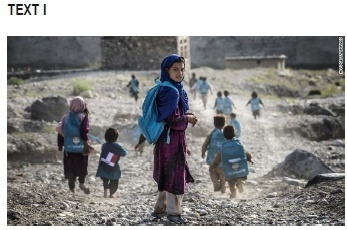
For many girls in Afghanistan, the simple act of walking to school can be a life-threatening journey. "You close the door behind you, and you enter a war zone," said Nushin Arbabzadah, an American-based author who was raised in Afghanistan. There were at least 185 documented attacks on schools and hospitals in Afghanistan last year, and the majority of those attacks were attributed to armed groups opposed to educating females. Some girls have been maimed by acid attacks. Others have had their drinking water poisoned or been targeted by bombers who think females should be forbidden from school -- as they were during the Taliban's rule.
Among the violence, however, there is promise: in a country where just 6% of women 25 and older have received any formal education, millions of girls are at long last enrolling in school. Today, more than 8.2 million children are going to schools like the one founded by Razia Jan. Jan and her team at the Zabuli Education Center are providing a free education to about 350 girls in rural Afghanistan. "Most of our students are the first generation of girls to get educated." Reports from humanitarian groups like UNICEF, Oxfam and Save the Children say that a great deal of progress has been made. "The overall education of girls in Afghanistan is a great success story," said Christine Roehrs, spokeswoman for Save the Children in Afghanistan.
One major area of focus is the number of female teachers. "In Afghan culture, parents don't consider it appropriate for girls to be educated by a man," Roehrs said. "There is a high dropout rate of young girls after the early grades because there are not enough female teachers". Another obstacle to girls' education is early marriage. The legal age for marriage is 16 in Afghanistan, but there have been many reports about girls being forced to marry well before that. In some cases, physical and emotional abuses keep girls out of the classroom. Many young women are accustomed to being hit and working as virtual slaves at home.
But female students still have high aspirations. In a recent Oxfam survey, more than 70% of the girls interviewed said they want to continue their education. "Once they enter the classroom, they are so involved being a student and trying to learn as much as they can," Jan said. "They want to learn. They want to get educated."
Source: Adjusted from CNN.com (http://edition.cnn.com/2012/09/26/world/asia/, visited on October, 2012)
According to the information in the text, education of girls in Afghanistan:
Questão 12 99368
FCM PB Medicina 2013/1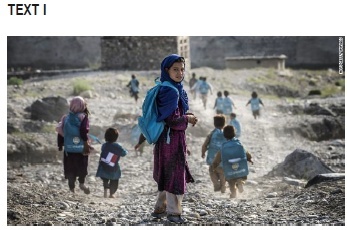
For many girls in Afghanistan, the simple act of walking to school can be a life-threatening journey. "You close the door behind you, and you enter a war zone," said Nushin Arbabzadah, an American-based author who was raised in Afghanistan. There were at least 185 documented attacks on schools and hospitals in Afghanistan last year, and the majority of those attacks were attributed to armed groups opposed to educating females. Some girls have been maimed by acid attacks. Others have had their drinking water poisoned or been targeted by bombers who think females should be forbidden from school -- as they were during the Taliban's rule.
Among the violence, however, there is promise: in a country where just 6% of women 25 and older have received any formal education, millions of girls are at long last enrolling in school. Today, more than 8.2 million children are going to schools like the one founded by Razia Jan. Jan and her team at the Zabuli Education Center are providing a free education to about 350 girls in rural Afghanistan. "Most of our students are the first generation of girls to get educated." Reports from humanitarian groups like UNICEF, Oxfam and Save the Children say that a great deal of progress has been made. "The overall education of girls in Afghanistan is a great success story," said Christine Roehrs, spokeswoman for Save the Children in Afghanistan.
One major area of focus is the number of female teachers. "In Afghan culture, parents don't consider it appropriate for girls to be educated by a man," Roehrs said. "There is a high dropout rate of young girls after the early grades because there are not enough female teachers". Another obstacle to girls' education is early marriage. The legal age for marriage is 16 in Afghanistan, but there have been many reports about girls being forced to marry well before that. In some cases, physical and emotional abuses keep girls out of the classroom. Many young women are accustomed to being hit and working as virtual slaves at home.
But female students still have high aspirations. In a recent Oxfam survey, more than 70% of the girls interviewed said they want to continue their education. "Once they enter the classroom, they are so involved being a student and trying to learn as much as they can," Jan said. "They want to learn. They want to get educated."
Source: Adjusted from CNN.com (http://edition.cnn.com/2012/09/26/world/asia/, visited on October, 2012)
Which alternative below has the correct information about the word and its function in the text?
Questão 18 99312
FCM PB Medicina 2013/2
Which alternative below has the CORRECT information about the word and its function in the text?
Questão 15 99306
FCM PB Medicina 2013/2
Angelina Jolie underwent a preventive double mastectomy after doctors estimated she had an 87% chance of developing breast cancer. How was that figure calculated and how does it differ from other women's risk of getting the disease? Jolie's chances of developing breast cancer were so high because she inherited a mutated BRCA 1 gene from her mother, Marcheline Bertrand, who died of ovarian cancer at the age of 56. The BRCA1 is present in everyone but only mutates in one in 1,000 people. Anyone with the mutation has a 50-80% chance of developing breast cancer. But Jolie's risk figure was calculated to be even higher because of other factors, including family history.
But what are the chances of getting breast cancer if you don't have a mutated gene? It is already "the top cancer in women both in the developed and the developing world", according to the World Health Organization - and in many countries, it's becoming more common. This is partly explained by the fact that people are living longer and cancer is generally a disease that affects people in later life.
In the UK, the chance of developing breast cancer before the age of 30 is roughly 0.05% (one in 2,000). It goes up to 2% (one in 50) before the age of 50 and 7.7% (one in 13) before the age of 70. However, it is after the age of 70 that the risk is highest. But increasing longevity isn't the only reason for the high incidence of breast cancer. "There is an increase in rates in younger women and it's for a number of reasons. We know that women's lifestyles are changing and being overweight and drinking a lot of alcohol is linked to breast cancer risk," says Dr Kat Arney, a senior science manager at Cancer Research UK. Changes in reproductive habits are also a factor. According to Cancer Research UK, the relative risk of developing breast cancer is estimated to increase by 3% for each year an adult woman delays becoming a mother.
Women who breastfeed also reduce their risk. It's estimated that risk is reduced by 4% for every 12 months of breastfeeding. This may explain why women in richer countries have a higher risk of breast cancer. African women are four times less likely to get the disease because they have children at a younger age, have more of them and breastfeed them for longer.
On the other hand, recovery rates are higher in developed countries. "Breast cancer survival rates [range] from 80% or over in North America, Sweden and Japan to around 60% in middle-income countries and below 40% in low-income countries," according the WHO. But with the number of cases of breast cancer rising in the UK, and in many other countries, how many women are taking the dramatic decision that Angelina Jolie was faced with - to have a mastectomy? The latest figures show that 18,000 operations were carried out in England in 2010/11. There are no official figures on how many of those were preventive but the figure is estimated to be between 5-10%.
(Source: Adapted from http://www.bbc.co.uk/news/magazine)
Choose the item which best completes the sentence bellow:
“There are two kinds of breast cancer: the common kind, _______ is called a sporadic kind, which most people get. It usually occurs over the age of 50. And the __________ inherited kind.”
Questão 14 99305
FCM PB Medicina 2013/2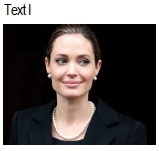
Angelina Jolie underwent a preventive double mastectomy after doctors estimated she had an 87% chance of developing breast cancer. How was that figure calculated and how does it differ from other women's risk of getting the disease? Jolie's chances of developing breast cancer were so high because she inherited a mutated BRCA 1 gene from her mother, Marcheline Bertrand, who died of ovarian cancer at the age of 56. The BRCA1 is present in everyone but only mutates in one in 1,000 people. Anyone with the mutation has a 50-80% chance of developing breast cancer. But Jolie's risk figure was calculated to be even higher because of other factors, including family history.
But what are the chances of getting breast cancer if you don't have a mutated gene? It is already "the top cancer in women both in the developed and the developing world", according to the World Health Organization - and in many countries, it's becoming more common. This is partly explained by the fact that people are living longer and cancer is generally a disease that affects people in later life.
In the UK, the chance of developing breast cancer before the age of 30 is roughly 0.05% (one in 2,000). It goes up to 2% (one in 50) before the age of 50 and 7.7% (one in 13) before the age of 70. However, it is after the age of 70 that the risk is highest. But increasing longevity isn't the only reason for the high incidence of breast cancer. "There is an increase in rates in younger women and it's for a number of reasons. We know that women's lifestyles are changing and being overweight and drinking a lot of alcohol is linked to breast cancer risk," says Dr Kat Arney, a senior science manager at Cancer Research UK. Changes in reproductive habits are also a factor. According to Cancer Research UK, the relative risk of developing breast cancer is estimated to increase by 3% for each year an adult woman delays becoming a mother.
Women who breastfeed also reduce their risk. It's estimated that risk is reduced by 4% for every 12 months of breastfeeding. This may explain why women in richer countries have a higher risk of breast cancer. African women are four times less likely to get the disease because they have children at a younger age, have more of them and breastfeed them for longer.
On the other hand, recovery rates are higher in developed countries. "Breast cancer survival rates [range] from 80% or over in North America, Sweden and Japan to around 60% in middle-income countries and below 40% in low-income countries," according the WHO. But with the number of cases of breast cancer rising in the UK, and in many other countries, how many women are taking the dramatic decision that Angelina Jolie was faced with - to have a mastectomy? The latest figures show that 18,000 operations were carried out in England in 2010/11. There are no official figures on how many of those were preventive but the figure is estimated to be between 5-10%.
(Source: Adapted from http://www.bbc.co.uk/news/magazine)
A contextual synonym for “recovery” (Text I – paragraph 5) is:
06