


![[Marketing] Questao Topo - deslogado](https://storage.estuda.com.br/banners/0_6b7ebee90b03af1c560c73bb8bcce34a_banner_deslogado_70_dias.png)
Questões de Inglês
19.971 Questões
Questão 15 152318
FMP 201318-Month-Old Bahati’s Struggle
to Survive Severe Malaria
Chris Bird, a former Reuters and Guardian reporter, put down his notepad and left more than 10 years of news reporting to study medicine with the intention of returning to the front lines where he can be hands-on saving lives and alleviating the kind of suffering he once wrote about.
As the sun went down and the ridges of the
Mitumba mountains turned a smoke blue, a line of
mothers sat quietly on a wooden bench in front of
the nurses’ station in the pediatric tent. The children
lying prostrate in their laps were new admissions, too
weak to protest against the nurses, who wore miner’s
headlamps to help search for a vein to place a drip.
These children have “severe malaria,” […] an
infection with one type of malaria parasite, Plasmodium
falciparum. After the parasite has invaded via the drilllike
proboscis of a blood-hungry female Anopheles
mosquito, the falciparum parasite replicates fast and,
like a microscopic wrecking ball, smashes red blood
cells and leaves children breathless with severe
anemia and sticks to blood vessels in the brain,
causing seizures, coma, and death.
Time is everything — delay treatment and the
parasites multiply unchecked and the child reaches a
point of no return. Lejuif — the nurse on duty — and
I started with the sickest looking child, 18-month-old
Bahati. His feet were cold, signalling he was in shock.
He didn’t respond when we rubbed him vigorously on
his chest — he was in a coma — and his chest heaved
up and down. He had severe respiratory distress. His
hemoglobin, the measure of how much oxygen his
red blood cells could carry, was very low. He needed
an immediate blood transfusion.
We rushed him under a crowd of stars between
the tent and the single story building containing our
intensive care unit (ICU). The unit has an oxygen
concentrator, which we used to help him breathe while
we placed a drip, gave anti-malarials, and arranged
for a transfusion.
Families have to donate blood if a child needs
a transfusion. Bahati’s mother had walked from the
gold mining town of Misisi, 15 kilometers down a dirt
road, and her partner had not accompanied her. As
she was pregnant, she could not donate. There was
no suitable blood in the hospital freezer. Wilondja,
another of the nurses, went back to the pediatric tent
and persuaded another of the parents to give blood.
We also started antibiotics as we had no means of
ruling out meningitis or another blood infection. […]
Political will and funding to buy bed nets,
insecticide spray, and medications that both cure
malaria and stop onward transmission of the disease
have saved many children’s lives in Sub-Saharan
Africa. There is now hope for a vaccine.
Experience in the Kimbi-Lulenge health district
would seem to bear out evidence from the World
Health Organization’s latest World Malaria Report
(2011) that the Democratic Republic of Congo (DRC)
is defying the trend and cases are actually rising.
MSF treated 15 percent more malaria cases in South
Kivu in the first two months of 2012, compared to
2011. […]
Bahati had a stormy course and remained in a
coma, with periodic seizures, for two days. His name
in Swahili means “luck,” and with the care of the
nursing staff in the makeshift ICU, he pulled through.
But thousands of children in the DRC will die from
malaria this year, a disease that is both preventable
and curable.
Available in: . Retrieved on: 27 April 2012. Adapted.
Which of the following excerpts taken from the text best depicts the unstable health care conditions in the medical premises?
Questão 14 152317
FMP 201318-Month-Old Bahati’s Struggle
to Survive Severe Malaria
Chris Bird, a former Reuters and Guardian reporter, put down his notepad and left more than 10 years of news reporting to study medicine with the intention of returning to the front lines where he can be hands-on saving lives and alleviating the kind of suffering he once wrote about.
As the sun went down and the ridges of the
Mitumba mountains turned a smoke blue, a line of
mothers sat quietly on a wooden bench in front of
the nurses’ station in the pediatric tent. The children
lying prostrate in their laps were new admissions, too
weak to protest against the nurses, who wore miner’s
headlamps to help search for a vein to place a drip.
These children have “severe malaria,” […] an
infection with one type of malaria parasite, Plasmodium
falciparum. After the parasite has invaded via the drilllike
proboscis of a blood-hungry female Anopheles
mosquito, the falciparum parasite replicates fast and,
like a microscopic wrecking ball, smashes red blood
cells and leaves children breathless with severe
anemia and sticks to blood vessels in the brain,
causing seizures, coma, and death.
Time is everything — delay treatment and the
parasites multiply unchecked and the child reaches a
point of no return. Lejuif — the nurse on duty — and
I started with the sickest looking child, 18-month-old
Bahati. His feet were cold, signalling he was in shock.
He didn’t respond when we rubbed him vigorously on
his chest — he was in a coma — and his chest heaved
up and down. He had severe respiratory distress. His
hemoglobin, the measure of how much oxygen his
red blood cells could carry, was very low. He needed
an immediate blood transfusion.
We rushed him under a crowd of stars between
the tent and the single story building containing our
intensive care unit (ICU). The unit has an oxygen
concentrator, which we used to help him breathe while
we placed a drip, gave anti-malarials, and arranged
for a transfusion.
Families have to donate blood if a child needs
a transfusion. Bahati’s mother had walked from the
gold mining town of Misisi, 15 kilometers down a dirt
road, and her partner had not accompanied her. As
she was pregnant, she could not donate. There was
no suitable blood in the hospital freezer. Wilondja,
another of the nurses, went back to the pediatric tent
and persuaded another of the parents to give blood.
We also started antibiotics as we had no means of
ruling out meningitis or another blood infection. […]
Political will and funding to buy bed nets,
insecticide spray, and medications that both cure
malaria and stop onward transmission of the disease
have saved many children’s lives in Sub-Saharan
Africa. There is now hope for a vaccine.
Experience in the Kimbi-Lulenge health district
would seem to bear out evidence from the World
Health Organization’s latest World Malaria Report
(2011) that the Democratic Republic of Congo (DRC)
is defying the trend and cases are actually rising.
MSF treated 15 percent more malaria cases in South
Kivu in the first two months of 2012, compared to
2011. […]
Bahati had a stormy course and remained in a
coma, with periodic seizures, for two days. His name
in Swahili means “luck,” and with the care of the
nursing staff in the makeshift ICU, he pulled through.
But thousands of children in the DRC will die from
malaria this year, a disease that is both preventable
and curable.
Available in: . Retrieved on: 27 April 2012. Adapted.
Which sentence states the way malaria transmission occurs?
Questão 13 152314
FMP 201318-Month-Old Bahati’s Struggle
to Survive Severe Malaria
Chris Bird, a former Reuters and Guardian reporter, put down his notepad and left more than 10 years of news reporting to study medicine with the intention of returning to the front lines where he can be hands-on saving lives and alleviating the kind of suffering he once wrote about.
As the sun went down and the ridges of the
Mitumba mountains turned a smoke blue, a line of
mothers sat quietly on a wooden bench in front of
the nurses’ station in the pediatric tent. The children
lying prostrate in their laps were new admissions, too
weak to protest against the nurses, who wore miner’s
headlamps to help search for a vein to place a drip.
These children have “severe malaria,” […] an
infection with one type of malaria parasite, Plasmodium
falciparum. After the parasite has invaded via the drilllike
proboscis of a blood-hungry female Anopheles
mosquito, the falciparum parasite replicates fast and,
like a microscopic wrecking ball, smashes red blood
cells and leaves children breathless with severe
anemia and sticks to blood vessels in the brain,
causing seizures, coma, and death.
Time is everything — delay treatment and the
parasites multiply unchecked and the child reaches a
point of no return. Lejuif — the nurse on duty — and
I started with the sickest looking child, 18-month-old
Bahati. His feet were cold, signalling he was in shock.
He didn’t respond when we rubbed him vigorously on
his chest — he was in a coma — and his chest heaved
up and down. He had severe respiratory distress. His
hemoglobin, the measure of how much oxygen his
red blood cells could carry, was very low. He needed
an immediate blood transfusion.
We rushed him under a crowd of stars between
the tent and the single story building containing our
intensive care unit (ICU). The unit has an oxygen
concentrator, which we used to help him breathe while
we placed a drip, gave anti-malarials, and arranged
for a transfusion.
Families have to donate blood if a child needs
a transfusion. Bahati’s mother had walked from the
gold mining town of Misisi, 15 kilometers down a dirt
road, and her partner had not accompanied her. As
she was pregnant, she could not donate. There was
no suitable blood in the hospital freezer. Wilondja,
another of the nurses, went back to the pediatric tent
and persuaded another of the parents to give blood.
We also started antibiotics as we had no means of
ruling out meningitis or another blood infection. […]
Political will and funding to buy bed nets,
insecticide spray, and medications that both cure
malaria and stop onward transmission of the disease
have saved many children’s lives in Sub-Saharan
Africa. There is now hope for a vaccine.
Experience in the Kimbi-Lulenge health district
would seem to bear out evidence from the World
Health Organization’s latest World Malaria Report
(2011) that the Democratic Republic of Congo (DRC)
is defying the trend and cases are actually rising.
MSF treated 15 percent more malaria cases in South
Kivu in the first two months of 2012, compared to
2011. […]
Bahati had a stormy course and remained in a
coma, with periodic seizures, for two days. His name
in Swahili means “luck,” and with the care of the
nursing staff in the makeshift ICU, he pulled through.
But thousands of children in the DRC will die from
malaria this year, a disease that is both preventable
and curable.
Available in: <http://doctorswithoutborders.org/news/article. cfm?id=5936&cat=fi eld-blogs>. Retrieved on: 27 April 2012. Adapted.
The paragraph limited by lines 1 and 7 has a
Questão 18 147926
UNEB 2013/1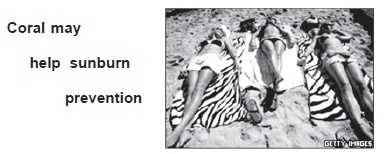
Researchers in Britain say they have found evidence that chemicals present in underwater coral could help protect humans against sunburn. They hope to be able to make a sunscreen pill.
5 Coral is an animal that thrives in shallow water, where it can absorb vital sunlight, but that also makes it vulnerable to strong ultraviolet rays. It’s long been known that algae living inside coral produces a sunscreen that protects it. But the team from King’s College in London
10 says this is the first time they have got close to using that chemical to create something similar for humans. After studying samples from the Great Barrier Reef they found that fish feeding off the coral are also able to withstand powerful ultraviolet rays, leading them to believe
15 that the protective amino acids — the key ingredient — pass up the food chain. Tests on human skin could take place within two years, though the scientists say it could take them a lot longer to work out whether the protective chemical can be turned into tablet form.
Coral may help sunburn prevention. Disponível em: <www.bbc.co.uk/>. Acesso em: 12 out. 2012.
Considering language use in the text, it’s correct to say:
Questão 12 146495
UEA - Geral 2013Amazon tribes
The Amazon is the world’s largest rainforest. It is also the ancestral home of one million Indians. They are divided into about 400 tribes, each with its own language, culture and territory. Many have had contact with outsiders for almost 500 years. Others – ‘uncontacted’ tribes – have had no contact at all.
• How do they live?
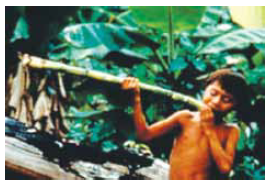
Most Indians live in settled villages by the rivers, and grow vegetables and fruits like manioc, corn, beans and bananas. They also hunt and fish, using plant-based poisons to stun the fish. Some tribes use shotguns for hunting, others use bows and arrows, spears, or blowguns with darts tipped with curare. Only a few Amazonian tribes are nomadic; they tend to live deep in the forest away from the rivers. They grow some crops but rely more on hunting and gathering.
• ___________ their problems?
Almost all the Indians’ problems revolve around land: outsiders either want their land, or something on or underneath it. The key threats are a massive boom in oil and gas exploration, rampant illegal logging and the rapid spread of ranching and farming.
(www.survivalinternational.org. Adaptado.)
No trecho do primeiro parágrafo – Many have had contact with outsiders for almost 500 years. – e no trecho do último parágrafo – outsiders either want their land, or something on or underneath it. –, a palavra outsiders refere-se
Questão 11 146494
UEA - Geral 2013Amazon tribes
The Amazon is the world’s largest rainforest. It is also the ancestral home of one million Indians. They are divided into about 400 tribes, each with its own language, culture and territory. Many have had contact with outsiders for almost 500 years. Others – ‘uncontacted’ tribes – have had no contact at all.
• How do they live?
Most Indians live in settled villages by the rivers, and grow vegetables and fruits like manioc, corn, beans and bananas. They also hunt and fish, using plant-based poisons to stun the fish. Some tribes use shotguns for hunting, others use bows and arrows, spears, or blowguns with darts tipped with curare. Only a few Amazonian tribes are nomadic; they tend to live deep in the forest away from the rivers. They grow some crops but rely more on hunting and gathering.
• ___________ their problems?
Almost all the Indians’ problems revolve around land: outsiders either want their land, or something on or underneath it. The key threats are a massive boom in oil and gas exploration, rampant illegal logging and the rapid spread of ranching and farming.
(www.survivalinternational.org. Adaptado.)
A lacuna no texto pode ser corretamente preenchida por:
06