


![[Marketing] Questao Topo - deslogado](https://storage.estuda.com.br/banners/0_6b7ebee90b03af1c560c73bb8bcce34a_banner_deslogado_70_dias.png)
Questões de Inglês
19.971 Questões
Questão 81 222593
UECE 2° Fase 1° Dia 2013/2TEXT
HARVARD BUSINESS REVIEW calls data science “the sexiest job in the 21st century,” and by most accounts this hot new field promises to revolutionize industries from business to government, health care to academia.
The field has been spawned by the enormous amounts of data that modern technologies create — be it the online behavior of Facebook users, tissue samples of cancer patients, purchasing habits of grocery shoppers or crime statistics of cities. Data scientists are the magicians of the Big Data era. They crunch the data, use mathematical models to analyze it and create narratives or visualizations to explain it, then suggest how to use the information to make decisions.
In the last few years, dozens of programs under a variety of names have sprung up in response to the excitement about Big Data, not to mention the six-figure salaries for some recent graduates. In the fall, Columbia will offer new master’s and certificate programs heavy on data. The University of San Francisco will soon graduate its charter class of students with a master’s in analytics.
Rachel Schutt, a senior research scientist at Johnson Research Labs, taught “Introduction to Data Science” last semester at Columbia (its first course with “data science” in the title). She described the data scientist this way: “a hybrid computer scientist software engineer statistician.” And added: “The best tend to be really curious people, thinkers who ask good questions and are O.K. dealing with unstructured situations and trying to find structure in them.”
Eurry Kim, a 30-year-old “wannabe data scientist,” is studying at Columbia for a master’s in quantitative methods in the social sciences and plans to use her degree for government service. She discovered the possibilities while working as a corporate tax analyst at the Internal Revenue Service. She might, for example, analyze tax return data to develop algorithms that flag fraudulent filings, or cull national security databases to spot suspicious activity.
Some of her classmates are hoping to apply their skills to e-commerce, where data about users’ browsing history is gold.
“This is a generation of kids that grew up with data science around them — Netflix telling them what movies they should watch, Amazon telling them what books they should read — so this is an academic interest with real-world applications,” said Chris Wiggins, a professor of applied mathematics at Columbia who is involved in its new Institute for Data Sciences and Engineering. “And,” he added, “they know it will make them employable.”
Universities can hardly turn out data scientists fast enough. To meet demand from employers, the United States will need to increase the number of graduates with skills handling large amounts of data by as much as 60 percent, according to a report by McKinsey Global Institute. There will be almost half a million jobs in five years, and a shortage of up to 190,000 qualified data scientists, plus a need for 1.5 million executives and support staff who have an understanding of data.
Because data science is so new, universities are scrambling to define it and develop curriculums. As an academic field, it cuts across disciplines, with courses in statistics, analytics, computer science and math, coupled with the specialty a student wants to analyze, from patterns in marine life to historical texts.
With the sheer volume, variety and speed of data today, as well as developing technologies, programs are more than a repackaging of existing courses. “Data science is emerging as an academic discipline, defined not by a mere amalgamation of interdisciplinary fields but as a body of knowledge, a set of professional practices, a professional organization and a set of ethical responsibilities,” said Christopher Starr, chairman of the computer science department at the College of Charleston, one of a few institutions offering data science at the undergraduate level.
Most master’s degree programs in data science require basic programming skills. They start with what Ms. Schutt describes as the “boring” part — scraping and cleaning raw data and “getting it into a nice table where you can actually analyze it.” Many use data sets provided by businesses or government, and pass back their results. Some host competitions to see which student can come up with the best solution to a company’s problem.
Studying a Web user’s data has privacy implications. Using data to decide someone’s eligibility for a line of credit or health insurance, or even recommending who they friend on Facebook, can affect their lives. “We’re building these models that have impact on human life,” Ms. Schutt said. “How can we do that carefully?” Ethics classes address these questions.
Finally, students have to learn to communicate their findings, visually and orally, and they need business know-how, perhaps to develop new products.
From: www.nytimes.com
Ethical responsibilities refer to the fact that
Questão 29 222071
FACISA 2013/1TEXT C
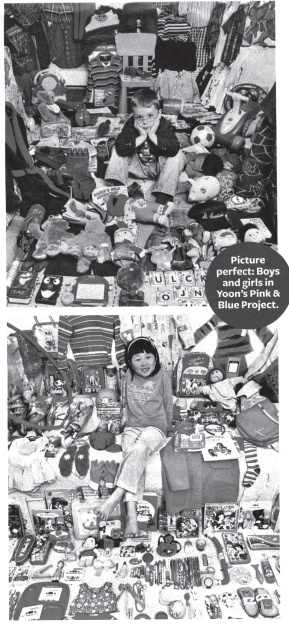
The Color of Gender
A checkered history of pink and blue
When did girls get pegged with pink and boys with blue? According to Smithsonian magazine, the hues’ history is a study in contradictions. In 1918, the trade publication Earnshaw’s Infants’ Department reported that “pink, being a more decided and stronger color, is more suitable for the boy, while blue, which is more delicate and dainty, is prettier for the girl.” This sentiment stuck until the 1940s, when retailers sensed a shift in parents’ preferences and navy became the more masculine shade. Then with the advent of women’s liberation, many mothers declined rosier “girlie” tones for their daughters. Today, the pendulum has swung again, with generation Xers opting to dress their girls in the pink items they were denied as children. This time, however, it’s more than just color coding. What was then a simple pink blouse now gets a princess patch and a shower of glitter. According to researchers, kids don’t understand gender until age seven, so we can assume that the cotton candy cuteness is for Mom.
Reader’s Digest, July/August 2012.
Which of the following statements is CORRECT with reference to TEXT C:
Questão 27 222063
FACISA 2013/1TEXT C
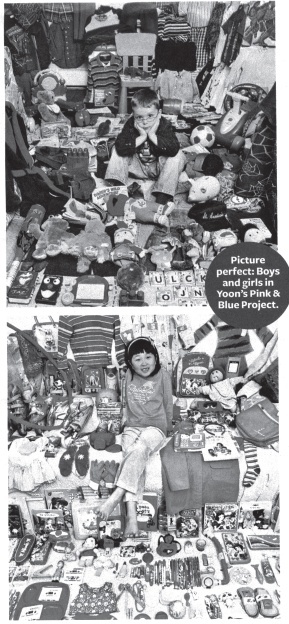
The Color of Gender
A checkered history of pink and blue
When did girls get pegged with pink and boys with blue? According to Smithsonian magazine, the hues’ history is a study in contradictions. In 1918, the trade publication Earnshaw’s Infants’ Department reported that “pink, being a more decided and stronger color, is more suitable for the boy, while blue, which is more delicate and dainty, is prettier for the girl.” This sentiment stuck until the 1940s, when retailers sensed a shift in parents’ preferences and navy became the more masculine shade. Then with the advent of women’s liberation, many mothers declined rosier “girlie” tones for their daughters. Today, the pendulum has swung again, with generation Xers opting to dress their girls in the pink items they were denied as children. This time, however, it’s more than just color coding. What was then a simple pink blouse now gets a princess patch and a shower of glitter. According to researchers, kids don’t understand gender until age seven, so we can assume that the cotton candy cuteness is for Mom.
Reader’s Digest, July/August 2012.
TEXT C informs us that attitudes regarding the use of the colors pink and blue for girls and boys
Questão 25 222056
FACISA 2013/1TEXT B
The mortarboard boom
Students and investors are profiting from the growth of private universities

Universities in Brazil have long been for the privileged few. Graduates earn, on average, 2.5 times as much as those without degrees, and five times as much as the majority who never finished secondary school. Until recently those gains went mostly to those who had attended private schools. To cap the unfairness, they went on to public universities where they paid no fees. But explosive growth in private, for-profit universities is at last opening up higher education. None of the for-profit institutions has the prestige or resources of the best public ones. Some are little more than diploma mills of dubious quality. But a qualification from one of them can double a youngster’s starting salary. A large population of young adults, deficient schools and the growth of industries, such as oil, that demand skilled workers all mean that the demand for higher education will continue to rise. Since the public sector will lack the cash to expand provision, this will have to come from private institutions. The government recognizes this. It offers private universities tax breaks in return for giving around a tenth of their places free or at discounts to students on modest incomes. But universities will have to spend on technology and seek economies of scale if they are to improve quality, cut costs, keep the students they have and woo more. The government is seeking a route to social justice: admission quotas. Extending quotas to all 59 federal universities and half of all places, will mean admitting many more ill prepared students, who may struggle [because of a poor grounding in the basics]. The surest way to guarantee all youngsters have a fair chance to get into the best universities is to offer good schools for all.
From The Economist, September 15th, 2012.
What is the solution offered by TEXT B for improving university education in Brazil?
Questão 24 222049
FACISA 2013/1TEXT B
The mortarboard boom
Students and investors are profiting from the growth of private universities

Universities in Brazil have long been for the privileged few. Graduates earn, on average, 2.5 times as much as those without degrees, and five times as much as the majority who never finished secondary school. Until recently those gains went mostly to those who had attended private schools. To cap the unfairness, they went on to public universities where they paid no fees. But explosive growth in private, for-profit universities is at last opening up higher education. None of the for-profit institutions has the prestige or resources of the best public ones. Some are little more than diploma mills of dubious quality. But a qualification from one of them can double a youngster’s starting salary. A large population of young adults, deficient schools and the growth of industries, such as oil, that demand skilled workers all mean that the demand for higher education will continue to rise. Since the public sector will lack the cash to expand provision, this will have to come from private institutions. The government recognizes this. It offers private universities tax breaks in return for giving around a tenth of their places free or at discounts to students on modest incomes. But universities will have to spend on technology and seek economies of scale if they are to improve quality, cut costs, keep the students they have and woo more. The government is seeking a route to social justice: admission quotas. Extending quotas to all 59 federal universities and half of all places, will mean admitting many more ill prepared students, who may struggle [because of a poor grounding in the basics]. The surest way to guarantee all youngsters have a fair chance to get into the best universities is to offer good schools for all.
From The Economist, September 15th, 2012.
Would it be CORRECT to say that TEXT B expresses the idea that private universities in Brazil
Questão 22 222046
FACISA 2013/1TEXT A

Frank Rankings
Ranking cities for “livability” grows more complicated each year. Just think of the urban scene in 2011: violent protests in Athens and elsewhere over economic issues, continuing unrest in Arab capitals, terrorist attacks on government buildings in Oslo and a summer camp nearby. All that strife prompted Mercer, a human resources consultancy, to add a separate personal safety section to its annual ranking of more than 200 cities, which helps companies determine cost of living adjustments for employees transferred overseas. Baghdad ranked dead last overall; Luxembourg was first for safety, due to a low crime rate and stable political situation.
Mercer weighs many factors in its overall rankings: education, public health, censorship, mass transit, culture. Economists and other rankers take a different tack. The Cato Institute’s urban planning expert Randal O’Toole favors looking at which cities draw the most newcomers. To him, that’s a sign of affordable,
livable cities.
National Geographic, September 2012.
TEXT A points out that when economists rate cities they give the highest ranking to those which have
06