


![[Marketing] Questao Topo - deslogado](https://storage.estuda.com.br/banners/0_6b7ebee90b03af1c560c73bb8bcce34a_banner_deslogado_70_dias.png)
Questões de Inglês
19.971 Questões
Questão 38 80834
UNITAU Medicina Verão - 1ª Fase 2014HOW TO LIVE LONG
It may be no coincidence that so many creative types have long lives. New findings show how doing what you love
can add years
One of the greatest buildings in New York City, the snow white, round drinking cup that is the Guggenheim Museum, was created by a very old man. The human genius behind that structural genius was Frank Lloyd Wright, who started designing the building in 1943, when he was 76, kept at it until ground was broken in 1956 and lived until 1959 — just shy of both his 92nd birthday and the museum's official opening.
There's something very real about the way creativity endures in the face of age — and maybe even pushes back age. By now it's a gerontological given that the active, busy brain is also the brain that stays lucid longer, that resists dementia and other cognitive problems better. And it's a biological given that sedentary, bored or depressed people are far likelier than happy and occupied ones to come down with physical ailments. Increasingly, brain research is showing that in the case of creative people, this mortal cause-and-effect pays powerful dividends — that it's not just the luck of living a long life that allows some people to leave behind such robust bodies of work but that the act of doing creative work is what helps add those extra years. And that's something that can be available to
everybody. Adapted from: http://content.time.com/time/magazine/article/0,9171,2151786,00.html
What is the main idea of the text?
Questão 34 80830
UNITAU Medicina Verão - 1ª Fase 2014HOW DO PARENTS' CHILD-FEEDING BEHAVIOURS INFLUENCE CHILD WEIGHT? IMPLICATIONS
FOR CHILDHOOD OBESITY POLICY
H. R. Clark, Research Associate,
E. Goyder, Reader in Public Health,
P. Bissell, Senior Lecturer in Public Health,
P. Bissell, Senior Lecturer in Public Health,
L. Blank, Research Associate and
J. Peters, Honorary Senior Lecturer in Public Health
+AuthorAffiliations
School of Health and Related Research, University of Sheffield, Sheffield, S1 4DA, UK Address correspondence to H. R. Clark, E-mail: heatherclark22@hotmail.com
ABSTRACT
Parents have some responsibility for children's dietary habits and they are often the focus of public health interventions designed to improve children's diets and thereby reduce the prevalence of childhood obesity. The current UK interventions promote awareness of healthy food choices, but offer little guidance for parents on childfeeding behaviours.
Research methods involved a review of recent literature regarding child-feeding behaviours and child weight. Parents report using a wide range of child-feeding behaviours, including monitoring, pressure to eat and restriction. Restriction of children's eating has most frequently and consistently been associated with child weight gain. , there is substantial evidence for a causal relationship between parental restriction and childhood overweight.
Parents may inadvertently promote excess weight gain in childhood by using inappropriate child-feeding behaviours. We recommend the development of interventions to increase awareness of the possible consequences of inappropriate child-feeding behaviours. Parents who are concerned about their child's weight will also require guidance and support in order to adopt more appropriate child-feeding behaviours.
(Adapted from: Oxford journals; Journal of public health) http://jpubhealth.oxfordjournals.org/content/29/2/132.full?sid=7855085f-d782- 45fa-a90c-d8a99a480542
The deleted word is
Questão 29 80264
UNEMAT 2014/1Texto base
[1] Second Life is a virtual world in three
dimensions that you can enter through the
Internet. Users can travel around, talk or
communicate with others, buy land and
[5] houses, build cars, parks or any other object
you can think of. You can go
shopping, attend colleges and universities or
go to concerts and other events. You can do
almost anything you can do in
[10] the real world. Second Life was created in
2003 by a San Francisco company called
Linden Lab. When you sign up for a free
account you become a resident. It gives you
the right to create an avatar and travel around
[15] in Second Life. In order to view
this virtual world you must download a
special viewer and install it on your computer.
The Second Life world is made up of different
regions. The mainland is the biggest region. It
[20] is owned by Linden Lab itself. There are also
other areas, owned by private people or other
companies. A membership fee of ten dollars a
month lets you buy your own land. By
becoming a paying member you also get
[25] some virtual money that you can spend. You
also get help if you have problems or run into
trouble.
Disponível em: <http://www.english-online.at>. Acesso em: 06.nov.2013.
Com base no texto, analise as seguintes assertivas:
I. Os usuários do Second Life podem viajar, falar ou se comunicar com qualquer pessoa que estiver em uma rede social da internet.
II. É possível estudar em uma faculdade ou em uma universidade e assistir a concertos dentro do Second Life.
III. Nem tudo o que se faz no mundo real pode ser feito no Second Life.
IV. Residente é o nome dado a todas as pessoas que se inscrevem no Second Life.
V. O Second Life, para ser visualizado, necessita da instalação de um programa especial chamado Linden Lab.
Assinale a alternativa correta:
Questão 45 80094
FMABC 2014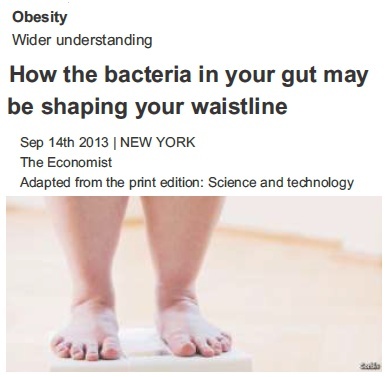
1 A CALORIE is a calorie. Eat too many and spend too
few, and you will become obese and sickly. This is the
conventional wisdom. But increasingly, it looks too
simplistic. All calories do not seem to be created equal,
and the way the body processes the same calories may
vary dramatically from one person to the next.
2 This is the intriguing suggestion from the latest
research into metabolic syndrome, the nasty clique that
includes high blood pressure, high blood sugar,
unbalanced cholesterol and, of course, obesity. This
uniquely modern scourge has swept across America,
where obesity rates are notoriously high. But it is also
doing damage from Mexico to South Africa and India,
raising levels of disease and pushing up health costs.
3 Metabolic syndrome can still be blamed on eating too
much and exercising too little. But it is crucial to
understand why some foods are particularly harmful
and why some people gain more weight than others.
Thankfully, researchers are beginning to offer
explanations in a series of recent papers.
4 One debate concerns the villainy of glucose, which is
found in starches, and fructose, found in fruits, table
sugar and, not surprisingly, high-fructose corn syrup.
Diets with a high “glycaemic index”, raising glucose
levels in the blood, seem to promote metabolic
problems. David Ludwig of Boston Children's Hospital
has shown that those on a diet with a low glycaemic
index experience metabolic changes that help them
keep weight off compared with those fed a low-fat diet.
This challenges the notion that a calorie is a calorie.
Others, however, blame fructose, which seems to
promote obesity and insulin resistance. Now a study
published in Nature Communications by Richard
Johnson, of the University of Colorado, explains that
glucose may do its harm, in part, through its conversion
to fructose.
5 Dr Johnson and his colleagues administered a diet of
water and glucose to three types of mice. One group
acted as a control and two others lacked enzymes that
help the body process fructose. The normal mice
developed a fatty liver and became resistant to insulin.
The others were protected. The body's conversion of
glucose to fructose, therefore, seems to help spur
metabolic woes.
6 Jeffrey Gordon, of Washington University in St Louis,
says that many studies point to the importance of what
he calls “job vacancies” in the microbiota of the obese.
Fed the proper diet, a person with more vacancies may
see the jobs filled by helpful bacteria. In a paper,
recently published in Science, Dr Gordon explores this
in mice. To control for the effects of genetics, Dr Gordon
found four pairs of human twins, with one twin obese
and the other lean. He collected their stool, then
transferred the twins' bacteria to sets of mice. Fed an
identical diet, the mice with bacteria from an obese twin
became obese, whereas mice with bacteria from a thin
twin remained lean.
7 Dr Gordon then tested what would happen when mice
with different bacteria were housed together—mouse
droppings help to transfer bacteria. Bacteria from the
lean mice made their way to the mice with the obese
twin's bacteria, preventing those mice from gaining
weight and developing other metabolic abnormalities.
But the phenomenon did not work in reverse, probably
due to Dr Gordon's theory on the microbiota's job
vacancies. Interestingly, the invasion did not occur, and
obesity was not prevented, when the mice ate a diet
high in fat and low in fruits and vegetables. The transfer
of helpful bacteria therefore seems to depend on diet.
8 Dr Gordon hopes to be able to identify specific bacteria
that might, eventually, be isolated and used as a
treatment for obesity. For now, however, he and other
researchers are exposing a complex interplay of
factors.
9 One type of calorie may be metabolised differently than
another. But the effect of a particular diet depends on a
person's genes and bacteria. And that person's bacteria
are determined in part by his diet. Metabolic syndrome,
it seems, hinges on an intricate relationship between
food, bacteria and genetics. Understand it, and
researchers will illuminate one of modernity's most
common ailments.
No parágrafo 5, a frase seems to help spur metabolic woes significa:
Questão 35 76127
UDESC Matutino 2014/1
Mark the correct alternative.
Sign nº 3 means:
Questão 34 76126
UDESC Matutino 2014/1
Mark the correct alternative.
Sign nº 2 means:
06