


![[Marketing] Questao Topo - deslogado](https://storage.estuda.com.br/banners/0_6b7ebee90b03af1c560c73bb8bcce34a_banner_deslogado_70_dias.png)
Questões de Inglês
19.971 Questões
Questão 24 88981
UEFS Caderno 1 2014/1TEXTO:
Globish: the new international language?
A French author and ex-vice president of IBM has
come up with a new reduced form of English to help
non-English speakers get by when they are abroad. In
his books Don’t Speak English, Parlez Globish and
5 Découvrez le Globish, Jean Paul Nerrière advocates the
use of Globish as the common language of international
communication.
Globish involves a vocabulary limited to 1,500
words. Other features include short sentences, an
10 absence of idiomatic expressions, and extensive hand
gestures to get the point across. It is not aimed at cultural
eloquence, Mr. Nerrière points out, but at “linguistic
efficiency, always, everywhere, with everyone.”
Mr. Nerrière originally started his investigations into
15 Globish in an effort to help other French men and women
sitting in business meetings held in English. He advised
them to content themselves with Globish instead of trying
to master the intricacies of formal English. Now his
globalized version of English is so common, he says,
20 that Americans, Britons, and other English speakers
should learn it, too.
Mr Nerrière says that native speakers of English
tend to stand out as strange in international business
meetings. This is due to their refusal to use the
25 elementary English adopted by colleagues from other
countries. He suggests they should make an effort to
speak like everybody else to appear less arrogant and
more open to doing business. He warns that commercial
ventures could depend upon the mastery of Globish: “If
30 you lose a contract to a rival because you’re speaking
an English that no one except another Anglophone
understands, then you’ve got a problem.”
Quick to dispel fears that Globish will mean the
end of other languages, Mr. Nerrière recommends that it
35 should only be used in international exchanges. It should
not, he insists, be used as a vehicle of culture. In other
words, he believes we should keep on learning languages
to read the great literary works of Molière, Shakespeare,
and Cervantes. He claims, however, that the best
40 language to talk about the price of steel in China is
Globish.
OXENDEN, C. & Latham-Koenig, C. American English File ,Workbook 4 p.71 Oxford University Press
Concerning the presence of native speakers of English in business meetings, Mr. Nerrière says that
Questão 23 88980
UEFS Caderno 1 2014/1TEXTO:
Globish: the new international language?
A French author and ex-vice president of IBM has
come up with a new reduced form of English to help
non-English speakers get by when they are abroad. In
his books Don’t Speak English, Parlez Globish and
5 Découvrez le Globish, Jean Paul Nerrière advocates the
use of Globish as the common language of international
communication.
Globish involves a vocabulary limited to 1,500
words. Other features include short sentences, an
10 absence of idiomatic expressions, and extensive hand
gestures to get the point across. It is not aimed at cultural
eloquence, Mr. Nerrière points out, but at “linguistic
efficiency, always, everywhere, with everyone.”
Mr. Nerrière originally started his investigations into
15 Globish in an effort to help other French men and women
sitting in business meetings held in English. He advised
them to content themselves with Globish instead of trying
to master the intricacies of formal English. Now his
globalized version of English is so common, he says,
20 that Americans, Britons, and other English speakers
should learn it, too.
Mr Nerrière says that native speakers of English
tend to stand out as strange in international business
meetings. This is due to their refusal to use the
25 elementary English adopted by colleagues from other
countries. He suggests they should make an effort to
speak like everybody else to appear less arrogant and
more open to doing business. He warns that commercial
ventures could depend upon the mastery of Globish: “If
30 you lose a contract to a rival because you’re speaking
an English that no one except another Anglophone
understands, then you’ve got a problem.”
Quick to dispel fears that Globish will mean the
end of other languages, Mr. Nerrière recommends that it
35 should only be used in international exchanges. It should
not, he insists, be used as a vehicle of culture. In other
words, he believes we should keep on learning languages
to read the great literary works of Molière, Shakespeare,
and Cervantes. He claims, however, that the best
40 language to talk about the price of steel in China is
Globish.
OXENDEN, C. & Latham-Koenig, C. American English File ,Workbook 4 p.71 Oxford University Press
The text says that Mr. Nerrière’s primary motivation to create Globish was
Questão 29 88039
UNCISAL 2° Dia 2014Oxfam dispatches aid experts to supertyphoon Haiyan-hit parts of the Philippines
Oxfam has dispatched a team of experts on the ground to assess the water, public health and sanitation conditions in Bohol today and another batch of teams will go to Northern Cebu, Northern and Eastern Samar and Leyte, in the Eastern Visayas region in the philippines, after super typhoon haiyan (local name: yolanda) hit the philippines on 8 november.
“Making sure people have clean water, safe sanitation and a roof over people’s heads will be an immediate priorites. These disasters compound the burden of Philippines’ poorest people. Small scale farmers and those relying on fishing to make a living will be hardest hit. Their fields and their boats and tackle will be badly damaged and they will need help not only today but in months to come,” said Marie Madamba-Nuñez of Oxfam in the Philippines.
[…]
Disponível em: www.oxfam.ca. Acesso em: 25 out. 2013 (fragmento).
Nesse texto, qual é a prioridade da entidade filantrópica Oxfam?
Questão 24 88034
UNCISAL 2° Dia 2014Oceans warm faster, and may hold the key to climate change
[…] The Earth hasn’t cooled — this past decade has still been the hottest on record—but temperatures havent't risen climate models predicted. Call it a “pause,” call it a “hiatus,” but the question is clear: where’s the heat?
Try the ocean. That’s one takeaway from a new paper published in Science today, one of a number of studies suggesting that the oceans depths seem to be soaking up the excess heat energy created by the accumulation of greenhouse gases. Researchers led by Yair Rosenthal at Rutgers University reconstructed temperatures in one part of the Pacific Ocean and found that its middle depths have been warming some 15 times faster over the past 60 years than at any other time over the past 10,000 years. It’s as if the oceans have been acting as a battery, absorbing the excess charge created by the greenhouse effect, which leaves less to warm the surface of the planet, where we’d notice it.
Disponível em: www.science.time.com. Acesso em 25 out. 2013 (adaptado).
No fragmento, os verbos em destaque estão empregados, respectivamente, nos seguintes tempos verbais:
Questão 51 87276
UEMG 2014ENGLISH TEST
The Man Who Sold the Eiffel Tower
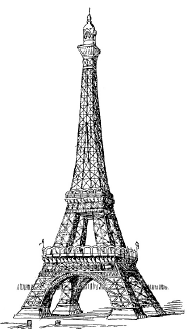
Paris, 1925. World War I had finished and the city was full of people with cash looking for business opportunities. Victor Lustig was reading the newspaper one day and found an article about the Eiffel Tower. It said the tower was being neglected because it was too expensive to maintain. Lustig a great ‘business opportunity’ – he would sell the Eiffel Tower!
Lustig wrote to six important businessmen in the city and invited them to a secret meeting in a well-known Paris hotel. He said he was a government official and he told them that he wanted to talk about a business deal. All six of the businessmen came to the meeting.
At the meeting, Lustig told them that the city wanted to sell the Eiffel Tower for scrap metal and that he had been asked to find a buyer. He said that the deal was secret because it would not be popular with the public. The businessmen believed him, perhaps the Eiffel Tower was never planned to be permanent. It had been built as part of the 1889 Paris Expo, and the original plan had been to remove it in 1909.

Lustig rented a limousine and took the men to visit the tower. After the tour, he said that if they were interested, they should contact him the next day. Lustig told them he would give the tower contract to the person with the highest offer. One of the dealers, Andre Poisson, was very interested, but he was also worried. Why was Lustig in such a hurry?
The two men had a meeting, and Lustig confessed that he wasn’t looking for the highest offer. He said he would give the contract to anybody – for a price. Poisson understood: Lustig wanted a little extra money “under the table” for himself. This was Lustig’s cleverest lie, because now Poisson believed him completely.
Lustig sold Poisson a false contract for the Eiffel Tower – and on top of that, Poisson paid him a little extra money “under the table”. Lustig put all the money in a suitcase and took the first train to Vienna. Poisson never told the police what had happened – he was too embarrassed. After a month, Lustig returned to Paris and tried to sell the Eiffel Tower again, but this time somebody told the police and he had to escape to America. There, he continued his criminal career and finished his days in the famous Alcatraz prison.
(Oxford UP 2009 - English Result, p.62. Adapted.)
Read the reported sentence below, from the text.
Lustig told them he would give the tower contract to the person with the highest offer.
Which of the alternatives below corresponds to Lustig’s direct speech?
Questão 49 87274
UEMG 2014ENGLISH TEST
The Man Who Sold the Eiffel Tower
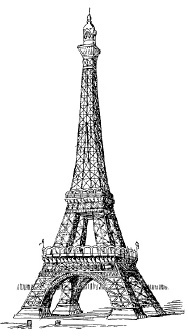
Paris, 1925. World War I had finished and the city was full of people with cash looking for business opportunities. Victor Lustig was reading the newspaper one day and found an article about the Eiffel Tower. It said the tower was being neglected because it was too expensive to maintain. Lustig a great ‘business opportunity’ – he would sell the Eiffel Tower!
Lustig wrote to six important businessmen in the city and invited them to a secret meeting in a well-known Paris hotel. He said he was a government official and he told them that he wanted to talk about a business deal. All six of the businessmen came to the meeting.
At the meeting, Lustig told them that the city wanted to sell the Eiffel Tower for scrap metal and that he had been asked to find a buyer. He said that the deal was secret because it would not be popular with the public. The businessmen believed him, perhaps the Eiffel Tower was never planned to be permanent. It had been built as part of the 1889 Paris Expo, and the original plan had been to remove it in 1909.
Lustig rented a limousine and took the men to visit the tower. After the tour, he said that if they were interested, they should contact him the next day. Lustig told them he would give the tower contract to the person with the highest offer. One of the dealers, Andre Poisson, was very interested, but he was also worried. Why was Lustig in such a hurry?
The two men had a meeting, and Lustig confessed that he wasn’t looking for the highest offer. He said he would give the contract to anybody – for a price. Poisson understood: Lustig wanted a little extra money “under the table” for himself. This was Lustig’s cleverest lie, because now Poisson believed him completely.
Lustig sold Poisson a false contract for the Eiffel Tower – and on top of that, Poisson paid him a little extra money “under the table”. Lustig put all the money in a suitcase and took the first train to Vienna. Poisson never told the police what had happened – he was too embarrassed. After a month, Lustig returned to Paris and tried to sell the Eiffel Tower again, but this time somebody told the police and he had to escape to America. There, he continued his criminal career and finished his days in the famous Alcatraz prison.
(Oxford UP 2009 - English Result, p.62. Adapted.)
According to the text, Victor Lustig sold the Eiffel Tower because
06