


![[Marketing] Questao Topo - deslogado](https://storage.estuda.com.br/banners/0_6b7ebee90b03af1c560c73bb8bcce34a_banner_deslogado_70_dias.png)
Questões de Inglês
19.971 Questões
Questão 18 99193
FCM PB Medicina 2014/1TEXT II
If you're having trouble falling—or staying—asleep at night, your diet could be to blame. Steer clear of these top sleep saboteurs, and you should be getting a good night's rest in no time, says dietitian Shelly Redmond, R.D., author of Eat Well and Be Fabulous.
• You know that caffeine will keep you wide-awake, but what you may not realize? Coffee and soda aren't the only culprits. Some OTC meds contain caffeine, too, as do many teas. If you're caffeine-sensitive, start opting for decaf and checking the labels of any meds you're planning to take about eight hours before bedtime.
• A glass of wine might sound like it'll help you relax and fall asleep, but studies have actually found that alcohol causes frequent waking at night, says Redmond. See, while booze may help you drift off, it also reduces REM sleep—and without it, you won't feel like you've logged any shuteye at all. So stick to just one glass no more than one to two hours before bed to avoid a rocky night.
• Water is great for weight loss and staying healthy but can have the unfortunate side effect of waking you up for middle-of-the-night bathroom breaks. And not only do 2 a.m. restroom runs interrupt your sleep cycle, but they can also cut into your REM sleep. Try to avoid drinking fluids 60-90 minutes before your usual bedtime to make sure you actually spend all night in bed.
• Tyramine, an amino acid found in aged and fermented foods, stimulates the brain and could keep you up at night as a result. Aged cheese, smoked fish, and cured meats all contain it—so if you must have a cheesy snack before bedtime, stick to the fresh stuff, like mozzarella.
• Anything with a lot of acid can cause heartburn and discomfort during the night—and that includes tomato-based foods and spicy dishes. To prevent tossing and turning, Redmond recommends staying away from these types of foods at least three hours before you hit the sack.
Source: ABC News (Adapted from http://abcnews.go.com/Health/, November/2013)
Which of the following is NOT mentioned in the text?
Questão 17 99192
FCM PB Medicina 2014/1TEXT II
If you're having trouble falling—or staying—asleep at night, your diet could be to blame. Steer clear of these top sleep saboteurs, and you should be getting a good night's rest in no time, says dietitian Shelly Redmond, R.D., author of Eat Well and Be Fabulous.
• You know that caffeine will keep you wide-awake, but what you may not realize? Coffee and soda aren't the only culprits. Some OTC meds contain caffeine, too, as do many teas. If you're caffeine-sensitive, start opting for decaf and checking the labels of any meds you're planning to take about eight hours before bedtime.
• A glass of wine might sound like it'll help you relax and fall asleep, but studies have actually found that alcohol causes frequent waking at night, says Redmond. See, while booze may help you drift off, it also reduces REM sleep—and without it, you won't feel like you've logged any shuteye at all. So stick to just one glass no more than one to two hours before bed to avoid a rocky night.
• Water is great for weight loss and staying healthy but can have the unfortunate side effect of waking you up for middle-of-the-night bathroom breaks. And not only do 2 a.m. restroom runs interrupt your sleep cycle, but they can also cut into your REM sleep. Try to avoid drinking fluids 60-90 minutes before your usual bedtime to make sure you actually spend all night in bed.
• Tyramine, an amino acid found in aged and fermented foods, stimulates the brain and could keep you up at night as a result. Aged cheese, smoked fish, and cured meats all contain it—so if you must have a cheesy snack before bedtime, stick to the fresh stuff, like mozzarella.
• Anything with a lot of acid can cause heartburn and discomfort during the night—and that includes tomato-based foods and spicy dishes. To prevent tossing and turning, Redmond recommends staying away from these types of foods at least three hours before you hit the sack.
Source: ABC News (Adapted from http://abcnews.go.com/Health/, November/2013)
In the sentence: “Steer clear of these top sleep saboteurs, and you should be getting a good night\'s rest in no time.” “Steer clear of” could be replaced by:
Questão 16 99191
FCM PB Medicina 2014/1
In the latest episode of the 2014 World Cup saga, Brazilian prosecutors are seeking an injunction to block the use of public funds for temporary infrastructure at World Cup stadiums located throughout Brazil. Structures like tents, cabling and communication equipment for broadcasters offer no long-term benefit to society, the prosecutors argue, and therefore they should be paid for by the FIFA, the world soccer governing body. If successful, the injunction could save Brazil almost 1.2 billion reals in taxpayer money, according to the statement released by the Procuradoria Geral da República. Brazil is not served by these expenditures for a private event, they argue, saying: "What is the public interest in paying for these services, if FIFA will be the only holder of their rights and sells them at millionaire prices?"
Brazil is spending about $3.5 billion to build or refurbish 12 stadiums for the tournament, which many Brazilians think should have been spent on other things, like health care and education. The public outrage propelled many to the streets in June and July, leading to the largest public demonstrations Brazil has ever seen. Since then, the financing of the World Cup has come under great scrutiny. Aside from the prosecutor’s lawsuit, the six cities that hosted the Confederations Cup soccer tournament in June are also separately suing to get back 230 million reals ($105 million) spent on temporary structures for the event. The Brazilian Supreme Court has yet to rule on the lawsuit.
FIFA replied that “liabilities related to complementary structures were clearly stated in contracts” signed by the stadium owners in 2007. It added that the local organizing committees were responsible for several of the temporary structures, as well as hospitality, commercial display areas, food concessions and merchandising.
“In order to further reduce the investment made by the stadium owners in the complementary structures, the local organizing committees and FIFA are reviewing all of the requirements, as they did in February 2013 for the FIFA Confederations Cup, when there was a significant decrease in scope.”
Source: The International Business Times (Adapted from http://www.ibtimes.com/, November/2013)
According to the information in the text, public demonstrations occurred in Brazil last June and July:
Questão 14 99189
FCM PB Medicina 2014/1
In the latest episode of the 2014 World Cup saga, Brazilian prosecutors are seeking an injunction to block the use of public funds for temporary infrastructure at World Cup stadiums located throughout Brazil. Structures like tents, cabling and communication equipment for broadcasters offer no long-term benefit to society, the prosecutors argue, and therefore they should be paid for by the FIFA, the world soccer governing body. If successful, the injunction could save Brazil almost 1.2 billion reals in taxpayer money, according to the statement released by the Procuradoria Geral da República. Brazil is not served by these expenditures for a private event, they argue, saying: "What is the public interest in paying for these services, if FIFA will be the only holder of their rights and sells them at millionaire prices?"
Brazil is spending about $3.5 billion to build or refurbish 12 stadiums for the tournament, which many Brazilians think should have been spent on other things, like health care and education. The public outrage propelled many to the streets in June and July, leading to the largest public demonstrations Brazil has ever seen. Since then, the financing of the World Cup has come under great scrutiny. Aside from the prosecutor’s lawsuit, the six cities that hosted the Confederations Cup soccer tournament in June are also separately suing to get back 230 million reals ($105 million) spent on temporary structures for the event. The Brazilian Supreme Court has yet to rule on the lawsuit.
FIFA replied that “liabilities related to complementary structures were clearly stated in contracts” signed by the stadium owners in 2007. It added that the local organizing committees were responsible for several of the temporary structures, as well as hospitality, commercial display areas, food concessions and merchandising.
“In order to further reduce the investment made by the stadium owners in the complementary structures, the local organizing committees and FIFA are reviewing all of the requirements, as they did in February 2013 for the FIFA Confederations Cup, when there was a significant decrease in scope.”
Source: The International Business Times (Adapted from http://www.ibtimes.com/, November/2013)
What is the best title for the text?
Questão 13 99188
FCM PB Medicina 2014/1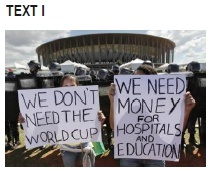
In the latest episode of the 2014 World Cup saga, Brazilian prosecutors are seeking an injunction to block the use of public funds for temporary infrastructure at World Cup stadiums located throughout Brazil. Structures like tents, cabling and communication equipment for broadcasters offer no long-term benefit to society, the prosecutors argue, and therefore they should be paid for by the FIFA, the world soccer governing body. If successful, the injunction could save Brazil almost 1.2 billion reals in taxpayer money, according to the statement released by the Procuradoria Geral da República. Brazil is not served by these expenditures for a private event, they argue, saying: "What is the public interest in paying for these services, if FIFA will be the only holder of their rights and sells them at millionaire prices?"
Brazil is spending about $3.5 billion to build or refurbish 12 stadiums for the tournament, which many Brazilians think should have been spent on other things, like health care and education. The public outrage propelled many to the streets in June and July, leading to the largest public demonstrations Brazil has ever seen. Since then, the financing of the World Cup has come under great scrutiny. Aside from the prosecutor’s lawsuit, the six cities that hosted the Confederations Cup soccer tournament in June are also separately suing to get back 230 million reals ($105 million) spent on temporary structures for the event. The Brazilian Supreme Court has yet to rule on the lawsuit.
FIFA replied that “liabilities related to complementary structures were clearly stated in contracts” signed by the stadium owners in 2007. It added that the local organizing committees were responsible for several of the temporary structures, as well as hospitality, commercial display areas, food concessions and merchandising.
“In order to further reduce the investment made by the stadium owners in the complementary structures, the local organizing committees and FIFA are reviewing all of the requirements, as they did in February 2013 for the FIFA Confederations Cup, when there was a significant decrease in scope.”
Source: The International Business Times (Adapted from http://www.ibtimes.com/, November/2013)
Which alternative below has the CORRECT information about the word and its function in the text?
Questão 12 99187
FCM PB Medicina 2014/1
In the latest episode of the 2014 World Cup saga, Brazilian prosecutors are seeking an injunction to block the use of public funds for temporary infrastructure at World Cup stadiums located throughout Brazil. Structures like tents, cabling and communication equipment for broadcasters offer no long-term benefit to society, the prosecutors argue, and therefore they should be paid for by the FIFA, the world soccer governing body. If successful, the injunction could save Brazil almost 1.2 billion reals in taxpayer money, according to the statement released by the Procuradoria Geral da República. Brazil is not served by these expenditures for a private event, they argue, saying: "What is the public interest in paying for these services, if FIFA will be the only holder of their rights and sells them at millionaire prices?"
Brazil is spending about $3.5 billion to build or refurbish 12 stadiums for the tournament, which many Brazilians think should have been spent on other things, like health care and education. The public outrage propelled many to the streets in June and July, leading to the largest public demonstrations Brazil has ever seen. Since then, the financing of the World Cup has come under great scrutiny. Aside from the prosecutor’s lawsuit, the six cities that hosted the Confederations Cup soccer tournament in June are also separately suing to get back 230 million reals ($105 million) spent on temporary structures for the event. The Brazilian Supreme Court has yet to rule on the lawsuit.
FIFA replied that “liabilities related to complementary structures were clearly stated in contracts” signed by the stadium owners in 2007. It added that the local organizing committees were responsible for several of the temporary structures, as well as hospitality, commercial display areas, food concessions and merchandising.
“In order to further reduce the investment made by the stadium owners in the complementary structures, the local organizing committees and FIFA are reviewing all of the requirements, as they did in February 2013 for the FIFA Confederations Cup, when there was a significant decrease in scope.”
Source: The International Business Times (Adapted from http://www.ibtimes.com/, November/2013)
The sentence: “[…] In order to further reduce the investment made by the stadium owners in the complementary structures, the local organizing committees and FIFA are reviewing all of the requirements […]” means that:
06