


![[Marketing] Questao Topo - deslogado](https://storage.estuda.com.br/banners/0_6b7ebee90b03af1c560c73bb8bcce34a_banner_deslogado_70_dias.png)
Questões de Inglês
19.971 Questões
Questão 46 128965
Unisinos Verão 2014Brazil’s Rousseff woos investors for infrastructure plan
By Luciana Lopez and Alonso Soto
NEW YORK/BRASILIA, Sept 25 | Wed Sep 25, 2013 3:46pm EDT
(Reuters) – Brazilian President Dilma Rousseff and her economic team courted Wall Street on Wednesday for investment in a massive plan to upgrade roads, airports and other infrastructure that has gotten off to a rocky start.
Investments to improve dilapidated roads, ports,
railways and airports are crucial for Rousseff’s
strategy to recover confidence in Brazil and bolster
an economy that has struggled to grow over the last
three years.
Her government is worried by the initial lack of
interest in concessions being offered to private
companies, which appear reluctant to commit to
the projects due to fears of excessive government
intervention.
Rousseff assured investors at a Goldman Sachs
event that her country has never broken a contract
and never will do so.
“I believe Brazil can offer opportunities that very
few countries in the world can,” she told an audience
of bankers and business people. “Legal risk does not
exist in Brazil.”
Brazil is scrambling to lift anemic investment levels
that have kept its economy stagnant, but concerns
that the government is meddling in contracts has
dented investors’ appetite for logistics tenders that
started last week.
A deserted highway tender, a last-minute
postponement in a high-speed train concession and
disappointing participation in the upcoming auction
for the huge Libra offshore oil prospect have cast
doubt on Brazil’s ability to draw investors.
(Fonte: http://www.reuters.com/article/2013/09/25/brazil-economyinvestors-idUSL2N0HL0YD20130925. Acesso em 3 out. 2013.)
Segundo o texto, a economia brasileira, nos últimos 3 anos,
Questão 65 128272
ULBRA Medicina 2014A demographic revolution is taking place in the world. We are witnessing the perks of improved healthcare
and living standards as longevity rises across the globe. The number of people over the age of 60 is expected to
increase to 2 billion by 2050, from about 600 million in 2000. This change will be most dramatic in countries in
the global south, where the number of older people is expected to triple during the next 40 years. However, as
often happens with demographic change, social attitudes and legal protection lag behind. Those in charge of
making policies are left scrambling to keep up with the transforming landscape.
With global aging of the population, there is an urgent need to reassess what role individual societies give to
older people to make sure that they are capable of enjoying a decent standard of living and can continue to
contribute to society as long as they wish. Shunting older people to the sidelines of our communities is not only
unjust, it makes little sense for countries to miss out on the huge opportunities that longer life brings, and the asset
that older people represent. Many older people keep on working and, in so doing, important knowledge and skills
are passed on to younger generations, and to others who act as carers to their family. In most countries, it is still
considered acceptable to deny people work, access to healthcare, education or the right to participate in government
purely because of their age.
Indeed, except for migrant workers and their families, international human rights conventions do not
recognise specifically that age discrimination should not be allowed. Human rights are, of course, universal, and,
there fore, older people\'s rights are protected in a general sense by the Universal Declaration of Human Rights,
but the absence of an explicit mandate against age discrimination allows the issue to slip under the net and
continue as acceptable practice. Age International is thus pushing for progress towards a new UN convention on
the rights of the elderly, to clarify how rights can work better for people in later life. We have learned from the
experience of human rights conventions for children, women and people with disabilities, that giving
governments greater guidance on how to protect the rights of people in specific circumstances can have a huge
impact on their wellbeing. What it means to be "human" and to live with dignity, respect and security requires
different responses from society, depending on our age and physical circumstances. This is widely accepted for
other demographic groups, and should be the basis for our approach to older people. Older people are not a
homogenous group – differences in how we age, our economic status and social standing underline the arbitrary
nature of age discrimination. Around the world, the debate about how to adapt to a changing demographic has
been framed in terms of how working-age people will cope with the "burden" of an ageing population, rather than
recognising the value and potential older people bring to their communities when they live healthier, longer,
active lives. Experience shows us that if discrimination is made legally unacceptable, impetus is given to a
societal shift in attitude – witness, for example, the transformation of women\'s lives in some countries where sex
discrimination laws have been passed. The need to make older people\'s rights clearer in law is increasingly
important in many developing countries, where the impact of HIV, conflict and parents seeking work in cities
have often meant grandparents are taking on the care of their grandchildren at a time in their lives when they
most need support. Thus, the enshrinement of the rights of the elderly in a UN convention, not only would we
ensure that all individuals are granted security and dignity in old age, but that those caring for the next generation
are given the best possible environment to raise happy, healthy, productive future adults. Governments need to
approach these issues head on and make sure that global human rights legislation is fit for the future and able to
respond to the opportunities and challenges of ageing in the 21st century.
Disponível em: http://www.theguardian.com/global-development/poverty-matters/2013/jul/31/ageism-human-rights-older-people.
In the sentence, “Thus, the enshrinement of the rights of the elderly in a UN convention, not only would we ensure that all individuals are granted security and dignity in old age, but that those caring for the next generation are given the best possible environment to raise happy, healthy, productive future adults” (l. 35-37), the noun enshrinement may be translated as:
Questão 63 128270
ULBRA Medicina 2014A demographic revolution is taking place in the world. We are witnessing the perks of improved healthcare
and living standards as longevity rises across the globe. The number of people over the age of 60 is expected to
increase to 2 billion by 2050, from about 600 million in 2000. This change will be most dramatic in countries in
the global south, where the number of older people is expected to triple during the next 40 years. However, as
often happens with demographic change, social attitudes and legal protection lag behind. Those in charge of
making policies are left scrambling to keep up with the transforming landscape.
With global aging of the population, there is an urgent need to reassess what role individual societies give to
older people to make sure that they are capable of enjoying a decent standard of living and can continue to
contribute to society as long as they wish. Shunting older people to the sidelines of our communities is not only
unjust, it makes little sense for countries to miss out on the huge opportunities that longer life brings, and the asset
that older people represent. Many older people keep on working and, in so doing, important knowledge and skills
are passed on to younger generations, and to others who act as carers to their family. In most countries, it is still
considered acceptable to deny people work, access to healthcare, education or the right to participate in government
purely because of their age.
Indeed, except for migrant workers and their families, international human rights conventions do not
recognise specifically that age discrimination should not be allowed. Human rights are, of course, universal, and,
there fore, older people\\'s rights are protected in a general sense by the Universal Declaration of Human Rights,
but the absence of an explicit mandate against age discrimination allows the issue to slip under the net and
continue as acceptable practice. Age International is thus pushing for progress towards a new UN convention on
the rights of the elderly, to clarify how rights can work better for people in later life. We have learned from the
experience of human rights conventions for children, women and people with disabilities, that giving
governments greater guidance on how to protect the rights of people in specific circumstances can have a huge
impact on their wellbeing. What it means to be "human" and to live with dignity, respect and security requires
different responses from society, depending on our age and physical circumstances. This is widely accepted for
other demographic groups, and should be the basis for our approach to older people. Older people are not a
homogenous group – differences in how we age, our economic status and social standing underline the arbitrary
nature of age discrimination. Around the world, the debate about how to adapt to a changing demographic has
been framed in terms of how working-age people will cope with the "burden" of an ageing population, rather than
recognising the value and potential older people bring to their communities when they live healthier, longer,
active lives. Experience shows us that if discrimination is made legally unacceptable, impetus is given to a
societal shift in attitude – witness, for example, the transformation of women\\'s lives in some countries where sex
discrimination laws have been passed. The need to make older people\\'s rights clearer in law is increasingly
important in many developing countries, where the impact of HIV, conflict and parents seeking work in cities
have often meant grandparents are taking on the care of their grandchildren at a time in their lives when they
most need support. Thus, the enshrinement of the rights of the elderly in a UN convention, not only would we
ensure that all individuals are granted security and dignity in old age, but that those caring for the next generation
are given the best possible environment to raise happy, healthy, productive future adults. Governments need to
approach these issues head on and make sure that global human rights legislation is fit for the future and able to
respond to the opportunities and challenges of ageing in the 21st century.
Disponível em: http://www.theguardian.com/global-development/poverty-matters/2013/jul/31/ageism-human-rights-older-people.
Mark the CORRECT statement concerning the meanings of the words or expressions extracted from the text.
Questão 58 127685
UPE 2° Dia 2014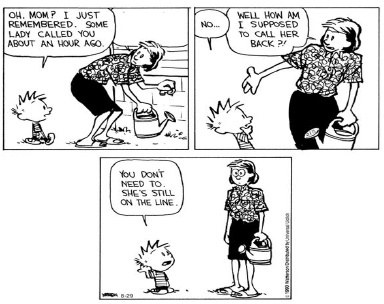
Considerando o contexto e as regras de uso da língua, o que teria dito a mãe de Calvin 2º balão de fala (1º quadradinho)?
Questão 57 127682
UPE 2° Dia 2014
Monica Seles VS Steffi Graf
The world of women’s tennis was ..................................... by this rivalry during the 1990s. German-born Steffi Graf had …………………………… eight Grand Slam tournaments before Monica Seles won her first. When she was ……………… in the 1992 Wimbledon final by Graf, a furious Seles said ‘I am still the …………………… women’s tennis player in the world. Steffi …………………… never be the number one again.’ (…) Everything changed in 1993 when during a tennis player in Hamburg, Seles was attacked on the tennis court by a crazy fan of Steffi Graf.
(CLANDFIELD, L. & BENNE, Roberta R. Global Intermediate coursebook. Macmillan, 2011. Adaptado.)
Considerando o contexto e a gramática, a sequência de palavras que completa CORRETAMENTE as lacunas se encontra na alternativa
Questão 54 127673
UPE 2° Dia 2014RISING SEAS
As the planet warms, the sea rises. Coastlines flood. What will we protect? What will we abandon?
How will we face the danger of rising seas?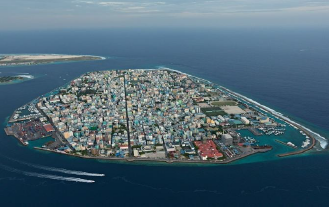
A seawall now protects Maale, capital of the Maldives, an Indian Ocean archipelago that is the lowest, flattest country on Earth.
By the time Hurricane Sandy veered toward the Northeast coast of the United States last October 29, it had mauled several countries in the Caribbean and left dozens dead. Faced with the largest storm ever spawned over the Atlantic, New York and other cities ordered mandatory evacuations of low-lying areas. Not everyone complied. Those who chose to ride out Sandy got a preview of the future, in which a warmer world will lead to inexorably rising seas.
A profoundly altered planet is what our fossil-fuel-driven civilization is creating, a planet where Sandy-scale flooding will become more common and more destructive for the world’s coastal cities. By releasing carbon dioxide and other heat-trapping gases into the atmosphere, we have warmed the Earth by more than a full degree Fahrenheit over the past century and raised sea level by about eight inches. Even if we stopped burning all fossil fuels tomorrow, the existing greenhouse gases would continue to warm the Earth for centuries. We have irreversibly committed future generations to a hotter world and rising seas. (…)
Global warming affects sea level in two ways. About a third of its current rise comes from thermal expansion – from the fact that water grows in volume as it warms. The rest comes from the melting of ice on land. So far it’s been mostly mountain glaciers, but the big concern for the future is the giant ice sheets in Greenland and Antarctica. Six years ago the Intergovernmental Panel on Climate Change (IPCC) issued a report predicting a maximum of 23 inches of sea-level rise by the end of this century. (…) However, that report intentionally omitted the possibility that the ice sheets might flow more rapidly into the sea, on the grounds that the physics of that process was poorly understood. But climate scientists now estimate that Greenland and Antarctica combined have lost on average about 50 cubic miles of ice each year since 1992 – roughly 200 billion metric tons of ice annually. Many think sea level will be at least three higher than today by 2100.
(National Geographic magazine. Vol. 224, nº 3, September 2013. Adaptado.)
No 2º parágrafo, as ocorrências do pronome we estabelecem referência com
06