


![[Marketing] Questao Topo - deslogado](https://storage.estuda.com.br/banners/0_6b7ebee90b03af1c560c73bb8bcce34a_banner_deslogado_70_dias.png)
Questões de Inglês
19.971 Questões
Questão 16 157592
CESGRANRIO 2014Do young people care about privacy?
We seem to be moving closer to a world where
every aspect of our lives is recorded, whether we like
it or not. And once our data is shared on the internet,
we lose control over it…
Facebook CEO Mark Zuckerberg thinks the age
of privacy is over…but a team of Italian researchers is
not so sure about that…They’re working on a mobile
application that will allow users to regain control of
their personal data.
Mattia Pasolli, Application Developer at the
project, known as the ‘Mobile Territorial Laboratory’
(MTL), reports that “All the people who don’t use
Facebook because of privacy issues might use it,
because they will know they have a sort of firewall that
precisely tells them what information is being shared
with external services.”
The application is being tested with 80 families in
the Northern Italian city of Trento. Every family has a
smartphone that collects data about their lives.
Fabrizio Antonelli, Director of the Mobile
Territorial Laboratory, explains that “The instrument
we used is called personal data store. It represents
a sort of security box for data, where we keep all the
information we collect about the person. Here, each
person can see the life cycle of his or her own data,
and see who has used that data, when, and for what
purpose.”
The research has been developed through the
principle of “participatory design”. The application
is developed through the participation of the 80
families taking part. It’s a real community and they
knew each other before the research.
Community Manager of MTL Erica Paris says
it could be a learning experience for users. “People
can learn a lot from this initiative, because through
this project they realise the amount of data that is
collected about them, including data from applications
other than ours. It’s something that they did not know
before”.
Mattia Pasolli says Europe has a long way to
go to emulate America. “In the United States, there
are cultural factors that facilitate the creation of very
innovative small start-ups. But in Europe the mentality
of ‘trial, failure and trying again’ is not still totally
accepted or part of our culture”.
One of the goals of the project is to improve
people’s quality of life through information and
communication technologies. The researchers hope
to anticipate the future trends in society.
Available at: <http://www.euronews.com/2013/06/03/do-young-people-care-about-privacy/> Retrieved on: Sept. 7th, 2013. Adapted.
In Text II, one notices that Mattia Passoli
Questão 15 157591
CESGRANRIO 2014Rise in violence ‘linked to climate change’
Rebecca Morelle (Science reporter, BBC World Service )
Shifts in climate are strongly linked to increases
in violence around the world, a study suggests.
US scientists found that even small changes
in temperature or rainfall correlated with a rise in
assaults, rapes and murders, as well as group
conflicts and war. The team says that with the current
projected levels of climate change, the world is likely
to become a more violent place.
Marshall Burke, from the University of California,
Berkeley, said: “This is a relationship we observe
across time and across all major continents around
the world. The relationship we find between these
climate variables and conflict outcomes are often very
large.”
The researchers looked at 60 studies from
around the world, with data spanning hundreds of
years. They report a “substantial” correlation between
climate and conflict. Their examples include an
increase in domestic violence in India during recent
droughts, and a spike in assaults, rapes and murders
during heatwaves in the US. The report also suggests
rising temperatures correlated with larger conflicts,
including ethnic clashes in Europe and civil wars in
Africa.
Mr Burke said: “We want to be careful, you
don’t want to attribute any single event to climate
in particular, but there are some really interesting
results.”
The researchers say they are now trying to
understand why this relationship exists. “The literature
offers a couple of different hints,” explained Mr Burke.
“One of the main mechanisms that seems to be at
play is changes in economic conditions. We know that
climate affects economic conditions around the world,
particularly agrarian parts of the world.
“There is lots of evidence that changes in
economic conditions affect people’s decisions about
whether or not to join a rebellion, for example.” But
he said there could also be a physiological basis,
because some studies suggest that heat causes
people to be prone to aggression.
“It is a major priority for future research to
distinguish between what is going on in each
particular situation.” The scientists say that with the
current projected levels of climate change the world is
likely to become a more violent place. They estimate
that a 2C (3.6F) rise in global temperature could see
personal crimes increase by about 15%, and group
conflicts rise by more than 50% in some regions.
Commenting on the research, Dr Stephan
Harrison from the University of Exeter said it was
a “timely study”. “What they have found is entirely
plausible... For example, we already know that
hotter and drier weather causes an increase in urban
violence. Likewise, during cooler and wetter weather
people tend to stay indoors, and the threat diminishes.”
However, other researchers have questioned whether
climate breeds conflict.
Available at: <http://www.bbc.co.uk/news/scienceenvironment-23538771>. Retrieved on: Sept. 7th 5 , 2013.
In the sentence of Text I: “other researchers have questioned whether climate breeds conflict” (lines 57-58), the author implies that researchers are
Questão 14 157590
CESGRANRIO 2014Rise in violence ‘linked to climate change’
Rebecca Morelle (Science reporter, BBC World Service )
Shifts in climate are strongly linked to increases
in violence around the world, a study suggests.
US scientists found that even small changes
in temperature or rainfall correlated with a rise in
assaults, rapes and murders, as well as group
conflicts and war. The team says that with the current
projected levels of climate change, the world is likely
to become a more violent place.
Marshall Burke, from the University of California,
Berkeley, said: “This is a relationship we observe
across time and across all major continents around
the world. The relationship we find between these
climate variables and conflict outcomes are often very
large.”
The researchers looked at 60 studies from
around the world, with data spanning hundreds of
years. They report a “substantial” correlation between
climate and conflict. Their examples include an
increase in domestic violence in India during recent
droughts, and a spike in assaults, rapes and murders
during heatwaves in the US. The report also suggests
rising temperatures correlated with larger conflicts,
including ethnic clashes in Europe and civil wars in
Africa.
Mr Burke said: “We want to be careful, you
don’t want to attribute any single event to climate
in particular, but there are some really interesting
results.”
The researchers say they are now trying to
understand why this relationship exists. “The literature
offers a couple of different hints,” explained Mr Burke.
“One of the main mechanisms that seems to be at
play is changes in economic conditions. We know that
climate affects economic conditions around the world,
particularly agrarian parts of the world.
“There is lots of evidence that changes in
economic conditions affect people’s decisions about
whether or not to join a rebellion, for example.” But
he said there could also be a physiological basis,
because some studies suggest that heat causes
people to be prone to aggression.
“It is a major priority for future research to
distinguish between what is going on in each
particular situation.” The scientists say that with the
current projected levels of climate change the world is
likely to become a more violent place. They estimate
that a 2C (3.6F) rise in global temperature could see
personal crimes increase by about 15%, and group
conflicts rise by more than 50% in some regions.
Commenting on the research, Dr Stephan
Harrison from the University of Exeter said it was
a “timely study”. “What they have found is entirely
plausible... For example, we already know that
hotter and drier weather causes an increase in urban
violence. Likewise, during cooler and wetter weather
people tend to stay indoors, and the threat diminishes.”
However, other researchers have questioned whether
climate breeds conflict.
Available at: <http://www.bbc.co.uk/news/scienceenvironment-23538771>. Retrieved on: Sept. 7th 5 , 2013.
The studies reported in Text I have confirmed all of the following affirmatives, EXCEPT that
Questão 13 157588
CESGRANRIO 2014Rise in violence ‘linked to climate change’
Rebecca Morelle (Science reporter, BBC World Service )
Shifts in climate are strongly linked to increases
in violence around the world, a study suggests.
US scientists found that even small changes
in temperature or rainfall correlated with a rise in
assaults, rapes and murders, as well as group
conflicts and war. The team says that with the current
projected levels of climate change, the world is likely
to become a more violent place.
Marshall Burke, from the University of California,
Berkeley, said: “This is a relationship we observe
across time and across all major continents around
the world. The relationship we find between these
climate variables and conflict outcomes are often very
large.”
The researchers looked at 60 studies from
around the world, with data spanning hundreds of
years. They report a “substantial” correlation between
climate and conflict. Their examples include an
increase in domestic violence in India during recent
droughts, and a spike in assaults, rapes and murders
during heatwaves in the US. The report also suggests
rising temperatures correlated with larger conflicts,
including ethnic clashes in Europe and civil wars in
Africa.
Mr Burke said: “We want to be careful, you
don’t want to attribute any single event to climate
in particular, but there are some really interesting
results.”
The researchers say they are now trying to
understand why this relationship exists. “The literature
offers a couple of different hints,” explained Mr Burke.
“One of the main mechanisms that seems to be at
play is changes in economic conditions. We know that
climate affects economic conditions around the world,
particularly agrarian parts of the world.
“There is lots of evidence that changes in
economic conditions affect people’s decisions about
whether or not to join a rebellion, for example.” But
he said there could also be a physiological basis,
because some studies suggest that heat causes
people to be prone to aggression.
“It is a major priority for future research to
distinguish between what is going on in each
particular situation.” The scientists say that with the
current projected levels of climate change the world is
likely to become a more violent place. They estimate
that a 2C (3.6F) rise in global temperature could see
personal crimes increase by about 15%, and group
conflicts rise by more than 50% in some regions.
Commenting on the research, Dr Stephan
Harrison from the University of Exeter said it was
a “timely study”. “What they have found is entirely
plausible... For example, we already know that
hotter and drier weather causes an increase in urban
violence. Likewise, during cooler and wetter weather
people tend to stay indoors, and the threat diminishes.”
However, other researchers have questioned whether
climate breeds conflict.
Available at: <http://www.bbc.co.uk/news/scienceenvironment-23538771>. Retrieved on: Sept. 7th 5 , 2013.
In Text I, the boldfaced item is synonymous with the item in italics in
Questão 20 156871
FAGOC 2014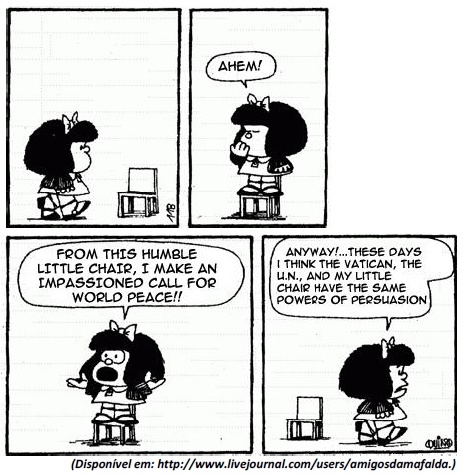
The word which means the same as ANYWAY is
Questão 19 156862
FAGOC 2014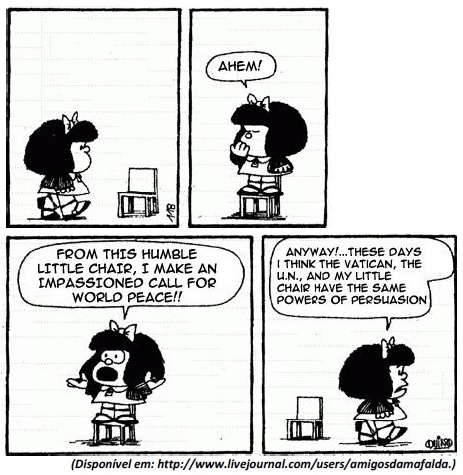
In the 4th frame, the word ANYWAY means that
06