


![[Marketing] Questao Topo - deslogado](https://storage.estuda.com.br/banners/0_6b7ebee90b03af1c560c73bb8bcce34a_banner_deslogado_70_dias.png)
Questões de Inglês
19.971 Questões
Questão 46 279435
FACASPER 2014The ad on the left, produced by the Agency DDB, Paris, was considered one of the best print ads 2012-2013 and has earned it a Gold Lion. Read it and choose the alternative that best shows its main idea.

Questão 45 279433
FACASPER 2014Spilt Milk by Chico Buarque: review
A mishmash of influences gives rise to a vivid portrait of Brazil
By Ian Thomson
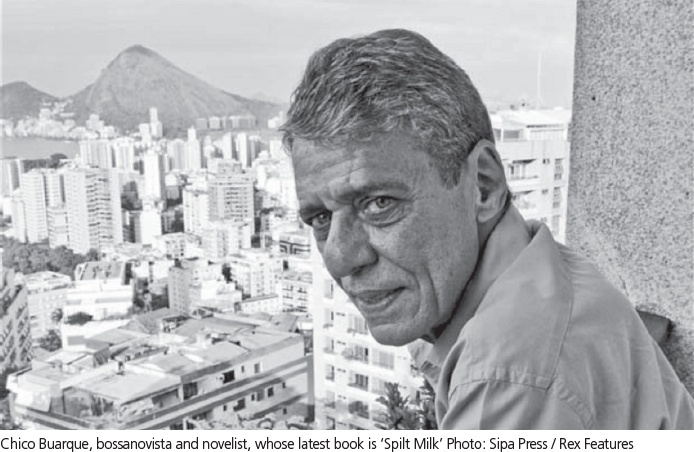
Back in the Sixties, Brazil thrilled to a new dance beat called bossa nova. With its languid jazz tones, the music had a hushed intensity and underlying air of sadness. Chico Buarque, a leading bossanovistasongwriter and novelist, is revered in Brazil as a political hero. In 1968, he was imprisoned by the military for “counter-culture activities”.
Spilt Milk, Buarque’s fourth novel, displays a typically Brazilian mishmash of influences ranging from memoir to adventure to political diatribe. A crotchety old man, Eulálio d’Assumpção, lies moribund in a Rio de Janeiro hospital, musing on his life while lashing out at stenographers and “spiteful” orderlies. The food, we learn, reeks unpleasantly of garlic (“Wait till my mother finds out”).
Aged 150, he has come down in the world wretchedly. In pages of rambling monologue, the improbably old narrator describes the decline of his family over generations of Brazilian history. Amid sagas of political tribalism and grievous dictatorship, plantation-owning forebears have squandered fortunes on drink, drugs and armament deals. A souring smell of “spilt milk” hangs over the narrative as it twists round half-remembered family feuds and hatreds.
Along the way, Buarque paints an exceptionally vivid picture of Brazilian high society in the 1890s, with its German governesses, imported French clothes and Chopin waltzes. Though bedbound and drugged, Eulálio recalls the love of his life, Matilde, whose cinnamon-coloured skin and “Moorish eyes” had worked a fatal charm on him years ago. Where is she now? At first glance, Spilt Milk appears to be in narrative disarray, as the book wanders backwards and forwards in time. Eventually, though, the inchoate strands cohere into an absorbing, if bitter, meditation on Brazil.
Just as bossa nova had borrowed from samba and West Coast jazz, so Buarque borrows from Samuel Beckett, Gabriel García Marquez and others. In a now-famous book of 1928, Manifesto Antropófago, Brazil’s leading modernist poet Oswald de Andrade had defined Brazilian literature as anthropophagic, or cannibalistic, “eating” other forms of European and African writing. Spilt Milk, brocaded with a range of literary influences, conforms to the ideal beautifully.
Source: http://www.telegraph.co.uk/culture/books/fictionreviews/9573627/Spilt-Milk-by-Chico-Buarque-review.html
Based on the book review, it is correct to affirm about Chico Buarque that
Questão 43 279419
FACASPER 2014Spilt Milk by Chico Buarque: review
A mishmash of influences gives rise to a vivid portrait of Brazil
By Ian Thomson
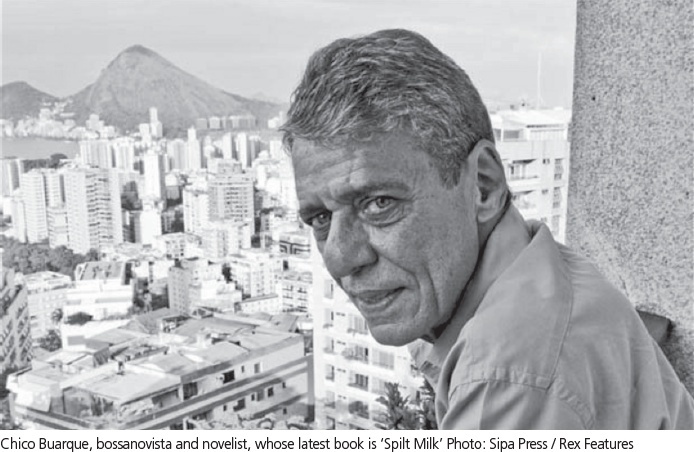
Back in the Sixties, Brazil thrilled to a new dance beat called bossa nova. With its languid jazz tones, the music had a hushed intensity and underlying air of sadness. Chico Buarque, a leading bossanovistasongwriter and novelist, is revered in Brazil as a political hero. In 1968, he was imprisoned by the military for “counter-culture activities”.
Spilt Milk, Buarque’s fourth novel, displays a typically Brazilian mishmash of influences ranging from memoir to adventure to political diatribe. A crotchety old man, Eulálio d’Assumpção, lies moribund in a Rio de Janeiro hospital, musing on his life while lashing out at stenographers and “spiteful” orderlies. The food, we learn, reeks unpleasantly of garlic (“Wait till my mother finds out”).
Aged 150, he has come down in the world wretchedly. In pages of rambling monologue, the improbably old narrator describes the decline of his family over generations of Brazilian history. Amid sagas of political tribalism and grievous dictatorship, plantation-owning forebears have squandered fortunes on drink, drugs and armament deals. A souring smell of “spilt milk” hangs over the narrative as it twists round half-remembered family feuds and hatreds.
Along the way, Buarque paints an exceptionally vivid picture of Brazilian high society in the 1890s, with its German governesses, imported French clothes and Chopin waltzes. Though bedbound and drugged, Eulálio recalls the love of his life, Matilde, whose cinnamon-coloured skin and “Moorish eyes” had worked a fatal charm on him years ago. Where is she now? At first glance, Spilt Milk appears to be in narrative disarray, as the book wanders backwards and forwards in time. Eventually, though, the inchoate strands cohere into an absorbing, if bitter, meditation on Brazil.
Just as bossa nova had borrowed from samba and West Coast jazz, so Buarque borrows from Samuel Beckett, Gabriel García Marquez and others. In a now-famous book of 1928, Manifesto Antropófago, Brazil’s leading modernist poet Oswald de Andrade had defined Brazilian literature as anthropophagic, or cannibalistic, “eating” other forms of European and African writing. Spilt Milk, brocaded with a range of literary influences, conforms to the ideal beautifully.
Source: http://www.telegraph.co.uk/culture/books/fictionreviews/9573627/Spilt-Milk-by-Chico-Buarque-review.html
Choose the statement that is true about the book review.
Questão 47 258014
Unit-SE Medicina - Caderno 1 2014TEXTO:
Scientists believe they have found an area within
the brain that controls the ageing process. In a series of
experiments on mice, they found that changes to this
region could shorten or lengthen the animal’s lifespan.
[5] The study is published in the journal Nature.
The hypothalamus is a small structure located deep
within the brain. It plays a critical role in controlling
growth, reproduction and metabolism — but now it could
hold the key to ageing too.
[10] A team of scientists in the US looked at this region
of the brain in mice. They found that blocking a chemical
in this area increased the animals’ lifespan. Healthy mice
typically live for between 600 to 1000 days.
But the rodents in the study were living about a fifth
[15] longer without suffering problems that are common in
old age, such as muscle loss or memory problems.
Conversely, when the scientists boosted the substance
in the hypothalamus, the animal’s lifespan was
shortened.
[20] The researchers now want to fully understand the
biological mechanism behind this process. They say
the work could provide new insights into age - related
diseases — and in the future even raise the prospect of
drugs that could increase our lifespan.
Disponível em: <www.bbc.co.uk/worldservice/learningenglish/language/wordsinthenews/2013/05/130503_witn_ageing.shtml>. Acesso em: 12 out. 2013.
In the experiments on mice mentioned in the text, the scientists discovered that these animals
Questão 46 258013
Unit-SE Medicina - Caderno 1 2014TEXTO:
Scientists believe they have found an area within
the brain that controls the ageing process. In a series of
experiments on mice, they found that changes to this
region could shorten or lengthen the animal’s lifespan.
[5] The study is published in the journal Nature.
The hypothalamus is a small structure located deep
within the brain. It plays a critical role in controlling
growth, reproduction and metabolism — but now it could
hold the key to ageing too.
[10] A team of scientists in the US looked at this region
of the brain in mice. They found that blocking a chemical
in this area increased the animals’ lifespan. Healthy mice
typically live for between 600 to 1000 days.
But the rodents in the study were living about a fifth
[15] longer without suffering problems that are common in
old age, such as muscle loss or memory problems.
Conversely, when the scientists boosted the substance
in the hypothalamus, the animal’s lifespan was
shortened.
[20] The researchers now want to fully understand the
biological mechanism behind this process. They say
the work could provide new insights into age - related
diseases — and in the future even raise the prospect of
drugs that could increase our lifespan.
Disponível em: <www.bbc.co.uk/worldservice/learningenglish/language/wordsinthenews/2013/05/130503_witn_ageing.shtml>. Acesso em: 12 out. 2013.
The only piece of information that is NOT TRUE about the hypothalamus is that it
Questão 44 257999
Unit-SE Medicina - Caderno 1 2014TEXTO:
Scientists say that a common ingredient found in
Chinese herbal medicine is responsible for the very high
incidence of some cancers and kidney disease in
Taiwan. For thousands of years the aristolochia plant
[5] with its reddish-yellow flowers has been a mainstay of
Chinese herbal medicine. Sometimes referred to as
birthwort in Europe, the toxic nature of the plant was
discovered in the 1990s when dozens of Belgian women
began developing kidney failure and urinary tract cancers.
[10] They had been using aristolochia-based slimming aids
at clinic.
Now scientists say that the key element,
aristolochic acid, is responsible for the very high levels
of kidney disease and urinary tract tumors in Taiwan.
[15] It’s estimated that about one in three of the population
there have used herbal medicines containing the toxin.
The country has the world’s highest incidence of cancers
of the upper urinary tract - and in their study the scientists
say more than half can be directly linked to the ingredient.
[20] While products containing aristolochic acid are
banned in many countries, one of the big concerns is
China. In 2004 a study suggests Chinese farmers
produce enough of the plant to dose 100 million people.
Scientists are concerned, that in the decades to come,
[25] disease caused by the aristolochia will create an
international public health problem of considerable
magnitude.
Disponível em: <www.bbc.co.uk/worldservice/learningenglish/language/wordsinthenews/2012/04/120412_witn_herbal_medicine.shtml>. Acesso em: 12 out. 2013.
Considering language use in the text, it’s correct to say:
06