


![[Marketing] Questao Topo - deslogado](https://storage.estuda.com.br/banners/0_6b7ebee90b03af1c560c73bb8bcce34a_banner_deslogado_70_dias.png)
Questões de Inglês
19.971 Questões
Questão 56 639742
UFN Verão 2014Michael Jackson 'made some bad choices'
[1] Michael Jackson's drug-taking meant he "was
playing Russian roulette in his bedroom every
night", a lawyer for AEG Live told the court in the
singer's wrongful death trial.
[5] During closing arguments, Marvin Putnam told
the jury that the star died because of his own "bad
choices". "You can't blame someone else for his
bad choices."
The Jackson family want $290m in personal
[10] damages from concert promoters AEG over his
2009 death. The singer died at the age of 50 from
an overdose of the surgical anaesthetic propofol,
ahead of a series of comeback concerts in London.
The family claims AEG Live failed to properly
[15] investigate Dr Conrad Murray - the former
cardiologist who was convicted of involuntary
manslaughter in 2011 - and missed warning signs
about the singer's health.
But, summing up on Wednesday, defence
[20] lawyer Mr Putnam claimed the star never told the
producers that he was using propofol to overcome
his chronic insomnia. "AEG only learned the truth
after Mr Jackson passed," he added. "AEG would
have never agreed to finance this tour if they knew
[25] Mr Jackson was playing Russian roulette in his
bedroom every night," Mr Putnam told jurors.
'Speculation and guesswork'
Mr Putnam reiterated that it was Jackson, not
AEG, who insisted on hiring Murray - then his
[30] family doctor - as his on-site doctor for the ‘This Is
It’ tour in London. "He didn't ask AEG," the lawyer
said. "He said, 'We're using this doctor'. He was a
grown man of 50 and as a grown man he is
responsible for his own health and his own choices
[35] no matter how bad those choices may be. It was
his money and he certainly wasn't going to take no
for an answer," he said.
Mr Putnam focused on emails and excerpts
from proposed contracts, arguing that there never
[40] was a contract between Murray and AEG. "You
can't negligently hire someone unless you hire
them," he said, adding: "The evidence is very clear
that Michael Jackson was the one who hired Dr
Murray."
[45] He dismissed the Jackson family claim for
$290m in damages, based on the singer's potential
earnings, as "speculation and guesswork". "I'm
sorry, that's an absurd number. And they haven't
even remotely proved it."
[50] Jackson lawyer, Brian Panish, is expected to
have one last chance to respond to the closing
arguments before the jury retires to consider. Nine
of the 12 jurors must agree to secure a verdict.
Adapted from www.bbc.co.uk
Analise as seguintes afirmações sobre o texto e identifique cada uma como verdadeira (V) ou falsa (F).
( ) O advogado da produtora de shows afirmou que seus clientes sabiam que o cantor usava o anestésico propofol para tratar sua insônia crônica, mas achavam que isso não representava nenhum risco para sua vida, porque a prática era autorizada pelo Dr. Conrad Murray.
( ) Uma das acusações feitas pela família Jackson é de que a AEG Live falhou em não perceber o declínio na saúde de Michael.
( ) O Dr. Conrad Murray não era pago pela AEG Live.
( ) A AEG Live terá que pagar uma indenização à família Jackson, tendo em vista que nove dos doze jurados concordaram, mas esta é muito menor que os 290 milhões de dólares pedidos.
( ) O processo judicial refere-se ao valor estimado que o cantor ganharia com shows apenas na cidade de Londres.
A sequência correta é
Questão 55 639725
UFN Verão 2014Michael Jackson 'made some bad choices'
[1] Michael Jackson's drug-taking meant he "was
playing Russian roulette in his bedroom every
night", a lawyer for AEG Live told the court in the
singer's wrongful death trial.
[5] During closing arguments, Marvin Putnam told
the jury that the star died because of his own "bad
choices". "You can't blame someone else for his
bad choices."
The Jackson family want $290m in personal
[10] damages from concert promoters AEG over his
2009 death. The singer died at the age of 50 from
an overdose of the surgical anaesthetic propofol,
ahead of a series of comeback concerts in London.
The family claims AEG Live failed to properly
[15] investigate Dr Conrad Murray - the former
cardiologist who was convicted of involuntary
manslaughter in 2011 - and missed warning signs
about the singer's health.
But, summing up on Wednesday, defence
[20] lawyer Mr Putnam claimed the star never told the
producers that he was using propofol to overcome
his chronic insomnia. "AEG only learned the truth
after Mr Jackson passed," he added. "AEG would
have never agreed to finance this tour if they knew
[25] Mr Jackson was playing Russian roulette in his
bedroom every night," Mr Putnam told jurors.
'Speculation and guesswork'
Mr Putnam reiterated that it was Jackson, not
AEG, who insisted on hiring Murray - then his
[30] family doctor - as his on-site doctor for the ‘This Is
It’ tour in London. "He didn't ask AEG," the lawyer
said. "He said, 'We're using this doctor'. He was a
grown man of 50 and as a grown man he is
responsible for his own health and his own choices
[35] no matter how bad those choices may be. It was
his money and he certainly wasn't going to take no
for an answer," he said.
Mr Putnam focused on emails and excerpts
from proposed contracts, arguing that there never
[40] was a contract between Murray and AEG. "You
can't negligently hire someone unless you hire
them," he said, adding: "The evidence is very clear
that Michael Jackson was the one who hired Dr
Murray."
[45] He dismissed the Jackson family claim for
$290m in damages, based on the singer's potential
earnings, as "speculation and guesswork". "I'm
sorry, that's an absurd number. And they haven't
even remotely proved it."
[50] Jackson lawyer, Brian Panish, is expected to
have one last chance to respond to the closing
arguments before the jury retires to consider. Nine
of the 12 jurors must agree to secure a verdict.
Adapted from www.bbc.co.uk
A partir da leitura do texto ‘Michael Jackson ‘made some bad choices’’, pode-se afirmar que:
I. A família de Michael acha que a produtora de shows AEG Live é corresponsável pela morte do cantor.
II. A família de Michael quer usar o dinheiro da indenização para tentar impedir o uso indiscriminado do anestésico propofol por cardiologistas americanos.
III. A família de Michael havia alertado a AEG, enquanto Michael ainda era vivo, que o Dr. Conrad Murray era negligente.
Está(ão) correta(s)
Questão 29 600814
UNIC 2014/2TEXTO:
Beyond the Breathalyzer
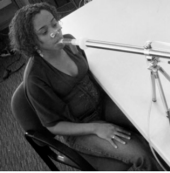
Researchers are mining our exhalations to diagnose disease
Anyone who’s ever had a few too many drinks
knows that a little exhalation can reveal a lot of
information. But the alcohol Breathalyzer, it turns out,
was just the beginning.
[5] A new batch of studies suggests that breath
tests — exhaling into a medical sensor for analysis —
can effectively screen for lung cancer, infections, diabetes
and more. Although researchers have long known that
those diseases alter our bodies’ chemical makeup,
[10] they’re starting to pinpoint the specific ways each alters
our breath. Lung-cancer tumors, for example, produce a
suite of volatile organic compounds that we wind up
exhaling. “We’re starting to discover so many things we
didn’t know were there,” says Dr. Raed Dweik of the
[15] Cleveland Clinic.
Already these tests are used to see if hearttransplant
patients are rejecting the organ, based on
the alkanes they emit, (alkanes are the by-products of
chemical reactions set off by free radicals — unstable,
[20] cell-damaging molecules — that are produced by the
body when it rejects donated organs); if asthma drugs
are working by measuring the amount of the breath’s
nitric-oxide content, ( people with asthma exhale
abnormally high levels of nitric oxide, a gas that regulates
[25] blood flow but may damage cells and cause inflammation
if overproduced in the airways) and if infection-causing
anaerobic bacteria are nesting in the gut (by the hydrogen
they release).
Researchers at the University of Vermont have
[30] proven that a breath-analysis technique can accurately
diagnose bacterial infections such as staph, according
to a study published in the Journal of Breath Research.
“Traditional methods to diagnose deadly, fast-spreading
diseases like tuberculosis require the collection of a
[35] sample that is then used to grow bacteria”, says Dr.
Jane Hill , co-author of the study. “This whole process
can take days for some common bacteria, and even
weeks for tuberculosis. Breath analysis would reduce
the time-to-diagnosis to just minutes.”
[40] But using breath tests to accurately diagnose
diseases like cancer won’t be easy. Breath, after all, is
a potluck of everything emitted by the body: in addition
to potentially telltale compounds, it contains the
emissions of good bacteria that help us digest food and
[45] ward off diseases. As James Carey, a chemistry professor
at the National University of Kaohsiung in Taiwan,
puts it, “Breath is the most complicated mixture on the
planet” — which is why he prefers to analyze emissions
from blood samples to detect sepsis. The challenge is
[50] sorting out the relevant from the irrelevant to reduce the
rate of false positives.
Still, the medical community remains hopeful.
Although breath tests are several years away from patient
testing and would likely be used along with other
[55] diagnostic methods, they’re cheaper and less invasive
than screening options like biopsies. That kind of
convenience will allow more people to get more tests for
disease before it becomes serious – which will ultimately
save more lives.
PARK, Alice. TIME. Oct 7, 2013. p.14, In: Briefing, HEALTH. Adaptado.
“Breath, after all, is a potluck of everything emitted by the body” (l. 41-42)
By using the word “potluck” to describe breath, the author means that
Questão 27 600812
UNIC 2014/2TEXTO:
Beyond the Breathalyzer
Researchers are mining our exhalations to diagnose disease
Anyone who’s ever had a few too many drinks
knows that a little exhalation can reveal a lot of
information. But the alcohol Breathalyzer, it turns out,
was just the beginning.
[5] A new batch of studies suggests that breath
tests — exhaling into a medical sensor for analysis —
can effectively screen for lung cancer, infections, diabetes
and more. Although researchers have long known that
those diseases alter our bodies’ chemical makeup,
[10] they’re starting to pinpoint the specific ways each alters
our breath. Lung-cancer tumors, for example, produce a
suite of volatile organic compounds that we wind up
exhaling. “We’re starting to discover so many things we
didn’t know were there,” says Dr. Raed Dweik of the
[15] Cleveland Clinic.
Already these tests are used to see if hearttransplant
patients are rejecting the organ, based on
the alkanes they emit, (alkanes are the by-products of
chemical reactions set off by free radicals — unstable,
[20] cell-damaging molecules — that are produced by the
body when it rejects donated organs); if asthma drugs
are working by measuring the amount of the breath’s
nitric-oxide content, ( people with asthma exhale
abnormally high levels of nitric oxide, a gas that regulates
[25] blood flow but may damage cells and cause inflammation
if overproduced in the airways) and if infection-causing
anaerobic bacteria are nesting in the gut (by the hydrogen
they release).
Researchers at the University of Vermont have
[30] proven that a breath-analysis technique can accurately
diagnose bacterial infections such as staph, according
to a study published in the Journal of Breath Research.
“Traditional methods to diagnose deadly, fast-spreading
diseases like tuberculosis require the collection of a
[35] sample that is then used to grow bacteria”, says Dr.
Jane Hill , co-author of the study. “This whole process
can take days for some common bacteria, and even
weeks for tuberculosis. Breath analysis would reduce
the time-to-diagnosis to just minutes.”
[40] But using breath tests to accurately diagnose
diseases like cancer won’t be easy. Breath, after all, is
a potluck of everything emitted by the body: in addition
to potentially telltale compounds, it contains the
emissions of good bacteria that help us digest food and
[45] ward off diseases. As James Carey, a chemistry professor
at the National University of Kaohsiung in Taiwan,
puts it, “Breath is the most complicated mixture on the
planet” — which is why he prefers to analyze emissions
from blood samples to detect sepsis. The challenge is
[50] sorting out the relevant from the irrelevant to reduce the
rate of false positives.
Still, the medical community remains hopeful.
Although breath tests are several years away from patient
testing and would likely be used along with other
[55] diagnostic methods, they’re cheaper and less invasive
than screening options like biopsies. That kind of
convenience will allow more people to get more tests for
disease before it becomes serious – which will ultimately
save more lives.
PARK, Alice. TIME. Oct 7, 2013. p.14, In: Briefing, HEALTH. Adaptado.
Considering the advantages of breath analysis to diagnose bacterial infections, when compared with traditional tests, the only alternative that is not true according to the text is that it
Questão 26 600811
UNIC 2014/2TEXTO:
Beyond the Breathalyzer
Researchers are mining our exhalations to diagnose disease
Anyone who’s ever had a few too many drinks
knows that a little exhalation can reveal a lot of
information. But the alcohol Breathalyzer, it turns out,
was just the beginning.
[5] A new batch of studies suggests that breath
tests — exhaling into a medical sensor for analysis —
can effectively screen for lung cancer, infections, diabetes
and more. Although researchers have long known that
those diseases alter our bodies’ chemical makeup,
[10] they’re starting to pinpoint the specific ways each alters
our breath. Lung-cancer tumors, for example, produce a
suite of volatile organic compounds that we wind up
exhaling. “We’re starting to discover so many things we
didn’t know were there,” says Dr. Raed Dweik of the
[15] Cleveland Clinic.
Already these tests are used to see if hearttransplant
patients are rejecting the organ, based on
the alkanes they emit, (alkanes are the by-products of
chemical reactions set off by free radicals — unstable,
[20] cell-damaging molecules — that are produced by the
body when it rejects donated organs); if asthma drugs
are working by measuring the amount of the breath’s
nitric-oxide content, ( people with asthma exhale
abnormally high levels of nitric oxide, a gas that regulates
[25] blood flow but may damage cells and cause inflammation
if overproduced in the airways) and if infection-causing
anaerobic bacteria are nesting in the gut (by the hydrogen
they release).
Researchers at the University of Vermont have
[30] proven that a breath-analysis technique can accurately
diagnose bacterial infections such as staph, according
to a study published in the Journal of Breath Research.
“Traditional methods to diagnose deadly, fast-spreading
diseases like tuberculosis require the collection of a
[35] sample that is then used to grow bacteria”, says Dr.
Jane Hill , co-author of the study. “This whole process
can take days for some common bacteria, and even
weeks for tuberculosis. Breath analysis would reduce
the time-to-diagnosis to just minutes.”
[40] But using breath tests to accurately diagnose
diseases like cancer won’t be easy. Breath, after all, is
a potluck of everything emitted by the body: in addition
to potentially telltale compounds, it contains the
emissions of good bacteria that help us digest food and
[45] ward off diseases. As James Carey, a chemistry professor
at the National University of Kaohsiung in Taiwan,
puts it, “Breath is the most complicated mixture on the
planet” — which is why he prefers to analyze emissions
from blood samples to detect sepsis. The challenge is
[50] sorting out the relevant from the irrelevant to reduce the
rate of false positives.
Still, the medical community remains hopeful.
Although breath tests are several years away from patient
testing and would likely be used along with other
[55] diagnostic methods, they’re cheaper and less invasive
than screening options like biopsies. That kind of
convenience will allow more people to get more tests for
disease before it becomes serious – which will ultimately
save more lives.
PARK, Alice. TIME. Oct 7, 2013. p.14, In: Briefing, HEALTH. Adaptado.
Fill in the parentheses with T (True) or F (False).
According to the text, it’s correct to say:
( ) Exhaled breath can let us know much more about people than their estimated blood alcohol content.
( ) Doctors have been using breath tests to diagnose diseases for a long time now.
( ) Nowadays, organ transplant rejection can be diagnosed through breath analysis.
( ) Researchers recognize that they still have a long way to go before diseases’ diagnose through breath tests can be a hundred percent reliable.
The correct sequence, from top to bottom, is
Questão 21 600796
UNIC 2014/2TEXTO:
Transparent Thinking
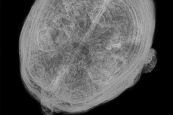
The image of a whole brain has been rendered before
from bits and pieces, whether illuminated by radiology
or cut into slivers with cold steel blades. But chemical
engineers and neuroscientists at Stanford University have
[5] now developed a process that renders the organ of thought
quite literally transparent.
To be sure, the technique called “Clarity” has been
used thus far mainly to study postmortem mouse brains,
but testimonials already are accumulating. Thomas Insel,
[10] director of the National Institute of Mental Health, says
the process “transforms the way we study the brain’s
anatomy and how disease changes it.” He claims that
“in-depth study of our most important three-dimensional
organ” will no longer be “constrained by two-dimensional
[15] methods.” “Ordinarily, brain tissue must be sliced
into very thin layers for study. But that can distort
the cells and their connections. The new method —
Clear Lipid-exchanged Anatomically Rigid
Imaging/immunostaining-compatible Tissue Hydrogel
[20] (CLARITY) — retains support for brain cells and their
interconnections, down to the molecular level. More
importantly, CLARITY permits the scientists to label
antibodies and repeatedly stain and de-stain tissues
without disturbing them.” [Psychiatric News Alert]
[25] Team leader Karl Deisseroth says the process may
eventually be applicable for research on many kinds of
tissue and “any biological system.” The innovation is
the replacement of fatty cells called lipids, which make
the brain opaque and obscure its dense neural
[30] connections, with a substance called hydrogel, which is
transparent. The “clarified” brain, as the Stanford team
calls it, can then be treated with fluorescent dyes that
light up specific circuitry. The detail is extraordinary, right
down to the molecular level.
DICKEY, Cristopher. Transparent Thinking. In: Big Think: Around the world in six ideas. Newsweek, May 13 & 20, 2013, p.8-9. Adaptado
Fill in the parentheses with T (True) or F (False).
About standard brain research practice, it’s correct to say:
( ) It has generally used ultra-thin slices of brain tissue samples.
( ) Cutting brain tissue into very thin, flat samples is likely to give inaccurate information about its cells and their connections.
( ) Getting images of the brain through radiology has long been disregarded by traditional neuroscientists.
( ) For the Stanford University neuroscientists, it’s still the most accurate process of brain analysis.
According to the text, the correct sequence, from top to bottom, is
06