


![[Marketing] Questao Topo - deslogado](https://storage.estuda.com.br/banners/0_6b7ebee90b03af1c560c73bb8bcce34a_banner_deslogado_70_dias.png)
Questões de Inglês
19.971 Questões
Questão 38 1084335
FGV-RJ Administração, C. Sociais, Direito, História 2014POLITICAL CAMPAIGNS
by James Surowiecki
[1] The 2012 Presidential election looks set to be, by a long shot, the most expensive ever. The Mitt Romney and Barack Obama campaigns (and their allies) have already spent more than four hundred million dollars on television ads, and are expected to spend six hundred million more in the next seven weeks. But the most important struggle between the campaigns is taking place elsewhere: in the hands-on, door-to-door fight for votes, called the “ground game.” And, as Sasha Issenberg shows in his enlightening new book, “The Victory Lab,” the ground game has been revolutionized in recent years by technological innovation and clever experimentation, to the point where it may well have a bigger impact on Election Day than all those millions in ads.
[2] Even in today's money-soaked politics, all campaigns have limited resources of money, time, and manpower. Campaigns fail if they waste resources courting voters who are unpersuadable or already persuaded. Their most urgent task is to find and persuade the few voters who are genuinely undecided and the larger number who are favorably disposed but need a push to actually vote. Companies have long gathered data to break down their customer base into specific segments. Now political parties have become adept at micro-targeting, too, using data on shopping habits, leisure activities, voting histories, charity donations, and so on, in order to pinpoint likely supporters and the type of appeal most likely to win them over. In the 2004 Presidential election, the Republican Party bought ads on the Golf Channel, because Karl Rove's data told him that golfers were more likely to support George W. Bush than John Kerry. And, as Issenberg documents, prospective Republican voters received different, and carefully targeted, versions of Bush's campaign positions depending on their neighborhood, or even their street: some were reminded that Bush was anti-abortion; others read about his pro- immigration positions. The 2008 Obama campaign was even more sophisticated, using a custom- built, constantly evolving algorithm that incorporated hundreds of variables in order to predict any given voter's allegiance and level of enthusiasm. It sometimes seemed to campaign operatives that the algorithm knew what voters thought before the voters themselves did.
[3] This kind of precision changes the nature of campaigning. Instead of just flooding the zone with TV ads and hoping that the right people see them, campaigns can send flyers to only a few hundred people, say, or buy bus ads on one particular city line. Micro-targeting is hardly perfect, but when it works it allows campaigns to speak to voters directly and cost-effectively.
Adapted from The New Yorker, September 24, 2012(Note: This article was written before the 2012 U.S. Presidential election.)
In paragraph 1, the phrase “But the most important struggle between the campaigns is taking place elsewhere...” most likely refers to which of the following?
Questão 33 1084314
FGV-RJ Administração, C. Sociais, Direito, História 2014EUROPEAN UNION ENLARGEMENT
[1] Critics who say the European Union has been tipped into inaction by the euro crisis are mistaken. Despite it, policymaking in such areas as competition, energy, the single market and telecoms carries on. And on July 1st the club will admit its 28th member, Croatia.
[2] To many this means that the western Balkans must eventually join the club, so membership talks continue with Montenegro and will open next year with Serbia. But further negotiations with Turkey, already almost frozen, have at German insistence been put off until October, because of the Turks” crackdown on protesters. And nobody even raises the possible accession of Moldova, Ukraine or the Caucasus.
[3] This is a mistake. Enlargement has been the EU's most successful policy by far. The hope of membership was crucial in fostering and smoothing the transition to democracy, first in Greece, Spain and Portugal and later across large parts of eastern Europe. The lure of joining the rich democrats” clubled countries into social and constitutional reform and persuaded them to free statist economies. The results benefited not just new members, but existing ones, too.
[4] Those who oppose further enlargement offer several arguments. The EU club is already too large to function well, they say, and is anyway in too big a mess to afford new distractions. Some countries were let in before their institutions were sufficiently developed (Romania and Bulgaria in 2007), or with unresolved territorial disputes (Cyprus, 2004). Hungary (also 2004) has regressed in its democracy. Others, like Turkey, are not really European at all. Public opinion is against more expansion, partly because of rising resistance to large-scale immigration. Potential candidates from the east are too big (Ukraine), too poor (Moldova), too Muslim (Turkey again), too autocratic (Azerbaijan)—or some combination of the above.
[5] Yet all these points have answers. Decision-making has not suffered from enlargement: policy squabbles are mostly among older members, not between old and new. Romania and Bulgaria may indeed have joined too soon, but the admission criteria have been toughened since they signed up. Countries with frozen conflicts should be told to resolve them before they join and not after. Hungary is being pressured back into line, albeit with difficulty. Turkey was accepted as a European country at least as far back as 1963, when it signed an association agreement.
[6] Clearly, people in the EU are worried about immigration. But it will be decades before many of these countries can join, and even then they will have long, potentially unlimited, transition periods before enjoying full free movement of labour. Size, poverty and religion have never stood in the way of membership and should not suddenly become obstacles now. Democracy and the rule of law remain fundamental requirements for the EU— indeed, this is precisely what gives it such powerful leverage over would-be members.
Adapted from The Economist, June 29", 2013
In paragraph 3, the sentence “This is a mistake” most likely refers to the
Questão 31 1084299
FGV-RJ Administração, C. Sociais, Direito, História 2014EUROPEAN UNION ENLARGEMENT
[1] Critics who say the European Union has been tipped into inaction by the euro crisis are mistaken. Despite it, policymaking in such areas as competition, energy, the single market and telecoms carries on. And on July 1st the club will admit its 28th member, Croatia.
[2] To many this means that the western Balkans must eventually join the club, so membership talks continue with Montenegro and will open next year with Serbia. But further negotiations with Turkey, already almost frozen, have at German insistence been put off until October, because of the Turks” crackdown on protesters. And nobody even raises the possible accession of Moldova, Ukraine or the Caucasus.
[3] This is a mistake. Enlargement has been the EU's most successful policy by far. The hope of membership was crucial in fostering and smoothing the transition to democracy, first in Greece, Spain and Portugal and later across large parts of eastern Europe. The lure of joining the rich democrats” clubled countries into social and constitutional reform and persuaded them to free statist economies. The results benefited not just new members, but existing ones, too.
[4] Those who oppose further enlargement offer several arguments. The EU club is already too large to function well, they say, and is anyway in too big a mess to afford new distractions. Some countries were let in before their institutions were sufficiently developed (Romania and Bulgaria in 2007), or with unresolved territorial disputes (Cyprus, 2004). Hungary (also 2004) has regressed in its democracy. Others, like Turkey, are not really European at all. Public opinion is against more expansion, partly because of rising resistance to large-scale immigration. Potential candidates from the east are too big (Ukraine), too poor (Moldova), too Muslim (Turkey again), too autocratic (Azerbaijan)—or some combination of the above.
[5] Yet all these points have answers. Decision-making has not suffered from enlargement: policy squabbles are mostly among older members, not between old and new. Romania and Bulgaria may indeed have joined too soon, but the admission criteria have been toughened since they signed up. Countries with frozen conflicts should be told to resolve them before they join and not after. Hungary is being pressured back into line, albeit with difficulty. Turkey was accepted as a European country at least as far back as 1963, when it signed an association agreement.
[6] Clearly, people in the EU are worried about immigration. But it will be decades before many of these countries can join, and even then they will have long, potentially unlimited, transition periods before enjoying full free movement of labour. Size, poverty and religion have never stood in the way of membership and should not suddenly become obstacles now. Democracy and the rule of law remain fundamental requirements for the EU— indeed, this is precisely what gives it such powerful leverage over would-be members.
Adapted from The Economist, June 29", 2013
In paragraph 1,"it” in the phrase “Despite it...” most likely refers to which of the following?
Questão 100 959183
PUC-RS Inverno 2014INSTRUCTION: Answer question with information from text.
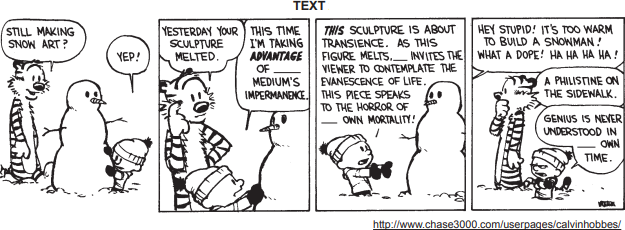
The word “AS” on the third frame conveys the same meaning of
Questão 96 959178
PUC-RS Inverno 2014INSTRUCTION: Answer question with information from text.
TEXT
Candy Crush Saga: ‘70% of the people on the last level haven’t paid anything’
King’s games guru is Tommy Palm, on the game that’s
being played 700m times a day on smartphones and tablets!
Candy Crush Saga has become a craze on Facebook,
iOS and Android alike.
[5] The key stat is right there in the headline: seven in ten
people who’ve reached the last level of wildly-popular
mobile game Candy Crush Saga haven’t spent any money
on in-app purchases.
This may come as a surprise. Hardcore gamers (and a fair
[10] few developers) often attack King’s puzzler as the epitome
of dreadful, money-sucking freemium gaming, exploiting
people too stupid to realise they’re being exploited.
It’s gaming snobbery of the worst kind, and not because
Candy Crush doesn’t sometimes feel over-aggressive
[15] in the way its difficulty curve nudges players towards
in-app purchases – it sometimes does – but because it’s
based on a view of casual gamers as little more than lab
rats, tapping buy-buttons when commanded rather than
seeking “proper” games elsewhere.
[20] As a player, I ducked out of Candy Crush Saga when I hit
my personal ceiling of fun versus payment. As a journalist,
though, I feel like defending the game against its fiercer
critics, who seem to think its players are incapable of
making similar decisions.
http://www.theguardian.com/technology/appsblog/2013/sep/10/ candy-crush-saga-king-interview
The expression “haven’t spent any money” (line 07) can be substituted, without a change in meaning, by
Questão 94 959176
PUC-RS Inverno 2014INSTRUCTION: Answer question with information from text.
TEXT
Candy Crush Saga: ‘70% of the people on the last level haven’t paid anything’
King’s games guru is Tommy Palm, on the game that’s
being played 700m times a day on smartphones and tablets!
Candy Crush Saga has become a craze on Facebook,
iOS and Android alike.
[5] The key stat is right there in the headline: seven in ten
people who’ve reached the last level of wildly-popular
mobile game Candy Crush Saga haven’t spent any money
on in-app purchases.
This may come as a surprise. Hardcore gamers (and a fair
[10] few developers) often attack King’s puzzler as the epitome
of dreadful, money-sucking freemium gaming, exploiting
people too stupid to realise they’re being exploited.
It’s gaming snobbery of the worst kind, and not because
Candy Crush doesn’t sometimes feel over-aggressive
[15] in the way its difficulty curve nudges players towards
in-app purchases – it sometimes does – but because it’s
based on a view of casual gamers as little more than lab
rats, tapping buy-buttons when commanded rather than
seeking “proper” games elsewhere.
[20] As a player, I ducked out of Candy Crush Saga when I hit
my personal ceiling of fun versus payment. As a journalist,
though, I feel like defending the game against its fiercer
critics, who seem to think its players are incapable of
making similar decisions.
http://www.theguardian.com/technology/appsblog/2013/sep/10/ candy-crush-saga-king-interview
A palavra “does” (line 16) é utilizada para
06