


![[Marketing] Questao Topo - deslogado](https://storage.estuda.com.br/banners/0_6b7ebee90b03af1c560c73bb8bcce34a_banner_deslogado_70_dias.png)
Questões de Inglês
19.971 Questões
Questão 41 95034
ESPM 2015/1Air strikes in Iraq
A time to act
by Lexington

OVERCOMING his deep wariness of overseas entanglements, President Barack Obama has authorised American generals to launch air strikes in Iraq against the fanatical jihadists of the Islamic State (IS). The first strike was carried out on August 8th within 12 hours of the president’s announcement, and involved the bombing of a mobile IS artillery piece near Erbil, capital of the autonomous Kurdish region in the country’s north.
Seeking to reassure a war-weary public, the president described two tightly defined missions that would trigger air attacks. First, the president told his public in a late-night address from the White House, warplanes would strike convoys of IS fighters if they threaten either American diplomats and troops stationed in Erbil or Baghdad.
Second, air strikes might be used to break an IS siege of thousands of civilians from the minority Yazidi sect, who have been trapped in mountains near the city of Sinjar without food and water, facing threats of mass slaughter from IS forces waiting below.
American transport planes dropped bundles of food and water onto the Sinjar mountains, with Kurdish peshmerga fighters on a nearby hilltop able to report that most were safely received—though more will doubtless be needed.
Mr Obama cast the operations in glowingly humanitarian terms. America cannot and should not intervene in every crisis around the world, he said. But when America has a mandate, as it does in this case, after being asked for help by the Iraqi government, and when it has “the unique capabilities to help avert a massacre”, then his country could not “turn a blind eye”.
Aug 8th 2014 | www.economist.com
According to the text,
Questão 16 94809
Mackenzie 2015/2GLOBALISATION, HUMANISM, MODERNITY: IN SEARCH OF EQUILIBRIUM
Monica Grigorescu*
Our time has proved to be amazingly effective in gropingly building up
a civilization which it has proved amazingly inept at putting in order.
(André Maliaux)
After so many crises which have followed each other in as many areas, we ought to admit that industrial and technological civilization is creating as many problems as it is capable of resolving. The myth of progress, one of the founding myths of our civilization, also appears to have collapsed as a myth. The development of modern society, spectacular as it is from an economist’s angle of vision, has not been able to society; stop a slide into human and moral underdevelopment. A deterioration of quality in relation to quantity makes only those things that can be actually measured appear to be real; unfortunately, things like poetry, suffering, or love are hardly quantifiable.
Towards the end of his eventful life, Jean Monnet, a remarkable figure of the twentieth century, reasoned that, had he been able to start all over again, he would have begun with culture. A founding father of what was later to become the European Union, he expressed that belated belief in the pre-eminent role of culture as a part of greater civilization after he had tried for several decades to build a prosperous Europe in economic terms in the aftermath of a devastating war.
*Director of the House of Latin America of the Ministry of Foreign Affair of Romania.
Revista Direito Mackenzie
I. Jean Monnet founded the European Union at the end of his life.
II. Today technology isn’t as beneficial as it used to be.
III. Poetry and love have been disregarded lately.
IV. Quantity isn’t as relevant as quality nowadays.
V. Progress has also been threatened by the world crisis.
De acordo com as afirmações a respeito do texto acima, podemos dizer que
Questão 14 94747
Mackenzie 2015/1The Rolling Stones Impose High Ticket Prices for U.S. Tour
“Is that a lot?” says Mick Jagger
By Jerry Hopkins November 15, 1969
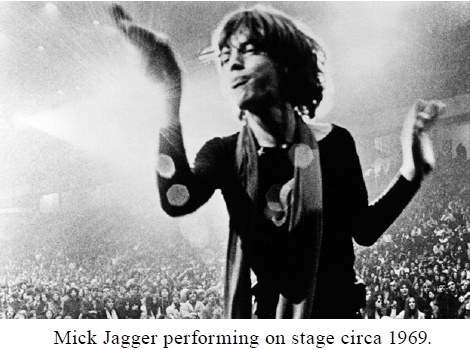
LOS ANGELES—The Rolling Stones have returned to the United States for their first tour in more than three years.
It begins with two evening shows at the Forum in Los Angeles November 8th, with tickets priced from $5.50 to $8.50. (This compares to a $7.50 top price for a Blind Faith concert in the same arena, a $6.50 top for the Doors. And in both those concerts, tickets started at $3.50.) In arranging this show, a previously-set hockey game between the Los Angeles Kings and the New York Rangers was rescheduled – at the request of the man who owns both the Forum and the Kings.
Acts appearing at the concerts here will include Terry Reid, who will appear on all the dates, and the Ike and Tina Turner Revue. Negotiations were continuing to have Ike and Tina, B. B. King and Chuck Berry join the Stones in several other cities.
Promoters of the L.A. concerts said the gross for the evening would exceed $275,000 if the Stones filled the 18,000 seats in the Forum both shows. Similar grosses, on a per show basis, were expected throughout the tour, with the Stones getting guarantees of $25,000 a concert and up, against take home percentages running close to $60,000.
Although figures such as these are not unusual for tours by groups of this magnitude, they did bring strong criticism from, among others, Ralph Gleason in the San Francisco Chronicle.
“Can the Rolling Stones actually need all that money?” Gleason asked. “If they really dig the black musicians as much as every note they play and every syllable they utter indicates, is it possible to take out a show with, say, Ike and Tina and some of the older men like Howlin’ Wolf and let them share in the loot? How much can the Stones take back to Merrie England after taxes, anyway? How much must the British manager and the American manager and the agency rake off the top?”
“Paying five, six and seven dollars for a Stones concert at the Oakland Coliseum for, say, an hour of the Stones seen a quarter of a mile away because the artists demand such outrageous fees that they can only be obtained under these circumstances, says a very bad thing to me about the artists’ attitude towards the public. It says they despise their own audience.”
When Mick Jagger was confronted by this criticism at a press conference at the Beverly Wilshire Hotel, he left the door slightly open to giving a free concert sometime during the 13-city, 18-concert tour, but his tone didn’t seem too promising.
“There has been talk of that,” he said. “I should think toward the end. We’ll have to see how things go. I don’t want to plan that right now, ‘cause we’re gonna be here some while. We’ve got time for all that. I don’t want to say that’s what we want to do or not do. I’m leaving it rather blurry. I’m not committing myself.”
And about the ticket cost, he strongly indicated that if some people thought prices were high, they might have been a lot worse.
“We were offered a lot of money to do some very good dates – money in front in Europe, before we left, really a lot of bread. We didn’t accept because we thought they’d be too expensive on the basis of the money we’d get. We didn’t say that unless we walk out of America with X dollars, we ain’t gonna come. We’re really not into that sort of economic scene. Either you’re gonna sing and all that crap, or you’re gonna be an economist. I really don’t know whether this is more expensive than recent tours by local bands. I don’t know how much people can afford. I’ve no idea. Is that a lot? You’ll have to tell me.”
www.rollingstone.com
The question that the promoters were asked and whose answer can be found in the phrase from $5.50 to $8.50 was probably:
Questão 37 94082
UNIFESP 2015Healthy choices
How do we reduce waistlines in a country where we traditionally do not like telling individuals what to do?
By Telegraph View
22 Aug 2014
Every new piece of information about Britain’s weight problem makes for ever more depressing reading. Duncan Selbie, the Chief Executive of Public Health England, today tells us that by 2034 some six million Britons will suffer from diabetes. Of course, many people develop diabetes through no fault of their own. But Mr Selbie’s research concludes that if the levels of obesity returned to their 1994 levels, 1.7 million fewer people would suffer from the condition.
Given that fighting diabetes already drains the National Health Service (NHS) by more than £1.5 million, or 10 per cent of its budget for England, the impact upon the Treasury in 20 years’ time from unhealthy lifestyles could be catastrophic. Bad health not only impacts on the individual but also on the rest of the community.
Diagnosis of the challenge is straightforward. The tougher question is what to do about reducing waistlines in a country where we traditionally do not like telling individuals what to do.
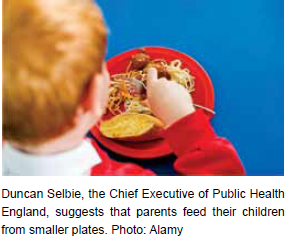
It is interesting to note that Mr Selbie does not ascribe to the Big Brother approach of ceaseless legislation and nannying. Rather, he is keen to promote choices – making the case passionately that people should be encouraged to embrace good health. One of his suggestions is that parents feed their children from smaller plates. That way the child can clear his or her plate, as ordered, without actually consuming too much. Like all good ideas, this is rooted in common sense.
(www.telegraph.co.uk. Adaptado.)
No trecho do segundo parágrafo “Bad health not only impacts on the individual but also on the rest of the community”, a expressão “not only … but also” indica uma ideia de
Questão 36 94081
UNIFESP 2015Healthy choices
How do we reduce waistlines in a country where we traditionally do not like telling individuals what to do?
By Telegraph View
22 Aug 2014
Every new piece of information about Britain’s weight problem makes for ever more depressing reading. Duncan Selbie, the Chief Executive of Public Health England, today tells us that by 2034 some six million Britons will suffer from diabetes. Of course, many people develop diabetes through no fault of their own. But Mr Selbie’s research concludes that if the levels of obesity returned to their 1994 levels, 1.7 million fewer people would suffer from the condition.
Given that fighting diabetes already drains the National Health Service (NHS) by more than £1.5 million, or 10 per cent of its budget for England, the impact upon the Treasury in 20 years’ time from unhealthy lifestyles could be catastrophic. Bad health not only impacts on the individual but also on the rest of the community.
Diagnosis of the challenge is straightforward. The tougher question is what to do about reducing waistlines in a country where we traditionally do not like telling individuals what to do.
It is interesting to note that Mr Selbie does not ascribe to the Big Brother approach of ceaseless legislation and nannying. Rather, he is keen to promote choices – making the case passionately that people should be encouraged to embrace good health. One of his suggestions is that parents feed their children from smaller plates. That way the child can clear his or her plate, as ordered, without actually consuming too much. Like all good ideas, this is rooted in common sense.
(www.telegraph.co.uk. Adaptado.)
No trecho inicial do segundo parágrafo “Given that fighting diabetes already drains the National Health Service”, a expressão em destaque introduz
Questão 34 94079
UNIFESP 2015Healthy choices
How do we reduce waistlines in a country where we traditionally do not like telling individuals what to do?
By Telegraph View
22 Aug 2014
Every new piece of information about Britain’s weight problem makes for ever more depressing reading. Duncan Selbie, the Chief Executive of Public Health England, today tells us that by 2034 some six million Britons will suffer from diabetes. Of course, many people develop diabetes through no fault of their own. But Mr Selbie’s research concludes that if the levels of obesity returned to their 1994 levels, 1.7 million fewer people would suffer from the condition.
Given that fighting diabetes already drains the National Health Service (NHS) by more than £1.5 million, or 10 per cent of its budget for England, the impact upon the Treasury in 20 years’ time from unhealthy lifestyles could be catastrophic. Bad health not only impacts on the individual but also on the rest of the community.
Diagnosis of the challenge is straightforward. The tougher question is what to do about reducing waistlines in a country where we traditionally do not like telling individuals what to do.
It is interesting to note that Mr Selbie does not ascribe to the Big Brother approach of ceaseless legislation and nannying. Rather, he is keen to promote choices – making the case passionately that people should be encouraged to embrace good health. One of his suggestions is that parents feed their children from smaller plates. That way the child can clear his or her plate, as ordered, without actually consuming too much. Like all good ideas, this is rooted in common sense.
(www.telegraph.co.uk. Adaptado.)
The excerpt from the first paragraph “many people develop diabetes through no fault of their own” means that these people
06