


![[Marketing] Questao Topo - deslogado](https://storage.estuda.com.br/banners/0_6b7ebee90b03af1c560c73bb8bcce34a_banner_deslogado_70_dias.png)
Questões de Inglês
19.971 Questões
Questão 5 96138
ESCS 1° Dia 20151 The primary cause for the Arab-Israeli conflict lies in
the claim of two national movements on the same land, and
particularly the Arab refusal to accept Jewish self4
determination to hold part of that land. Furthermore
fundamentalist religious concepts regarding the right of either
side to the entire land have played an increasing role, on the
7 Jewish side particularly in the religious settler movement, on
the Palestinian side in the Hamas and similar groups. But
whereas the settlers received a blow when they failed to
10 prevent the disengagement from the Gaza Strip, Hamas won the
Palestinian elections, and after their breakup with Fatah and
their take-over of the Gaza Strip, they remain a dominant force
13 capable of blocking any peace agreement.
The Arab-Israeli conflict is further complicated by
preconceptions and demonizing of the other by both sides. The
16 Israelis see around them mostly undemocratic Arab states with
underdeveloped economies, backward cultural and social
standards and an aggressive religion inciting to hatred and
19 terrorism. The Arabs consider the Israelis colonial invaders and
conquerors, who are aiming to control the entire Middle East.
Since the Oslo peace process however, a broad
22 consensus has been formed that an independent Palestinian
Arab state should be established within the areas occupied in
1967. Polls on both sides show that majorities among Israelis
25 and Palestinians accept a two-state solution, but Palestinians
almost unanimously stick to the right of return of the refugees
to Israel, and most Israelis oppose a Palestinian capital in East
28 Jerusalem.
Internet: <www.israel-palestina.info> (adapted).
Choose the option which represents the statement supported by the text.
Questão 2 96135
ESCS 1° Dia 20151 Climate change may not be responsible for the recent
skyrocketing cost of natural disasters, but it is very likely that
it will impact future catastrophes. Climate models provide a
4 glimpse of the future, and while they do not agree on all of the
details, most models predict a few general trends. According to
the Intergovernmental Panel on Climate Change, an increase of
7 greenhouse gases in the atmosphere will probably boost
temperatures over most land surfaces, though the exact change
will vary regionally. More uncertain — but possible —
10 outcomes of an increase in global temperatures include
increased risk of drought and increased intensity of storms,
including tropical cyclones with higher wind speeds, a wetter
13 Asian monsoon, and, possibly, more intense mid-latitude
storms.
Internet: <http://earthobservatory.nasa.gov> (adapted).
Based on the text, choose the correct option.
Questão 1 96134
ESCS 1° Dia 20151 Climate change may not be responsible for the recent
skyrocketing cost of natural disasters, but it is very likely that
it will impact future catastrophes. Climate models provide a
4 glimpse of the future, and while they do not agree on all of the
details, most models predict a few general trends. According to
the Intergovernmental Panel on Climate Change, an increase of
7 greenhouse gases in the atmosphere will probably boost
temperatures over most land surfaces, though the exact change
will vary regionally. More uncertain — but possible —
10 outcomes of an increase in global temperatures include
increased risk of drought and increased intensity of storms,
including tropical cyclones with higher wind speeds, a wetter
13 Asian monsoon, and, possibly, more intense mid-latitude
storms.
Internet: <http://earthobservatory.nasa.gov> (adapted).
The passage made it clear that
Questão 48 95121
ESPM 2015/2Egypt’s War on Atheism
By MONA ELTAHAWY
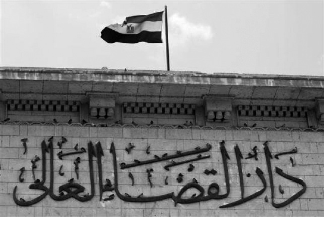
CAIRO — It took one session on Jan. 10 for a court in the Nile Delta province of Beheira to sentence Karim al-Banna, a 21-year-old student, to three years in prison for saying on Facebook that he was an atheist. The student’s lawyer complained that he was denied the right even to present a defense, but an equally chilling aspect of Mr. Banna’s case is that his father testified against him.
Also telling is that Mr. Banna was originally arrested, in November, when he went to the police to complain that his neighbors were harassing him. This was after his name had appeared in a local newspaper on a list of known atheists. Instead of protecting him, the police accused him of insulting Islam.
Such tag teams of family, media and state are not uncommon in cases against atheists. Because atheism itself is not illegal in Egypt, charges are laid under laws against blasphemy or contempt for religion. Similar charges have been used for political purposes against Egypt’s Christian minority.
It is no surprise that Mr. Banna’s conviction occurred on the watch of Abdel Fattah el-Sisi, the former army general who led the ouster of Mohamed Morsi of the Muslim Brotherhood to become president. Regardless of which way the seesaw of power in Egypt tips — toward the Islamists or toward the military — it is always a heterosexual, conservative Muslim man who heads the moral hierarchy. The further from that identity you are, the more vulnerable you are.
Nowhere is this morality power play exercised more vehemently than in curbing perceived religious and sex crimes. Hence Egypt’s witch hunt against gay men. Rights activists say that 2014 was the worst year in a decade for gay people in Egypt, with at least 150 men arrested or put on trial. Same-sex relationships are not illegal, but gay men are targeted under “debauchery” laws.
In a speech this month honoring the Prophet Muhammad’s birthday, Mr. Sisi called on Muslim leaders in Egypt to start a “religious revolution” to counter the jihadist message of the Islamic State. He also sent his foreign minister to the solidarity march after the attacks in Paris at the office of the magazine Charlie Hebdo and a kosher supermarket.
The contradiction in Mr. Sisi’s aim of keeping the heterosexual, conservative Muslim man at the top of Egypt’s moral hierarchy is glaring. You can’t trump the Islamists in their piety and lead a campaign against minorities like atheists and gay men even as you condemn extremist violence and show solidarity for free speech and free thinking.
Despite the clampdown, atheists are openly challenging such hypocrisy. Social media has allowed those who “deviate” from the authoritarian template to find one another and express themselves in ways that the regime, its men of religion and its media otherwise deny them.
(adapted from nytimes.com, January 27th , 2015 )
The syntactic subject of the sentence “Nowhere is this morality power play exercised more vehemently than in curbing perceived religious and sex crimes” is:
Questão 46 95119
ESPM 2015/2Egypt’s War on Atheism
By MONA ELTAHAWY
CAIRO — It took one session on Jan. 10 for a court in the Nile Delta province of Beheira to sentence Karim al-Banna, a 21-year-old student, to three years in prison for saying on Facebook that he was an atheist. The student’s lawyer complained that he was denied the right even to present a defense, but an equally chilling aspect of Mr. Banna’s case is that his father testified against him.
Also telling is that Mr. Banna was originally arrested, in November, when he went to the police to complain that his neighbors were harassing him. This was after his name had appeared in a local newspaper on a list of known atheists. Instead of protecting him, the police accused him of insulting Islam.
Such tag teams of family, media and state are not uncommon in cases against atheists. Because atheism itself is not illegal in Egypt, charges are laid under laws against blasphemy or contempt for religion. Similar charges have been used for political purposes against Egypt’s Christian minority.
It is no surprise that Mr. Banna’s conviction occurred on the watch of Abdel Fattah el-Sisi, the former army general who led the ouster of Mohamed Morsi of the Muslim Brotherhood to become president. Regardless of which way the seesaw of power in Egypt tips — toward the Islamists or toward the military — it is always a heterosexual, conservative Muslim man who heads the moral hierarchy. The further from that identity you are, the more vulnerable you are.
Nowhere is this morality power play exercised more vehemently than in curbing perceived religious and sex crimes. Hence Egypt’s witch hunt against gay men. Rights activists say that 2014 was the worst year in a decade for gay people in Egypt, with at least 150 men arrested or put on trial. Same-sex relationships are not illegal, but gay men are targeted under “debauchery” laws.
In a speech this month honoring the Prophet Muhammad’s birthday, Mr. Sisi called on Muslim leaders in Egypt to start a “religious revolution” to counter the jihadist message of the Islamic State. He also sent his foreign minister to the solidarity march after the attacks in Paris at the office of the magazine Charlie Hebdo and a kosher supermarket.
The contradiction in Mr. Sisi’s aim of keeping the heterosexual, conservative Muslim man at the top of Egypt’s moral hierarchy is glaring. You can’t trump the Islamists in their piety and lead a campaign against minorities like atheists and gay men even as you condemn extremist violence and show solidarity for free speech and free thinking.
Despite the clampdown, atheists are openly challenging such hypocrisy. Social media has allowed those who “deviate” from the authoritarian template to find one another and express themselves in ways that the regime, its men of religion and its media otherwise deny them.
(adapted from nytimes.com, January 27th , 2015 )
According to the text:
Questão 45 95118
ESPM 2015/2Egypt’s War on Atheism
By MONA ELTAHAWY
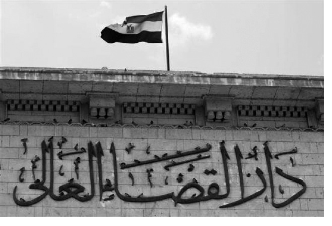
CAIRO — It took one session on Jan. 10 for a court in the Nile Delta province of Beheira to sentence Karim al-Banna, a 21-year-old student, to three years in prison for saying on Facebook that he was an atheist. The student’s lawyer complained that he was denied the right even to present a defense, but an equally chilling aspect of Mr. Banna’s case is that his father testified against him.
Also telling is that Mr. Banna was originally arrested, in November, when he went to the police to complain that his neighbors were harassing him. This was after his name had appeared in a local newspaper on a list of known atheists. Instead of protecting him, the police accused him of insulting Islam.
Such tag teams of family, media and state are not uncommon in cases against atheists. Because atheism itself is not illegal in Egypt, charges are laid under laws against blasphemy or contempt for religion. Similar charges have been used for political purposes against Egypt’s Christian minority.
It is no surprise that Mr. Banna’s conviction occurred on the watch of Abdel Fattah el-Sisi, the former army general who led the ouster of Mohamed Morsi of the Muslim Brotherhood to become president. Regardless of which way the seesaw of power in Egypt tips — toward the Islamists or toward the military — it is always a heterosexual, conservative Muslim man who heads the moral hierarchy. The further from that identity you are, the more vulnerable you are.
Nowhere is this morality power play exercised more vehemently than in curbing perceived religious and sex crimes. Hence Egypt’s witch hunt against gay men. Rights activists say that 2014 was the worst year in a decade for gay people in Egypt, with at least 150 men arrested or put on trial. Same-sex relationships are not illegal, but gay men are targeted under “debauchery” laws.
In a speech this month honoring the Prophet Muhammad’s birthday, Mr. Sisi called on Muslim leaders in Egypt to start a “religious revolution” to counter the jihadist message of the Islamic State. He also sent his foreign minister to the solidarity march after the attacks in Paris at the office of the magazine Charlie Hebdo and a kosher supermarket.
The contradiction in Mr. Sisi’s aim of keeping the heterosexual, conservative Muslim man at the top of Egypt’s moral hierarchy is glaring. You can’t trump the Islamists in their piety and lead a campaign against minorities like atheists and gay men even as you condemn extremist violence and show solidarity for free speech and free thinking.
Despite the clampdown, atheists are openly challenging such hypocrisy. Social media has allowed those who “deviate” from the authoritarian template to find one another and express themselves in ways that the regime, its men of religion and its media otherwise deny them.
(adapted from nytimes.com, January 27th , 2015 )
According to the text:
06