


![[Marketing] Questao Topo - deslogado](https://storage.estuda.com.br/banners/0_6b7ebee90b03af1c560c73bb8bcce34a_banner_deslogado_70_dias.png)
Questões de Inglês
19.971 Questões
Questão 11 99066
FCM PB Medicina 2015/1Text I
When 25-year old Fatuma was raped just a few doors away from her own home in Khayelitsha, South Africa, she knew exactly what to do afterwards. “I was in shock and I felt as though my life was ruined forever. But something in me must have wanted to survive because I knew I mustn’t wash and that I had to get to a clinic within 72 hours to get medicines to protect me from HIV. I had heard it on the radio and read the leaflets.”
This vital information came from the Khayelitsha Thuthuzela Forensic Centre, a “one-stop shop” for survivors of rape that is a beacon of hope in an area of South Africa that has a very high rate of sexual violence. People are advised to go straight to the centre if they are sexually assaulted, to receive emergency HIV prevention medication - a 28-day course of antiretrovirals, known as “PEP”. Once there, they are also offered advice and support on preventing other sexually transmitted diseases, as well avoiding unwanted pregnancies. They are given psychological support and, if they want it, help to seek justice. “Because South Africa has such a high prevalence of HIV, survivors of sexual assault are increasingly aware that it is essential to receive HIV prevention medication quickly. When it is taken properly, within 72 hours of a person being exposed to the virus, PEP can reduce the risk of infection by 80%.” says Dr. Genine Josias, the centre’s medical coordinator.
The need in South Africa for PEP, which stands for post-exposure prophylaxis, cannot be underestimated. Globally, the country has the largest number of people living with HIV. This, combined with high rates of sexual violence, means sizeable numbers of people are at risk of being infected with the virus. PEP has been available in South Africa since the 1990s. Understanding of how effective it can be has been growing both amongst health providers and people who may need it. However, as in other countries, compliance with the PEP drug regimen is a challenge. “Recent evidence shows that globally only around 40% of victims of sexual assault who begin PEP complete the course properly,” said Dr Nathan Ford from WHO’s department of HIV/AIDS. “This is partly due to the complexity of prescribing PEP and also to the side effects of some of the drugs used,” he added. Dr Josias, however, believes that another reason for many survivors of sexual assault not completing their course of PEP is because they underestimate the risk of their being infected with HIV. “Victims often know their attacker and think they also know their HIV status. But they may well be wrong,” Dr Josias explained. As such, raising awareness in the community is a critical part of the work of the Khayelitsha Thuthuzela Forensic Centre and the other Thuthuzela Centres doing similar work in different parts of the country. “There are always more people who need to be educated, new children growing up. We disseminate information in every way we can, from newspaper adverts through to puppeteering and workshops.”
Source: World Health Organization (Adapted from http://www.who.int/features/2014/, November 2014)
What is the best title for the text?
Questão 13 98958
FCM PB Medicina 2015/2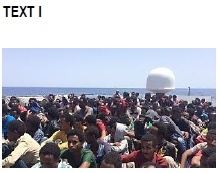
An Italian Navy ship on Wednesday rescued 290 desperate Eritrean migrants from a rickety boat on the Mediterranean, as they attempted to reach safer shores in Europe. CNN's Christiane Amanpour was onboard the frigate as it conducted the operation, just one of several carried out by the Navy today. "It is people taking their lives in their hands, getting on these boats," Amanpour told. "They've either been peddled a bunch of lies from the human traffickers, who advertise that this is a comfortable and reliable trip from Libyan ports across the Mediterranean, when of course it isn't, or they just basically say to themselves as the gentleman told me, you know, 'I would rather risk this than death at home."
More than 35,000 migrants have arrived in Italy via the Mediterranean this year alone, and the numbers continue to climb, says the International Organization for Migration. Most are Eritrean, but they come from all over Africa and Syria. At least 1,826 migrants have died in the Mediterranean so far this year, many times more than had perished during the same period last year. "We did see one of those who tried to get across to safety in this small, rickety boat was dead on arrival," Amanpour reported. "And three others were taken to the helicopter on the island of Lampedusa. So they were given emergency care there. The rest will be staying on board until they can be offloaded at Lampedusa, or somewhere else, and then processed on land."
Europe has come under severe criticism for not taking the humanitarian crisis more seriously. After a series of disasters last month, the EU has stepped up funding. But critics still say that countries are approaching the problem too militaristically; the EU on Monday agreed to set up a naval mission to go after the gangs that facilitate the perilous crossing. Italy has borne the brunt of the rescue mission as Europe struggle to deal with an influx of refugees and migrants braving unimaginable conditions at sea.
"It's an extraordinarily complex process. It takes quite a long time to rescue boat of 300 people. They have to make sure that there's nothing hostile on board. Then all the naval personnel suit up in white hazardous material suits with masks and gloves -- we all had to do the same thing -- in order to make sure that you don't get contaminated by any potential disease, any illness. The weather is good today, and that attracted some of these migrants. It may not get so good tomorrow, and people are quite concerned that migrants might set off from Libya, and then find themselves in very hostile, unfriendly, and swelling seas in these terrible boats."
(Adapted from: http://edition.cnn.com/2015/05/20/world/)
What is the best title for the text?
Questão 11 98956
FCM PB Medicina 2015/2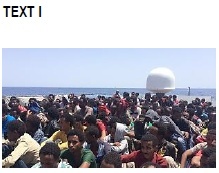
An Italian Navy ship on Wednesday rescued 290 desperate Eritrean migrants from a rickety boat on the Mediterranean, as they attempted to reach safer shores in Europe. CNN's Christiane Amanpour was onboard the frigate as it conducted the operation, just one of several carried out by the Navy today. "It is people taking their lives in their hands, getting on these boats," Amanpour told. "They've either been peddled a bunch of lies from the human traffickers, who advertise that this is a comfortable and reliable trip from Libyan ports across the Mediterranean, when of course it isn't, or they just basically say to themselves as the gentleman told me, you know, 'I would rather risk this than death at home."
More than 35,000 migrants have arrived in Italy via the Mediterranean this year alone, and the numbers continue to climb, says the International Organization for Migration. Most are Eritrean, but they come from all over Africa and Syria. At least 1,826 migrants have died in the Mediterranean so far this year, many times more than had perished during the same period last year. "We did see one of those who tried to get across to safety in this small, rickety boat was dead on arrival," Amanpour reported. "And three others were taken to the helicopter on the island of Lampedusa. So they were given emergency care there. The rest will be staying on board until they can be offloaded at Lampedusa, or somewhere else, and then processed on land."
Europe has come under severe criticism for not taking the humanitarian crisis more seriously. After a series of disasters last month, the EU has stepped up funding. But critics still say that countries are approaching the problem too militaristically; the EU on Monday agreed to set up a naval mission to go after the gangs that facilitate the perilous crossing. Italy has borne the brunt of the rescue mission as Europe struggle to deal with an influx of refugees and migrants braving unimaginable conditions at sea.
"It's an extraordinarily complex process. It takes quite a long time to rescue boat of 300 people. They have to make sure that there's nothing hostile on board. Then all the naval personnel suit up in white hazardous material suits with masks and gloves -- we all had to do the same thing -- in order to make sure that you don't get contaminated by any potential disease, any illness. The weather is good today, and that attracted some of these migrants. It may not get so good tomorrow, and people are quite concerned that migrants might set off from Libya, and then find themselves in very hostile, unfriendly, and swelling seas in these terrible boats."
(Adapted from: http://edition.cnn.com/2015/05/20/world/)
Which of the following is NOT mentioned in the text?
Questão 60 98395
IMEPAC Medicina 2015/1DRUG & REFERENCE INFORMATION
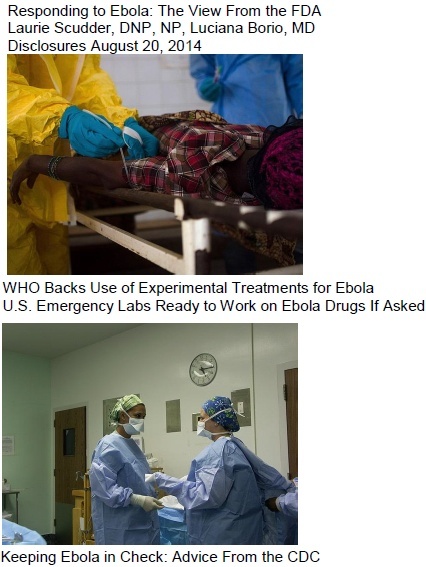
Editor's Note: The issue of compassionate use of unapproved therapies has been brought to the attention of all healthcare providers recently after the decision to treat 2 Americans infected with the Ebola virus with an experimental serum never before used in humans. With the Ebola epidemic deemed to be out of control by the World Health Organization (WHO), the need for effective treatments has researchers and regulators scrambling to find, test, and potentially approve previously untested therapies.
In a press release in August, WHO discussed the ethics of using Ebola drugs that have never been cleared for human use, wary of a long history of medicines being tested on people who were never properly informed of the risks. In the countries hardest hit by Ebola, suspicion of foreign medical workers is already widespread.
Medscape spoke with Luciana Borio, MD, at the US Food and Drug Administration (FDA) about the issue of compassionate use and their efforts to respond to this crisis. Dr. Borio serves as the Acting Deputy Chief Scientist and Assistant Commissioner for Counterterrorism Policy in the Office of Counterterrorism and Emerging Threats at the FDA. In this capacity, Dr. Borio is responsible for providing leadership, coordination, and oversight for FDA's national and global health security, counterterrorism, and emerging threat portfolios.
She serves as FDA's point of entry on policy and planning matters concerning counterterrorism and emerging threats, and collaborates across the US government and internationally on actions to advance global health security and US national security.
Medscape: Can you define "compassionate use" as a regulatory and legal concept?
Luciana Borio, MD: I'd like to begin by taking a step back. Ultimately, the goal for the FDA is to have products that are approved, licensed, or cleared to prevent or treat diseases. However, during a public health emergency, such as the one we are currently facing with Ebola, we don't always have these approved products available, and the best way for us to meet patients' needs might be the use of an unapproved product.
FDA has mechanisms that we can use to facilitate patient access to investigational products; one of these is the Emergency Investigational New Drug (IND) application, often referred to as "compassionate use." It is one of a number of mechanisms under our expanded access program.
Through this emergency IND mechanism, we can allow the use of an investigational product outside of a clinical trial being conducted to develop the product toward approval, in order to treat a patient with a serious or immediately life-threatening disease when the patient has no comparable or satisfactory alternative treatment option.
To evaluate a request for an emergency IND, we have to assess whether the benefits outweigh the risks on the basis of the best available scientific evidence that we have because, clearly, the data package at this point is often quite incomplete. The product may be effective or may not, and we also may see sometimes unexpected serious side effects. Sometimes we don't know exactly what is the most appropriate dose, for example, to give to a sick patient. We have only incomplete information about the use of these products, but we do the best we can to conduct a proper benefit/risk assessment with the available scientific data.
Under this mechanism, it is usually the patient's clinician who contacts the FDA requesting the emergency IND or compassionate use exemption. If, after an evaluation of the application, FDA believes the use is appropriate, the doctor will then make arrangements directly with the product developer to obtain the product. The manufacturer may or may not be willing to make the product available outside of the clinical trial, and FDA cannot compel the company to do so. So when the company provides expanded access to its product, it is doing so voluntarily.
http://www.medscape.com/viewarticle/829611 (Accessed on August 25th, 2014, edited)
The word coordination, found in the text, is formed by the word coordinate and the suffix tion, which transforms the verb into a noun. Many words in English are formed from a word to which a prefix or a suffix is added.
Mark the alternative that DOES NOT constitute a word formed in this way:
Questão 58 98393
IMEPAC Medicina 2015/1DRUG & REFERENCE INFORMATION
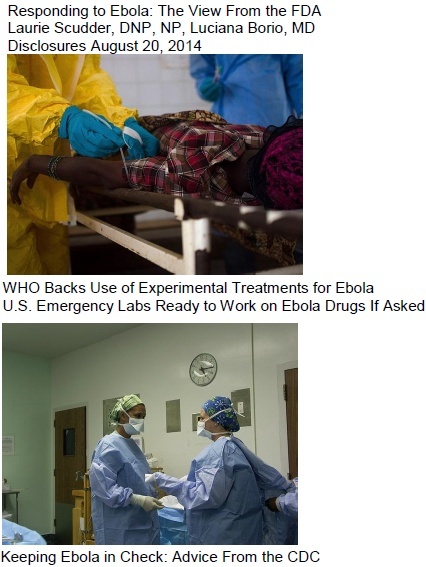
Editor's Note: The issue of compassionate use of unapproved therapies has been brought to the attention of all healthcare providers recently after the decision to treat 2 Americans infected with the Ebola virus with an experimental serum never before used in humans. With the Ebola epidemic deemed to be out of control by the World Health Organization (WHO), the need for effective treatments has researchers and regulators scrambling to find, test, and potentially approve previously untested therapies.
In a press release in August, WHO discussed the ethics of using Ebola drugs that have never been cleared for human use, wary of a long history of medicines being tested on people who were never properly informed of the risks. In the countries hardest hit by Ebola, suspicion of foreign medical workers is already widespread.
Medscape spoke with Luciana Borio, MD, at the US Food and Drug Administration (FDA) about the issue of compassionate use and their efforts to respond to this crisis. Dr. Borio serves as the Acting Deputy Chief Scientist and Assistant Commissioner for Counterterrorism Policy in the Office of Counterterrorism and Emerging Threats at the FDA. In this capacity, Dr. Borio is responsible for providing leadership, coordination, and oversight for FDA's national and global health security, counterterrorism, and emerging threat portfolios.
She serves as FDA's point of entry on policy and planning matters concerning counterterrorism and emerging threats, and collaborates across the US government and internationally on actions to advance global health security and US national security.
Medscape: Can you define "compassionate use" as a regulatory and legal concept?
Luciana Borio, MD: I'd like to begin by taking a step back. Ultimately, the goal for the FDA is to have products that are approved, licensed, or cleared to prevent or treat diseases. However, during a public health emergency, such as the one we are currently facing with Ebola, we don't always have these approved products available, and the best way for us to meet patients' needs might be the use of an unapproved product.
FDA has mechanisms that we can use to facilitate patient access to investigational products; one of these is the Emergency Investigational New Drug (IND) application, often referred to as "compassionate use." It is one of a number of mechanisms under our expanded access program.
Through this emergency IND mechanism, we can allow the use of an investigational product outside of a clinical trial being conducted to develop the product toward approval, in order to treat a patient with a serious or immediately life-threatening disease when the patient has no comparable or satisfactory alternative treatment option.
To evaluate a request for an emergency IND, we have to assess whether the benefits outweigh the risks on the basis of the best available scientific evidence that we have because, clearly, the data package at this point is often quite incomplete. The product may be effective or may not, and we also may see sometimes unexpected serious side effects. Sometimes we don't know exactly what is the most appropriate dose, for example, to give to a sick patient. We have only incomplete information about the use of these products, but we do the best we can to conduct a proper benefit/risk assessment with the available scientific data.
Under this mechanism, it is usually the patient's clinician who contacts the FDA requesting the emergency IND or compassionate use exemption. If, after an evaluation of the application, FDA believes the use is appropriate, the doctor will then make arrangements directly with the product developer to obtain the product. The manufacturer may or may not be willing to make the product available outside of the clinical trial, and FDA cannot compel the company to do so. So when the company provides expanded access to its product, it is doing so voluntarily.
http://www.medscape.com/viewarticle/829611 (Accessed on August 25th, 2014, edited)
One of the concerns of the World Health Organization is
Questão 7 97226
Unioeste 2° Dia 2015Seven portions of fruit and vegetables are better for you
For many years, the nutrition message has been "five a day" – the recommendation that five portions of fruit and vegetables are enough to keep disease at bay and help us to live longer. That advice has been revised upwards. A new study suggests that people who get seven or more portions a day are healthier. Researchers from University College London studied the dietary habits of 65,000 adults over a seven-year period. They concluded that: "A robust inverse association exists between fruit and vegetable consumption and mortality, with benefits seen in up to 7-plus portions daily." In other words, if you eat more fruit and vegetables, chances are you live longer. The researchers put people into five different groups, depending on how much fruit and veg they ate. They found that those who ate seven or more portions a day had a 42 percent lower risk of death than those who ate just one portion. They recommended that schools serve healthier meals and that supermarkets put more emphasis on prominently displaying cheaper produce. They warned that frozen and canned fruit was linked to higher mortality rates. Some experts say the findings of the study should be taken with a pinch of salt. One dietician said the findings ignored the fact that people who eat more fruit and veg are generally wealthier and thus lead lifestyles that will help them live longer anyway.
Adapted from: http://www.breakingnewsenglish.com/1404/140403-fruit-and-vegetables.html
Na frase “They found that those who ate seven or more portions a day…”, o pronome “they” refere-se a:
06