


![[Marketing] Questao Topo - deslogado](https://storage.estuda.com.br/banners/0_6b7ebee90b03af1c560c73bb8bcce34a_banner_deslogado_70_dias.png)
Questões de Inglês
19.971 Questões
Questão 17 123988
UPF Inverno 2015It\\'s not time to make a change
Just relax, take it easy
You\\'re still young, that\\'s your fault
There\\'s so much you have to know
Find a girl, settle down
If you want, you can marry
Look at me
I am old, but I\\'m happy
I was once like you are now
And I know that it\\'s not easy
To be calm when you\\'ve found
Something going on
But take your time, think a lot
Why, think of everything you\\'ve got
For you will still be here tomorrow
But your dreams may not
[…]
By Cat Stevens
(Retrieved and adapted from. http://www.songtexte.com/songtext/catstevens/ father-and-son-1bda7968.html. Access on April, 8th, 2015)
According to the main idea of the song, it is possible to assume:
Questão 68 112501
UFRR Módulo 3 2015
There are numbers of standard expressions that take the verbs \'do\' and \'make\'. Choose the right answer that best suits these following expressions.
I. ____ your hair.
II. _____ believe.
III. _____ time.
IV. _____ a phone call.
V. ____ good.
Questão 42 111015
UEMA PAES 2015
In the English language the‘s has different grammatical uses. Choose the alternative in which the‘s is being used in the text sentence: Who’s got my beach ball?
Questão 21 107732
ACAFE Medicina 2015/1Brazil cotton deal perpetuates an unhealthy status quo of subsidies
Published by The Washington Post (The text below has been slightly modified to better suit the exam)
1. When is a victory for the United States not a victory
for the American taxpayer? When it’s an international
agreement like the one the Obama administration has
just reached to settle a long-running dispute with
Brazil over cotton subsidies. The roots of that dispute
lie in this country’s history of showering federal funds
on crop producers, including cotton growers. That
particular business received $32.9 billion from
Washington between 1995 and 2012, according to
the Environmental Working Group, largely through
programs that had the effect of rewarding farmers for
increasing production. The extra supply dampened
prices on the world market, so, in 2002, Brazil
complained to the World Trade Organization, which
ruled that US cotton subsidies were indeed
“trade-distorting” and authorized Brazil to retaliate
against US exports. The United States avoided
sanctions — not by reforming its programs but by
agreeing in 2010 to pay Brazil’s cotton farmers
$147.3 million per year.
2. In short, the US government bought off Brazil’s
cotton farmers so that it could keep on buying off its
own. Under the new settlement, announced
Wednesday, Brazil agreed to drop its case at the
WTO and to forgo any new ones during the five-year
term of the farm bill Congress enacted last year. In
return, the United States agreed to trim the modest
US cotton export credit subsidy program and, most
important, to pay Brazil one last dollop of taxpayer
cash, in the amount of $300 million.
3. This is good news to the extent that it fortifies
US-Brazil relations on the eve of a new presidential
term in that country and that it spares US exporters
from the threat of Brazilian retaliation, which could
have reached a total of $829 million per year. Yet, in
essence, the new deal perpetuates the unhealthy
status quo whereby the United States pays Brazil
____ the right ____ continue propping _____ a
domestic cotton industry that can ____ should learn
to compete ____ its own.
Choose the correct alternative below with the past participle forms of the verbs “lie” (first paragraph), “keep” (second paragraph) and “forgo” (second paragraph).
Questão 17 107728
ACAFE Medicina 2015/1Brazil cotton deal perpetuates an unhealthy status quo of subsidies
Published by The Washington Post (The text below has been slightly modified to better suit the exam)
1. When is a victory for the United States not a victory
for the American taxpayer? When it’s an international
agreement like the one the Obama administration has
just reached to settle a long-running dispute with
Brazil over cotton subsidies. The roots of that dispute
lie in this country’s history of showering federal funds
on crop producers, including cotton growers. That
particular business received $32.9 billion from
Washington between 1995 and 2012, according to
the Environmental Working Group, largely through
programs that had the effect of rewarding farmers for
increasing production. The extra supply dampened
prices on the world market, so, in 2002, Brazil
complained to the World Trade Organization, which
ruled that US cotton subsidies were indeed
“trade-distorting” and authorized Brazil to retaliate
against US exports. The United States avoided
sanctions — not by reforming its programs but by
agreeing in 2010 to pay Brazil’s cotton farmers
$147.3 million per year.
2. In short, the US government bought off Brazil’s
cotton farmers so that it could keep on buying off its
own. Under the new settlement, announced
Wednesday, Brazil agreed to drop its case at the
WTO and to forgo any new ones during the five-year
term of the farm bill Congress enacted last year. In
return, the United States agreed to trim the modest
US cotton export credit subsidy program and, most
important, to pay Brazil one last dollop of taxpayer
cash, in the amount of $300 million.
3. This is good news to the extent that it fortifies
US-Brazil relations on the eve of a new presidential
term in that country and that it spares US exporters
from the threat of Brazilian retaliation, which could
have reached a total of $829 million per year. Yet, in
essence, the new deal perpetuates the unhealthy
status quo whereby the United States pays Brazil
____ the right ____ continue propping _____ a
domestic cotton industry that can ____ should learn
to compete ____ its own.
Based on the information given in the text, who did the US government buy off?
Questão 60 107692
FACERES Medicina 2015/2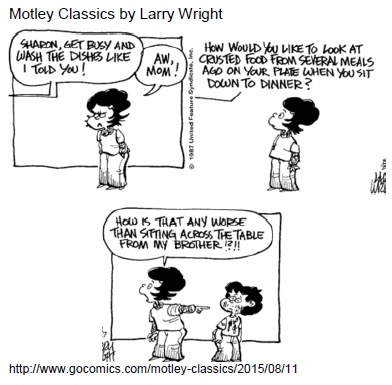
The expression “How would you like” in “How would you like to look at crusted food from several meals ago on your plate when you seat down to dinner” is used:
06