


![[Marketing] Questao Topo - deslogado](https://storage.estuda.com.br/banners/0_6b7ebee90b03af1c560c73bb8bcce34a_banner_deslogado_70_dias.png)
Questões de Inglês
19.971 Questões
Questão 22 147301
UNEB Medicina 2015/1Education is self empowerment
Education, if looked at beyond its conventional boundaries, forms the very essence of all our actions.What we do is what we know and have learned, either through instructions or through observation and
5 assimilation. Receiving a good education helps empower you, thus making you strong enough to look after yourself in any given situation. It keeps you aware of your given surrounding as well as the rules and regulations of the
10 society you’re living in. It’s only through knowledge that you can be able to question authority for its negligence or discrepancies. It is only then that you can avail your rights as a citizen and seek improvement in the structural functioning of governance and economy. It’s only when
15 a citizen is aware about the policies of its government can he be able to support or protest the change. As a whole, people can bring about development only when they know where improvement is necessary for the greater good of mankind. Education helps you
20 understand yourself better, it helps you realize your poten.tial and qualities as a human being. It helps you to tap into latent talent, so that you may be able to sharpen your skills.
EDUCATION is self empowerment. Disponível em: <http://www.hamariweb.com/ articles/article.aspx?id=37692>. Acesso em: 15 nov. 2014.
Fill in the parentheses with T (True) or F (False).
It’s stated in the text:
( ) As far as education is concerned, learning is what really counts, no matter how you gain knowledge.
( ) Educated people have a critical view of their environment and are, therefore, better able to fight for their rights.
( ) Education is a powerful tool for uncovering people’s hidden talents.
( ) People should be discouraged to achieve success and popularity through education.
The correct sequence, from top to bottom, is
Questão 38 142221
UPE 2° Fase / 1° Dia SSA 2015
The next time the clerk at your favorite grocery store asks whether you prefer “paper or plastic” for your purchases, consider giving the truly eco-friendly response and saying, “neither.”
Plastic bags end up as litter that fouls the landscape, and kill thousands of marine mammals every year that mistake the floating bags for food. Plastic bags that get buried in landfills may take up to 1,000 years to break down, and in the process they separate into smaller and smaller toxic particles that contaminate soil and water. Furthermore, the production of plastic bags consume millions of gallons of oil that could be used for fuel and heating.
Paper bags, which many people consider a better alternative to plastic bags, carry their own set of environmental problems. For example, according to the American Forest and Paper Association, in 1999 the U.S. alone used 10 billion paper grocery bags, which adds up to a lot of trees.
But if you decline paper and plastic bags, then how do you get your groceries home? The answer, according to many environmentalists, is high-quality reusable shopping bags made of materials that don’t harm the environment during production and don’t need to be discarded after each use.
Experts estimate that 500 billion to 1 trillion plastic bags are consumed and discarded annually worldwide — more than a million per minute.
Disponível em: http://environment.about.com/od/recycling/a/reusablebags.htm. Adaptado.
Considerando a gramática e o contexto, analise as alternativas a seguir e assinale a CORRETA.
Questão 29 142011
UPE 3° Fase / 1° Dia SSA 2015
The Vestibular (from Portuguese: vestíbulo, "entrance hall") is a competitive examination and is the primary and widespread entrance system used by Brazilian universities to select their students. The Vestibular usually takes place from November to January, right before the start of school year in February or March, although certain universities hold it every semester. The exams often span several days, usually three, with different disciplines being tested each day. Origin
The Vestibular was implanted primarily as a way to prevent nepotism or some other form of unfair or beneficial selection of candidates. It was considered by law the only authorized selection method until 1996, when the new Education Law was passed.
Criticism
While the Vestibular is generally considered to be a fair and unbiased system to select students, there are controversies.
There is some criticism to the alleged standardization of the high school curriculum for the whole country to match the Vestibular agenda. As most types of academic evaluation, the vestibular suffers from the same limitations as a regular test; that is, factors such as stress come into play. It also seems to favor candidates that come from a wealthier background, who had access to better and deeper education in private schools, as opposed to the comparatively poor public high school educational system, although many university boards claim that it doesn\\'t matter which background the candidates have, since their Vestibular aims to select the best students based solely on their knowledge. To ease this problem, some universities such as the Federal University of Minas Gerais, provide a 10– 15% bonus for students who received their middle and high education in public schools. There is also the alternative of taking classes at cram schools called cursinhos. Those are revisions of Vestibular subjects, given through periods of 9 months (the regular year-long one), 6 months (the semi-intensive one), and 3 months (known as intensive). These "cursinhos" are given usually for the most prestigious schools and can be done after concluding high school or as a complement of the last year of it.
(Disponível em: http://en.wikipedia.org/wiki/Vestibular)
The word “their” (first paragraph) is
Questão 36 141737
UPE 1° Fase / 1° Dia SSA 2015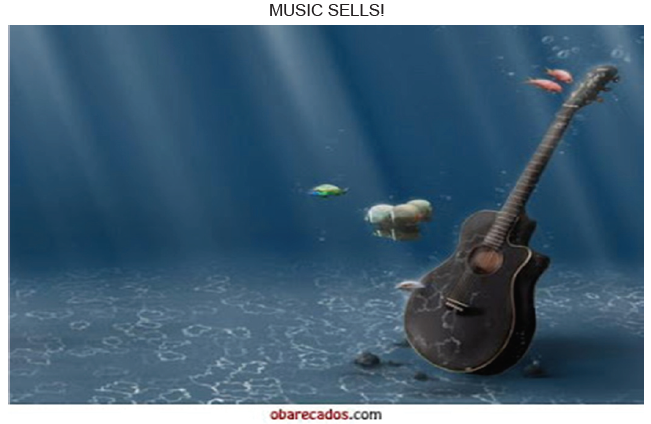
Levi’s jeans launched a new advertising campaign in Europe. Like most ads, these used music.
And what did the advertising agency choose? Handel’s “Sarabande in D minor”.
Most bands and groups are really happy to record music for ads. People associate their name with specific products — cellphones, jeans, and so on. This helps them to become famous. It also makes it easier to sell their other things – CDs and tickets for their concerts. Of course, they prefer to provide music for “cool” products. And there can be ethical problems. Will a vegetarian group provide music for a hamburger ad?
Words or emotions?
In the past, most ads used “jingles” — special words and music written about the product. But now these soundtracks are more like movie music. They express a mood, which reinforces the visual message. Often, people remember the music, and want to know who performed it — and wrote it. Then the sales of other music by the same composer usually increase dramatically. Movie music – the new classics?
The sales of movie music can be enormous. Soundtracks like “Gladiator”, “Apocalypse Now” and “Titanic” are really popular. And their success can be worldwide, too, just like the movies. “Gladiator” sold more than a million copies.
For more composers, writing movie soundtracks compensates for the difficulty of making money from their “serious” work. But what’s the difference? Pop music, dance music, classical… Perhaps it’s just music.
HOLDEN, Susan. Macmillan Portfolio / Susan Holden. São Paulo: Macmillan, 2004. Adaptado.
De acordo com o texto,
I. muitas músicas usadas como trilha em comerciais surtem um efeito positivo para seus compositores, já que lhes dão um bom retorno financeiro, algo mais difícil de conseguir-se com seu trabalho de músico feito à parte.
II. os comerciais que usam trilha sonora como música de cinema, em vez de jingles, ajudam a popularizar seus compositores que passam a vender mais discos, entradas para shows, pois as pessoas ficam interessadas em conhecer outras composições de sua autoria.
III. os compositores de música para comerciais de rádio e TV enfrentam constantemente problemas legais com esse tipo de produção, pois compor músicas para peças publicitárias implica, também, sérios problemas éticos.
IV. as músicas feitas para comerciais são, de um modo geral, sucessos passageiros, que proporcionam aos compositores apenas um retorno financeiro temporário e, portanto, não lhes interessa como fonte de trabalho e renda.
V. antigamente, as músicas produzidas especialmente para comerciais de TV e rádio — os jingles — eram vendidas posteriormente, em discos de vinil ou CDs, pois tornavam-se inesquecíveis pelo público consumidor dos produtos por elas divulgados.
Estão CORRETOS os itens
Questão 33 141733
UPE 1° Fase / 1° Dia SSA 2015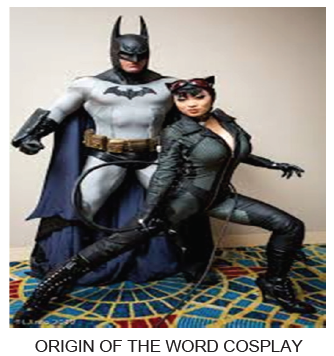
Cosplay, or costume play, is a popular trend where people dressing up mimicking fictional characters from anime, manga (comics), video games and movies etc.
Japan is generally credited as the origin of cosplay, but there are no actual facts of when the cosplay culture started. The credit for coining the word ‘cosplay’ seems more apparent though… although there are a few versions on how it was created, the credit goes to Nobuyuki Takahashi when he first used the word in some Japanese magazines in 1983/1984.
“Akibanana” has some scanned image of the My Anime magazine released in June 1983, which is said to be where the word first appeared, written in Japanese – コスプレ (kosupure)…
Disponível em: http://yeinjee.com/origin-of-the-word-cosplay
According to the text, the word “cosplay”
I. is originated from Japan.
II. is a popular trend.
III. means “costume play” for short.
IV. was coined by Nobuyuki Takahashi.
V. appeared in 1983/1984.
The CORRECT alternative is
Questão 21 137279
ACAFE Demais Cursos 2015/1Brazil cotton deal perpetuates an unhealthy status quo of subsidies
Published by The Washington Post (The text below has been slightly modified to better suit the exam)
1. When is a victory for the United States not a victory for the American taxpayer? When it’s an international agreement like the one the Obama administration has just reached to settle a long-running dispute with Brazil over cotton subsidies. The roots of that dispute lie in this country’s history of showering federal funds on crop producers, including cotton growers. That particular business received $32.9 billion from Washington between 1995 and 2012, according to the Environmental Working Group, largely through programs that had the effect of rewarding farmers for increasing production. The extra supply dampened 9 prices on the world market, so, in 2002, Brazil complained to the World Trade Organization, which ruled that US cotton subsidies were indeed “trade-distorting” and authorized Brazil to retaliate against US exports. The United States avoided sanctions — not by reforming its programs but by agreeing in 2010 to pay Brazil’s cotton farmers $147.3 million per year.
2. In short, the US government bought off Brazil’s cotton farmers so that it could keep on buying off its own. Under the new settlement, announced Wednesday, Brazil agreed to drop its case at the WTO and to forgo any new ones during the five-year term of the farm bill Congress enacted last year. In return, the United States agreed to trim the modest US cotton export credit subsidy program and, most important, to pay Brazil one last dollop of taxpayer cash, in the amount of $300 million.
3. This is good news to the extent that it fortifies US-Brazil relations on the eve of a new presidential term in that country and that it spares US exporters from the threat of Brazilian retaliation, which could have reached a total of $829 million per year. Yet, in essence, the new deal perpetuates the unhealthy status quo whereby the United States pays Brazil ____ the right ____ continue propping _____ a domestic cotton industry that can ____ should learn to compete ____ its own.
Choose the correct alternative below with the past participle forms of the verbs “lie” (first paragraph), “keep” (second paragraph) and “forgo” (second paragraph).
06