


![[Marketing] Questao Topo - deslogado](https://storage.estuda.com.br/banners/0_6b7ebee90b03af1c560c73bb8bcce34a_banner_deslogado_70_dias.png)
Questões de Inglês
19.971 Questões
Questão 13 157658
CESGRANRIO 2015What is the future of technology in education?
By Matt Britland
Some time ago I was asked about the future of
technology in education. It is a question I think about
all the time. By its very nature, technology changes
quickly and making it accessible to pupils, teachers
and other stakeholders is an ongoing challenge.
I don’t think iPad is the future. For me, the future
is not about one specific device. Don’t misunderstand
me, I love the iPad. In fact, I have just finished a trial
using them – and they have proved effective.
IPads and other mobile technology are the
‘now’, and they will play a part in the future, but four
years ago the iPad didn’t even exist. We don’t know
what the current technology will be in another four.
Perhaps it will be wearable devices such as Google
Glass, although I suspect tablets will still be used in
education.
The future is about access, both locally and
globally. Teaching and learning is going to be social.
Future schools could have a traditional cohort of
students plus online only students who live across
the country or abroad. Things are already starting to
move this way with the emergence of massive open
online courses (MOOCs).
For me the future of technology in education is the
cloud because it can remove the barrier technology
often represents to teaching and learning.
Schools will only need one major thing to
be prepared for the future: a fast robust internet
connection. Infrastructure is paramount to the future
of technology in education.
We don’t know about the new future devices, but
we do know that they will need the cloud. Schools and
other educational institutions will need to provide the
best possible infrastructure.
If you want to start to use mobile technology in
your school, whether it is an iPad program or a bring
your own device (BYOD) program, your connectivity
must be fast and reliable. If the network is inefficient,
students and teachers will not want to use the devices.
The infrastructure should be there before the devices.
Teachers can use the cloud to set, collect and
grade work online. Students will have instant access
to grades, comments and work via a computer,
smartphone or tablet. Many schools are already doing
this.
This is where devices come in. All devices in the
future will need to access the cloud. Students will
have their own devices, either specified by the school
or chosen by themselves.
Thanks to the cloud and mobile devices,
technology will be integrated into every part of school.
Games fields, gyms and school trips will all change.
Whether offsite or on site, the school, teachers,
students and support staff will all be connected. All
classrooms will be paperless.
With the cloud, the world will be our classroom.
E-learning will change teaching and learning. Students
and teachers can interact from anywhere.
The cloud can also encourage independent
learning. Teachers could adopt a flipped classroom
approach more often. Teachers can put videos,
documents, audio podcasts or interactive images for
students online. Students will take ownership of their
own learning. There is a massive amount of resources
online that students can find and use without the
help of the teacher. As long as they have an internet
connection, they are good to go.
This, of course, means the teacher’s role will
change.
Shared applications and documents on the
cloud will allow for more social lessons. How often do
students get an opportunity to collaborate productively
using technology in the classroom? It isn’t always
easy. However, using Google Apps is easy when
students are working on documents together. They
could be in the same room or in different countries. Of
course, these collaborative tools are also very useful
for teachers, even if they never meet their students.
What we must remember is that when schools
adopt new technology and services, they must be
evaluated. Staff will also need training. Any initiative is
doomed to failure without well trained, confident staff
who can see how technology can support and benefit
teaching and learning.
Many schools have already embraced this, but
there’s still a way to go to ensure all schools are ready
for the future of technology. It is time for all schools to
embrace the cloud.
Available at: <http://www.theguardian.com/teacher-network/teacher-blog/2013/jun/19/technology-future-education-cloud- -social-learning>. Retrieved on: 20th Aug. 2014. Adapted.
Based on the second paragraph of the text (lines 6-9), one can say that the author
Questão 12 157657
CESGRANRIO 2015What is the future of technology in education?
By Matt Britland
Some time ago I was asked about the future of
technology in education. It is a question I think about
all the time. By its very nature, technology changes
quickly and making it accessible to pupils, teachers
and other stakeholders is an ongoing challenge.
I don’t think iPad is the future. For me, the future
is not about one specific device. Don’t misunderstand
me, I love the iPad. In fact, I have just finished a trial
using them – and they have proved effective.
IPads and other mobile technology are the
‘now’, and they will play a part in the future, but four
years ago the iPad didn’t even exist. We don’t know
what the current technology will be in another four.
Perhaps it will be wearable devices such as Google
Glass, although I suspect tablets will still be used in
education.
The future is about access, both locally and
globally. Teaching and learning is going to be social.
Future schools could have a traditional cohort of
students plus online only students who live across
the country or abroad. Things are already starting to
move this way with the emergence of massive open
online courses (MOOCs).
For me the future of technology in education is the
cloud because it can remove the barrier technology
often represents to teaching and learning.
Schools will only need one major thing to
be prepared for the future: a fast robust internet
connection. Infrastructure is paramount to the future
of technology in education.
We don’t know about the new future devices, but
we do know that they will need the cloud. Schools and
other educational institutions will need to provide the
best possible infrastructure.
If you want to start to use mobile technology in
your school, whether it is an iPad program or a bring
your own device (BYOD) program, your connectivity
must be fast and reliable. If the network is inefficient,
students and teachers will not want to use the devices.
The infrastructure should be there before the devices.
Teachers can use the cloud to set, collect and
grade work online. Students will have instant access
to grades, comments and work via a computer,
smartphone or tablet. Many schools are already doing
this.
This is where devices come in. All devices in the
future will need to access the cloud. Students will
have their own devices, either specified by the school
or chosen by themselves.
Thanks to the cloud and mobile devices,
technology will be integrated into every part of school.
Games fields, gyms and school trips will all change.
Whether offsite or on site, the school, teachers,
students and support staff will all be connected. All
classrooms will be paperless.
With the cloud, the world will be our classroom.
E-learning will change teaching and learning. Students
and teachers can interact from anywhere.
The cloud can also encourage independent
learning. Teachers could adopt a flipped classroom
approach more often. Teachers can put videos,
documents, audio podcasts or interactive images for
students online. Students will take ownership of their
own learning. There is a massive amount of resources
online that students can find and use without the
help of the teacher. As long as they have an internet
connection, they are good to go.
This, of course, means the teacher’s role will
change.
Shared applications and documents on the
cloud will allow for more social lessons. How often do
students get an opportunity to collaborate productively
using technology in the classroom? It isn’t always
easy. However, using Google Apps is easy when
students are working on documents together. They
could be in the same room or in different countries. Of
course, these collaborative tools are also very useful
for teachers, even if they never meet their students.
What we must remember is that when schools
adopt new technology and services, they must be
evaluated. Staff will also need training. Any initiative is
doomed to failure without well trained, confident staff
who can see how technology can support and benefit
teaching and learning.
Many schools have already embraced this, but
there’s still a way to go to ensure all schools are ready
for the future of technology. It is time for all schools to
embrace the cloud.
Available at: <http://www.theguardian.com/teacher-network/teacher-blog/2013/jun/19/technology-future-education-cloud- -social-learning>. Retrieved on: 20th Aug. 2014. Adapted.
In the fragment of the text “making it accessible to pupils, teachers and other stakeholders is an ongoing challenge” (lines 4-5), the word stakeholders can be substituted, with no change in meaning, by
Questão 16 156979
FAGOC 2015The Walking Dead
The return of AMC’s undead megahit is further proof that The Walking Dead is one of the best things on telly. It’s exciting, superbly acted, well written, and it’s as good as it’s ever been, if not better. But watching has started to feel like a peculiarly predictable form of masochism, like plunging your face into a thicket of nettles once a week because occasionally you like the smell. The Walking Dead has been back for one episode – and I’m already completely depressed.
Back in October I watched the opening episode of series five with my mouth agape in awe, half‐chewed popcorn disgustingly presented to the world, and thinking: “This is one of the best episodes I’ve ever seen. Ever.” Rick and the survivors languished in the long pig gulag of Terminus, furiously gearing themselves up for what promised to be the almighty dust‐up of almighty dust‐ups. Their fellow detainees were slaughtered in front of them, their killer slitting their throats over a trough, working his way down the line of kneeling prisoners. It was terrifying.
After this, the series inevitably simmered down. The show hardly relaxed into jam sandwiches, knock‐knock jokes and daisy chains, but episodes came and went, and they were fine. There was some walking and talking in the woods, some time in a church with a priest who’d done a bad thing, and some people in a hospital who turned out to be unpleasant. A couple of members of the group died. And then, by the end of the first half of the series, The Walking Dead – the show that only a few episodes ago had been the greatest thing since the invention of the flushing latrine – felt a bit boring.
It seemed tired and predictable: of course the priest had done a bad thing, because this is The Walking Dead. Of course some members of the group died, because ditto. And of course the people in the hospital were deplorable, because, in the world of The Walking Dead, anyone who isn’t under the stewardship of Rick Grimes is 110% likely to be an evil, sadistic bastard. They never meet anyone nice. It’s exhausting. The Walking Dead doesn’t surprise you. It just continues.
The graphic novels on which the show is based are still being written, and I wonder if this is The Walking Dead’s problem – the interminability of it. Of course, I’m going to keep watching the new season, and of course I’m going to be sucked right back in. But investing in the show again is like joining a gym – I’ll be knowingly committing to a harrowing relationship of perennial grimness.
(Available: http://www.theguardian.com/tv‐and‐radio/2015/feb/10. Adapted.)
It is true about the text that
Questão 61 154739
AFA 2015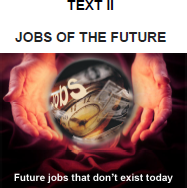
There is no future in any job. The future lies in the person who holds the job.” – George W. Crane
education is that they tend to prepare students for jobs of
the past. Similarly, the best paying jobs of the future are
all jobs that currently exist today. Many of them will still
[5] exist in the future, but with some changes as technology
and communication systems make their impact.
As a rule of thumb, 60% of the jobs 10 years
from now haven’t been invented yet. With that in mind,
I’ve decided to put together a list of some jobs that will be
[10] in high demand in the future.
Jobs before 2020
Many of the changes we see today will cause
new jobs to materialize quickly. This first section deals
[15] with new positions that will likely be developed within the
next 10 years.
3D printing engineers – Classes in 3D printing are
already being introduced into high schools and the
demand for printer-produced products will rise quickly.
[20] The trend will be for these worker-less workshops to
enter virtually different fields, at the same time, driving
the need for competent technicians and engineers to
design and maintain the next wave of this technology.
Nano-medics – Health professionals capable of working
[25] on the nano-level, both in designing diagnostics systems,
remedies, and monitoring solutions will be in high
demand.
Organ agents – The demand for transplantable organs
is exploding and people who can track down and deliver
[30] healthy organs will be in hot demand.
Octogenarian service providers – As the population
continues to age we will have record numbers of people
living into their 80s, 90s, and 100s. This growing group of
active oldsters will provide a demand for goods and
[35] services currently not being addressed in today’s
marketplace.
Jobs in 2030 and beyond
A number of technologies currently on the
drawing board will require a bit longer lead time before
[40]the industry comes into its own. Here are a few examples
of these kinds of jobs:
Body part & limb makers – The organ agents listed
before will quickly find themselves out of work as soon as
we figure out how to efficiently grow and mass produce
[45] our own organs from scratch.
Earthquake forecasters – While scientists are
developing skills to work with nanoscale precision on the
earth’s surface, the best we can know about below the
surface is blindfolded guesswork done with 100-mile
[50] precision. What we don’t know is literally killing us – over
226,000 killed in 2010 alone. But that will change over
time as we begin to understand the inner working of the
earth and accurately forecast when the next big quakes
are about to hit.
[55] “Heavy air” engineers – Compressed air is useful in a
wide variety of ways. However, we have yet to figure out
how to compress streams of air as they pass through our
existing atmosphere. Once we do, it will create untold
opportunity for non-surface based housing and
[60] transportation system, weather control, and other kinds
of experimentation.
Final thoughts
The jobs and occupations listed above are just
scratching the surface. This list is intended to help
[65] stretch your imagination and start you down a path of
imagining your own future.
(Adapted from http://www.futuristspeaker.com/2011/11/55-jobs-of-the-future)
“This first section deals with new positions that will likely be developed within the next 10 years.” The underlined word (line 15) is closest in meaning to
Questão 60 154736
AFA 2015
There is no future in any job. The future lies in the person who holds the job.” – George W. Crane
education is that they tend to prepare students for jobs of
the past. Similarly, the best paying jobs of the future are
all jobs that currently exist today. Many of them will still
[5] exist in the future, but with some changes as technology
and communication systems make their impact.
As a rule of thumb, 60% of the jobs 10 years
from now haven’t been invented yet. With that in mind,
I’ve decided to put together a list of some jobs that will be
[10] in high demand in the future.
Jobs before 2020
Many of the changes we see today will cause
new jobs to materialize quickly. This first section deals
[15] with new positions that will likely be developed within the
next 10 years.
3D printing engineers – Classes in 3D printing are
already being introduced into high schools and the
demand for printer-produced products will rise quickly.
[20] The trend will be for these worker-less workshops to
enter virtually different fields, at the same time, driving
the need for competent technicians and engineers to
design and maintain the next wave of this technology.
Nano-medics – Health professionals capable of working
[25] on the nano-level, both in designing diagnostics systems,
remedies, and monitoring solutions will be in high
demand.
Organ agents – The demand for transplantable organs
is exploding and people who can track down and deliver
[30] healthy organs will be in hot demand.
Octogenarian service providers – As the population
continues to age we will have record numbers of people
living into their 80s, 90s, and 100s. This growing group of
active oldsters will provide a demand for goods and
[35] services currently not being addressed in today’s
marketplace.
Jobs in 2030 and beyond
A number of technologies currently on the
drawing board will require a bit longer lead time before
[40]the industry comes into its own. Here are a few examples
of these kinds of jobs:
Body part & limb makers – The organ agents listed
before will quickly find themselves out of work as soon as
we figure out how to efficiently grow and mass produce
[45] our own organs from scratch.
Earthquake forecasters – While scientists are
developing skills to work with nanoscale precision on the
earth’s surface, the best we can know about below the
surface is blindfolded guesswork done with 100-mile
[50] precision. What we don’t know is literally killing us – over
226,000 killed in 2010 alone. But that will change over
time as we begin to understand the inner working of the
earth and accurately forecast when the next big quakes
are about to hit.
[55] “Heavy air” engineers – Compressed air is useful in a
wide variety of ways. However, we have yet to figure out
how to compress streams of air as they pass through our
existing atmosphere. Once we do, it will create untold
opportunity for non-surface based housing and
[60] transportation system, weather control, and other kinds
of experimentation.
Final thoughts
The jobs and occupations listed above are just
scratching the surface. This list is intended to help
[65] stretch your imagination and start you down a path of
imagining your own future.
(Adapted from http://www.futuristspeaker.com/2011/11/55-jobs-of-the-future)
Questão 59 154734
AFA 2015
There is no future in any job. The future lies in the person who holds the job.” – George W. Crane
education is that they tend to prepare students for jobs of
the past. Similarly, the best paying jobs of the future are
all jobs that currently exist today. Many of them will still
[5] exist in the future, but with some changes as technology
and communication systems make their impact.
As a rule of thumb, 60% of the jobs 10 years
from now haven’t been invented yet. With that in mind,
I’ve decided to put together a list of some jobs that will be
[10] in high demand in the future.
Jobs before 2020
Many of the changes we see today will cause
new jobs to materialize quickly. This first section deals
[15] with new positions that will likely be developed within the
next 10 years.
3D printing engineers – Classes in 3D printing are
already being introduced into high schools and the
demand for printer-produced products will rise quickly.
[20] The trend will be for these worker-less workshops to
enter virtually different fields, at the same time, driving
the need for competent technicians and engineers to
design and maintain the next wave of this technology.
Nano-medics – Health professionals capable of working
[25] on the nano-level, both in designing diagnostics systems,
remedies, and monitoring solutions will be in high
demand.
Organ agents – The demand for transplantable organs
is exploding and people who can track down and deliver
[30] healthy organs will be in hot demand.
Octogenarian service providers – As the population
continues to age we will have record numbers of people
living into their 80s, 90s, and 100s. This growing group of
active oldsters will provide a demand for goods and
[35] services currently not being addressed in today’s
marketplace.
Jobs in 2030 and beyond
A number of technologies currently on the
drawing board will require a bit longer lead time before
[40]the industry comes into its own. Here are a few examples
of these kinds of jobs:
Body part & limb makers – The organ agents listed
before will quickly find themselves out of work as soon as
we figure out how to efficiently grow and mass produce
[45] our own organs from scratch.
Earthquake forecasters – While scientists are
developing skills to work with nanoscale precision on the
earth’s surface, the best we can know about below the
surface is blindfolded guesswork done with 100-mile
[50] precision. What we don’t know is literally killing us – over
226,000 killed in 2010 alone. But that will change over
time as we begin to understand the inner working of the
earth and accurately forecast when the next big quakes
are about to hit.
[55] “Heavy air” engineers – Compressed air is useful in a
wide variety of ways. However, we have yet to figure out
how to compress streams of air as they pass through our
existing atmosphere. Once we do, it will create untold
opportunity for non-surface based housing and
[60] transportation system, weather control, and other kinds
of experimentation.
Final thoughts
The jobs and occupations listed above are just
scratching the surface. This list is intended to help
[65] stretch your imagination and start you down a path of
imagining your own future.
(Adapted from http://www.futuristspeaker.com/2011/11/55-jobs-of-the-future)
Mark the INCORRECT alternative.
06