


![[Marketing] Questao Topo - deslogado](https://storage.estuda.com.br/banners/0_6b7ebee90b03af1c560c73bb8bcce34a_banner_deslogado_70_dias.png)
Questões de Inglês
19.971 Questões
Questão 35 233806
UESB Caderno 1 2015TEXTO:
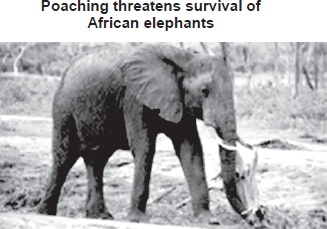
The office of the Convention on International Trade
in Endangered Species (known as CITES) says rates of
elephant poaching and trade in illegal ivory remain very
high. In a new report, CITES warns that Africa’s elephants
[5] face an immediate threat to their survival because of
continued high levels of poaching for their ivory.
Twenty thousand elephants were illegally killed in
Africa last year, the report shows. That figure far exceeds
the growth rate of the elephant population. In some regions
[10] of Africa elephants are threatened with extinction.
The report also documents a clear increase in the
number of large seizures -amounts of over 500kg — of
ivory in Africa. For the first time there were more such
seizures in Africa than in Asia, an indication, the report
[15] suggests, of the involvement of transnational organized
crime in the illegal ivory trade.
And while elephant conservationists do believe that
increased ivory confiscation is a sign that law enforcement
is improving, they also point out that demand for ivory
[20] remains very high, and that even in some of the
monitored elephant populations, poaching is actually
increasing.
FOULKES, Imogen. Poaching threatens survival of African elephants. Disponível em: <www.bbc.co.uk/worldservice/learning english/language/wordsinthenews/2014/06/140616_witn_ivory. shtml>. Acesso em: 13 out. 2014.
According to CITES, the illegal trade of elephants’ ivory
Questão 30 233796
UESB Caderno 1 2015TEXTO:
The ‘STEM’ sell
When people think of jobs related to science,
technology, engineering, and math, or STEM as
America’s relentless acronym makers would have it, they
don’t usually think of blue-collar workers or applicants
[5] without full college education. But a new report from
Brookings Institution reveals what it calls “the hidden
STEM economy.” It estimates that about 26 million jobs
in the United States require a high level of knowledge in
one STEM field or another , but about half of those are
[10] attainable, in fact, to workers without a four-year college
degree. These are in manufacturing, health care,
construction installation, maintenance, and repair, and
they pay on average $53,000 a year, which sure beats
not working at all and is about 10 percent higher than
[15] jobs with similar educational requirements. Moreover,
these sort of jobs are spread all over the country, not
just in urban centers. But here’s the problem: of the
$4.3 billion the federal government spends to
stimulate and improve education in science, technology,
[20] engineering, and math, only about one fifth goes toward
the training of people who won’t get a bachelor’s degree.
Community colleges are virtually ignored. Brookings
advocates spreading the knowledge as well as the wealth.
DICKEY, Christopher . The ‘STEM’ sell. In: BIG THINK, Around the world in five ideas. Newsweek , Jul 8 & 15, 2013. p.8.
In the United States, workers who are part of “the hidden STEM economy”, without a bachelor’s degree
Questão 29 233791
UESB Caderno 1 2015TEXTO:
The ‘STEM’ sell
When people think of jobs related to science,
technology, engineering, and math, or STEM as
America’s relentless acronym makers would have it, they
don’t usually think of blue-collar workers or applicants
[5] without full college education. But a new report from
Brookings Institution reveals what it calls “the hidden
STEM economy.” It estimates that about 26 million jobs
in the United States require a high level of knowledge in
one STEM field or another , but about half of those are
[10] attainable, in fact, to workers without a four-year college
degree. These are in manufacturing, health care,
construction installation, maintenance, and repair, and
they pay on average $53,000 a year, which sure beats
not working at all and is about 10 percent higher than
[15] jobs with similar educational requirements. Moreover,
these sort of jobs are spread all over the country, not
just in urban centers. But here’s the problem: of the
$4.3 billion the federal government spends to
stimulate and improve education in science, technology,
[20] engineering, and math, only about one fifth goes toward
the training of people who won’t get a bachelor’s degree.
Community colleges are virtually ignored. Brookings
advocates spreading the knowledge as well as the wealth.
DICKEY, Christopher . The ‘STEM’ sell. In: BIG THINK, Around the world in five ideas. Newsweek , Jul 8 & 15, 2013. p.8.
Fill in the parentheses with T (True) or F (False).
According to the report from Brookings Institution about jobs related to STEM,
( ) over twenty-five million jobs in the U.S. are designed for people who are specialized in at least one of the STEM field subjects.
( ) about fifty percent of these jobs are gotten by people without a college degree.
( ) such jobs as in manufacturing an health care pay less than jobs with similar education requirements.
( ) the downside of these jobs is that they are only offered in big cities.
The correct sequence, from top to bottom, is
Questão 27 233783
UESB Caderno 1 2015TEXTO:
Advertisements starring ... you
Popular sites are trying to cash in on users’ connections
Your friends may be the most effective pitchmen. In
the latest sign that technology firms are increasingly
deploying users’ data to boost ads, Google announced
that it was changing its terms of service to allow the
[5] company to combine users’ posts, reviews and profile
photos in advertisements. Here’s how it works: a user
searching Google for, say, a date-night restaurant might
see text ads promoting a local eatery — along with a
friend’s face and review on the firm’s social network,
[10] Google+. A whopping 87% of the search giant’s $50 billion
in annual revenue comes from advertising, and Google is
betting this information will make ads clickier.
Rival Facebook has already found that pitching
products with a friend’s endorsement — a Like or positive
[15] post – makes for more powerful ads, which accounted
for most of the social network’s $5 billion in revenue last
year. Research firm eMarketer estimates that the
so-called social-ad business will be worth $9.5 billion in
U.S. sales this year. But it can be a risky business. In
[20] August, a judge approved Facebook’s settlement of a
class-action suit over employing users in ads, and the
company agreed to give them control over when they’re
recruited to promote a product. “They’re still walking a
tightrope,” explains consultant Jake Wengroff of firms
[25] trying such ads. The practice, he says, can alienate users
and open companies to privacy suits. Still, given the
potential profits in better ads, analysts say it might be a
risk worth taking. Here’s a look at what companies are
trying.
[30] TWITTER
Brands can pay to have users’ tweets amplified across
the site — with permission. Retweets essentially become
easy marketing.
[35] Google’s new ads won’t show up only in search; they
could also one day appear across services such as
e-mail and maps. Users can opt out.
Facebook’s photo-sharing site says it plans to launch
[40] ads in the next few months. It backtracked last year on
a policy that would have given advertisers access to users’
photos.
Users’ Likes and photos can appear in ads targeted to
[45] their friends. Users can opt out.
The content-sharing site hasn’t said whether it will
incorporate users’ connections into the ads it recently
rolled out.
RAYMAN, Noah. Advertisements starring ... you. TIME Oct. 28, 2013. p.13.
Considering language use in the text, it’s correct to say:
Questão 26 233782
UESB Caderno 1 2015TEXTO:
Advertisements starring ... you
Popular sites are trying to cash in on users’ connections
Your friends may be the most effective pitchmen. In
the latest sign that technology firms are increasingly
deploying users’ data to boost ads, Google announced
that it was changing its terms of service to allow the
[5] company to combine users’ posts, reviews and profile
photos in advertisements. Here’s how it works: a user
searching Google for, say, a date-night restaurant might
see text ads promoting a local eatery — along with a
friend’s face and review on the firm’s social network,
[10] Google+. A whopping 87% of the search giant’s $50 billion
in annual revenue comes from advertising, and Google is
betting this information will make ads clickier.
Rival Facebook has already found that pitching
products with a friend’s endorsement — a Like or positive
[15] post – makes for more powerful ads, which accounted
for most of the social network’s $5 billion in revenue last
year. Research firm eMarketer estimates that the
so-called social-ad business will be worth $9.5 billion in
U.S. sales this year. But it can be a risky business. In
[20] August, a judge approved Facebook’s settlement of a
class-action suit over employing users in ads, and the
company agreed to give them control over when they’re
recruited to promote a product. “They’re still walking a
tightrope,” explains consultant Jake Wengroff of firms
[25] trying such ads. The practice, he says, can alienate users
and open companies to privacy suits. Still, given the
potential profits in better ads, analysts say it might be a
risk worth taking. Here’s a look at what companies are
trying.
[30] TWITTER
Brands can pay to have users’ tweets amplified across
the site — with permission. Retweets essentially become
easy marketing.
[35] Google’s new ads won’t show up only in search; they
could also one day appear across services such as
e-mail and maps. Users can opt out.
Facebook’s photo-sharing site says it plans to launch
[40] ads in the next few months. It backtracked last year on
a policy that would have given advertisers access to users’
photos.
Users’ Likes and photos can appear in ads targeted to
[45] their friends. Users can opt out.
The content-sharing site hasn’t said whether it will
incorporate users’ connections into the ads it recently
rolled out.
RAYMAN, Noah. Advertisements starring ... you. TIME Oct. 28, 2013. p.13.
Fill in the parentheses with T (True) or F (False).
It’s stated in the text:
( ) Brands aim to have users’ tweets reduced.
( ) Google wants to show their new ads both in search and service sites.
( ) Instagram’s plan to use ads together with users’ photos didn’t work out last year.
( ) So far, Pinterest hasn’t disclosed its position about employing users’ friends in its ads.
The correct sequence, from top to bottom, is
Questão 25 233779
UESB Caderno 1 2015TEXTO:
Advertisements starring ... you
Popular sites are trying to cash in on users’ connections
Your friends may be the most effective pitchmen. In
the latest sign that technology firms are increasingly
deploying users’ data to boost ads, Google announced
that it was changing its terms of service to allow the
[5] company to combine users’ posts, reviews and profile
photos in advertisements. Here’s how it works: a user
searching Google for, say, a date-night restaurant might
see text ads promoting a local eatery — along with a
friend’s face and review on the firm’s social network,
[10] Google+. A whopping 87% of the search giant’s $50 billion
in annual revenue comes from advertising, and Google is
betting this information will make ads clickier.
Rival Facebook has already found that pitching
products with a friend’s endorsement — a Like or positive
[15] post – makes for more powerful ads, which accounted
for most of the social network’s $5 billion in revenue last
year. Research firm eMarketer estimates that the
so-called social-ad business will be worth $9.5 billion in
U.S. sales this year. But it can be a risky business. In
[20] August, a judge approved Facebook’s settlement of a
class-action suit over employing users in ads, and the
company agreed to give them control over when they’re
recruited to promote a product. “They’re still walking a
tightrope,” explains consultant Jake Wengroff of firms
[25] trying such ads. The practice, he says, can alienate users
and open companies to privacy suits. Still, given the
potential profits in better ads, analysts say it might be a
risk worth taking. Here’s a look at what companies are
trying.
[30] TWITTER
Brands can pay to have users’ tweets amplified across
the site — with permission. Retweets essentially become
easy marketing.
[35] Google’s new ads won’t show up only in search; they
could also one day appear across services such as
e-mail and maps. Users can opt out.
Facebook’s photo-sharing site says it plans to launch
[40] ads in the next few months. It backtracked last year on
a policy that would have given advertisers access to users’
photos.
Users’ Likes and photos can appear in ads targeted to
[45] their friends. Users can opt out.
The content-sharing site hasn’t said whether it will
incorporate users’ connections into the ads it recently
rolled out.
RAYMAN, Noah. Advertisements starring ... you. TIME Oct. 28, 2013. p.13.
According to Jake Wengroff, firms trying the kind of advertisement mentioned in the text
06