


![[Marketing] Questao Topo - deslogado](https://storage.estuda.com.br/banners/0_6b7ebee90b03af1c560c73bb8bcce34a_banner_deslogado_70_dias.png)
Questões de Inglês
19.971 Questões
Questão 52 532935
FDV 2015/1Socrates Takes a Back Seat to Business and Tech
The students are pitching. On a spring afternoon at Michigan State University, 15 law students are presenting start-up proposals to a panel of legal scholars and entrepreneurs and an audience of fellow students. The end-of-semester event is one part seminar and one part “Shark Tank” reality show. The companies the students are describing would be very different from the mega-firms that many law students have traditionally aspired to work for, and to grow wealthy from. Instead, these young people are proposing businesses more nimble and offbeat. A few of them talk of outsourced services for larger law firms.
The Entrepreneurial Lawyering Startup Competition, a showcase of the university’s Reinvent Law Laboratory, is not an activity many practicing lawyers would recognize. But it might be the kind of broadened curriculum many of today’s students need. “Legal education has been stronger on tradition than innovation,” said Joan W. Howarth, dean of the Michigan State law school. “What we’re trying to do is educate lawyers for the future, not the past.” Like a number of law schools looking to the future of a challenging profession, this school is pushing its students to understand business and technology so that they can advise entrepreneurs in coming fields. The school wants them to think of themselves as potential founders of start-ups as well, and to operate fluidly in a legal environment that is being transformed by technology.
Michigan State professors don’t just teach torts, contracts and the intricacies of constitutional law. They also delve into software and services that sift through thousands of cases to help predict whether a client’s case might be successful or what arguments could be most effective. They introduce their students to programs that search through mountains of depositions and filings, automating tasks like the dreary “document review” that was once the baptism of fire and boredom for young associates. One of the founders of the Reinvent Law Laboratory is Daniel Martin Katz, an associate professor with expertise in big data and powerful computing and their applications to legal studies. He hopes to give his students a leg up in a job market that seems increasingly bleak, and to help them become “Tshaped,” by which he means having deep knowledge as well as a broadened set of abilities. So providing them with information on seemingly arcane subjects like data analytics can be a career builder. “Analytics plus law gets you into a niche,” he said. The program is partly funded by the Kauffman Foundation, which supports entrepreneurship education.
With the marketplace shifting, schools have increasingly come under fire for being out of touch. Catherine L. Carpenter, vice dean of Southwestern Law School in Los Angeles, tracks curriculum across the country. She said schools are trying to teach their students to run their own firms, to look for entrepreneurial opportunities by finding “gaps in the law or gaps in the delivery of services,” and to gain specialized knowledge that can help them counsel entrepreneurs. At Indiana University’s law school, Prof. William D. Henderson has been advocating a shake-up in legal education whose time may have come. “You have got to be in a lot of pain” before a school will change something as tradition-bound as legal training, he said, but pain is everywhere at the moment, and “that’s kind of our opening.” He advocates putting more technology and practical training into the curriculum to adapt to a field that is less about “expensive, artisan-trained lawyers” and more about providing legal services at lower cost.
Bill Mooz, a visiting professor at the University of Colorado law school, has started a four-week summer boot camp called Tech Lawyer Accelerator to provide, as he put it, “all of the things they don’t teach you in law school and they don’t teach in law firms but which you need to be effective in today’s world.” Students are brought up to speed on tech tools designed to make legal services more efficient. They hear lectures from companies like Adobe and NetApp. After the four weeks, they spend the rest of the summer, or even the following semester, working directly for a company. At Northwestern Law, Daniel B. Rodriguez, the dean, is expanding clinical education while using faculty members with technical and business experience to instruct in “the law/business/technology interface.” Law school, he said, used to be a refuge for students who “might be math phobic, who don’t do numbers.” But the practice of law increasingly requires lawyers to understand the work and strategy of their clients, whether that means reading a spreadsheet or going even further. “That doesn’t mean you need to have a Ph.D. or a master’s degree in math to become a lawyer,” Mr. Rodriguez said. “It doesn’t actually kill you, but makes you stronger, to have a background in statistics.” And, he said, “Not to be too jargonistic, but big-data analytics have pervaded many aspects of the management world, and lawyers need to have some facility with that.” The Northwestern program stresses teamwork, though the lecture format is still a big part of the program.
These programs might be especially important for schools that aren’t in the top education tier, to combat the “very elitist” attitudes of the legal employment market, said Brian Z. Tamanaha, a law professor at Washington University in St. Louis. “Will it be enough for them to pick the M.S.U. grad over the Michigan grad, to name a local competitor? That remains to be seen.” Another skeptical law professor, Paul F. Campos of the University of Colorado, said he finds Michigan State’s approach “admirable” but declared himself amused by the focus on tech. “The irony here is that these new technologies are destroying traditional legal jobs!” Mr. Campos’s blog, Inside the Law School Scam, was harshly critical of legal education. Now, he says, “The fundamental problem remains that we’re putting out way, way too many lawyers — or, should I say, people with law degrees, given the number of entry-level jobs.”
For the students at Michigan State, the opportunities outweigh the risks. While none are likely to become expert programmers, they believe their training will get them a job at firms that need someone who can communicate with the geek contractors. “This is the worst time in the history of legal education to go to law school,” said Patrick Ellis, a recent graduate. “I am not top of my class, not at a top-10 law school, but I’m confident I’m going to have a meaningful career because of this program.”
The winner of the start-up competition at Michigan State was Stand’n, a blend of social media’s friendtracking features and apps to connect people and firms with legal services on short notice. The student behind the idea, Andrew Johnston, called it “kind of like an Uber for lawyers.” Law firms, he explained, could use the service when they need an attorney to fill in for them at routine court appearances and depositions. The idea brought him $2,000 from the judges.
Dean Howarth said she had bumped into one of her more conventional law school colleagues who had seen the gathering and wondered if it was that law school staple, the moot court competition. “I said, ‘No, it’s a start-up competition.’” Ms. Howarth said with a smile, adding, “I had no idea if he had a clue as to what that would be.”
(SCHWARTZ, John. Socrates Takes a Back Seat to Business and Tech. aug. 3, 2014. The New York Times. New York. Disponível em:. Acesso em: 09 ago. 2014)
According to the article which of the following people would have the least to fear from a deep change in law schools’ curriculum?
Questão 51 532933
FDV 2015/1Socrates Takes a Back Seat to Business and Tech
The students are pitching. On a spring afternoon at Michigan State University, 15 law students are presenting start-up proposals to a panel of legal scholars and entrepreneurs and an audience of fellow students. The end-of-semester event is one part seminar and one part “Shark Tank” reality show. The companies the students are describing would be very different from the mega-firms that many law students have traditionally aspired to work for, and to grow wealthy from. Instead, these young people are proposing businesses more nimble and offbeat. A few of them talk of outsourced services for larger law firms.
The Entrepreneurial Lawyering Startup Competition, a showcase of the university’s Reinvent Law Laboratory, is not an activity many practicing lawyers would recognize. But it might be the kind of broadened curriculum many of today’s students need. “Legal education has been stronger on tradition than innovation,” said Joan W. Howarth, dean of the Michigan State law school. “What we’re trying to do is educate lawyers for the future, not the past.” Like a number of law schools looking to the future of a challenging profession, this school is pushing its students to understand business and technology so that they can advise entrepreneurs in coming fields. The school wants them to think of themselves as potential founders of start-ups as well, and to operate fluidly in a legal environment that is being transformed by technology.
Michigan State professors don’t just teach torts, contracts and the intricacies of constitutional law. They also delve into software and services that sift through thousands of cases to help predict whether a client’s case might be successful or what arguments could be most effective. They introduce their students to programs that search through mountains of depositions and filings, automating tasks like the dreary “document review” that was once the baptism of fire and boredom for young associates. One of the founders of the Reinvent Law Laboratory is Daniel Martin Katz, an associate professor with expertise in big data and powerful computing and their applications to legal studies. He hopes to give his students a leg up in a job market that seems increasingly bleak, and to help them become “Tshaped,” by which he means having deep knowledge as well as a broadened set of abilities. So providing them with information on seemingly arcane subjects like data analytics can be a career builder. “Analytics plus law gets you into a niche,” he said. The program is partly funded by the Kauffman Foundation, which supports entrepreneurship education.
With the marketplace shifting, schools have increasingly come under fire for being out of touch. Catherine L. Carpenter, vice dean of Southwestern Law School in Los Angeles, tracks curriculum across the country. She said schools are trying to teach their students to run their own firms, to look for entrepreneurial opportunities by finding “gaps in the law or gaps in the delivery of services,” and to gain specialized knowledge that can help them counsel entrepreneurs. At Indiana University’s law school, Prof. William D. Henderson has been advocating a shake-up in legal education whose time may have come. “You have got to be in a lot of pain” before a school will change something as tradition-bound as legal training, he said, but pain is everywhere at the moment, and “that’s kind of our opening.” He advocates putting more technology and practical training into the curriculum to adapt to a field that is less about “expensive, artisan-trained lawyers” and more about providing legal services at lower cost.
Bill Mooz, a visiting professor at the University of Colorado law school, has started a four-week summer boot camp called Tech Lawyer Accelerator to provide, as he put it, “all of the things they don’t teach you in law school and they don’t teach in law firms but which you need to be effective in today’s world.” Students are brought up to speed on tech tools designed to make legal services more efficient. They hear lectures from companies like Adobe and NetApp. After the four weeks, they spend the rest of the summer, or even the following semester, working directly for a company. At Northwestern Law, Daniel B. Rodriguez, the dean, is expanding clinical education while using faculty members with technical and business experience to instruct in “the law/business/technology interface.” Law school, he said, used to be a refuge for students who “might be math phobic, who don’t do numbers.” But the practice of law increasingly requires lawyers to understand the work and strategy of their clients, whether that means reading a spreadsheet or going even further. “That doesn’t mean you need to have a Ph.D. or a master’s degree in math to become a lawyer,” Mr. Rodriguez said. “It doesn’t actually kill you, but makes you stronger, to have a background in statistics.” And, he said, “Not to be too jargonistic, but big-data analytics have pervaded many aspects of the management world, and lawyers need to have some facility with that.” The Northwestern program stresses teamwork, though the lecture format is still a big part of the program.
These programs might be especially important for schools that aren’t in the top education tier, to combat the “very elitist” attitudes of the legal employment market, said Brian Z. Tamanaha, a law professor at Washington University in St. Louis. “Will it be enough for them to pick the M.S.U. grad over the Michigan grad, to name a local competitor? That remains to be seen.” Another skeptical law professor, Paul F. Campos of the University of Colorado, said he finds Michigan State’s approach “admirable” but declared himself amused by the focus on tech. “The irony here is that these new technologies are destroying traditional legal jobs!” Mr. Campos’s blog, Inside the Law School Scam, was harshly critical of legal education. Now, he says, “The fundamental problem remains that we’re putting out way, way too many lawyers — or, should I say, people with law degrees, given the number of entry-level jobs.”
For the students at Michigan State, the opportunities outweigh the risks. While none are likely to become expert programmers, they believe their training will get them a job at firms that need someone who can communicate with the geek contractors. “This is the worst time in the history of legal education to go to law school,” said Patrick Ellis, a recent graduate. “I am not top of my class, not at a top-10 law school, but I’m confident I’m going to have a meaningful career because of this program.”
The winner of the start-up competition at Michigan State was Stand’n, a blend of social media’s friendtracking features and apps to connect people and firms with legal services on short notice. The student behind the idea, Andrew Johnston, called it “kind of like an Uber for lawyers.” Law firms, he explained, could use the service when they need an attorney to fill in for them at routine court appearances and depositions. The idea brought him $2,000 from the judges.
Dean Howarth said she had bumped into one of her more conventional law school colleagues who had seen the gathering and wondered if it was that law school staple, the moot court competition. “I said, ‘No, it’s a start-up competition.’” Ms. Howarth said with a smile, adding, “I had no idea if he had a clue as to what that would be.”
(SCHWARTZ, John. Socrates Takes a Back Seat to Business and Tech. aug. 3, 2014. The New York Times. New York. Disponível em:. Acesso em: 09 ago. 2014)
According to the article:
Questão 49 497175
UCPEL 2015Paralyzed Rats Take 1,000 Steps,
Orchestrated by Computer
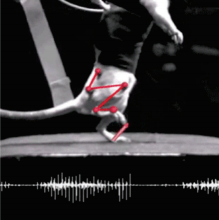
Controlled by software, paralyzed rats walk and
climb stairs.
[5] It’s a strange sight: a paralyzed rat walking on its
hind legs in a precise cadence, all controlled by a
computer.
“It is a little bit Frankenstein,” says Gregoire
Courtine, a neuroscientist at the École
[10] Polytechnique Fédérale in Lausanne, Switzerland,
who in a paper published yesterday in Science
Translational Medicine describes his efforts to use
electronics to restore fluid, realistic movements to
paralyzed animals.
[15] The study is part of a wider effort to help paralyzed
people walk again by zapping their spinal cords
with electrical pulses. These signals can replace
commands normally sent out by the brain, but which
are interrupted when the spinal cord is injured.
[20] This spring, doctors and researchers from the
University of Louisville and the University of
California, Los Angeles, said four men who had
been paralyzed for years were able to regain
movement in their legs, hips, ankles, and toes, and
[25] even stand using an implanted device that
stimulated their spinal cords, a technique called
epidural stimulation. Though the movements
achieved were modest—and fall short of allowing
the men to walk on their own—the technology let
[30] them exercise their legs, which seemed to restore
some movement.
His team hopes to test its ideas in a human volunteer
next year. “The idea is to use this in the
rehabilitation room,” Courtine says, citing evidence
[35] that exercising the spinal cord and legs may partly
restore severed connections to the brain.
Epidural stimulation technology is still a long way
from allowing paralyzed people to walk on their
own, though. Hunter Peckham, a bioengineer at
[40] Case Western Reserve University, says that patients
want to control their own movements, which means
that future versions of these systems must strike a
balance between automated routines and
movements picked by the user.
[45] Courtine says his group is working on developing
a brain-machine interface, such as electrodes
implanted in the motor cortex of the brain to record
intended movements, that might eventually allow
patients to control a spinal stimulator, and the
[50] movement of their legs, using their own thoughts.
By Courtney Humphries, Technology Review published by MIT, September 25, 2014
Adapted from http://www.technologyreview.com/news/ 531051/paralyzed-rats-take-1000-steps-orchestrated-bycomputer/
No próximo ano, Courtine e sua equipe esperam testar as suas ideias em um voluntário humano na sala de reabilitação para continuar a investigar se
Questão 47 497158
UCPEL 2015Paralyzed Rats Take 1,000 Steps,
Orchestrated by Computer
Controlled by software, paralyzed rats walk and
climb stairs.
[5] It’s a strange sight: a paralyzed rat walking on its
hind legs in a precise cadence, all controlled by a
computer.
“It is a little bit Frankenstein,” says Gregoire
Courtine, a neuroscientist at the École
[10] Polytechnique Fédérale in Lausanne, Switzerland,
who in a paper published yesterday in Science
Translational Medicine describes his efforts to use
electronics to restore fluid, realistic movements to
paralyzed animals.
[15] The study is part of a wider effort to help paralyzed
people walk again by zapping their spinal cords
with electrical pulses. These signals can replace
commands normally sent out by the brain, but which
are interrupted when the spinal cord is injured.
[20] This spring, doctors and researchers from the
University of Louisville and the University of
California, Los Angeles, said four men who had
been paralyzed for years were able to regain
movement in their legs, hips, ankles, and toes, and
[25] even stand using an implanted device that
stimulated their spinal cords, a technique called
epidural stimulation. Though the movements
achieved were modest—and fall short of allowing
the men to walk on their own—the technology let
[30] them exercise their legs, which seemed to restore
some movement.
His team hopes to test its ideas in a human volunteer
next year. “The idea is to use this in the
rehabilitation room,” Courtine says, citing evidence
[35] that exercising the spinal cord and legs may partly
restore severed connections to the brain.
Epidural stimulation technology is still a long way
from allowing paralyzed people to walk on their
own, though. Hunter Peckham, a bioengineer at
[40] Case Western Reserve University, says that patients
want to control their own movements, which means
that future versions of these systems must strike a
balance between automated routines and
movements picked by the user.
[45] Courtine says his group is working on developing
a brain-machine interface, such as electrodes
implanted in the motor cortex of the brain to record
intended movements, that might eventually allow
patients to control a spinal stimulator, and the
[50] movement of their legs, using their own thoughts.
By Courtney Humphries, Technology Review published by MIT, September 25, 2014
Adapted from http://www.technologyreview.com/news/ 531051/paralyzed-rats-take-1000-steps-orchestrated-bycomputer/
De acordo com o texto, o objetivo mais amplo do estudo de Courtine é
Questão 21 493581
IFPR 2015Instrução: a questão refere-se ao texto abaixo:
Water for Our Future
Fresh water is arguably the world’s most precious resource. Yet in all corners of the globe, shortages and inadequate access to sanitation persist. Rivers are fragmented by dams, choked by chemicals, threatened by climate change, depleted by irresponsible businesses and industries that don’t manage water wisely, and polluted by toxic runoff from cities, factories and farms. We can’t solve these challenges alone, and thankfully, we don’t have to. Although there are many millions of miles of water on the earth, it is thought that most of this total is salt water or ice, and therefore not usable for human needs. Also, we cannot use more than one-third of the water that falls from the sky. The other two-either disappears back into the air, or is used by plants, of flows into the sea or under the ground. Indeed, some of the places where man formerly obtained fresh, clear water are disappearing. Along the coastline of the United States, humans have used so much of their natural supply of water that sea water is very slowly taking the place of the clear water as it is used. This loss of good water cannot continue. More and more people are demanding more and more clean water every year. It has been figured that the modern city family uses six times more water today than yesterday’s farm family did, when wells were the main source of water. Where will we get the water that our increasing population requires just to stay alive? What can we do about our water supply? The only answer is that we must learn to reuse water and the main difficulty to do so at present is the problem of water pollution. We are being attacked on all sides by water pollution of all types from all kinds of sources. The time has now come for man to make his environment his friend, not his enemy. Water is a local issue, but addressing water resource management challenges requires global solidarity as well as regional, national and local actions. Something must be done, and must be done on a large scale. However, one great problem of the crisis is that decisions must be made today, before the need has become generally apparent, to prevent adverse effects that are projected to occur in a more or less distant future. There is wide spread agreement that humanity should start securing and improving its water resources in order to adequately deal with the other environmental problems that may arise.
(Adapted from: The North American Regional Process event for the 7th World Water Forum, Karin Krchnak, Director Freshwater Program, May, 2014, Washington, DC)
The sentence “when wells were the main source of water” refers to a time when:
Questão 19 493578
IFPR 2015Instrução: a questão refere-se ao texto abaixo:
Water for Our Future
Fresh water is arguably the world’s most precious resource. Yet in all corners of the globe, shortages and inadequate access to sanitation persist. Rivers are fragmented by dams, choked by chemicals, threatened by climate change, depleted by irresponsible businesses and industries that don’t manage water wisely, and polluted by toxic runoff from cities, factories and farms. We can’t solve these challenges alone, and thankfully, we don’t have to. Although there are many millions of miles of water on the earth, it is thought that most of this total is salt water or ice, and therefore not usable for human needs. Also, we cannot use more than one-third of the water that falls from the sky. The other two-either disappears back into the air, or is used by plants, of flows into the sea or under the ground. Indeed, some of the places where man formerly obtained fresh, clear water are disappearing. Along the coastline of the United States, humans have used so much of their natural supply of water that sea water is very slowly taking the place of the clear water as it is used. This loss of good water cannot continue. More and more people are demanding more and more clean water every year. It has been figured that the modern city family uses six times more water today than yesterday’s farm family did, when wells were the main source of water. Where will we get the water that our increasing population requires just to stay alive? What can we do about our water supply? The only answer is that we must learn to reuse water and the main difficulty to do so at present is the problem of water pollution. We are being attacked on all sides by water pollution of all types from all kinds of sources. The time has now come for man to make his environment his friend, not his enemy. Water is a local issue, but addressing water resource management challenges requires global solidarity as well as regional, national and local actions. Something must be done, and must be done on a large scale. However, one great problem of the crisis is that decisions must be made today, before the need has become generally apparent, to prevent adverse effects that are projected to occur in a more or less distant future. There is wide spread agreement that humanity should start securing and improving its water resources in order to adequately deal with the other environmental problems that may arise.
(Adapted from: The North American Regional Process event for the 7th World Water Forum, Karin Krchnak, Director Freshwater Program, May, 2014, Washington, DC)
The expression “more and more clean water” means:
06