


![[Marketing] Questao Topo - deslogado](https://storage.estuda.com.br/banners/0_6b7ebee90b03af1c560c73bb8bcce34a_banner_deslogado_70_dias.png)
Questões de Inglês
19.971 Questões
Questão 15 130791
UNISC Medicina 2016/2Should Students Have to Wear School Uniforms?
Traditionally favored by private and parochial
institutions, school uniforms are being adopted by
US public schools in increasing numbers. Almost
one in five US public schools required students to
wear uniforms during the 2011-2012 school year,
up from one in eight in 2003-2004. Mandatory
uniform policies in public schools are found more
commonly in high-poverty areas. Proponents say
that school uniforms make schools safer for
students, create a “level playing field” that reduces
socioeconomic disparities, and encourage children
to focus on their studies rather than their clothes.
Opponents say school uniforms infringe upon
students’ right to express their individuality, have
no positive effect on behavior and academic
achievement, and emphasize the socioeconomic
disparities they are intended to disguise.
The first recorded use of standardized dress in
education may have been in England in 1222, when
the Archbishop of Canterbury mandated that
students wear a robe-like outfit called the “cappa
clausa.” The origin of the modern school uniform
can be traced to 16th Century England, when the
impoverished “charity children” attending the
Christ’s Hospital boarding school wore blue cloaks
reminiscent of the cassocks worn by clergy, along
with yellow stockings. As of Sep. 2014, students at
Christ’s Hospital were still wearing the same
uniform, and according to the school it is the oldest
school uniform still in use. When Christ’s Hospital
surveyed its students in 2011, 95% voted to keep
the traditional uniforms.
In later centuries, school uniforms became
associated with the upper class. At one of
England’s most prestigious schools, Eton, students
were required to wear black top hats and tails on
and off campus until 1972, when the dress codes
began to be relaxed. School uniforms in the United
States followed the traditional use of uniforms
established in England and were generally limited
to private and parochial schools. One exception
was found in government-run boarding schools for
Native American children, first established in the
late 1800s, where the children, who had been
removed from their families, were dressed in
military-style uniforms.
The first US public schools known to institute
uniform policies were in Maryland and
Washington, DC, in the fall of 1987, with Cherry
Hill Elementary School in Baltimore, MD, gaining
the most publicity. These early uniform programs
were voluntary, but according to a New York Times
report from Dec. 1987, most parents supported the
idea and “almost all” students wore the uniforms.
School officials and other advocates of the new
uniform policies noted improvements in students’
“frame of mind” and stated that uniforms had
“sharply reduced discipline problems.” They also
reported that uniforms had “already reduced the
preoccupation of students with expensive designer
clothing for school wear and eased the financial
burden that placed on the students’ families.” The
origin of the uniform policy in Baltimore has been
linked to a 1986 shooting, in which a local public
school student was wounded during a fight over a
pair of $95 sunglasses.
By the fall of 1988, 39 public elementary
schools and two public junior high schools in
Washington, DC, had instituted mandatory
uniform polices, and soon the movement spread to
other states, including Connecticut and New
Jersey, generally in urban schools with mainly low
income and minority students. In 1988, Ed Koch,
then-Mayor of New York City, expressed support
for school uniforms, saying that they encourage
“common respect and improve the learning
environment,” and praising them because of their
similarity to outfits worn in private and parochial
schools. A pilot uniform program was introduced in
New York City in 1989.
Fonte: adapted from http.school-uniforms.procon.org. Access on april 18th, 2016.
Based on the text it is possible to say that
I – schools were not safe without uniforms according to the proponents.
II – oponents say there is a negative effect on students’ behavior.
III – oponents do not see effectiveness on the students’ performance.
IV – most of the US public schools adopted uniform during the 2011-2012 school year.
Assinale a alternativa correta.
Questão 14 130790
UNISC Medicina 2016/2Should Students Have to Wear School Uniforms?
Traditionally favored by private and parochial
institutions, school uniforms are being adopted by
US public schools in increasing numbers. Almost
one in five US public schools required students to
wear uniforms during the 2011-2012 school year,
up from one in eight in 2003-2004. Mandatory
uniform policies in public schools are found more
commonly in high-poverty areas. Proponents say
that school uniforms make schools safer for
students, create a “level playing field” that reduces
socioeconomic disparities, and encourage children
to focus on their studies rather than their clothes.
Opponents say school uniforms infringe upon
students’ right to express their individuality, have
no positive effect on behavior and academic
achievement, and emphasize the socioeconomic
disparities they are intended to disguise.
The first recorded use of standardized dress in
education may have been in England in 1222, when
the Archbishop of Canterbury mandated that
students wear a robe-like outfit called the “cappa
clausa.” The origin of the modern school uniform
can be traced to 16th Century England, when the
impoverished “charity children” attending the
Christ’s Hospital boarding school wore blue cloaks
reminiscent of the cassocks worn by clergy, along
with yellow stockings. As of Sep. 2014, students at
Christ’s Hospital were still wearing the same
uniform, and according to the school it is the oldest
school uniform still in use. When Christ’s Hospital
surveyed its students in 2011, 95% voted to keep
the traditional uniforms.
In later centuries, school uniforms became
associated with the upper class. At one of
England’s most prestigious schools, Eton, students
were required to wear black top hats and tails on
and off campus until 1972, when the dress codes
began to be relaxed. School uniforms in the United
States followed the traditional use of uniforms
established in England and were generally limited
to private and parochial schools. One exception
was found in government-run boarding schools for
Native American children, first established in the
late 1800s, where the children, who had been
removed from their families, were dressed in
military-style uniforms.
The first US public schools known to institute
uniform policies were in Maryland and
Washington, DC, in the fall of 1987, with Cherry
Hill Elementary School in Baltimore, MD, gaining
the most publicity. These early uniform programs
were voluntary, but according to a New York Times
report from Dec. 1987, most parents supported the
idea and “almost all” students wore the uniforms.
School officials and other advocates of the new
uniform policies noted improvements in students’
“frame of mind” and stated that uniforms had
“sharply reduced discipline problems.” They also
reported that uniforms had “already reduced the
preoccupation of students with expensive designer
clothing for school wear and eased the financial
burden that placed on the students’ families.” The
origin of the uniform policy in Baltimore has been
linked to a 1986 shooting, in which a local public
school student was wounded during a fight over a
pair of $95 sunglasses.
By the fall of 1988, 39 public elementary
schools and two public junior high schools in
Washington, DC, had instituted mandatory
uniform polices, and soon the movement spread to
other states, including Connecticut and New
Jersey, generally in urban schools with mainly low
income and minority students. In 1988, Ed Koch,
then-Mayor of New York City, expressed support
for school uniforms, saying that they encourage
“common respect and improve the learning
environment,” and praising them because of their
similarity to outfits worn in private and parochial
schools. A pilot uniform program was introduced in
New York City in 1989.
Fonte: adapted from http.school-uniforms.procon.org. Access on april 18th, 2016.
The text supports the following statements except.
Questão 36 130753
UDESC Manhã 2016/1Catching a Cold
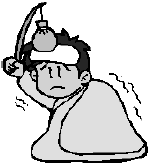
Many people catch a cold in the springtime and/ or fall. It makes us wonder... if scientists can send a man to the moon, why can\\'t they find a cure for the common cold. The answer is easy. There are literally hundreds of kinds cold viruses out there. You never know which one you will get, so there isn\\'t a cure for each one.
When a virus attacks your body, your body works hard to get rid of it. Blood rushes to your nose and brings congestion with it. You feel terrible because you can\\'t breathe well, but your body is actually "eating" the virus. Your temperature rises and you get a fever, but the heat of your body is killing the virus. You also have a runny nose to stop the virus from getting to your cells. You may feel miserable, but actually your wonderful body is doing everything it can to kill the cold.
Different people have different remedies for colds. In the United States and some other countries, for example, people might eat chicken soup to feel better. Some people take hot baths and drink warm liquids. Other people take medicines to stop the fever, congestion, and runny nose.
……………one interesting thing to note- ………….. scientists ……………… taking medicines when you ……………. a cold is actually bad ………… you. The virus stays in you longer because your body doesn\\'t have a way to fight it and kill it. Bodies can do an amazing job on their own. There is a joke, however, on taking medicine when you have a cold. It goes like this:
It takes about 1 week to get over a cold if you don\\'t take medicine, but only 7 days to get over a cold if you take medicine.
Available at: www.5minuteenglish.com (accessed on August 26 th, 2015)
The text says that:
Questão 35 130752
UDESC Manhã 2016/1Catching a Cold
Many people catch a cold in the springtime and/ or fall. It makes us wonder... if scientists can send a man to the moon, why can\\'t they find a cure for the common cold. The answer is easy. There are literally hundreds of kinds cold viruses out there. You never know which one you will get, so there isn\\'t a cure for each one.
When a virus attacks your body, your body works hard to get rid of it. Blood rushes to your nose and brings congestion with it. You feel terrible because you can\\'t breathe well, but your body is actually "eating" the virus. Your temperature rises and you get a fever, but the heat of your body is killing the virus. You also have a runny nose to stop the virus from getting to your cells. You may feel miserable, but actually your wonderful body is doing everything it can to kill the cold.
Different people have different remedies for colds. In the United States and some other countries, for example, people might eat chicken soup to feel better. Some people take hot baths and drink warm liquids. Other people take medicines to stop the fever, congestion, and runny nose.
……………one interesting thing to note- ………….. scientists ……………… taking medicines when you ……………. a cold is actually bad ………… you. The virus stays in you longer because your body doesn\\'t have a way to fight it and kill it. Bodies can do an amazing job on their own. There is a joke, however, on taking medicine when you have a cold. It goes like this:
It takes about 1 week to get over a cold if you don\\'t take medicine, but only 7 days to get over a cold if you take medicine.
Available at: www.5minuteenglish.com (accessed on August 26 th, 2015)
Mark the correct alternative where the words consecutively fill the blank spaces in lines 15 and 16.
Questão 34 130751
UDESC Manhã 2016/1Catching a Cold
Many people catch a cold in the springtime and/ or fall. It makes us wonder... if scientists can send a man to the moon, why can\\'t they find a cure for the common cold. The answer is easy. There are literally hundreds of kinds cold viruses out there. You never know which one you will get, so there isn\\'t a cure for each one.
When a virus attacks your body, your body works hard to get rid of it. Blood rushes to your nose and brings congestion with it. You feel terrible because you can\\'t breathe well, but your body is actually "eating" the virus. Your temperature rises and you get a fever, but the heat of your body is killing the virus. You also have a runny nose to stop the virus from getting to your cells. You may feel miserable, but actually your wonderful body is doing everything it can to kill the cold.
Different people have different remedies for colds. In the United States and some other countries, for example, people might eat chicken soup to feel better. Some people take hot baths and drink warm liquids. Other people take medicines to stop the fever, congestion, and runny nose.
……………one interesting thing to note- ………….. scientists ……………… taking medicines when you ……………. a cold is actually bad ………… you. The virus stays in you longer because your body doesn\\'t have a way to fight it and kill it. Bodies can do an amazing job on their own. There is a joke, however, on taking medicine when you have a cold. It goes like this:
It takes about 1 week to get over a cold if you don\\'t take medicine, but only 7 days to get over a cold if you take medicine.
Available at: www.5minuteenglish.com (accessed on August 26 th, 2015)
It is correct to say that:
Questão 33 130750
UDESC Manhã 2016/1Catching a Cold
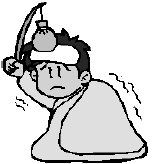
Many people catch a cold in the springtime and/ or fall. It makes us wonder... if scientists can send a man to the moon, why can\\'t they find a cure for the common cold. The answer is easy. There are literally hundreds of kinds cold viruses out there. You never know which one you will get, so there isn\\'t a cure for each one.
When a virus attacks your body, your body works hard to get rid of it. Blood rushes to your nose and brings congestion with it. You feel terrible because you can\\'t breathe well, but your body is actually "eating" the virus. Your temperature rises and you get a fever, but the heat of your body is killing the virus. You also have a runny nose to stop the virus from getting to your cells. You may feel miserable, but actually your wonderful body is doing everything it can to kill the cold.
Different people have different remedies for colds. In the United States and some other countries, for example, people might eat chicken soup to feel better. Some people take hot baths and drink warm liquids. Other people take medicines to stop the fever, congestion, and runny nose.
……………one interesting thing to note- ………….. scientists ……………… taking medicines when you ……………. a cold is actually bad ………… you. The virus stays in you longer because your body doesn\\'t have a way to fight it and kill it. Bodies can do an amazing job on their own. There is a joke, however, on taking medicine when you have a cold. It goes like this:
It takes about 1 week to get over a cold if you don\\'t take medicine, but only 7 days to get over a cold if you take medicine.
Available at: www.5minuteenglish.com (accessed on August 26 th, 2015)
It´s correct to say about the text.
06