


![[Marketing] Questao Topo - deslogado](https://storage.estuda.com.br/banners/0_6b7ebee90b03af1c560c73bb8bcce34a_banner_deslogado_70_dias.png)
Questões de Inglês
19.971 Questões
Questão 16 137586
ACAFE Medicina 2016/2Researchers have used a £1,250 system to create a range of organic compounds and inorganic clusters – some of which are used to create cancer treatments.
Longer term, the scientists say the process could be used to make customised medicines. They predict the technique will be used by pharmaceutical firms within five years, and by the public within 20.
"We are showing that you can take chemical constituents, pass them through a printer and create what is effectively a chemical synthesiser in which the reaction occurs allowing you to get out something different at the end," researcher Mark Symes told the BBC.
"We\'re extrapolating from that to say that in the future you could buy common chemicals, slot them into something that 3D prints, just press a button to mix the ingredients and filter them through the architecture and at the bottom you would get out your prescription drug."
\'Revolutionising healthcare\'
The 3D printing process involves the use of a robotically controlled syringe which builds an object out of a gel-based "ink", into which chemicals and catalysts are mixed.
"Chemists normally put chemicals in glassware to create a reaction," said Prof Lee Cronin, who came up with the idea.
"What we are doing is mixing the concept of the glassware and the chemicals together in the 3D printer to create what we call \'reactionware\'.
"It\'s almost like a cake – you print the last reactionary agent first and then build other chemical layers above, finally adding a liquid at the top. The liquid goes to layer one making a new molecule which goes to the next layer creating another and so on until at the bottom you get your prescription drug out."
Until now the researchers have used bathroom sealant to create their reactor, and the substances created have not been suitable for human consumption.
But the scientists say their next step is to switch ingredients and replicate drugs already available in pharmacies. They also hope to work with engineers to increase the printer\'s speed and resolution.
If successful, they say doctors and individuals could ultimately download pre-set recipes and even tailor medicines to their individual needs.
"This would not only place traditionally expensive chemical engineering technology within reach of typical laboratories and small commercial enterprises, but also could revolutionise access to healthcare and the chemical sciences in general in 10 the developing world," they wrote in a paper published in the Nature Chemistry journal.
Fonte: BBC News, 18/04/ 2012
Choose the only correct alternative. What´s the main idea of the text?
Questão 49 136728
ESPM 2016/2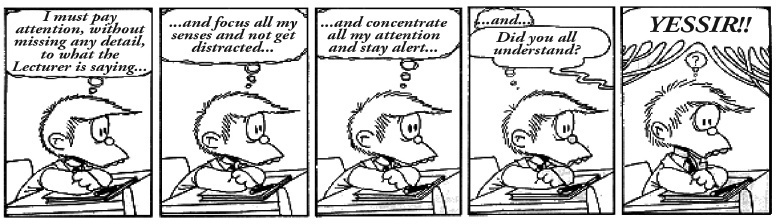
The boy got startled in the last frame because:
Questão 43 134643
UNEMAT 2016/2WORLD CINEMA DRAMATIC SPECIAL JURY
AWARD: ACTING
Val is the kind of live-in housekeeper who takes her work seriously. She wears a crisp maid’s uniform while serving perfect canapés; she serves her wealthy São Paulo employers day in and day out while lovingly nannying their teenage son whom she’s raised since toddlerhood. Everyone and everything in the elegant house has its place until one day, Val’s ambitious, clever daughter Jessica arrives from Val’s hometown to take the college entrance examination. Jessica’s confident, youthful presence upsets the unspoken yet strict balance of power in the household; Val must decide where her allegiances lie and what she’s willing to sacrifice.
With subtly dark, giddy humor and keenly drawn characters, director Anna Muylaert mines the incendiary drama when old ideas and new worlds collide. The immense satisfaction and fun of The Second Mother stem from watching tacit social codes and delicate hierarchies waver as a new generation blithely treads on sacrosanct boundaries. Muylaert has given us a fresh, contemporary spin on class in Brazil, wrapped in a deeply moving story of what belonging and family mean.
Disponível em: http://www.sundance.org/projects/the-second-mother. Acesso em nov. 2015.
De acordo com a sinopse, o tema central do filme baseia-se:
Questão 45 134374
Unit-SE Medicina - Caderno 1 2016
Two years after being on the brink of eradication,
polio has spread to at least 10 countries in Asia, Africa
and the Middle East, prompting the World Health
Organization to declare a global public-health emergency.
In Pakistan, the nexus of the new outbreak, rumors
abound that immunization can cause infertility or worse,
and local Taliban groups have obstructed anti-polio
workers. The number of cases in the country rose 60%
last year.
Last year, polio emerged in Syria for the first time
in 15 years; experts blame the ongoing civil war. Other
conflict-torn countries, like the Central African Republic,
are considered to be at risk.
In an-effort to thwart the disease, WHO has
recommended that all residents traveling from Pakistan,
Syria and Cameroon be vaccinated. Whether that’s
enforceable remains to be seen.
The Explainer: How Polio Became a Global Health Crisis. Time, May 19, 2014. p. 8
Fill in the parentheses with T (True) or F (False).
Some of the reasons of polio’s outbreak have to do with
( ) suspension of regular immunization in Pakistan.
( ) difficulties posed by unstable conflict zones.
( ) no access to vaccines in Africa countries.
( ) lack of anti polio vaccines in the poor regions.
The correct sequence, from top to bottom, is
Questão 40 134364
Unit-SE Medicina - Caderno 1 2016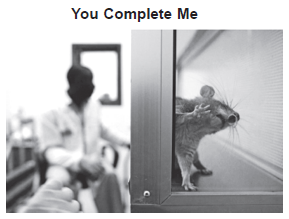
If Hollywood ever makes a prequel to The Matrix, it
could start with the research that scientists at Duke
University are doing with rats. In the sci-fi movie, humans
were connected to a machine and to each other in one
enormous interlinked, well, matrix. It’s not too dissimilar
to what they’ve been doing at Duke. Thanks to technology
they’ve developed that records and transmits brain
signals, they’ve been able to plug rats’ brains into each
other so that when one learns a simple task, the other
does as well. They even managed to connect a rat brain
in Brazil to a rat brain in North Carolina. It seems the
rodents begin to share their identities: acting, for instance,
as if their whiskers were the same length when they’re
not. “We are creating a single central nervous system
made up of two rat brains,” says neurobiology professor
Miguel Nicolelis. Theoretically, he said, there could be
many more in what he called a “brain-net,” or perhaps
even a vast organic computer. “You can imagine that a
combination of brains could provide solutions that
individual brains cannot achieve by themselves,” says
Nicolelis. No mention of plugging human brains into each
other ... yet.
DICKEY, Christopher. You Complete Me. BIG THINK, Around the world in six ideas. By. Newsweek, Apr. 1, 2013. p. 7.
Fill in the parentheses with T (True) or F (False).
It’s stated in the text:
( ) The movie “The Matrix” was based on the experiment with rats conducted at Duke University.
( ) This experiment showed brain to brain communication between two rats.
( ) Having their brains wired, one rat was able to pass on its knowledge of one stimulus to another rat.
( ) A similar experiment with human brains is already being planned in the near future.
The correct sequence, from top to bottom, is
Questão 35 134357
Unit-SE Medicina - Caderno 1 2016
No need to sugarcoat it: According to new
guidelines from the World Health Organization (WHO),
only 5% of a person’s total daily calories should come
from added sugar (about 26 g per day for a 2,000-calorie
diet). Their experts made the recommendation after
studying the increasing rates of obesity, tooth decay and
heart disease, all of which are linked to sugar
consumption.
But is it too extreme? In the U.S., the Centers for
Disease Control estimates that a full 13% of U.S. adults’
total caloric intake came from sugar in 2010. The main
culprit isn’t even sweets — it’s processed foods. A
tablespoon of ketchup has 4 g of sugar; a frozen pizza
may contain as much as 26 g. Expecting people to
sacrifice all that “is unrealistic,” says Keri Gans, a
registered dietitian and the author of The Small Change
Diet. “We should focus on what we should be eating and
not what we shouldn’t be.”
To that end, WHO’s original 10% restriction (about
52 g of added sugar per day for a 2,000-calorie diet) may
be “more realistic” in the U.S., according to Francesco
Branca, WHO’s director for nutrition. That would be
slightly more than the amount recommended in the
controversial guidelines the American Heart Association
released in 2009, which suggested from 30 g to 45 g per
day.
In the long run, the onus to reduce sugar
consumption may fall on the food industry. In February,
for example, the U.S. Food and Drug Administration
announced it will revamp nutrition labels to highlight
added sugars (as opposed to sugar that occurs naturally,
as in fruit), making it easier for people to gauge a product’s
healthfulness. And following the attempted “soda ban” in
New York City — which aimed to outlaw sugary beverages
in sizes over 16 oz. (473 ml) — San Francisco and
Berkeley, Calif., are trying to pass a sugary-beverage
tax in an effort to curb the 180,000 deaths worldwide that
are linked to sweetened drinks.
It may not be possible to shift our diets right away,
says Dr. Donald Hensrud, a preventive medicine and
nutrition expert with the Mayo Clinic. But by taking
advantage of food-health initiatives — like the new
labels — and eating more fresh foods, “we can change
our taste preferences” for the better. This is a key factor
45 in nutrition weight loss children.
SIFFERLIN, Alexandra. Sweet Sacrifice. Time. Mar 24, 2014.
As far as diets are concerned, Keri Gans, author of “The Small Change Diet”,
06