


![[Marketing] Questao Topo - deslogado](https://storage.estuda.com.br/banners/0_6b7ebee90b03af1c560c73bb8bcce34a_banner_deslogado_70_dias.png)
Questões de Inglês
19.971 Questões
Questão 27 215843
FACISA 2016/1TEXT B
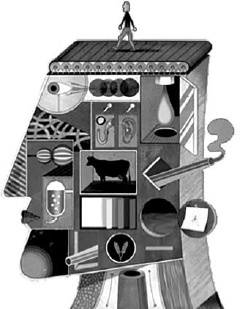
STILL EVOLVING (AFTER ALL THESE YEARS)
For 3,000 years, our species has been changing remarkably quickly. And we’re not done yet
Humans are willful creatures. No other species on the planet has gained so much mastery over its own fate. We have neutralized countless threats that once killed us in the millions: we have learned to protect ourselves from the elements and predators in the wild; we have developed cures and treatments for many deadly diseases; we have transformed the small gardens of our agrarian ancestors into the vast fields of industrial agriculture; and we have dramatically increased our chances of bearing healthy children despite all the usual difficulties. Many people argue that our technological advancement – our ability to defy and control nature – has made humans exempt from natural selection and that human evolution has effectively ceased. There is no “survival of the fittest,” the argument goes, if just about everyone survives into old age. This notion is more than just a stray thought in the public consciousness. Professional scientists such as Steven Jones of University College London and respected science communicators such as David Attenborough have also declared that human evolution is over.
But it is not. We have evolved in our recent past, and we will continue to do so as long as we are around. If we take the more than seven million years since humans split from our last common ancestor with chimpanzees and convert it to a 24-hour day, the past 30,000 years would take about a mere six minutes. Yet much has unfolded during this last chapter of our evolution: Vast migrations into new environments, dramatic changes in diet and a more than 1,000-fold increase in global population. All those new people added many unique mutations to the total population. The result was a pulse of rapid natural selection. Human evolution is not stopping. If anything, it is accelerating.
John Hawks, Scientific American: Innovators, June/July 2015
The words deadly and effectively in BOLD in the first paragraph of TEXT B are
Questão 26 215841
FACISA 2016/1TEXT B
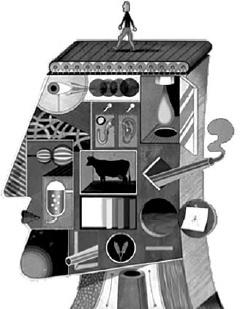
STILL EVOLVING (AFTER ALL THESE YEARS)
For 3,000 years, our species has been changing remarkably quickly. And we’re not done yet
Humans are willful creatures. No other species on the planet has gained so much mastery over its own fate. We have neutralized countless threats that once killed us in the millions: we have learned to protect ourselves from the elements and predators in the wild; we have developed cures and treatments for many deadly diseases; we have transformed the small gardens of our agrarian ancestors into the vast fields of industrial agriculture; and we have dramatically increased our chances of bearing healthy children despite all the usual difficulties. Many people argue that our technological advancement – our ability to defy and control nature – has made humans exempt from natural selection and that human evolution has effectively ceased. There is no “survival of the fittest,” the argument goes, if just about everyone survives into old age. This notion is more than just a stray thought in the public consciousness. Professional scientists such as Steven Jones of University College London and respected science communicators such as David Attenborough have also declared that human evolution is over.
But it is not. We have evolved in our recent past, and we will continue to do so as long as we are around. If we take the more than seven million years since humans split from our last common ancestor with chimpanzees and convert it to a 24-hour day, the past 30,000 years would take about a mere six minutes. Yet much has unfolded during this last chapter of our evolution: Vast migrations into new environments, dramatic changes in diet and a more than 1,000-fold increase in global population. All those new people added many unique mutations to the total population. The result was a pulse of rapid natural selection. Human evolution is not stopping. If anything, it is accelerating.
John Hawks, Scientific American: Innovators, June/July 2015
TEXT B claims that human beings are superior to other species because
Questão 22 215828
FACISA 2016/1TEXTO I
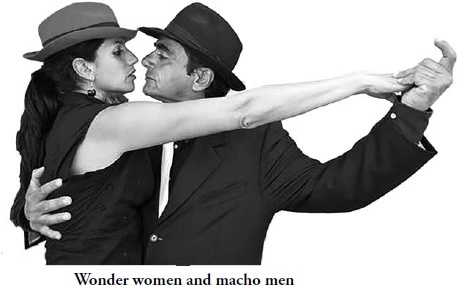
Latin American women are making great strides. The culture is not keeping up
Women [in Latin America] have made great progress towards equality with men, especially in schools, workplaces and politics. But social attitudes have changed more slowly. Women’s ambitions are often belittled: hostility towards them is common. Raw statistics tell a story of female advancement; machista culture has yet to catch up.
In the past quarter-century, the proportion of women in the workforce has risen more in Latin America than in any other region. True, they typically hold jobs that require little skill and pay low salaries: domestic work is the largest source of female employment. But women now spend more years in school than men, which suggests that their prospects will improve. A handful have climbed to the top of the corporate ladder. […]
Women are still scarce in Latin American boardrooms. Not in politics however. […] Several countries, including Argentina, Brazil and Mexico, have adopted quotas for women on parties’ lists of candidates. In the past decade, voters have elected women to the presidencies of Brazil, Chile and Costa Rica as well as Argentina. […]
Yet Latin Americans are less likely than people in any other region to say that women are treated with dignity. Only a third say women are respected,[…], just a fifth of people say women are appreciated […] Electing women to high office is apparently no cure for sexism.[…]. In Latin America it feeds off a culture of machismo, a chest-thumping sort of masculinity that can either smother women in domesticity or degrade them.[…]
There are signs, though, that attitudes may at last be starting to change.[…] Governments are starting to do a better job of fighting violence and promoting women’s equality at work.[…] Businesses are beginning to improve conditions for working women.[...]All this is encouraging. But it may be a while before Latin America’s culture catches up with the achievements of its women.
The Economist, August 22nd 2015
The word handful in BOLD in Paragraph 2 of TEXT A means
Questão 21 215824
FACISA 2016/1TEXT A
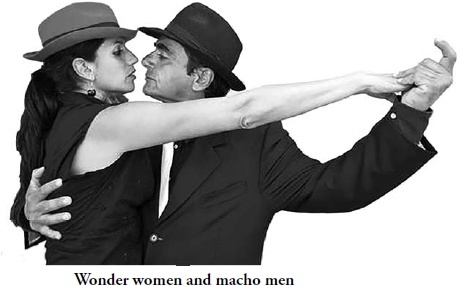
Latin American women are making great strides. The culture is not keeping up
Women [in Latin America] have made great progress towards equality with men, especially in schools, workplaces and politics. But social attitudes have changed more slowly. Women’s ambitions are often belittled: hostility towards them is common. Raw statistics tell a story of female advancement; machista culture has yet to catch up.
In the past quarter-century, the proportion of women in the workforce has risen more in Latin America than in any other region. True, they typically hold jobs that require little skill and pay low salaries: domestic work is the largest source of female employment. But women now spend more years in school than men, which suggests that their prospects will improve. A handful have climbed to the top of the corporate ladder. […]
Women are still scarce in Latin American boardrooms. Not in politics however. […] Several countries, including Argentina, Brazil and Mexico, have adopted quotas for women on parties’ lists of candidates. In the past decade, voters have elected women to the presidencies of Brazil, Chile and Costa Rica as well as Argentina. […]
Yet Latin Americans are less likely than people in any other region to say that women are treated with dignity. Only a third say women are respected,[…], just a fifth of people say women are appreciated […] Electing women to high office is apparently no cure for sexism.[…]. In Latin America it feeds off a culture of machismo, a chest-thumping sort of masculinity that can either smother women in domesticity or degrade them.[…]
There are signs, though, that attitudes may at last be starting to change.[…] Governments are starting to do a better job of fighting violence and promoting women’s equality at work.[…] Businesses are beginning to improve conditions for working women.[...]All this is encouraging. But it may be a while before Latin America’s culture catches up with the achievements of its women.
The Economist, August 22nd 2015
TEXT A expresses the opinion that
Questão 36 215669
FACISA 2016/2TEXT B
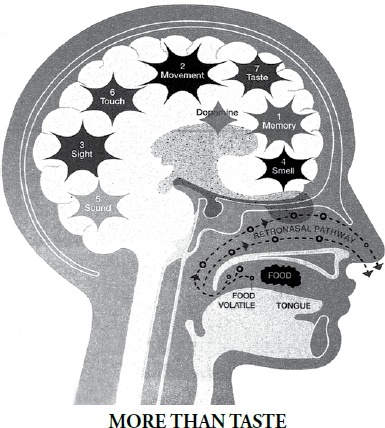
How the brain constructs flavor
The tongue detects basic tastes, but the nose – with hundreds of receptors for chemicals that waft off food – contributes more to flavor. According to neurobiologist Gordon Shepherd, the brain draws on all the senses to assemble a complex “flavor image” that lingers in our memory.
ANTICIPATION
A flavor experience may begin with a past meal: The memory activates dopamine reward centers, leading us to crave the flavors to come. We salivate.
SENSORY OVERTURE
A brain primed for pleasure begins to receive sensory impulses from the food as we move it to our mouth, see its colors and shapes, and inhale its aromas.
SOUNDS DELICIOUS
We chew. Sound and mouthfeel add key information: Is the food gooey, crunchy, or crispy? Receptors in our taste buds register sweet, salty, sour [and] bitter[…].
SENSATIONS MERGE TO CREATE FLAVOR
Volatile chemicals waft off food as we chew and swallow it, and as we exhale, they’re carried into the nasal cavity from behind. The brain combines information from all the senses to produce the experience of flavor. And though we think it originates in the mouth, most of it actually comes from these “retronasal” smells detected by receptors in the nose. They build the memory that prepares us for the next experience.
National Geographic, December 2015
Which of the following statements is correct, with reference to TEXT B?
Questão 59 212053
UNIVAG 2016/2Out of Shape at 18, at Risk for Future Diabetes
Nicholas Bakalar
March 9, 2016
Being out of shape at age 18 may increase your risk for eventually developing Type 2 diabetes, regardless of your weight and family history, a new study says. The study looked at data from more than 1.5 million Swedish men, using tests of muscle strength and aerobic capacity when they were conscripted for military service at age 18, between 1969 and 1997. Their muscle strength had been measured with handgrip and other tests, and their aerobic capacity calculated as they exercised on a stationary bicycle.
With this data in hand, researchers checked the men’s medical records from 1987 to 2012. They found 34,008 cases of Type 2 diabetes over an average 26 years of follow-up. The study is in the Annals of Internal Medicine. Both low aerobic capacity and low muscle strength at 18 were associated with a higher risk for Type 2 diabetes; poor aerobic capacity was a slightly stronger risk factor. Having both weak muscles and low aerobic capacity more than tripled the risk for future diabetes. The effect was independent of other risk factors — body mass index, family history of diabetes, education and socioeconomic status.
“Early life interventions are really important,” said the lead author, Dr. Casey Crump, a professor of family medicine at the Icahn School of Medicine at Mount Sinai in New York. “Prevention of Type 2 diabetes should begin early in life, and should include both aerobic fitness and muscular strength. This is important regardless of people’s weight.”
(http://well.blogs.nytimes.com)
No trecho do segundo parágrafo “They found 34,008 cases of Type 2 diabetes over an average 26 years of follow-up”, o termo em destaque tem sentido, em português, de
06