


![[Marketing] Questao Topo - deslogado](https://storage.estuda.com.br/banners/0_6b7ebee90b03af1c560c73bb8bcce34a_banner_deslogado_70_dias.png)
Questões de Inglês
19.971 Questões
Questão 15 306835
FCM PB 2016/2TEXT I

"Brazil’s soccer team celebrated its victory in the Confederations Cup tournament in Rio de Janeiro in June 2013. In a study of the Zika virus’s genome, scientists noted that it was possible the virus arrived during the tournament. Credit: Michael Regan/Getty Images‖
"The Zika virus is now spreading widely throughout the hemisphere probably arrived in the Americas in a single traveler in the second half of 2013 — almost a year earlier than previous estimates — according to a new study of the virus’s genome led by Brazilian and British researchers.
Experts were divided in their opinions of the new study, published on Thursday in the journalScience. Some praised the work, while others said it was too limited to draw such a specific conclusion.By counting mutations in the viral genomes in different blood samples over time, the scientists created a ―molecular clock‖ that estimates how fast the virus mutated. The researchers then compared new samples with earlier ones from Asia, where the Zika virus had circulated for decades, and from the South Pacific, where it began circulating in 2007. The team calculated that the Zika virus arrived in the Americas between May and December 2013. They also concluded that it probably — but not necessarily — arrived in Brazil first. The virus was not positively identified in Brazil until May 2015. But, by then, it had clearly been circulating in the country’s northeast for many months, because cities there were experiencing large outbreaks of a mysterious disease causing rash, fever and bloodshot eyes.
The new study relies on just 23 viral genomes. They include samples of Zika virus obtained in Thailand, French Polynesia and the Cook Islands and 20 in the Americas, including nine from Brazil and the rest from Colombia, Martinique, Haiti, Guatemala, Suriname and Puerto Rico. The gene sequences from the Americas were all closely related, and most resembled one collected in French Polynesia in November 2013.
Two earlier studies have suggested that the virus reached Brazil either with the influx of athletes or tourists arriving for the 2014 soccer World Cup, which was played in host cities all over Brazil from June to July that year. Those assumptions were based on air traffic patterns, not on viral sequencing. Oliver G. Pybus, a disease geneticist at Oxford University and one of the paper’s authors, said that the virus’s arrival during the Confederations Cup was ―within the range of possibilities, but not something you can capture scientifically."
Until this year, however, few doctors had even heard of Zika, and it was often misdiagnosed as dengue or other diseases."
(Adapted from: http://www.nytimes.com/2016/03/25/health)
Which of the following sentences is either not mentioned or cannot be comprehended from the text?
Questão 14 306833
FCM PB 2016/2TEXT I
"Brazil’s soccer team celebrated its victory in the Confederations Cup tournament in Rio de Janeiro in June 2013. In a study of the Zika virus’s genome, scientists noted that it was possible the virus arrived during the tournament. Credit: Michael Regan/Getty Images‖
"The Zika virus is now spreading widely throughout the hemisphere probably arrived in the Americas in a single traveler in the second half of 2013 — almost a year earlier than previous estimates — according to a new study of the virus’s genome led by Brazilian and British researchers.
Experts were divided in their opinions of the new study, published on Thursday in the journalScience. Some praised the work, while others said it was too limited to draw such a specific conclusion.By counting mutations in the viral genomes in different blood samples over time, the scientists created a ―molecular clock‖ that estimates how fast the virus mutated. The researchers then compared new samples with earlier ones from Asia, where the Zika virus had circulated for decades, and from the South Pacific, where it began circulating in 2007. The team calculated that the Zika virus arrived in the Americas between May and December 2013. They also concluded that it probably — but not necessarily — arrived in Brazil first. The virus was not positively identified in Brazil until May 2015. But, by then, it had clearly been circulating in the country’s northeast for many months, because cities there were experiencing large outbreaks of a mysterious disease causing rash, fever and bloodshot eyes.
The new study relies on just 23 viral genomes. They include samples of Zika virus obtained in Thailand, French Polynesia and the Cook Islands and 20 in the Americas, including nine from Brazil and the rest from Colombia, Martinique, Haiti, Guatemala, Suriname and Puerto Rico. The gene sequences from the Americas were all closely related, and most resembled one collected in French Polynesia in November 2013.
Two earlier studies have suggested that the virus reached Brazil either with the influx of athletes or tourists arriving for the 2014 soccer World Cup, which was played in host cities all over Brazil from June to July that year. Those assumptions were based on air traffic patterns, not on viral sequencing. Oliver G. Pybus, a disease geneticist at Oxford University and one of the paper’s authors, said that the virus’s arrival during the Confederations Cup was ―within the range of possibilities, but not something you can capture scientifically."
Until this year, however, few doctors had even heard of Zika, and it was often misdiagnosed as dengue or other diseases."
(Adapted from: http://www.nytimes.com/2016/03/25/health)
Which alternative below has the correct information about the word and its function in the text?
Questão 12 306826
FCM PB 2016/2TEXT I

"Brazil’s soccer team celebrated its victory in the Confederations Cup tournament in Rio de Janeiro in June 2013. In a study of the Zika virus’s genome, scientists noted that it was possible the virus arrived during the tournament. Credit: Michael Regan/Getty Images‖
"The Zika virus is now spreading widely throughout the hemisphere probably arrived in the Americas in a single traveler in the second half of 2013 — almost a year earlier than previous estimates — according to a new study of the virus’s genome led by Brazilian and British researchers.
Experts were divided in their opinions of the new study, published on Thursday in the journalScience. Some praised the work, while others said it was too limited to draw such a specific conclusion.By counting mutations in the viral genomes in different blood samples over time, the scientists created a ―molecular clock‖ that estimates how fast the virus mutated. The researchers then compared new samples with earlier ones from Asia, where the Zika virus had circulated for decades, and from the South Pacific, where it began circulating in 2007. The team calculated that the Zika virus arrived in the Americas between May and December 2013. They also concluded that it probably — but not necessarily — arrived in Brazil first. The virus was not positively identified in Brazil until May 2015. But, by then, it had clearly been circulating in the country’s northeast for many months, because cities there were experiencing large outbreaks of a mysterious disease causing rash, fever and bloodshot eyes.
The new study relies on just 23 viral genomes. They include samples of Zika virus obtained in Thailand, French Polynesia and the Cook Islands and 20 in the Americas, including nine from Brazil and the rest from Colombia, Martinique, Haiti, Guatemala, Suriname and Puerto Rico. The gene sequences from the Americas were all closely related, and most resembled one collected in French Polynesia in November 2013.
Two earlier studies have suggested that the virus reached Brazil either with the influx of athletes or tourists arriving for the 2014 soccer World Cup, which was played in host cities all over Brazil from June to July that year. Those assumptions were based on air traffic patterns, not on viral sequencing. Oliver G. Pybus, a disease geneticist at Oxford University and one of the paper’s authors, said that the virus’s arrival during the Confederations Cup was ―within the range of possibilities, but not something you can capture scientifically."
Until this year, however, few doctors had even heard of Zika, and it was often misdiagnosed as dengue or other diseases."
(Adapted from: http://www.nytimes.com/2016/03/25/health)
The conjunction while (2nd paragraph) may be replaced, without causing grammatical loss, by:
Questão 21 304156
UPF Verão 2016Text 2
Migrant crisis: Afghan boy's lonely start in Germany
[1] Munich station has become the destination for tens of thousands
[2] of people taking the migrant route from the Balkans, and
[3] Germany has reimposed border controls in an attempt to slow the
[4] influx down.
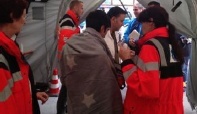
[5] Many of those arriving are children who have travelled long
[6] distances without their families. One was Ali, a 15-year-old
[7] unaccompanied Afghan boy from Kabul, who got off the train in
[8] Munich, at the end of an arduous journey by land and sea.
[9] He had come with a group of young friends from Afghanistan, all
[10] of them apparently without their families. They had travelled
[11] overland to Turkey, then by boat to Greece, across the Western
[12] Balkans to Austria, finally reaching Germany.
[13] Tired and hungry, he went to the bathroom, but when he came
[14] out, his friends were nowhere to be seen in the chaos and milling
[15] crowds in the station. Suddenly, he found himself completely
[16] alone, unable to speak German, or any other language that
[17] officials could understand.
[18] Eventually he gathered up the courage to approach police
[19] guarding tents set up by the German Medical Disaster Relief
[20] Agency. The police began looking for a Farsi speaker, and this
[21] was where I became involved.
[22] Ali was given a basic medical check-up and offered food and
[23] water. He was still shaking. Staff and volunteers wrapped a
[24] blanket around his shoulders and tried to calm him down. "I am
[25] scared of the police, I am scared they will send me back to
[26] Afghanistan", he said, crying. Fear and fatigue were clearly
[27] visible in his eyes.
[28] Soon, a social worker from the youth welfare office arrived and
[29] drove Ali to Haus 7, a refugee reception centre dedicated to
[30] unaccompanied minors. More than 10,000 unaccompanied
[31] refugee children live in Germany, many of them from Afghanistan
[32] and Syria.
[33] On the way to Haus 7, Ali gradually became calmer, and listened
[34] with fascination to the social worker talking to the lranian taxi
[35] driver in German. "This language sounds so strange and
[36] different", he said. "I would love to be able to speak it one day."
[37] When the social worker told him he would be given German
[38] lessons, a smile appeared on Ali's face for the first time since his
[39] arrival in Munich.
(Retrieved and adapted from http://www.bbc.com/news/worId-europe-34213673. Access on September 20“, 2015)
Answer questions according to Text 2.
The article illustrates:
Questão 22 304136
UPF Verão 2016Text 2
Migrant crisis: Afghan boy's lonely start in Germany
[1] Munich station has become the destination for tens of thousands
[2] of people taking the migrant route from the Balkans, and
[3] Germany has reimposed border controls in an attempt to slow the
[4] influx down.
[5] Many of those arriving are children who have travelled long
[6] distances without their families. One was Ali, a 15-year-old
[7] unaccompanied Afghan boy from Kabul, who got off the train in
[8] Munich, at the end of an arduous journey by land and sea.
[9] He had come with a group of young friends from Afghanistan, all
[10] of them apparently without their families. They had travelled
[11] overland to Turkey, then by boat to Greece, across the Western
[12] Balkans to Austria, finally reaching Germany.
[13] Tired and hungry, he went to the bathroom, but when he came
[14] out, his friends were nowhere to be seen in the chaos and milling
[15] crowds in the station. Suddenly, he found himself completely
[16] alone, unable to speak German, or any other language that
[17] officials could understand.
[18] Eventually he gathered up the courage to approach police
[19] guarding tents set up by the German Medical Disaster Relief
[20] Agency. The police began looking for a Farsi speaker, and this
[21] was where I became involved.
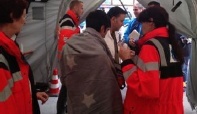
[22] Ali was given a basic medical check-up and offered food and
[23] water. He was still shaking. Staff and volunteers wrapped a
[24] blanket around his shoulders and tried to calm him down. "I am
[25] scared of the police, I am scared they will send me back to
[26] Afghanistan", he said, crying. Fear and fatigue were clearly
[27] visible in his eyes.
[28] Soon, a social worker from the youth welfare office arrived and
[29] drove Ali to Haus 7, a refugee reception centre dedicated to
[30] unaccompanied minors. More than 10,000 unaccompanied
[31] refugee children live in Germany, many of them from Afghanistan
[32] and Syria.
[33] On the way to Haus 7, Ali gradually became calmer, and listened
[34] with fascination to the social worker talking to the lranian taxi
[35] driver in German. "This language sounds so strange and
[36] different", he said. "I would love to be able to speak it one day."
[37] When the social worker told him he would be given German
[38] lessons, a smile appeared on Ali's face for the first time since his
[39] arrival in Munich.
(Retrieved and adapted from http://www.bbc.com/news/worId-europe-34213673. Access on September 20“, 2015)
Answer questions according to Text 2.
According to the text, Ali:
I. travelled by himself.
II. was feeling frightened when he arrived at the station.
III. was allocated into & youth hostel as a temporary accommodation.
IV. was examined by the Officials of the German Medical Disaster Relief Agency.
The only true statements are:
Questão 20 304121
UPF Verão 2016Text 1
Why is EU struggling migrants and asylum?
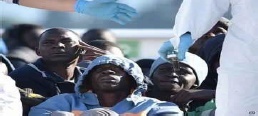
[1] Some 2,500 migrants have drowned in the Mediterranean
[2] this year as overcrowded boats head for the coasts of Greece
[3] and Italy.
[4] The flow of desperate migrants from Syria and North Africa
[5] hoping to reach Europe is already much higher than in the
[6] same period in 2014.
[7] Germany, which receives __________ the most asyIum
[8] applications in the EU, is expecting 800,000 refugees to
[9] arrive this year.
[10] How big is the migration challenge affecting Europe now?
[11] The number of migrants reaching Europe by boat has risen
[12] dramatically this year, compared with the same period in
[13] 2014. The number arriving in Greece, in particular, has
[14] soared.
[15] The EU's border agency said that almost 50,000 migrants
[16] had arrived on the Greek islands in July alone, most of them
[17] Syrians. The number of migrants reaching Greece by sea had
[18] reached 158,000 by mid-August, according to the UN,
[19] overtaking the 90,000 who arrived in ItaIy by sea.
[20] The majority heading for Greece via the eastern
[21] Mediterranean route take the relatively short voyage from the
[22] Turkish mainland to the islands of Kos, Chios, Lesvos and
[23] Samos. The voyage from Libya to Italy is longer and more
[24] hazardous.
[25] Migrant deaths at sea this year passed 2,000 in August, the
[26] International Organization for Migration (IOM) reported. And
[27] of those, 1,930 died trying to reach Italy. A shipwreck off
[28] Italy's Lampedusa island on 19 April took an estimated 800
[29] lives. So, more migrants - Syrians especially - are trying to
[30] reach Greece now, __________ risking the Libya route.
[31] Since the beginning of the year some 340,000 migrants have
[32] been detected at Europe's external borders, Frontex says.
[33] That compares with 123,500 in the same period last year.
(Retrieved and adapted from http://www.newstoday.com.bd/?option=detaiIs&news_id=2420633&date=2015-08-30. Access on October, 152 2015)
Answer questions according to Text 1.
Select the alternative that adequately fills in the blanks in lines 7 and 30:
06