


![[Marketing] Questao Topo - deslogado](https://storage.estuda.com.br/banners/0_6b7ebee90b03af1c560c73bb8bcce34a_banner_deslogado_70_dias.png)
Questões de Inglês
19.971 Questões
Questão 50 5905506
UnirG 2020Leia o texto a seguir para responder à questão.
Roberto: Hey, Loreto. Got a minute?
Loreto: I’m going to a meeting off-site, but we can talk if you don’t
mind walking me to my car.
Roberto: Sure, okay. I just wanted to ask if you’re interested in carpooling to work. We only live a few blocks from each other.
Loreto: Thanks for asking, but I’m not sure carpooling would work
for me. Sometimes I run late in the morning and I wouldn’t want to
hold you up.
Roberto: We wouldn’t have to commute together every day, only
on those days that are convenient for both of us. Carpooling has its
advantages, too. In addition to doing our part for the environment,
we could use the high-occupancy carpool lanes. That’ll save time,
especially if there’s a lot of traffic congestion.
Loreto: Yeah, I guess that could cut down on our commute time.
Roberto: We also get preferential treatment for parking on the days
we carpool.
Loreto: How would it work? Do we set up a schedule and take
turns driving?
Roberto: Why don’t I swing by and pick you up tomorrow morning
and we can talk more about it?
Loreto: If you don’t mind picking me up en route, that would be
great. By the way, how do you know where I live?
Roberto: Oh, I asked around. See you tomorrow.
Disponível em: https://secure3.eslpod.com/podcast/esl-podcast-480-riding-in-a-carpool/ Acesso em: 25 out. 2019.
A partir da leitura do diálogo entre Loreto e Roberto, podese inferir que eles são
Questão 49 5905502
UnirG 2020
Criados para satirizar o comportamento humano, os cartuns cumprem também o papel de denunciar aspectos da sociedade ou criticá-los.
No cartum acima, qual das seguintes expressões deve ser usada no último quadrinho para sinalizar o tom de denúncia/crítica?
Questão 23 5577209
Unit-AL Medicina 1° Dia 2020TEXTO
Most Adolescents Do Not Exercise Enough to Stay Healthy, Study Finds
GENEVA—Anew report finds most adolescents
around the world do not get enough physical activity
on a daily basis to be healthy and to stay healthy as
adults. This World Health Organization study presents
[5] the first-ever global estimates of insufficient physical
activity among adolescents ages 11 to 17.
Data for this study was collected from 1.6 million
adolescents across 146 countries. It finds girls were
less active than boys in all but four countries —Tonga,
[10] Samoa, Afghanistan and Zambia.
The report says the biggest gender gaps are seen
in the United States and Ireland where 15 percent
more girls than boys were physically inactive. The
World Health Organization recommends adolescents
[15] do moderate or vigorous exercises for one hour every
day of the week to stay fit
Benefits of exercise
Regina Guthold is a scientist in the WHO’s
Department of Maternal, Newborn, Child and
[20] Adolescent Health, and lead author of the study. She
says the 60-minute workouts can be split into three
segments of 20 minutes a day for health benefits to
kick in.
They get better heart health,” she said. “They
[25] have better respiratory fitness. They have better
cognitive function too — easier learning. They have
better pro-social behavior. And, it is likely that the
benefits track into adulthood, meaning that active
adolescents are likely to be active adults and then
[30] they get the health benefits as adults as well.”
Guthold says any kind of physical activity is good.
This could include walking or biking to school, team
sports, dancing, active domestic chores, physical
education and planned exercise.
[35] The study finds young people everywhere in the
world do not exercise enough. Data shows that 85
percent of girls and 78 percent of boys do not meet
the current WHO recommendations of at least one
hour of physical activity a day
[40] Electronic revolution
The co-author of the study, Leanne Riley, cites
some of the causes behind this high level of inactivity
“We have had this electronic revolution that
seems to have changed adolescents’ movement
[45] patterns and encourages them to sit more, to be
less active, to drive more, walk less, be less active
in general and then be more involved in digital play
rather than the active play,” she said.
WHO says schools should encourage physical
[50] education and get students to be more active
in competitive and non-competitive sports. It
recommends city and community leaders should
create paths for young people to walk and cycle safely
and independently.
[55] It says urban planning also has a big role to play
in designing safer, recreational play areas in parks for
young people.
WHO also states that
Questão 31 5552823
Escola Naval 1° Dia 2020Which option completes the text below correctly?
There are different opinions on how water you should be drinking every day Health authorities commonly recommend eight 8- ounce glasses, which equals about 2 liters, or half a gallon. This is called the 8x8 rule and is very easy to remember.
However, health gurus believe that you need to sip on water constantiy throughout the day, even when you're not thirsty.
As with most things, this depends on the individual. factors (both internal and external) ultimately affect your need for water.
(https://www healthline.com)
Questão 23 5552513
Escola Naval 1° Dia 2020Based on the text below, answer question.
Career confusion in the 21st century: challenges and opportunities
[1] The time and energy that teenagers dedicate to learning and the fields of study they choose profoundly shape the opportunities they will have during their whole lives. Their dreams and aspirations do not just depend on
their talents, but they can be highly influenced by their personal background as well as by the depth and extent of their knowledge about the world of work. In summary, students cannot be what they cannot see.
[2] With young people staying in education longer than ever and the labour market automating with unprecedented speed, students need help to make sense of the world of work. In 2018, the OECD Programme for International Student Assessment (PISA), the world's largest dataset on young people's educational experiences, collected first-of-its kind data on this, making it possible to explore how much the career dreams of young people have changed over the past 20 years, how closely they are related to actual labour demand, and how closely aspirations are shaped by social background and gender.
[3] Studies in Australia, the United Kingdom and the United States show that teenagers who combine part- time employment with full-time education do better in their school-to-work transitions. The positive benefits include
lower probabilities of being unemployed or NEET (Not in Education, Employment or Training), higher wages, and others (see Box 1). However, the benefits cannot be taken for granted and some experiences in different countries have demonstrated that governments and schools can better support young people as they prepare themselves for working life.
[4] Schools may provide programmes of career development activities, particularly those that include workplace experience. Experience of the world of work challenges young people to understand what it means to be personally effective in different workplaces while providing a unique opportunity to develop social networks of value. Through exposure to the people who do different jobs, young people have the chance to challenge gender- and class-based stereotyping and expand their aspirations, easing ultimate entry into the labour market (see Box 2).
[5] However, in recent years, analyses of career preparation have focused on the challenge cf misalignment: where the educational plans of young people are out of kilter with their occupational expectations. When young people underestimate the education required to fulfil their dreams, they can expect to find their early working lives more difficult than would be expected. Of particular concern is that most young people whose aspirations are misaligned with their education come from disadvantaged backgrounds. Consequently, it is now clear that career guidance serves an important service in dealing with inequalities.
[6] Results from PISA show that the career aspirations of young people are no simple reflection of teenage academic ability. Rather, they reflect complex lives. Analyses show that the children of more advantaged families are more likely to want to go on to university than working class kids. Similarly, career thinking is often determined by gender and immigrant background as well as socioeconomic status. Disadvantaged young people are at clear risk of career confusion. It is neither fair, nor efficient, for students to move through education with limited views of both the amplitude of the labour market and their own potential.
Box 1 - The positive effects of teenage part-time employment
[7] Studies in Australia, the United Kingdom and the United States commonly show that teenagers who combine full-time study with part-time work can expect to do better in the adult job market than would be expected, given their backgrounds and academic qualifications. Studies that follow them from childhood to adulthood have routinely found evidence of higher earnings and fewer periods of unemployment. In an American study which follows young people born in the mid-1970s up to the age of 30, the researchers find a positive relationship between working part time at age 14 and 15 and a subjective sense of job realization in adulthood. Teenage students who worked were far more likely to agree at age 30 that they were working in a job that they wanted. However, the exact relationship between working when a teenager and later "economic success is not well understood, and the phenomenon may have some disadvantages: students working excessive hours perform worse in final examinations than would otherwise be exnected.
Box 2 - The long-term impacts of career talks
[8] Results from PISA show that the career aspirations of young people are no simple reflection of teenage academic ability. Rather, they reflect complex lives. Analyses show that the children of more advantaged families are more likely to want to go on to university than
(Adapted from: Dream jobs? Teenager career aspirations and the future of work. Available at: www.oecd.org/education/dream-jobs- teenagers-career-aspirations-and-the-future-of-work .htm )
The word “their, in “[...] with limited views of both the amplitude of the labour market and their own potential,” (paragraph 6), refers to:
Questão 20 5506390
FACISA 2020/1Read the text below and answer the question that follow.
TEXT
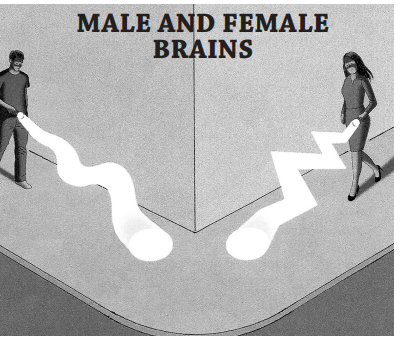
Few would deny that men and women differ physically. […] But their brains and behavior reflect no significant differences, argue many people, including some psychologists. Increasingly, it seems, it is de rigueur to reject or downplay psychological differences between the sexes – despite substantial scientific evidence that they exist.
Women tend to engage in more altruistic behavior and rate higher on certain measures of empathy. Men, on average, perform better on tasks in which they mentally rotate an object, while women can better remember the location of objects. Evolutionary theorists postulate that sex differences arose because male and female hominids faced different reproductive and survival pressures.
Men are also much more likely to be diagnosed with autism spectrum disorder, for instance, while rates of mood disorders and Alzheimer’s disease are higher among women. These sex differences can have important implications for understanding and treating disorders.
A recent review of sex differences in vulnerability to stress examined findings in humans and nonhuman animals on molecular as well as behavioral levels. Among those findings […] is that “boys and girls, particularly adolescents, had different responses to experiencing post-traumatic stress disorder. Girls had internalizing symptoms, such as self-blame, and boys engaged much more in externalizing behavior,” including acting disruptively. […] The same disorders can [therefore] produce considerably different symptoms.
Sex differences can be important in the development of medications, too. […] past efforts show that a drug tested on male animals won’t necessarily work for human females.
“No one’s saying that men and women are completely different beings. There is probably more that overlaps than is different,” [Georgia] Hodes says. “But we need to understand these differences. I think it becomes especially important when you’re trying to develop better treatments.”
Matt Huston, Psychology Today, October 2019
The expression “on average” in BOLD in PARAGRAPH 2 of TEXT signifies
06