


![[Marketing] Questao Topo - deslogado](https://storage.estuda.com.br/banners/0_6b7ebee90b03af1c560c73bb8bcce34a_banner_deslogado_70_dias.png)
Questões de Inglês
19.971 Questões
Questão 74 734581
FAI 2016/1Vaccine hesitancy: A growing challenge for immunization programmes
August 18, 2015
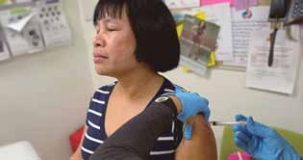
In a special issue of the journal Vaccine, guest-edited by WHO (World Health Organization) and published today, experts review the role of vaccine hesitancy in limiting vaccine coverage and explore strategies to address it. Vaccine hesitancy refers to delay in acceptance or refusal of safe vaccines despite availability of vaccination services. The issue is complex and context specific, varying across time, place and vaccines. It is influenced by factors such as misinformation, complacency, convenience and confidence.
“Vaccines can only improve health and prevent deaths if they are used, and immunization programmes must be able to achieve and sustain high vaccine uptake rates. Vaccine hesitancy is an increasingly important issue for country immunization programmes,” says Dr Philippe Duclos, Senior Health Adviser for WHO’s Immunization, Vaccines and Biological Department.
The recommendations proposed by WHO aim to increase the understanding of vaccine hesitancy, its determinants and challenges. They also suggest ways organizations can increase acceptance of vaccines, share effective practices, and develop new tools to assess and address hesitancy
Factors contributing to vaccine hesitancy
Concerns about vaccine safety can be linked to vaccine hesitancy, but safety concerns are only one of many factors that may drive hesitancy. Vaccine hesitancy can be caused by other factors such as: negative beliefs based on myths, e.g. that vaccination of women leads to infertility; misinformation; mistrust in the health care professional or health care system; the role of influential leaders; costs, and geographic barriers.
But the authors note there is no “magic bullet,” or single intervention strategy that works for all instances of vaccine hesitancy. The magnitude and setting of the problem varies and must be diagnosed for each instance to develop tailored strategies to improve vaccine acceptance. Effective communication is key to dispelling fears, addressing concerns and promoting acceptance of vaccination.
Vaccine hesitancy is not only an issue in high income countries, but is a complex, rapidly changing global problem that varies widely. Interviews with immunization managers from WHO regions revealed that while in some cases particular rural ethnic minorities and remote communities were affected; in other areas wealthy urban residents expressed concerns regarding vaccine safety. In some areas concerns are related to subgroups of religious or philosophical objectors.
Determinants of vaccine hesitancy can act both as barriers and promoters. For example, a higher level of education does not necessarily predict vaccine acceptance, the experts note. In fact, a number of studies identify higher education as a potential barrier to vaccine acceptance in some settings, while other studies identify education as a promoter of vaccine acceptance in different areas.
(www.who.int. Adaptado.)
According to the information presented in the first and second paragraphs,
Questão 20 692970
UNESC 2016Mark the alternative in which DO and MAKE are all used correctly:
Questão 65 631978
UFN Verão 2016Asia's smartphone addiction
By Heather Chen
BBC News, Singapore
7 September 2015
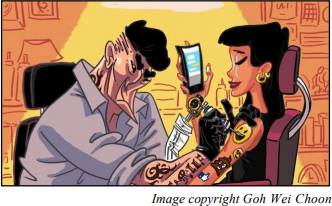
Nomophobia - or no mobile phone phobia
- the onset of severe anxiety on losing
access to your smartphone has been
talked about for years.But in Asia, the
[5] birthplace of the selfie stick and the
emoji, psychologists say smartphone
addiction is fast on the rise and the
addicts are getting younger.
A recent study surveyed almost 1,000
[10] students in South Korea, where 72% of
children own a smartphone by the age of
11 or 12 and spend on average 5.4 hours
a day on them - as a result about 25% of
children were considered addicted to
[15] smartphones. The study, to be published
in 2016 found that stress was an
important indicator of your likelihood
to get addicted.
Smartphones are central to many
[20] societies but they have been integrated
into Asian cultures in many ways: there
is the obligatory "food porn" photograph
at the beginning of any meal; in Japan
it is an entire subculture with its own
[25] name-keitai culture.
Asia and its 2.5bn smartphone
users provides a stream of
phone-related "mishap news", such as
the Taiwanese tourist who had to be
[30] rescued after she walked off a pier
while checking Facebook on her phone.
Or the woman from China's Sichuan
province rescued by fire fighters
after falling into a drain while
[35] looking at her phone.
They may make for slapstick healines
but in Singapore too the concern is
that those most vulnerable are getting
younger. With its population of just 6
[40] million, it has one of the world's
highest smartphone penetration rates.
It also has specialists in digital
adiction, a cyber wellness clinic and
a campaign to see digital addiction be
[45] formally recognised.
"Youths lack that level of maturity,
making it harder for them to manage
smartphone usage as they don't have
self-control," said Chong Ee-Jay,
[50] manager of Touch Cyber Wellness Centre
in Singapore.
He has serious concerns about how
young children behave when they get
phones.
[55] "They are readily available to very
young children here as part of their
school curriculum," he said. In
Singapore it is not uncommon for
homework assignments to be set via
[60] WhatsApp.
In South Korea, 19-year-old student
Emma Yoon (not her real name) has been
undergoing treatment fornomophobia
since April 2013. "My phone became my
world. It became an extension of me.
[65] My heart would race and my palms grew
sweaty if I thought I lost my phone.
So I never went anywhere without it."
Ms Yoon's parents also said that
their daughter's smartphone usage
[70] amplified other behavioural problems
she was exhibiting. She began to
retreat from hobbies and school
activities.
Many people will recognise the
[75] feeling of anxiety when the pocket
feels strangely light but the
difference here is that the phone
becomes the focus of other problems
and anxieties. The South Korean study
[80] also found that people who used their
smartphones for social media purposes
were more likely to get addicted.
The device is seen as the sole key
to wider human contact. Vulnerable
[85] children and young adults can feel
adrift and unable to connect to others
without it. In some Asian societies,
where students are set heavy and
time-consuming homework tasks to
[90] complete on their own, the phone is
the only connection to friends, humour
and sharing. So it can assume a
disproportionate importance.
http://www.bbc.com/news/world-asia-33130567
Segundo o texto, é correto afirmar que:
Questão 63 631973
UFN Verão 2016Asia's smartphone addiction
By Heather Chen
BBC News, Singapore
7 September 2015
Nomophobia - or no mobile phone phobia
- the onset of severe anxiety on losing
access to your smartphone has been
talked about for years.But in Asia, the
[5] birthplace of the selfie stick and the
emoji, psychologists say smartphone
addiction is fast on the rise and the
addicts are getting younger.
A recent study surveyed almost 1,000
[10] students in South Korea, where 72% of
children own a smartphone by the age of
11 or 12 and spend on average 5.4 hours
a day on them - as a result about 25% of
children were considered addicted to
[15] smartphones. The study, to be published
in 2016 found that stress was an
important indicator of your likelihood
to get addicted.
Smartphones are central to many
[20] societies but they have been integrated
into Asian cultures in many ways: there
is the obligatory "food porn" photograph
at the beginning of any meal; in Japan
it is an entire subculture with its own
[25] name-keitai culture.
Asia and its 2.5bn smartphone
users provides a stream of
phone-related "mishap news", such as
the Taiwanese tourist who had to be
[30] rescued after she walked off a pier
while checking Facebook on her phone.
Or the woman from China's Sichuan
province rescued by fire fighters
after falling into a drain while
[35] looking at her phone.
They may make for slapstick healines
but in Singapore too the concern is
that those most vulnerable are getting
younger. With its population of just 6
[40] million, it has one of the world's
highest smartphone penetration rates.
It also has specialists in digital
adiction, a cyber wellness clinic and
a campaign to see digital addiction be
[45] formally recognised.
"Youths lack that level of maturity,
making it harder for them to manage
smartphone usage as they don't have
self-control," said Chong Ee-Jay,
[50] manager of Touch Cyber Wellness Centre
in Singapore.
He has serious concerns about how
young children behave when they get
phones.
[55] "They are readily available to very
young children here as part of their
school curriculum," he said. In
Singapore it is not uncommon for
homework assignments to be set via
[60] WhatsApp.
In South Korea, 19-year-old student
Emma Yoon (not her real name) has been
undergoing treatment fornomophobia
since April 2013. "My phone became my
world. It became an extension of me.
[65] My heart would race and my palms grew
sweaty if I thought I lost my phone.
So I never went anywhere without it."
Ms Yoon's parents also said that
their daughter's smartphone usage
[70] amplified other behavioural problems
she was exhibiting. She began to
retreat from hobbies and school
activities.
Many people will recognise the
[75] feeling of anxiety when the pocket
feels strangely light but the
difference here is that the phone
becomes the focus of other problems
and anxieties. The South Korean study
[80] also found that people who used their
smartphones for social media purposes
were more likely to get addicted.
The device is seen as the sole key
to wider human contact. Vulnerable
[85] children and young adults can feel
adrift and unable to connect to others
without it. In some Asian societies,
where students are set heavy and
time-consuming homework tasks to
[90] complete on their own, the phone is
the only connection to friends, humour
and sharing. So it can assume a
disproportionate importance.
http://www.bbc.com/news/world-asia-33130567
O texto responde, prioritariamente, a qual dos questionamentos a seguir?
Questão 60 631932
UFN Verão 2016Asia's smartphone addiction
By Heather Chen
BBC News, Singapore
7 September 2015
Nomophobia - or no mobile phone phobia
- the onset of severe anxiety on losing
access to your smartphone has been
talked about for years.But in Asia, the
[5] birthplace of the selfie stick and the
emoji, psychologists say smartphone
addiction is fast on the rise and the
addicts are getting younger.
A recent study surveyed almost 1,000
[10] students in South Korea, where 72% of
children own a smartphone by the age of
11 or 12 and spend on average 5.4 hours
a day on them - as a result about 25% of
children were considered addicted to
[15] smartphones. The study, to be published
in 2016 found that stress was an
important indicator of your likelihood
to get addicted.
Smartphones are central to many
[20] societies but they have been integrated
into Asian cultures in many ways: there
is the obligatory "food porn" photograph
at the beginning of any meal; in Japan
it is an entire subculture with its own
[25] name-keitai culture.
Asia and its 2.5bn smartphone
users provides a stream of
phone-related "mishap news", such as
the Taiwanese tourist who had to be
[30] rescued after she walked off a pier
while checking Facebook on her phone.
Or the woman from China's Sichuan
province rescued by fire fighters
after falling into a drain while
[35] looking at her phone.
They may make for slapstick healines
but in Singapore too the concern is
that those most vulnerable are getting
younger. With its population of just 6
[40] million, it has one of the world's
highest smartphone penetration rates.
It also has specialists in digital
adiction, a cyber wellness clinic and
a campaign to see digital addiction be
[45] formally recognised.
"Youths lack that level of maturity,
making it harder for them to manage
smartphone usage as they don't have
self-control," said Chong Ee-Jay,
[50] manager of Touch Cyber Wellness Centre
in Singapore.
He has serious concerns about how
young children behave when they get
phones.
[55] "They are readily available to very
young children here as part of their
school curriculum," he said. In
Singapore it is not uncommon for
homework assignments to be set via
[60] WhatsApp.
In South Korea, 19-year-old student
Emma Yoon (not her real name) has been
undergoing treatment fornomophobia
since April 2013. "My phone became my
world. It became an extension of me.
[65] My heart would race and my palms grew
sweaty if I thought I lost my phone.
So I never went anywhere without it."
Ms Yoon's parents also said that
their daughter's smartphone usage
[70] amplified other behavioural problems
she was exhibiting. She began to
retreat from hobbies and school
activities.
Many people will recognise the
[75] feeling of anxiety when the pocket
feels strangely light but the
difference here is that the phone
becomes the focus of other problems
and anxieties. The South Korean study
[80] also found that people who used their
smartphones for social media purposes
were more likely to get addicted.
The device is seen as the sole key
to wider human contact. Vulnerable
[85] children and young adults can feel
adrift and unable to connect to others
without it. In some Asian societies,
where students are set heavy and
time-consuming homework tasks to
[90] complete on their own, the phone is
the only connection to friends, humour
and sharing. So it can assume a
disproportionate importance.
http://www.bbc.com/news/world-asia-33130567
Analise as seguintes afirmações a respeito do texto.
I. O sentimento de ansiedade extrema, causado pela incapacidade de comunicação através de aparelhos celulares, denomina-se nomofobia e, ao contrário do que comumente se pensa, não representa um problema recente.
II. No contexto asiático, o problema da nomofobia assume proporções ainda maiores, se comparado ao resto do mundo, sobretudo entre os indivíduos mais jovens, cada vez mais dependentes de seus telefones celulares.
III. Uma pesquisa recente, envolvendo cerca de 1.000 alunos coreanos de até 12 anos de idade, concluiu que 72% dos sujeitos investigados estão viciados no uso de smartphones, sendo o estresse o sintoma mais evidente na falta de acesso à ferramenta.
Está(ão) correta(s)
Questão 12 601618
FAM 2016/1Leia o texto para responder à questão.
Americans are finally eating less
July 24, 2015
Margot Sanger-Katz
After decades of worsening diets and sharp increases in obesity, Americans’ eating habits have begun changing for the better. Calories consumed daily by the typical American adult, which peaked around 2003, are in the midst of their first sustained decline since federal statistics began to track the subject, more than 40 years ago. The number of calories that the average American child takes in daily has fallen even more — by at least 9 percent.
The declines cut across most major demographic groups — including higher- and lower-income families, and blacks and whites — though they vary somewhat by group. In the most striking shift, the amount of full-calorie soda drunk by the average American has dropped 25 percent since the late 1990s. As calorie consumption has declined, obesity rates appear to have stopped rising for adults and school-aged children and have come down for the youngest children, suggesting the calorie reductions are making a difference.
The reversal appears to stem from people’s growing realization that they were harming their health by eating and drinking too much. The awareness began to build in the late 1990s, thanks to a burst of scientific research about the costs of obesity, and to public health campaigns in recent years. The encouraging data does not mean an end to the obesity epidemic: More than a third of American adults are still considered obese, putting them at increased risk of diabetes, heart disease and cancer. Americans are still eating far too few fruits and vegetables and far too much junk food, even if they are eating somewhat less of it, experts say.
But the changes in eating habits suggest that what once seemed an inexorable decline in health may finally be changing course. Since the mid-1970s, when American eating habits began to rapidly change, calorie consumption had been on a near-steady incline. “I think people are hearing the message, and diet is slowly improving,” said Dr. Dariush Mozaffarian, the dean of the Friedman School of Nutrition Science and Policy at Tufts University. Barry Popkin, a University of North Carolina professor who has studied food data extensively, described the development as a “turning point.”
There is no perfect way to measure American calorie consumption. But three large sources of data about diet all point in the same direction. Detailed daily food diaries tracked by government researchers, data from food bar codes and estimates of food production all show reductions in the calories consumed by the average American since the early 2000s. Those signals, along with the flattening of the national obesity rate, have convinced many public health researchers that the changes are meaningful.
The eating changes have been the most substantial in households with children. Becky Lopes-Filho’s 4-year-old son, Sebastian, has always been at the top of the growth chart for weight. Ms. Lopes-Filho, 35, is the operations manager of a pizzeria in Cambridge, Mass., and her son, like her, loves food. As he has gotten older, she has grown more concerned about his cravings for sweets. Instead of a cookie every day now, she said, she has been trying to limit him to one a week. “If he was given access, he would just go nuts,” she said. “He, I think, would tend to be a super obese kid.”
(www.nytimes.com. Adaptado.)
No trecho do segundo parágrafo “though they vary somewhat by group”, o termo em destaque refere-se a
06