


![[Marketing] Questao Topo - deslogado](https://storage.estuda.com.br/banners/0_6b7ebee90b03af1c560c73bb8bcce34a_banner_deslogado_70_dias.png)
Questões de Inglês
19.971 Questões
Questão 9 6407018
EFOMM 2016The seven-decade journey to an expanded Panama Canal is coming to a close, despite one last obstacle.
(by David Z. Morris / April 17, 2015)
The Panama Canal is getting a major
overhaul, and despite an unresolved lawsuit that
has delayed the project, it’s poised to transform
global trade dramatically.
The original Panama Canal remains of the
most ambitious public works projects of all time.
But it wasn’t quite ambitious enough: within a few
years of its opening in 1914, it was too small for
many military and cargo ships. The U.S. authorities
then in control began excavation for larger locks in
1939—but that work came to a standstill as
America entered World War II, and no effective
progress was made on the project for the remainder
of the 20th century.
That changed swiftly when the canal
transitioned to full Panamanian control in 1999. By
2006, a detailed expansion plan had been drafted
and approved by Panamanian voters in a 77%
landslide. With a total budget of $5.2 billion,
completion was initially projected for 2014. Last
year, the canal netted $2.6 billion, roughly half of
Panama’s national revenue. The Panama Canal
Authority has projected that the expansion will
increase that revenue eightfold by 2025.
There’s been a hitch in the expansion effort,
however. A group of mostly European contractors
known as the Grupo Unidos por el Canal has filed
claims totaling more than a half billion dollars
against the Panama Canal Authority, alleging that
misinformation led to cost overruns.
But according to Dr. J. David Rogers, a
professor of geological engineering at Missouri
University of Science and Technology, who has
worked closely with the Panamanians for more
than a quarter-century, the real problem is that
contractors knowingly underbid the job.
The canal expansion is about more than
money to the Panamanians, according to Dr.
Rogers. “It’s a national pride project for them. It’s
their lifeblood,” he says of the Panamanians’
feelings about the canal. “It’s what makes them
go.”
The same seriousness didn’t characterize
Americans’ approach to canal expansion. Of a
series of false starts and fizzled plans, the most
amazing came as part of Operation Plowshare, the
“Atoms for Peace” program of the U.S. Atomic
Energy Agency (now the Department of Energy).
Intended to highlight the peacetime usefulness of
atomic warheads, Plowshare spent more than a
decade exploring the possibility of widening the
canal by detonating a string of nuclear warheads.
Rising awareness of environmental risks in the
1960s scuttled the idea.
Under the current, nuke-free plan, new
approach channels and locks are being excavated
alongside the existing entrances, allowing
operations to continue normally during
construction. The new locks and channels will be
about three times bigger, allowing the passage of
more of today’s huge container ships. The
maximum load will increase from about 5,000
containers to 12,000—though the very largest
ships, which currently balloon up to 19,000
containers and primarily work routes between
Europe and Asia through the Suez Canal, still
won’t fit.
The expansion will provide cheaper shipping
between Asia and the American Gulf Coast. Traffic
that currently flows through West Coast ports such
as Los Angeles and Long Beach—including huge
amounts of Midwestern grain and coal—will soon
move more directly through ports including
Houston and Savannah. Ports along the U.S. Gulf
and East coasts have been expanding to
accommodate increased ship size and traffic.
The ongoing court battle means that even the
Panama Canal Authority’s recently-updated 2016
target for completion may be missed. But a bigger
canal is finally coming—and with it, a host of new
possibilities.
(fortune.com/2015/04/17/panama-canal/)
Choose the correct alternative.
Questão 5 6406956
EFOMM 2016The seven-decade journey to an expanded Panama Canal is coming to a close, despite one last obstacle.
(by David Z. Morris / April 17, 2015)
The Panama Canal is getting a major
overhaul, and despite an unresolved lawsuit that
has delayed the project, it’s poised to transform
global trade dramatically.
The original Panama Canal remains of the
most ambitious public works projects of all time.
But it wasn’t quite ambitious enough: within a few
years of its opening in 1914, it was too small for
many military and cargo ships. The U.S. authorities
then in control began excavation for larger locks in
1939—but that work came to a standstill as
America entered World War II, and no effective
progress was made on the project for the remainder
of the 20th century.
That changed swiftly when the canal
transitioned to full Panamanian control in 1999. By
2006, a detailed expansion plan had been drafted
and approved by Panamanian voters in a 77%
landslide. With a total budget of $5.2 billion,
completion was initially projected for 2014. Last
year, the canal netted $2.6 billion, roughly half of
Panama’s national revenue. The Panama Canal
Authority has projected that the expansion will
increase that revenue eightfold by 2025.
There’s been a hitch in the expansion effort,
however. A group of mostly European contractors
known as the Grupo Unidos por el Canal has filed
claims totaling more than a half billion dollars
against the Panama Canal Authority, alleging that
misinformation led to cost overruns.
But according to Dr. J. David Rogers, a
professor of geological engineering at Missouri
University of Science and Technology, who has
worked closely with the Panamanians for more
than a quarter-century, the real problem is that
contractors knowingly underbid the job.
The canal expansion is about more than
money to the Panamanians, according to Dr.
Rogers. “It’s a national pride project for them. It’s
their lifeblood,” he says of the Panamanians’
feelings about the canal. “It’s what makes them
go.”
The same seriousness didn’t characterize
Americans’ approach to canal expansion. Of a
series of false starts and fizzled plans, the most
amazing came as part of Operation Plowshare, the
“Atoms for Peace” program of the U.S. Atomic
Energy Agency (now the Department of Energy).
Intended to highlight the peacetime usefulness of
atomic warheads, Plowshare spent more than a
decade exploring the possibility of widening the
canal by detonating a string of nuclear warheads.
Rising awareness of environmental risks in the
1960s scuttled the idea.
Under the current, nuke-free plan, new
approach channels and locks are being excavated
alongside the existing entrances, allowing
operations to continue normally during
construction. The new locks and channels will be
about three times bigger, allowing the passage of
more of today’s huge container ships. The
maximum load will increase from about 5,000
containers to 12,000—though the very largest
ships, which currently balloon up to 19,000
containers and primarily work routes between
Europe and Asia through the Suez Canal, still
won’t fit.
The expansion will provide cheaper shipping
between Asia and the American Gulf Coast. Traffic
that currently flows through West Coast ports such
as Los Angeles and Long Beach—including huge
amounts of Midwestern grain and coal—will soon
move more directly through ports including
Houston and Savannah. Ports along the U.S. Gulf
and East coasts have been expanding to
accommodate increased ship size and traffic.
The ongoing court battle means that even the
Panama Canal Authority’s recently-updated 2016
target for completion may be missed. But a bigger
canal is finally coming—and with it, a host of new
possibilities.
(fortune.com/2015/04/17/panama-canal/)
Complete the sentences with the correct verb tenses.
1. Little ____________ how inconvenient he can be.
2. Not until she received the call _______________ relieved.
3. Not for one moment _____________ your honesty.
4. Under no circumstances _______________ class.
Questão 2 6406926
EFOMM 2016The seven-decade journey to an expanded Panama Canal is coming to a close, despite one last obstacle.
(by David Z. Morris / April 17, 2015)
The Panama Canal is getting a major
overhaul, and despite an unresolved lawsuit that
has delayed the project, it’s poised to transform
global trade dramatically.
The original Panama Canal remains of the
most ambitious public works projects of all time.
But it wasn’t quite ambitious enough: within a few
years of its opening in 1914, it was too small for
many military and cargo ships. The U.S. authorities
then in control began excavation for larger locks in
1939—but that work came to a standstill as
America entered World War II, and no effective
progress was made on the project for the remainder
of the 20th century.
That changed swiftly when the canal
transitioned to full Panamanian control in 1999. By
2006, a detailed expansion plan had been drafted
and approved by Panamanian voters in a 77%
landslide. With a total budget of $5.2 billion,
completion was initially projected for 2014. Last
year, the canal netted $2.6 billion, roughly half of
Panama’s national revenue. The Panama Canal
Authority has projected that the expansion will
increase that revenue eightfold by 2025.
There’s been a hitch in the expansion effort,
however. A group of mostly European contractors
known as the Grupo Unidos por el Canal has filed
claims totaling more than a half billion dollars
against the Panama Canal Authority, alleging that
misinformation led to cost overruns.
But according to Dr. J. David Rogers, a
professor of geological engineering at Missouri
University of Science and Technology, who has
worked closely with the Panamanians for more
than a quarter-century, the real problem is that
contractors knowingly underbid the job.
The canal expansion is about more than
money to the Panamanians, according to Dr.
Rogers. “It’s a national pride project for them. It’s
their lifeblood,” he says of the Panamanians’
feelings about the canal. “It’s what makes them
go.”
The same seriousness didn’t characterize
Americans’ approach to canal expansion. Of a
series of false starts and fizzled plans, the most
amazing came as part of Operation Plowshare, the
“Atoms for Peace” program of the U.S. Atomic
Energy Agency (now the Department of Energy).
Intended to highlight the peacetime usefulness of
atomic warheads, Plowshare spent more than a
decade exploring the possibility of widening the
canal by detonating a string of nuclear warheads.
Rising awareness of environmental risks in the
1960s scuttled the idea.
Under the current, nuke-free plan, new
approach channels and locks are being excavated
alongside the existing entrances, allowing
operations to continue normally during
construction. The new locks and channels will be
about three times bigger, allowing the passage of
more of today’s huge container ships. The
maximum load will increase from about 5,000
containers to 12,000—though the very largest
ships, which currently balloon up to 19,000
containers and primarily work routes between
Europe and Asia through the Suez Canal, still
won’t fit.
The expansion will provide cheaper shipping
between Asia and the American Gulf Coast. Traffic
that currently flows through West Coast ports such
as Los Angeles and Long Beach—including huge
amounts of Midwestern grain and coal—will soon
move more directly through ports including
Houston and Savannah. Ports along the U.S. Gulf
and East coasts have been expanding to
accommodate increased ship size and traffic.
The ongoing court battle means that even the
Panama Canal Authority’s recently-updated 2016
target for completion may be missed. But a bigger
canal is finally coming—and with it, a host of new
possibilities.
(fortune.com/2015/04/17/panama-canal/)
In lines 9 - 11: “The US authorities then in control began excavation for larger locks in 1939”, the word in bold means:
Questão 33 6312663
UNIFIMES 2016Leia o texto para responder a questão.
Mediterranean diet slows ageing of brain, study shows
Camilla Turner
October 21, 2015
Following a Mediterranean-style diet slows the rate at which the brain shrinks by five years, research suggests. The study indicates that a diet consisting of fruit and vegetables, fish and olive oil but little red meat or dairy products may be associated with losing fewer brain cells due to ageing. The findings add weight to the theory that a healthy diet can avert the onset of Alzheimer’s disease by stopping the brain from growing older.
The Columbia University study, published by the journal Neurology, shows that people following a Mediterranean-like diet had a larger brain volume than those who didn’t. Researchers say the difference between the two groups was about the same as five years of ageing. Study author Doctor Yian Gu, of Columbia University, said: “These results are exciting, as they raise the possibility that people may potentially prevent brain shrinking and the effects of ageing on the brain simply by following a healthy diet.” The diet in the study included a high intake of vegetables, legumes, fruits, cereals, fish and monounsaturated fatty acids such as olive oil; a low intake of saturated fatty acids, dairy products, meat and poultry; and mild to moderate amounts of alcohol.
Tom Dening, professor of dementia research at the University of Nottingham, said: “These are interesting findings and offer encouragement to people who think that the Mediterranean diet has preventive value in dementia.” Derek Hill, professor of medical imaging science at University College London, said: “Brain shrinkage – or atrophy – is a natural consequence of ageing, and this shrinkage proceeds more rapidly in people with cognitive impairment or Alzheimer’s disease.”
(www.telegraph.co.uk. Adaptado.)
No trecho do primeiro parágrafo “The findings add weight to the theory that a healthy diet can avert the onset of Alzheimer’s disease”, a expressão em destaque tem sentido semelhante a
Questão 12 4652423
Unilago 2016/2Leia o texto a seguir e responda à questão.
A lasting effect
My eyes immediately focused on the bandaged stump and the empty space where his leg used to be. The nurse had warned me before I entered the room, but I was still jolted by the sight. The surgeons had amputated his leg just two days before, below the knee. This was the last resort, a life-saving measure. How must it feel to be seventeen years old with only one leg? I forced my look away from his wound and met his eyes. They were swollen and tired, probably a combination of pain, medications, and the stress of starting a new life feeling less than whole. I tried to hide my sadness while conjuring a soft smile.
“Hi. My name is Bryan. I’m a medical student, but I play music at the hospital every week. Would you like to hear any songs?”
He nodded his head slightly forward in assent. I placed my pile of worn and wrinkled song sheets in his hand, and while he was browsing through the selection, his mother said, “Well, you know he plays guitar, too.” Warm maternal pride filled her eyes.
“That’s great. How long have you been playing?” I asked him.
“Since I was ten,” he answered with a scratchy voice.
“Wow, seven years. I’ve only been playing since my last year of college – about four years.”
I began to feel insecure about playing for a musician with more experience than I had.
“Why don’t you play something first?” I offered.
He weakly nodded his head again. His forearms were pocked with multiple IV lines, each connected to a hanging bag, and his chest had a painful incision that was covered with thick gauze and medical tape. We snaked my guitar through the shield of medical paraphernalia and carefully rested it on his stomach. He contracted his face in pain as he tried to reposition himself in the bed in search of a comfortable position. Once he was settled, he began to pick a rhythm on the guitar. He played slowly and deliberately, trying to fight through the medication vagueness, persistently persuading his fingers to follow orders. After a few stumbles, a tune emerged and danced around the room. Then in the midst of his song, he winced harshly through gritted teeth and suddenly stopped playing. His ailing body had sent his brain a reminder of his condition; he could no longer play through his pain. With a frustrated gasp, he surrendered the guitar. As I returned the guitar to my shoulders, he began to search again through the stack of papers for a familiar song. He looked over my entire catalog before making his first selection. It was one of the most difficult songs I knew how to play. Like a true guitarist, he wanted to test my skills. I took a deep breath and began the song. His eyes were fixed on my fingers as they plucked and strummed, and bent the strings with bluesy inflection. He seemed to critique every move and every note. His face was painted with deep pleasure. We played through several songs over the next half hour, each just as difficult. While I played, his eyes were full of life, no longer obscured by pain or worries. He had transcended his problems and found peace in a musical refuge. The music had provided shelter from his stormy life. As the final note faded, reality began to seep back into the room. His eyes lost their depth and forgotten pains quickly registered. Once again, he was a seventeen-year-old boy in a hospital with one leg and several scars. As I watched his painful transformation, I was sadly reminded that every song must end. My guitar could not undo the harms that he had suffered, and the relief I offered was merely a momentary distraction. My guitar was not a panacea. Regardless, I was convinced that something more than a diversion had taken place. I believed that, in some way, our music would live on beyond the end of that last song. Although he was reeling in pain at that moment, perhaps he felt a trifle less pain because of our music. And later that night when he was lying alone in the hospital bed, perhaps he felt a little less lonely because of my visit. And, someday ahead, when the memories of his suffering have slowly subsided, perhaps he might be reminded of the songs that made him smile on the worst day of his life. And maybe he will smile again and pick up his guitar.
(Adaptado de: SISK, B. A lasting effect. Hektoen International. A Journal of Medical Humanities. Disponível em: http://www.hektoeninternational.org/index.php?option=com_content&view=article&id=402. Acesso em: 25 abr. 2016.)
Sobre alguns trechos do texto, atribua V (verdadeiro) ou F (falso) às afirmativas a seguir.
( ) Em “They were swollen and tired”, a palavra sublinhada se refere a “his wound”, que aparece na frase anterior.
( ) Em “Would you like to hear any songs?”, a expressão sublinhada é usada para expressar um fato com probabilidade de ocorrer no futuro.
( ) Em “Well, you know he plays guitar, too”, a palavra sublinhada é usada para introduzir um novo assunto na conversa.
( ) Em “Once he was settled, he began to pick a rhythm on the guitar”, a palavra sublinhada pode ser substituída, sem alteração de sentido, por “when”.
( ) Em “perhaps he might be reminded of the songs that made him smile”, o verbo sublinhado indica uma possibilidade.
Assinale a alternativa que contém, de cima para baixo, a sequência correta.
Questão 11 4652403
Unilago 2016/2Leia o texto a seguir e responda à questão.
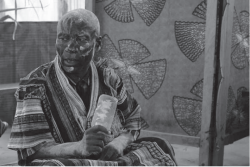
(A community health worker takes on the role of the traditional healer in a play warning of the dangers of traditional medicine)
12 November 2015
Worlds AIDS day (1st December) is fast approaching and with it we have a number of activities planned here in the South Kivu province of Democratic Republic of Congo.
In this part of the world public understanding of the disease is minimal and stigmatisation is a huge. Many diseases caused by bacteria and viruses are seen to be the work of magic or poisoning and HIV is no exception.
The first port of call for most people when they fall sick is the traditional healer or the prayer room. Both warn against the dangers of western medicine and urge people to stop taking the hospitals drugs. The effect of this is very damaging and we often see HIV patients arriving in a terrible state having abandoned their treatment for these alternative healings.
Stigmatisation here is the worst I have worked with, but living with HIV anywhere in the world is difficult.
Taking a taxi in Amsterdam, while attending my mission briefings, my driver made it clear that he believed getting HIV meant certain death. It’s not the 90s anymore and this is no longer the case.
Modern treatment means that people living with this infection, while they cannot be cured, can live a long, healthy life and have a family without infecting them. If this is still poorly understood in the west, then imagine the understanding here, deep in Eastern DRC.
Here, most people are too afraid even to tell their partners of their status for fear of rejection.
Of course the partners are likely positive themselves and may be the source of the infection. Often when people do disclose, families are broken apart and human beings are marginalised.
And it is in that context that we approach World AIDS day with a number of events aimed at improving public knowledge over the next month.
Our teams are visiting schools, putting on theatre productions, speaking on local radio and, most excitingly, we will be hearing public testimony from people living with HIV.
Three of our patients have volunteered to speak out about their disease, to share their story with their community.
This has never been done before here and the courage involved is huge. Each has their own story which they have consented to be published on this blog and in the coming weeks I will share these with you.
(Adaptado de: VERRECHIA, R. The slow battle against stigma and misunderstanding. Congo, in Colour Blog In Medecines sans frontieres. Disponível em: http://blogs.msf.org/en/staff/blogs/congo-in-colour/the-slow-battle-against-stigma-andmisunderstanding. Acesso em: 23 abr. 2016.)
Assinale a alternativa que apresenta, corretamente, o significado da expressão sublinhada na frase “A community health worker takes on the role of the traditional healer in a play warning of the dangers of traditional medicine”.
06