


![[Marketing] Questao Topo - deslogado](https://storage.estuda.com.br/banners/0_6b7ebee90b03af1c560c73bb8bcce34a_banner_deslogado_70_dias.png)
Questões de Inglês
19.971 Questões
Questão 16 7285194
PUC-GO 2016/1TEXTO
VI
Para entenderes bem o que é a morte e a vida, basta contar-te como morreu minha avó.
— Como foi?
— Senta-te.
Rubião obedeceu, dando ao rosto o maior interesse possível, enquanto Quincas Borba continuava a andar.
— Foi no Rio de Janeiro, começou ele, defronte da Capela Imperial, que era então Real, em dia de grande festa; minha avó saiu, atravessou o adro, para ir ter à cadeirinha, que a esperava no Largo do Paço. Gente como formiga. O povo queria ver entrar as grandes senhoras nas suas ricas traquitanas. No momento em que minha avó saía do adro para ir à cadeirinha, um pouco distante, aconteceu espantar- -se uma das bestas de uma sege; a besta disparou, a outra imitou-a, confusão, tumulto, minha avó caiu, e tanto as mulas como a sege passaram-lhe por cima. Foi levada em braços para uma botica da Rua Direita, veio um sangrador, mas era tarde; tinha a cabeça rachada, uma perna e o ombro partidos, era toda sangue; expirou minutos depois.
— Foi realmente uma desgraça, disse Rubião.
— Não.
— Não?
— Ouve o resto. Aqui está como se tinha passado o caso. O dono da sege estava no adro, e tinha fome, muita fome, porque era tarde, e almoçara cedo e pouco. Dali pôde fazer sinal ao cocheiro; este fustigou as mulas para ir buscar o patrão. A sege no meio do caminho achou um obstáculo e derribou-o; esse obstáculo era minha avó. O primeiro ato dessa série de atos foi um movimento de conservação: Humanitas tinha fome. Se em vez de minha avó, fosse um rato ou um cão, é certo que minha avó não morreria, mas o fato era o mesmo; Humanitas precisa comer. Se em vez de um rato ou de um cão, fosse um poeta, Byron ou Gonçalves Dias diferia o caso no sentido de dar matéria a muitos necrológios; mas o fundo subsistia. O universo ainda não parou por lhe faltarem alguns poemas mortos em flor na cabeça de um varão ilustre ou obscuro; mas Humanitas (e isto importa, antes de tudo) Humanitas precisa comer.
Rubião escutava, com a alma nos olhos, sinceramente desejoso de entender; mas não dava pela necessidade a que o amigo atribuía a morte da avó. Seguramente o dono da sege, por muito tarde que chegasse à casa, não morria de fome, ao passo que a boa senhora morreu de verdade, e para sempre. Explicou-lhe, como pôde, essas dúvidas, e acabou perguntando-lhe:
— E que Humanitas é esse?
— Humanitas é o princípio. Mas não, não digo nada, tu não és capaz de entender isto, meu caro Rubião; falemos de outra coisa.
— Diga sempre.
Quincas Borba, que não deixara de andar, parou alguns instantes.
— Queres ser meu discípulo?
— Quero.
— Bem, irás entendendo aos poucos a minha filosofia; no dia em que a houveres penetrado inteiramente, ah! nesse dia terás o maior prazer da vida, porque não há vinho que embriague como a verdade. Crê-me, o Humanitismo é o remate das coisas; e eu, que o formulei, sou o maior homem do mundo. Olha, vês como o meu bom Quincas Borba está olhando para mim? Não é ele, é Humanitas...
— Mas que Humanitas é esse?
— Humanitas é o principio. Há nas coisas todas certa substância recôndita e idêntica, um princípio único, universal, eterno, comum, indivisível e indestrutível, — ou, para usar a linguagem do grande Camões:
Uma verdade que nas coisas anda,
Que mora no visíbil e invisíbil.
Pois essa sustância ou verdade, esse princípio indestrutível é que é Humanitas. Assim lhe chamo, porque resume o universo, e o universo é o homem. Vais entendendo?
— Pouco; mas, ainda assim, como é que a morte de sua avó...
— Não há morte. O encontro de duas expansões, ou a expansão de duas formas, pode determinar a supressão de uma delas; mas, rigorosamente, não há morte, há vida, porque a supressão de uma é a condição da sobrevivência da outra, e a destruição não atinge o princípio universal e comum. Daí o carácter conservador e benéfico da guerra. Supõe tu um campo de batatas e duas tribos famintas. As batatas apenas chegam para alimentar uma das tribos, que assim adquire forças para transpor a montanha e ir à outra vertente, onde há batatas em abundância; mas, se as duas tribos dividirem em paz as batatas do campo, não chegam a nutrir-se suficientemente e morrem de inanição. A paz, nesse caso, é a destruição; a guerra é a conservação. Uma das tribos extermina a outra e recolhe os despojos. Daí a alegria da vitória, os hinos, aclamações, recompensas públicas e todos os demais efeitos das ações bélicas. Se a guerra não fosse isso, tais demonstrações não chegariam a dar- -se, pelo motivo real de que o homem só comemora e ama o que lhe é aprazível ou vantajoso, e pelo motivo racional de que nenhuma pessoa canoniza uma ação que virtualmente a destrói. Ao vencido, ódio ou compaixão; ao vencedor, as batatas.
— Mas a opinião do exterminado?
— Não há exterminado. Desaparece o fenômeno; a substância é a mesma. Nunca viste ferver água? Hás de lembrar-te que as bolhas fazem-se e desfazem-se de contínuo, e tudo fica na mesma água. Os indivíduos são essas bolhas transitórias.
— Bem; a opinião da bolha...
— Bolha não tem opinião. Aparentemente, há nada mais contristador que uma dessas terríveis pestes que devastam um ponto do globo? E, todavia, esse suposto mal é um benefício, não só porque elimina os organismos fracos, incapazes de resistência, como porque dá lugar à observação, à descoberta da droga curativa. A higiene é filha de podridões seculares; devemo-la a milhões de corrompidos e infectos. Nada se perde, tudo é ganho. Repito, as bolhas ficam na água. Vês este livro? É Dom Quixote. Se eu destruir o meu exemplar, não elimino a obra, que continua eterna nos exemplares subsistentes e nas edições posteriores. Eterna e bela, belamente eterna, como este mundo divino e supradivino.
(ASSIS, Machado de. Quincas Borba. 18. ed. São Paulo: Ática, 2011. p. 26-28.)
In the fragment “Seguramente o dono da sege, por muito tarde que chegasse à casa, não morria de fome, ao passo que a boa senhora morreu de verdade, e para sempre”. We can say that the verb “to die” is used in two different ways. The first one is figurative language and the second is real meaning. We have the same expression and verb in English.
From the following options, choose the alternative which is also figurative language “morrer de fome”
Questão 56 7284712
PUC-GO 2016/2TEXTO
XIII
O meu amor é uma flauta alta.
Auto em si,
desce dos montes e das colinas trêmulo,
estranho e abandonado,
entre o balir dos gerânios,
os ventos e o orvalho sangrando
em bolhas de luz seu destino.
O meu amor é poema,
sopro de flauta de um menino!
Nunca é estrangeiro o meu amor.
Entre musgos, sarças e violetas, nasce,
cresce, caminha: abre-se em flor!
(VIEIRA, Delermando. Os tambores da tempestade. Goiânia: Poligráfica, 2010. p. 35)
Read the sentences below about Text.
Mark the correct one:
Questão 30 7166327
PAS - UFLA 2° Etapa - 2° Dia 2016PASSAGE 2
Public health is the science of protecting and improving the health of families and communities through
promotion of healthy lifestyles, research for disease and injury prevention and detection and control of infectious
diseases.
Overall, public health is concerned with protecting the health of entire populations. These populations
[05] can be as small as a local neighborhood, or as big as an entire country or region of the world.
Public health professionals try to prevent problems from happening or recurring through implementing
educational programs, recommending policies, administering services and conducting research – in contrast to
clinical professionals like doctors and nurses, who focus primarily on treating individuals after they become sick
or injured. Public health also works to limit health disparities. The largest part of public health is promoting
[10] healthcare equity, quality and accessibility.
Available at: http://www.cdcfoundation.org/print/content/what-public-health. Access on: 6/7/2016. (Adapted).
The words “healthcare equity”, “quality” and “accessibility” (line 10) are examples of what
Questão 26 7154104
PAS - UFLA 1° Etapa - 2° Dia 2016PASSAGE
SEX EDUCATION FOR CHILDREN: WHY PARENTS SHOULD TALK TO THEIR KIDS ABOUT SEX STARTING EARLY WITH AGE-APPROPRIATE INFORMATION ABOUT SEX IS A GOOD IDEA
Curiosity about sex is a natural step from learning about the body. Sex education helps kids understand
about the body and helps them feel positive about their own bodies. Younger kids are interested in pregnancy
and babies, rather than the mechanics of sex.
Discussing sex is also part of starting open communication with your child. Early, honest, and open
[05] communication between parents and kids is very important, especially when your child becomes an adolescent. If
open communication is normal, kids are more likely to speak with parents about all the other trials of
adolescence, such as depression, relationships, and the abuse of drugs and alcohol, as well as sexual issues.
Beginning a conversation about sex early and continuing that conversation as the child grows is the best
sex education strategy. It lets parents avoid giving one big, and likely uncomfortable talk when the child reaches
[10] adolescence (and will have already gotten information and misinformation from their friends). These
conversations are easier when they come out of a life experience, like seeing a pregnant woman or a baby.
When parents talk with their children about sex, they can make sure that they are getting the right
information. Parents should be a child’s first source of information about sex. Understanding correct information
can protect children from risky behaviour as they grow up.
Available at: http://www.ifrc.org/PageFiles/89397/the%20phenomenon%20of%20migration_TYPEFI_final_En.pdf Access on: 5/27/2015.
The word "they" (line 12, bold faced) refers to:
Questão 68 6853663
FEMA Medicina 2016Leia o texto para responder à questão.
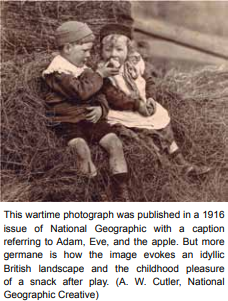
Food is more than survival
With it we make friends, court lovers, and count our blessings
Victoria Pope
The sharing of food has always been part of the human story. From Qesem Cave near Tel Aviv comes evidence of ancient meals prepared at a 300,000-year-old hearth, the oldest ever found, where diners gathered to eat together. Retrieved from the ashes of Vesuvius: a circular loaf of bread with scoring marks, baked to be divided. “To break bread together,” a phrase as old as the Bible, captures the power of a meal to forge relationships, bury anger, provoke laughter. Children make mud pies, have tea parties, trade snacks to make friends, and mimic the rituals of adults. They celebrate with sweets from the time of their first birthday, and the association of food with love will continue throughout life – and in some belief systems, into the afterlife. Consider the cultures that leave delicacies graveside to let the departed know they are not forgotten. And even when times are tough, the urge to celebrate endures. In the Antarctic in 1902, during Robert Falcon Scott’s Discovery expedition, the men prepared a fancy meal for Midwinter Day, the shortest day and longest night of the year. Hefty provisions had been brought on board. Forty-five live sheep were slaughtered and hung from the rigging, frozen by the elements until it was time to feast. The cold, the darkness, and the isolation were forgotten for a while. “With such a dinner,” Scott wrote, “we agreed that life in the Antarctic Regions was worth living.”
(www.nationalgeographic.com. Adaptado.)
The photo caption was used to
Questão 64 6853633
FEMA Medicina 2016Leia o texto para responder à questão.
Stephen Hawking warns artificial intelligence could end mankind
Rory Cellan-Jones
December 2, 2014
“The development of full artificial intelligence (AI) could spell the end of the human race”, said Professor Hawking. His warning came in response to a question about a revamp of the technology he uses to communicate, which involves a basic form of AI. But others are less gloomy about AI’s prospects. The theoretical physicist, who has the motor neurone disease amyotrophic lateral sclerosis (ALS), is using a new system developed by Intel to speak. Machine learning experts from the British company Swiftkey were also involved in its creation. Their technology, already employed as a smartphone keyboard app, learns how the professor thinks and suggests the words he might want to use next. Prof Hawking says the primitive forms of AI developed so far have already proved very useful, but he fears the consequences of creating something that can match or surpass humans. “It would take off on its own, and re-design itself at an ever increasing rate,” he said. “Humans, who are limited by slow biological evolution, couldn’t compete, and would be superseded.”
But others are less pessimistic. “I believe we will remain in charge of the technology for a decently long time and the potential of it to solve many of the world problems will be realised,” said Rollo Carpenter, creator of Cleverbot. Cleverbot’s software learns from its past conversations, and has gained high scores in the Turing test, fooling a high proportion of people into believing they are talking to a human. Mr Carpenter says we are a long way from having the computing power or developing the algorithms needed to achieve full artificial intelligence, but believes it will come in the next few decades. “We cannot quite know what will happen if a machine exceeds our own intelligence, so we can’t know if we’ll be infinitely helped by it, or ignored by it and sidelined, or conceivably destroyed by it,” he says. But he is betting that AI is going to be a positive force.
Prof Hawking is not alone in fearing for the future. In the short term, there are concerns that clever machines capable of undertaking tasks done by humans until now will swiftly destroy millions of jobs. In the longer term, the technology entrepreneur Elon Musk has warned that AI is “our biggest existential threat”.
In his BBC interview, Prof Hawking also talks of the benefits and dangers of the internet. He quotes the director of GCHQ’s (Government Communications Headquarters) warning about the net becoming the command centre for terrorists: “More must be done by the internet companies to counter the threat, but the difficulty is to do this without sacrificing freedom and privacy.”
He has, however, been an enthusiastic early adopter of all kinds of communication technologies and is looking forward to being able to write much faster with his new system. But one aspect of his own tech – his computer generated voice – has not changed in the latest update. Prof Hawking concedes that it’s slightly robotic, but insists he didn’t want a more natural voice. “It has become my trademark, and I wouldn’t change it for a more natural voice with a British accent,” he said. “I’m told that children who need a computer voice, want one like mine.”
(www.bbc.com. Adaptado.)
No trecho do último parágrafo “Prof Hawking concedes that it’s slightly robotic”, o termo em destaque pode ser substituído, sem alteração de sentido, por
06