


![[Marketing] Questao Topo - deslogado](https://storage.estuda.com.br/banners/0_6b7ebee90b03af1c560c73bb8bcce34a_banner_deslogado_70_dias.png)
Questões de Inglês
19.971 Questões
Questão 65 145505
UECE 1ª Fase 2017/1Nearly 250 million young children across the world – 43% of under-fives – are unlikely to fulfil their potential as adults because of stunting and extreme poverty, new figures show.
The first three years of life are crucial to a child’s development, according to a series of research papers published in the Lancet medical journal, which says there are also economic costs to the failure to help them grow. Those who do not get the nutrition, care and stimulation they need will earn about 26% less than others as adults.
“The costs of not acting immediately to expand services to improve early childhood development are high for individuals and their families, as well as for societies,” say the researchers. The cost to some countries in GDP (gross domesticproduct), they estimate, is as much as twice their spending on healthcare.
The figures come as the World Bank prepares for a summit meeting with finance ministersaround the globe to discuss how nurturing children in their early years will help their countries’ economic development. The World Bank president, Jim Yong Kim, has told the Guardian that he intends to use the World Economic Forum in Davos each year to name and shame countries that do not reduce their high stunting rates.
The Lancet series says the first 24 months of life are the critical time for avoiding stunting. Undernourished children living in extreme poverty end up small and their brain development is affected, so that they find it hard to learn. “Some catch-up is possible in height-for-age after 24 months, with uncertain cognitive gains,” says one of the papers. In sub-Saharan Africa, 66% of children are estimated to be at risk of poor development because of stunting and poverty. In south Asia, the figure is 65%, and 18% in the Caribbean and South America. Mothers need to be well nourished to give their babies a good start in life and be able to breastfeed. Families need help to give children the nutrition and nurturing they need, say researchers. That includes breastfeeding, free pre-school education – which is available in only two-thirds of high-income countries – paid leave for parents and a minimum wage to pull more families out of poverty. There are children at risk in all countries, rich and poor. The series points to early childhood programs that have been effective, including SureStart in the UK, Early Head Start in the US, Chile’s Crece Contigo and Grade R in South Africa In a Comment piece in the journal, Dr Margaret Chan, director general of the World Health Organization, Anthony Lake, executive director of the United Nations Children’s Fund, and Keith Hansen, vice-president for human development at the World Bank, write:
“The early childhood agenda is truly global, because the need is not limited to low-income countries. Children living in disadvantaged households in middle-income and wealthy countries are also at risk. “In targeting our investments, we should give priority to populations in the greatest need, such as families and children in extreme poverty and those who require humanitarian assistance. In addition, we have to build more resilient systems in vulnerable communities to mitigate the disruptive influence ofnatural disasters, fragility, conflict, and violence.” Wanda Wyporska, executive director of the Equality Trust, said: “It’s no surprise that the richer you are, the better your health is likely to be”. But the chasm of health inequality between rich and poor has widened in recent years. “Being born into a poor family shouldn’t mean decades of poorer health and even premature death, but that’s the shameful reality of the UK’s health gap. If you rank neighborhoods in the UK from the richest to the poorest, you have almost perfectly ranked health from the best to the worst.”
https://www.theguardian.com/globaldevelopment/ 2016/oct/04
Besides ending up small, under-nourished children who live in extreme poverty will also have
Questão 64 145504
UECE 1ª Fase 2017/1Nearly 250 million young children across the world – 43% of under-fives – are unlikely to fulfil their potential as adults because of stunting and extreme poverty, new figures show.
The first three years of life are crucial to a child’s development, according to a series of research papers published in the Lancet medical journal, which says there are also economic costs to the failure to help them grow. Those who do not get the nutrition, care and stimulation they need will earn about 26% less than others as adults.
“The costs of not acting immediately to expand services to improve early childhood development are high for individuals and their families, as well as for societies,” say the researchers. The cost to some countries in GDP (gross domesticproduct), they estimate, is as much as twice their spending on healthcare.
The figures come as the World Bank prepares for a summit meeting with finance ministersaround the globe to discuss how nurturing children in their early years will help their countries’ economic development. The World Bank president, Jim Yong Kim, has told the Guardian that he intends to use the World Economic Forum in Davos each year to name and shame countries that do not reduce their high stunting rates.
The Lancet series says the first 24 months of life are the critical time for avoiding stunting. Undernourished children living in extreme poverty end up small and their brain development is affected, so that they find it hard to learn. “Some catch-up is possible in height-for-age after 24 months, with uncertain cognitive gains,” says one of the papers. In sub-Saharan Africa, 66% of children are estimated to be at risk of poor development because of stunting and poverty. In south Asia, the figure is 65%, and 18% in the Caribbean and South America. Mothers need to be well nourished to give their babies a good start in life and be able to breastfeed. Families need help to give children the nutrition and nurturing they need, say researchers. That includes breastfeeding, free pre-school education – which is available in only two-thirds of high-income countries – paid leave for parents and a minimum wage to pull more families out of poverty. There are children at risk in all countries, rich and poor. The series points to early childhood programs that have been effective, including SureStart in the UK, Early Head Start in the US, Chile’s Crece Contigo and Grade R in South Africa In a Comment piece in the journal, Dr Margaret Chan, director general of the World Health Organization, Anthony Lake, executive director of the United Nations Children’s Fund, and Keith Hansen, vice-president for human development at the World Bank, write:
“The early childhood agenda is truly global, because the need is not limited to low-income countries. Children living in disadvantaged households in middle-income and wealthy countries are also at risk. “In targeting our investments, we should give priority to populations in the greatest need, such as families and children in extreme poverty and those who require humanitarian assistance. In addition, we have to build more resilient systems in vulnerable communities to mitigate the disruptive influence ofnatural disasters, fragility, conflict, and violence.” Wanda Wyporska, executive director of the Equality Trust, said: “It’s no surprise that the richer you are, the better your health is likely to be”. But the chasm of health inequality between rich and poor has widened in recent years. “Being born into a poor family shouldn’t mean decades of poorer health and even premature death, but that’s the shameful reality of the UK’s health gap. If you rank neighborhoods in the UK from the richest to the poorest, you have almost perfectly ranked health from the best to the worst.”
https://www.theguardian.com/globaldevelopment/ 2016/oct/04
In the journal's Comment piece, we learn that
Questão 63 145503
UECE 1ª Fase 2017/1Nearly 250 million young children across the world – 43% of under-fives – are unlikely to fulfil their potential as adults because of stunting and extreme poverty, new figures show.
The first three years of life are crucial to a child’s development, according to a series of research papers published in the Lancet medical journal, which says there are also economic costs to the failure to help them grow. Those who do not get the nutrition, care and stimulation they need will earn about 26% less than others as adults.
“The costs of not acting immediately to expand services to improve early childhood development are high for individuals and their families, as well as for societies,” say the researchers. The cost to some countries in GDP (gross domesticproduct), they estimate, is as much as twice their spending on healthcare.
The figures come as the World Bank prepares for a summit meeting with finance ministersaround the globe to discuss how nurturing children in their early years will help their countries’ economic development. The World Bank president, Jim Yong Kim, has told the Guardian that he intends to use the World Economic Forum in Davos each year to name and shame countries that do not reduce their high stunting rates.
The Lancet series says the first 24 months of life are the critical time for avoiding stunting. Undernourished children living in extreme poverty end up small and their brain development is affected, so that they find it hard to learn. “Some catch-up is possible in height-for-age after 24 months, with uncertain cognitive gains,” says one of the papers. In sub-Saharan Africa, 66% of children are estimated to be at risk of poor development because of stunting and poverty. In south Asia, the figure is 65%, and 18% in the Caribbean and South America. Mothers need to be well nourished to give their babies a good start in life and be able to breastfeed. Families need help to give children the nutrition and nurturing they need, say researchers. That includes breastfeeding, free pre-school education – which is available in only two-thirds of high-income countries – paid leave for parents and a minimum wage to pull more families out of poverty. There are children at risk in all countries, rich and poor. The series points to early childhood programs that have been effective, including SureStart in the UK, Early Head Start in the US, Chile’s Crece Contigo and Grade R in South Africa In a Comment piece in the journal, Dr Margaret Chan, director general of the World Health Organization, Anthony Lake, executive director of the United Nations Children’s Fund, and Keith Hansen, vice-president for human development at the World Bank, write:
“The early childhood agenda is truly global, because the need is not limited to low-income countries. Children living in disadvantaged households in middle-income and wealthy countries are also at risk. “In targeting our investments, we should give priority to populations in the greatest need, such as families and children in extreme poverty and those who require humanitarian assistance. In addition, we have to build more resilient systems in vulnerable communities to mitigate the disruptive influence ofnatural disasters, fragility, conflict, and violence.” Wanda Wyporska, executive director of the Equality Trust, said: “It’s no surprise that the richer you are, the better your health is likely to be”. But the chasm of health inequality between rich and poor has widened in recent years. “Being born into a poor family shouldn’t mean decades of poorer health and even premature death, but that’s the shameful reality of the UK’s health gap. If you rank neighborhoods in the UK from the richest to the poorest, you have almost perfectly ranked health from the best to the worst.”
https://www.theguardian.com/globaldevelopment/ 2016/oct/04
According to the text, not acting right away to help young children's development may represent
Questão 33 141542
UPE 3° Fase / 1° Dia SSA 2017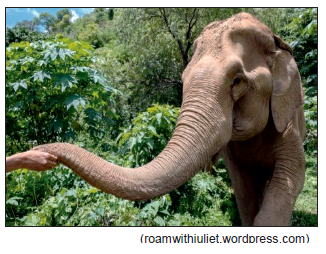
Text 3
CHIANG MAI, THAILAND
Care for Elephants
Asian elephants face many threats – especially loss of habitat due to encroaching development, which can lead to conflict with humans. Today the elephant population in Thailand is estimated at only 3,000 to 4,000. Lend a hand with the least fortune of these animals at the Elephant Nature Park outside Chiang Mai. As a sanctuary for orphaned and disabled elephants, some of which have been abused as work animals, the center invites visitors to help feed and bathe the gentle giants, as well as assist with general maintenance around the park.[…]

Text 4
SOUTH DAKOTA
Explore the Badlands
Over the past half million years, erosion has sculpted sediment deposited by the ancient sea that once stretched across the Great Plains into buttes, spires, and pinnacle formations, leaving us the Badlands. Named by the Lakota for its unwelcoming terrain that they believed was riddled with the remains of a mythological horned serpent, the striking landscape inspires awe among visitors today, especially during the magic hours of sunrise and sunset, and under a full moon.[…]
Text 5
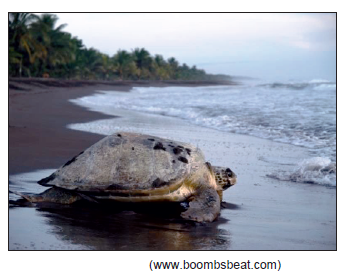
COSTA RICA Rescue Sea Turtles Commercial fishing, coastal development, humans harvesting eggs, marine debris, oil spills: The threats to sea turtles are staggering. Only an estimated one in 1,000 to 10,000 survives to adulthood, which is why conservationists around the world depend on volunteers to give these primordial creatures the best shot possible. Help conduct nightly patrols along the black-sand beaches of Tortuguero National Park on Costa Rica’s Caribbean coast, one of the most important nesting sites in the Western Hemisphere.[…] (In: Places That Will Change Your Life. Produced by National Geographic Partners, Washington, DC: 2016. Adaptado.)Considerando a gramática e as funções comunicativas da língua, os termos ‘Explore’ and ‘Rescue’, nos subtítulos dos textos 4 e 5, são
Questão 38 141215
UPE 1° Fase / 1° Dia SSA 2017Read this passage which is on the phonographic disc included on the Voyager spacecraft:
"This is a present from a small, distant world, a token of our sounds, our science, our images, our music, our thoughts and our feelings. We are attempting to survive our time so we may live into __________." (US President Jimmy Carter)
(In: Global Intermediate Coursebook: learn English, learn through English, learn about English. Lindsay Clandfield & Rebecca Robb Benne. Macmillan, 2011. Adaptado.)
Considering both context and grammar, the CORRECT word or phrase to fill in the statement is
Questão 37 141214
UPE 1° Fase / 1° Dia SSA 2017
Howard Gardner believes that a person __________ is good at math is not more intelligent than someone who is good at sports. He believes they are intelligent in a different way.
Howard Gardner is a psychologist, and a long time __________ (in 1983) he wrote a book about his theory. In his view there is not just one kind of intelligence – there are multiple intelligences. It‟s possible to be good (or not so good) at one or more of them. You can have trouble __________ words, for example, but be quite good at drawing and at athletics. Or you can find it hard to understand yourself but be really good at connecting with other people!
The idea __________ „multiple intelligences‟ is very interesting. It‟s also really useful. People __________ a strong musical intelligence for example, can use songs to help them learn. You can also develop your weaker intelligences to give yourself more choices and to make your life more interesting.
(In: Jetstream, Pre-intermediate A. REVELL, J and TOMALIN, M. Helbling Languages, 2015. Adaptado.)
A parte destacada em ‗But the launching of this bottle into the cosmic ocean says something very hopeful about life on this planet.‘ apresenta sentido conotativo, do qual se depreende um(a)
06