


![[Marketing] Questao Topo - deslogado](https://storage.estuda.com.br/banners/0_6b7ebee90b03af1c560c73bb8bcce34a_banner_deslogado_70_dias.png)
Questões de Inglês
19.971 Questões
Questão 35 217597
UENP 2017/1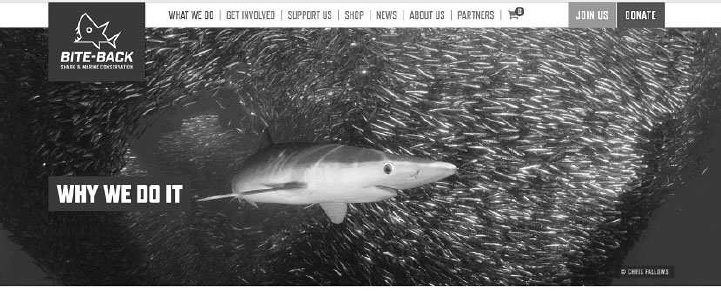
There aren’t plenty more fish in the sea.
The race is on to save sharks and other key marine species – including swordfish, marlin, monkfish andCskates/rays – from being wiped out by overfishing.C73,000,000 sharks are slaughtered every year.CThat’s around 200,000 sharks a day. Or roughly twoCevery second. Unless something changes, sharksCcould become a thing of the past. We’re not going to let that happen.
There aren’t plenty more fish in the sea.
The race is on to save sharks and other key marine species – including swordfish, marlin, monkfish andCskates/rays – from being wiped out by overfishing.C73,000,000 sharks are slaughtered every year.CThat’s around 200,000 sharks a day. Or roughly twoCevery second. Unless something changes, sharksCcould become a thing of the past. We’re not going to let that happen.
Choking to death
Sharks have been swimming in the oceans since before dinosaurs walked the earth. They’ve shaped the marine environment and everything in it. Without sharks the oceans could collapse, taking with them their ability to produce 50% of the oxygen we breathe and absorb 20% of the CO2 emissions we produce. With every shark slaughtered we’re strengthening our stranglehold on the planet.
Too many fishing boats, too few fish The International Union for the Conservation of Nature recently reported that 85% of the world’s fish stocks are fully exploited or overexploited. It’s the big fish that will disappear first.
That’s why we’re focussing on key species that are most vulnerable to overfishing yet widely available in shops and restaurants. Join us and help protect our blue planet.
(Adaptado de: Bite-Back Shark & Marine Conservation (website) Why we do it. Disponível em: https://www.bite-back.com/whatwe- do/why-we-do-it/. Acesso em: 15 ago. 2017).
Com base na leitura do texto, considere as afirmativas a seguir.
I. Os tubarões são animais muito antigos, anteriores aos dinossauros.
II. Tubarões são responsáveis pelo estabelecimento do ecossistema marinho do planeta.
III. O extermínio dos tubarões poderia afetar gravemente o equilíbrio dos oceanos e, consequentemente, o planeta.
IV. Tubarões consomem em média 20% de CO2, contribuindo com a qualidade do ar que respiramos.
Assinale a alternativa correta.

Questão 32 217591
UENP 2017/1
Em relação aos comentários sobre a charge, considere as afirmativas a seguir.
I. Denunciam shoppings e lojas de departamentos onde a mesma situação já ocorreu.
II. Recomendam algumas ações em resposta à situação apresentada na charge.
III. Demonstram espanto e questionam a veracidade do acontecimento.
IV. Comparam como as reações à situação podem ser diferentes na América Latina e Europa.
Assinale a alternativa correta.

Questão 52 213807
EsPCEx 2° Dia 2017Military operations in megacities A linguistic perspective
The challenge of conducting future military operations within megacities (cities with populations over ten million) lies in understanding the dynamic and multidimensional complexities of these urban areas. Military operations in megacities, whether combat-oriented or otherwise, will be similar to those in other urban environments, but will be complicated by factors unique to the megacity environment.
First and foremost, megacities are largely multilingual. While this can be said of large cities in general, the scale of multilingualism in megacities magnifies its effects. For instance, in New York City (NYC) – a metropolitan megacity of over eighteen million people – nine foreign languages are spoken by communities of one hundred thousand or larger. Language also plays a role in determining one’s identity and the language community in which one decides to live. For example, the majority of Russian speakers in NYC tend to live in south Brooklyn and Staten Island, while Chinese speakers tend to cluster in Manhattan and Sunset Park. In megacities, language, culture, and regional context go hand in hand and often reach beyond ethnic identities.
In order to fully understand the context of a megacity, we must understand the role of the languages used in its communities. How _____(1) language communities interact in megacities? What tensions ______(2) caused by multiple language communities in urban space? What role ______(3) language play in the power structures (government or otherwise) of megacities?
Adapted from Military Review – Jan/Feb 2016
Choose the alternative containing the correct words to respectively complete gaps (1), (2) and (3) in paragraph 3.
Questão 17 213479
FACISA 2017/2Read the TEXT below and answer the questions that follow.

It isn’t easy being a girl, especially in Africa. […] To help them, we need not do anything complicated: we just need to get out of their way. Too many girls still hit barriers accessing fundamental rights. […] Three areas strike me as particularly ready for change: education, health and sanitation. And change should start in 2017.
First, education. […]. Despite major gains in primary education, girls attend secondary school and university in far fewer numbers than boys. […] Why is that? Girls face barriers to learning that boys don’t often have to contend with.[…] Social and cultural norms such as early marriage and pregnancy, and parental bias towards sons, also often cause girls to drop out. […] Countries with higher levels of discrimination in general against women performed worse on development indicators, including education. Yet we know how to demolish these barriers: among other things, improve school infrastructure, promote gender-sensitive curricula, make the cost of attending school affordable and end child marriage. […]
Second: health. Infectious disease like HIV/AIDS, tuberculosis and malaria, and conditions related to malnutrition, disproportionately affect girls and young women, either as sufferers or caregivers. These make it far harder for them to attend school or work. […] The hidden epidemic of poor nutrition undermines all aspects of women’s well-being […] But we have failed to invest in eradicating undernutrition.[…]
Lastly sanitation. An estimated 2.4 billion people live without adequate sanitation. This poses enormous obstacles every day for young women across sub-Saharan Africa. […]
Today’s young women, who are hungry for the chance to build a better world, still face the looming barriers of inequality. Let’s give them wings to fly.
Yvonne Chaka Chaka, The World in 2017
The central idea of TEXT is that
Questão 13 212165
UNIVAG 2017/1Zika, Ebola outbreaks can be predicted using
climate change, scientists say
Jamie A.
June 14, 2016
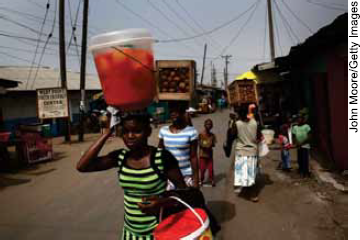
Women walk with their wares through the West Point slum on February 9, 2016 in Monrovia, Liberia. West Point, the most impoverished and overpopulated community in Liberia, was hard hit by the Ebola outbreak, and health facilities at the time were overwhelmed. After almost two years, on January 14, 2016 the World Health Organization declared the epidemic over, after the virus had killed some 11,300 people and infected more than 28,500 people in West Africa.
Scientists in the UK said that Zika and Ebola outbreaks could be predicted based on changes in the environment. Researchers at the University College London (UCL) developed a model that can predict outbreaks of zoonotic diseases – such as Zika and Ebola that came from animals – based on changes in climate, population growth and land use.
The study, which was published in Methods in Ecology and Evolution, is described as “a major improvement in our understanding of the spread of diseases from animals to humans,” and the researchers said that the study could help governments prepare and respond to outbreaks, as well as consider the environmental risks when making policies. “Our model can help decision-makers assess the likely impact (on zoonotic disease) of any interventions or change in national or international government policies, such as conversion of grasslands to agricultural lands,” Kate Jones, professor at the University College London’s genetics, evolution and environment department and co-author of the study, said in a press release. According to the study, more than 60 percent of emerging infectious diseases are zoonotic by nature, and that aside from Zika and Ebola, other highly infectious diseases such as Rift Valley fever and Lassa fever are predicted to spread with changing environmental factors.
Researchers tested the new model with the Lassa fever epidemic in West Africa, which was caused by the Lassa virus from rats. The team used the locations of 408 known Lassa fever outbreaks in West Africa between 1967 and 2012 and the changes in land use and crop yields, temperature and rainfall, behavior and access to healthcare.
To track the virus’ location against ecological factors, the researchers also identified the sub-species of the multimammate rat (Mastomys natalensis) responsible for transmitting the virus. With these information, the model predicts that the number of people infected by the disease will double from 195,125 to 406,725 by 2070.
“Our new approach successfully predicts outbreaks of individual diseases by pairing the changes in the host’s distribution as the environment changes with the mechanics of how that disease spreads from animals to people, which hasn’t been done before,” Dr. David Redding of UCL and co-author of the study said in the press release. “It allows us to calculate how often people are likely to come into contact with disease-carrying animals and their risk of the virus spilling over. Alongside population increases, the expected future changes to climatic patterns will drive an expansion of the areas of West Africa considered high risk, especially the western most regions around Senegal and Guinea, the coastline of Cote d’Ivoire and Ghana, and in Central Nigeria,” Redding added. According to the researchers, the model could be refined to include the impact of travel infrastructure, human-to-human contact rates and poverty.
(www.natureworldnews.com. Adaptado.)
In the fragment from the second paragraph “According to the study, more than 60 percent of emerging infectious diseases are zoonotic by nature, and that aside from Zika and Ebola”, the terms in bold can be replaced, without change in meaning, by
Questão 11 212162
UNIVAG 2017/1Zika, Ebola outbreaks can be predicted using
climate change, scientists say
Jamie A.
June 14, 2016
Women walk with their wares through the West Point slum on February 9, 2016 in Monrovia, Liberia. West Point, the most impoverished and overpopulated community in Liberia, was hard hit by the Ebola outbreak, and health facilities at the time were overwhelmed. After almost two years, on January 14, 2016 the World Health Organization declared the epidemic over, after the virus had killed some 11,300 people and infected more than 28,500 people in West Africa.
Scientists in the UK said that Zika and Ebola outbreaks could be predicted based on changes in the environment. Researchers at the University College London (UCL) developed a model that can predict outbreaks of zoonotic diseases – such as Zika and Ebola that came from animals – based on changes in climate, population growth and land use.
The study, which was published in Methods in Ecology and Evolution, is described as “a major improvement in our understanding of the spread of diseases from animals to humans,” and the researchers said that the study could help governments prepare and respond to outbreaks, as well as consider the environmental risks when making policies. “Our model can help decision-makers assess the likely impact (on zoonotic disease) of any interventions or change in national or international government policies, such as conversion of grasslands to agricultural lands,” Kate Jones, professor at the University College London’s genetics, evolution and environment department and co-author of the study, said in a press release. According to the study, more than 60 percent of emerging infectious diseases are zoonotic by nature, and that aside from Zika and Ebola, other highly infectious diseases such as Rift Valley fever and Lassa fever are predicted to spread with changing environmental factors.
Researchers tested the new model with the Lassa fever epidemic in West Africa, which was caused by the Lassa virus from rats. The team used the locations of 408 known Lassa fever outbreaks in West Africa between 1967 and 2012 and the changes in land use and crop yields, temperature and rainfall, behavior and access to healthcare.
To track the virus’ location against ecological factors, the researchers also identified the sub-species of the multimammate rat (Mastomys natalensis) responsible for transmitting the virus. With these information, the model predicts that the number of people infected by the disease will double from 195,125 to 406,725 by 2070.
“Our new approach successfully predicts outbreaks of individual diseases by pairing the changes in the host’s distribution as the environment changes with the mechanics of how that disease spreads from animals to people, which hasn’t been done before,” Dr. David Redding of UCL and co-author of the study said in the press release. “It allows us to calculate how often people are likely to come into contact with disease-carrying animals and their risk of the virus spilling over. Alongside population increases, the expected future changes to climatic patterns will drive an expansion of the areas of West Africa considered high risk, especially the western most regions around Senegal and Guinea, the coastline of Cote d’Ivoire and Ghana, and in Central Nigeria,” Redding added. According to the researchers, the model could be refined to include the impact of travel infrastructure, human-to-human contact rates and poverty.
(www.natureworldnews.com. Adaptado.)
O modelo abordado no texto
06