


![[Marketing] Questao Topo - deslogado](https://storage.estuda.com.br/banners/0_6b7ebee90b03af1c560c73bb8bcce34a_banner_deslogado_70_dias.png)
Questões de Inglês
19.971 Questões
Questão 32 249965
Unit-SE Medicina - Caderno 1 2017TEXTO:
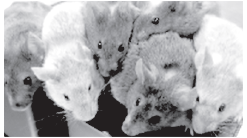
Japanese scientists say they have created healthy
baby mice from eggs they made entirely in the lab using
a sample of mouse skin cells. The pups born from the
eggs appeared to be healthy and were able to go on to
[5] have babies themselves.
Experts say the findings offer future hope of artificial
eggs for couples who need fertility treatment. But they
say many more years of study is needed to make that
leap to humans.
[10] Scientists have already been able to make sperm
in the lab, but for that feat they used an immature
embryonic stem cell, which is known to be able to morph
into any type of cell. Taking a grown-up skin cell and
getting it to change into an egg is more challenging, say
[15] experts. The Japanese team, Prof Katsuhiko Hayashi
and colleagues, took cells from a mouse tail and
reprogrammed these adult cells back into immature ones.
Then, they coaxed these immature stem cells to become
an egg.
[20] Not all of the eggs that they made in the lab were
healthy or viable. But the ones that were could be fertilized
by sperm in a dish. When these fertilized eggs were put
into the wombs of adult female mice, they developed
into apparently healthy babies.
[25] Experts warn there are many barriers to using the
same method in humans. Some are technical, but
arguably the biggest ones are about safety and ethics.
Flaws in artificial eggs might be passed on to future
generations, for example.
[30] Prof Azim Surani has been studying how to turn
human skin cells into the precursors of sperm and eggs
in his lab. He said: “As far as humans are concerned, we
are way behind. We can’t be sure the same will apply
with human cells.”
ROBERTS, Michelle. Health editor, BBC News online. Disponível em: . Acesso em: 12 out. 2016.
Fill in the parentheses with T (True) or F (False).
About the experience mentioned in the text, it’s correct to say:
( ) The researchers used cells from an adult mouse.
( ) The cells taken from the mouse were kept unchanged.
( ) The researchers succeeded in transforming the removed cells into immature ones.
( ) All the healthy eggs made in the lab could be fertilized.
The correct sequence, from top to bottom, is
Questão 19 249221
UNITINS Tarde 2017/1Read the following text and pay attention to the following image to answer the questions:
The New York Times - The Opinion Pages
Brazil’s Merchants of Death
By ROBERT MUGGAH and NATHAN B. THOMPSON OCT. 23, 2016.

RIO DE JANEIRO — As Brazil weathers the worst political and economic crises in living memory, Brazilians can hardly be blamed for being distracted. But there is a subject that the country’s politicians — and citizens — are not discussing (…).
The fingerprints of Brazil’s largest arms companies are turning up in a growing number of the world’s hot spots, including Yemen, where thousands of civilians are perishing in a punishing war with no end in sight. An investigation last month into Forjas Taurus, the Brazilian firearms manufacturer, revealed that the company supplied weapons to a notorious Yemeni arms dealer. Two (now former) executives of the company — Latin America’s largest — have been charged with illegal arms transfers, though the case remains under seal. Taurus, which is involved in the case only as an interested party, has denied any wrongdoing and says it is working to “clarify the facts.” (…)
The civil war in Yemen has already killed an estimated 10,000 people since early 2015 and displaced more than three million (…).
The two Taurus executives were accused of negotiating a second sale of 11,000 weapons in 2015 when Brazil’s Federal Police moved in.
This is not the first time Brazilian weapons have turned up in the Yemeni conflict. Late last year, researchers discovered unexploded ordnance and cluster bombs in Yemen that are believed to have been purchased from Avibras Indústria Aeroespacial, a São José dos Campos-based company that manufactures cluster rockets and the Astros multiplelaunch rocket system.More than 100 countries have banned the manufacture, stockpiling and use of these weapons because of their potential to cause indiscriminate damage to civilian populations and infrastructure. Brazil is not one of them.
Brazil routinely authorizes weapons sales to countries with poor human rights records. The country has signed major deals not only with Saudi Arabia, but also with Egypt, Libya, Iran, Iraq, the United Arab Emirates, Zimbabwe and dozens of countries across the Middle East and Africa since the 1980s. Brazilian companies have also ramped up sales of “nonlethal” arms such as tear gas, pepper spray and concussion and smoke grenades. Some of these have surfaced in Bahrain, Turkey and Egypt, often in the wake of bloody police-led efforts to crush pro-democracy demonstrations.
Many of Brazil’s arms manufacturers have been heavily subsidized by the Brazilian Development Bank, or BNDES. Freedom of information requests reveal that Taurus received $16.7 million in lowinterest loans between 2008 and 2015. In 2013 alone, the year Taurus reportedly sold the 8,000 handguns to Mr. Mana’a, the company benefited from $10 million in loans from BNDES. The Brazilian Cartridge Company, one of the world’s largest producers of ammunition (and majority shareholder of Taurus), received $2.9 million in loans over this same eight-year period. Brazil’s defense sector, excepting aeronautics, received $70.5 million in BNDES loans from 2008 to 2015. BNDES is now implicated in Brazil’s largest corruption scandal.
One reason Brazilian arms exports are expanding at breakneck speed is because Brazil’s Congress passed a law to promote innovation and competition in a flagging defense sector. The legislation also grants designated companies significant tax exemptions. Brazil is now the fourth largest supplier of small arms and ammunition in the world and second in the Western Hemisphere, after only the United States.
The fact is that no one really knows how many weapons Brazil sells around the world, whether to rights-violating governments or otherwise. The country’s arms export policies are maddeningly nontransparent, lacking adequate oversight and mechanisms to ensure that the people who use the weapons comply with international law (…).
Robert Muggah is the research director of the Igarapé Institute, an independent think tank based in Rio de Janeiro, where Nathan B. Thompson is a researcher.
A version of this op-ed appears in print on October 24,
2016, on page A14 of the New York edition with the headline: Brazil’s merchants of death.
The whole version of this text is available at: http://www.nytimes.com/2016/10/24/opinion/brazilsmerchants- of-death.html - Texto Adaptado
According to the text, the BNDES, the Brazilian Development Bank:
Questão 16 249213
UNITINS Tarde 2017/1Read the following text and pay attention to the following image to answer the question:
The New York Times - The Opinion Pages
Brazil’s Merchants of Death
By ROBERT MUGGAH and NATHAN B. THOMPSON OCT. 23, 2016.

RIO DE JANEIRO — As Brazil weathers the worst political and economic crises in living memory, Brazilians can hardly be blamed for being distracted. But there is a subject that the country’s politicians — and citizens — are not discussing (…).
The fingerprints of Brazil’s largest arms companies are turning up in a growing number of the world’s hot spots, including Yemen, where thousands of civilians are perishing in a punishing war with no end in sight. An investigation last month into Forjas Taurus, the Brazilian firearms manufacturer, revealed that the company supplied weapons to a notorious Yemeni arms dealer. Two (now former) executives of the company — Latin America’s largest — have been charged with illegal arms transfers, though the case remains under seal. Taurus, which is involved in the case only as an interested party, has denied any wrongdoing and says it is working to “clarify the facts.” (…)
The civil war in Yemen has already killed an estimated 10,000 people since early 2015 and displaced more than three million (…).
The two Taurus executives were accused of negotiating a second sale of 11,000 weapons in 2015 when Brazil’s Federal Police moved in.
This is not the first time Brazilian weapons have turned up in the Yemeni conflict. Late last year, researchers discovered unexploded ordnance and cluster bombs in Yemen that are believed to have been purchased from Avibras Indústria Aeroespacial, a São José dos Campos-based company that manufactures cluster rockets and the Astros multiplelaunch rocket system.More than 100 countries have banned the manufacture, stockpiling and use of these weapons because of their potential to cause indiscriminate damage to civilian populations and infrastructure. Brazil is not one of them.
Brazil routinely authorizes weapons sales to countries with poor human rights records. The country has signed major deals not only with Saudi Arabia, but also with Egypt, Libya, Iran, Iraq, the United Arab Emirates, Zimbabwe and dozens of countries across the Middle East and Africa since the 1980s. Brazilian companies have also ramped up sales of “nonlethal” arms such as tear gas, pepper spray and concussion and smoke grenades. Some of these have surfaced in Bahrain, Turkey and Egypt, often in the wake of bloody police-led efforts to crush pro-democracy demonstrations.
Many of Brazil’s arms manufacturers have been heavily subsidized by the Brazilian Development Bank, or BNDES. Freedom of information requests reveal that Taurus received $16.7 million in lowinterest loans between 2008 and 2015. In 2013 alone, the year Taurus reportedly sold the 8,000 handguns to Mr. Mana’a, the company benefited from $10 million in loans from BNDES. The Brazilian Cartridge Company, one of the world’s largest producers of ammunition (and majority shareholder of Taurus), received $2.9 million in loans over this same eight-year period. Brazil’s defense sector, excepting aeronautics, received $70.5 million in BNDES loans from 2008 to 2015. BNDES is now implicated in Brazil’s largest corruption scandal.
One reason Brazilian arms exports are expanding at breakneck speed is because Brazil’s Congress passed a law to promote innovation and competition in a flagging defense sector. The legislation also grants designated companies significant tax exemptions. Brazil is now the fourth largest supplier of small arms and ammunition in the world and second in the Western Hemisphere, after only the United States.
The fact is that no one really knows how many weapons Brazil sells around the world, whether to rights-violating governments or otherwise. The country’s arms export policies are maddeningly nontransparent, lacking adequate oversight and mechanisms to ensure that the people who use the weapons comply with international law (…).
Robert Muggah is the research director of the Igarapé Institute, an independent think tank based in Rio de Janeiro, where Nathan B. Thompson is a researcher.
A version of this op-ed appears in print on October 24,
2016, on page A14 of the New York edition with the headline: Brazil’s merchants of death.
The whole version of this text is available at: http://www.nytimes.com/2016/10/24/opinion/brazilsmerchants- of-death.html - Texto Adaptado
According to the text, Brazilian politicians and citizens are not discussing:
Questão 39 244751
UNITAU Medicina Verão - 1ª Fase 2017Biotech Labs Birth New Drugs — and New Fortunes
Drugs that help millions of people have lifted stocks of the firms that own them and made millionaires of many scientists and doctors behind them
Friday, June 24 2016 15:54 EDT
Paul A. Friedman, like many travelers shuffling through airport security lines, sometimes daydreams about owning a private jet.
Dr. Friedman is one of the lucky ones who could afford it. Over the past few years, the former associate professor at Harvard Medical School sold $146.1 million worth of shares in Incyte Corp. He headed the firm as chief executive from lean times through the successful launch of a drug to treat a rare cancer.
Despite the windfall, he continues to drive his 2009 Audi. “We live in the same place, my wife and I,” said the 73-year-old physician, who retired as CEO in 2014 and remains a company director.
New drugs that extend or improve the lives of millions of people — and the potential of ones still in development —have lifted stocks of the biotechnology companies that own them and created a new class of millionaires from many of the scientists, doctors and investors behind them.
Biotech leaders have joined hedge-fund and tech executives in the U.S. corporate winner’s circle, riding the success of new high-price drugs and investor enthusiasm for the high-risk business. Some have bought fancy houses. Others, like Dr. Friedman, say not much has changed from lives spent in labs.
Organic chemist Norbert W. Bischofberger, the longtime research and development chief at Gilead Sciences Inc. —and a co-inventor of Tamiflu—sold $320.3 million worth of company stock through 2015. Yet his wife had his old car towed and replaced with a new Toyota after he balked at getting a new one. “The conversation,” he recalled, “went something like, Wife: ‘We should get a new car for you.’ I: ‘There is nothing wrong with the one I got.’ ”
Drugs conceived in biotech labs have advanced the treatment of such illnesses as hepatitis C, cystic fibrosis and some cancers. Many grew out of new insights into the genetic causes and biological processes of disease, aided by years of government and private research.
An analysis of corporate filings by The Wall Street Journal found that executives and directors at the 100 largest biotech companies sold stock valued at $8 billion in the industry’s bull market last year.
The payouts marked a dramatic peak for an industry that five years earlier was in the doldrums, with venture capital investments and initial public offerings nearing historical lows. Stock sales by biotech directors and executives averaged $1.2 billion annually from 2004 through 2011, adjusted for inflation, growing to an average $2.3 billion a year from 2012 through 2014.
The average annual market value of biotech companies in the S&P Composite 1500 more than tripled from $180 billion in 2010, to $594.2 billion this year, according to data from S&P Dow Jones Indices.
Biotech was aided by low interest rates in the U.S. that drew investors to riskier, high-return ventures. The health-care law also helped by adding millions of people to insurance rolls, expanding the potential customer base with many people getting prescription drug coverage for the first time.
Scrutiny of drug prices and fear of government price controls have contributed to a recent slump in biotech stocks, with the NASDAQ Biotechnology index down 26% since January. “Every little company, every idea attracted capital,” said Geoffrey C. Porges, a senior biotechnology analyst at Leerink Partners LLC. “As a result, we probably overfunded the industry.”
Most of the new, patent-protected drugs have few rivals and scant limits on price, a sky’s-the-limit prospect that continues to draw investors to biotech firms with approved medicines — and to those only promising them.
Stock sales by executives and directors at money-losing biotech companies totaled $2.67 billion last year, or a third of all sales analyzed by the Journal, as investors seeking a stake in the next potential blockbuster sent the value of these firms soaring.
Merger fortunes
2015 was a record year for mergers and acquisitions. Some of the biggest windfalls went to shareholders of acquired biotech companies. Robert W. Duggan, former CEO of Pharmacyclics Inc. topped the list: $3.46 billion in cash and stock when the firm was acquired by AbbVie Inc. for $21 billion.
Mr. Duggan hadn’t worked in drug development before he bought into the money-losing Sunnyvale, Calif., biotech firm in 2004. Four years later, he used his 29% stake to take control of the company. At the time, in September 2008, Pharmacyclics had a market valuation of $53 million and, since 1991, had recorded losses of $340 million.
In 2013, Pharmacyclics received approval from the Food and Drug Administration for its first drug, Imbruvica, which has since become a popular treatment for the most common type of adult leukemia. Studies found it slowed progression of the disease with fewer side effects than older drugs.
With a yearly per-patient price tag around $100,000, Imbruvica’s global sales were $548 million in 2014, its first full year on the market, and rose to more than $1 billion last year.
“It shows if you get it right and make a modest investment, you can come out quite well,” said Mr. Duggan, who had put about $50 million into the firm. Other company executives and directors made $419 million in the deal.
At Receptos Inc., whose lead drug hasn’t moved beyond late-stage studies, 14 executives and directors received a total of $540.5 million for their stock when the company was acquired last year by Celgene Corp., for $7.2 billion.
Sheila Gujrathi, the former chief medical officer at Receptos, received $75 million for her shares when the deal closed. Dr. Gujrathi, 45 years old, was one of the few women among biotech’s biggest earners last year.
“If you go into medicine, you don’t grow up thinking you could be a multimillionaire,” she said. “To find myself in a position where I have a substantial amount of wealth, yes, it’s surprising and life-changing.”
Biotech is distinguished from software and other strands of tech because it often takes hundreds of millions of dollars and a decade or more to learn if a new drug treatment succeeds. The cost of developing, say, a smartphone app is so low that anyone with the coding skills can make and sell one.
Even a promising drug can fail after years of investment during late-stage studies, and most biotech companies expect years of losses.
“The normal state of the industry is to be struggling to demonstrate that they’re making money, desperately trying to convince people it’s not just a bunch of risky science experiments,” said Dr. Porges, who completed medical school before entering the drug industry.
Regeneron Pharmaceuticals Inc., based in Tarrytown, N.Y., was founded in 1988 and had accumulated $1.27 billion in losses before getting FDA approval in November 2011 for Eylea, a treatment for age-related vision loss that annually costs $11,000 to $16,000. Eylea sales in the U.S. last year reached $2.68 billion.
Company shares grew 16-fold from 2011 through 2015 —the best-performing stock in the S&P 500 over that period.
Fonte omitida propositalmente.
The word “interest” in paragraph 8th can be closest translated to
Questão 38 244750
UNITAU Medicina Verão - 1ª Fase 2017Biotech Labs Birth New Drugs — and New Fortunes
Drugs that help millions of people have lifted stocks of the firms that own them and made millionaires of many scientists and doctors behind them
Friday, June 24 2016 15:54 EDT
Paul A. Friedman, like many travelers shuffling through airport security lines, sometimes daydreams about owning a private jet.
Dr. Friedman is one of the lucky ones who could afford it. Over the past few years, the former associate professor at Harvard Medical School sold $146.1 million worth of shares in Incyte Corp. He headed the firm as chief executive from lean times through the successful launch of a drug to treat a rare cancer.
Despite the windfall, he continues to drive his 2009 Audi. “We live in the same place, my wife and I,” said the 73-year-old physician, who retired as CEO in 2014 and remains a company director.
New drugs that extend or improve the lives of millions of people — and the potential of ones still in development —have lifted stocks of the biotechnology companies that own them and created a new class of millionaires from many of the scientists, doctors and investors behind them.
Biotech leaders have joined hedge-fund and tech executives in the U.S. corporate winner’s circle, riding the success of new high-price drugs and investor enthusiasm for the high-risk business. Some have bought fancy houses. Others, like Dr. Friedman, say not much has changed from lives spent in labs.
Organic chemist Norbert W. Bischofberger, the longtime research and development chief at Gilead Sciences Inc. —and a co-inventor of Tamiflu—sold $320.3 million worth of company stock through 2015. Yet his wife had his old car towed and replaced with a new Toyota after he balked at getting a new one. “The conversation,” he recalled, “went something like, Wife: ‘We should get a new car for you.’ I: ‘There is nothing wrong with the one I got.’ ”
Drugs conceived in biotech labs have advanced the treatment of such illnesses as hepatitis C, cystic fibrosis and some cancers. Many grew out of new insights into the genetic causes and biological processes of disease, aided by years of government and private research.
An analysis of corporate filings by The Wall Street Journal found that executives and directors at the 100 largest biotech companies sold stock valued at $8 billion in the industry’s bull market last year.
The payouts marked a dramatic peak for an industry that five years earlier was in the doldrums, with venture capital investments and initial public offerings nearing historical lows. Stock sales by biotech directors and executives averaged $1.2 billion annually from 2004 through 2011, adjusted for inflation, growing to an average $2.3 billion a year from 2012 through 2014.
The average annual market value of biotech companies in the S&P Composite 1500 more than tripled from $180 billion in 2010, to $594.2 billion this year, according to data from S&P Dow Jones Indices.
Biotech was aided by low interest rates in the U.S. that drew investors to riskier, high-return ventures. The health-care law also helped by adding millions of people to insurance rolls, expanding the potential customer base with many people getting prescription drug coverage for the first time.
Scrutiny of drug prices and fear of government price controls have contributed to a recent slump in biotech stocks, with the NASDAQ Biotechnology index down 26% since January. “Every little company, every idea attracted capital,” said Geoffrey C. Porges, a senior biotechnology analyst at Leerink Partners LLC. “As a result, we probably overfunded the industry.”
Most of the new, patent-protected drugs have few rivals and scant limits on price, a sky’s-the-limit prospect that continues to draw investors to biotech firms with approved medicines — and to those only promising them.
Stock sales by executives and directors at money-losing biotech companies totaled $2.67 billion last year, or a third of all sales analyzed by the Journal, as investors seeking a stake in the next potential blockbuster sent the value of these firms soaring.
Merger fortunes
2015 was a record year for mergers and acquisitions. Some of the biggest windfalls went to shareholders of acquired biotech companies. Robert W. Duggan, former CEO of Pharmacyclics Inc. topped the list: $3.46 billion in cash and stock when the firm was acquired by AbbVie Inc. for $21 billion.
Mr. Duggan hadn’t worked in drug development before he bought into the money-losing Sunnyvale, Calif., biotech firm in 2004. Four years later, he used his 29% stake to take control of the company. At the time, in September 2008, Pharmacyclics had a market valuation of $53 million and, since 1991, had recorded losses of $340 million.
In 2013, Pharmacyclics received approval from the Food and Drug Administration for its first drug, Imbruvica, which has since become a popular treatment for the most common type of adult leukemia. Studies found it slowed progression of the disease with fewer side effects than older drugs.
With a yearly per-patient price tag around $100,000, Imbruvica’s global sales were $548 million in 2014, its first full year on the market, and rose to more than $1 billion last year.
“It shows if you get it right and make a modest investment, you can come out quite well,” said Mr. Duggan, who had put about $50 million into the firm. Other company executives and directors made $419 million in the deal.
At Receptos Inc., whose lead drug hasn’t moved beyond late-stage studies, 14 executives and directors received a total of $540.5 million for their stock when the company was acquired last year by Celgene Corp., for $7.2 billion.
Sheila Gujrathi, the former chief medical officer at Receptos, received $75 million for her shares when the deal closed. Dr. Gujrathi, 45 years old, was one of the few women among biotech’s biggest earners last year.
“If you go into medicine, you don’t grow up thinking you could be a multimillionaire,” she said. “To find myself in a position where I have a substantial amount of wealth, yes, it’s surprising and life-changing.”
Biotech is distinguished from software and other strands of tech because it often takes hundreds of millions of dollars and a decade or more to learn if a new drug treatment succeeds. The cost of developing, say, a smartphone app is so low that anyone with the coding skills can make and sell one.
Even a promising drug can fail after years of investment during late-stage studies, and most biotech companies expect years of losses.
“The normal state of the industry is to be struggling to demonstrate that they’re making money, desperately trying to convince people it’s not just a bunch of risky science experiments,” said Dr. Porges, who completed medical school before entering the drug industry.
Regeneron Pharmaceuticals Inc., based in Tarrytown, N.Y., was founded in 1988 and had accumulated $1.27 billion in losses before getting FDA approval in November 2011 for Eylea, a treatment for age-related vision loss that annually costs $11,000 to $16,000. Eylea sales in the U.S. last year reached $2.68 billion.
Company shares grew 16-fold from 2011 through 2015 —the best-performing stock in the S&P 500 over that period.
Fonte omitida propositalmente.
The word “balked” in paragraph 4th is closest in meaning to
Questão 35 244747
UNITAU Medicina Verão - 1ª Fase 2017Biotech Labs Birth New Drugs — and New Fortunes
Drugs that help millions of people have lifted stocks of the firms that own them and made millionaires of many scientists and doctors behind them
Friday, June 24 2016 15:54 EDT
Paul A. Friedman, like many travelers shuffling through airport security lines, sometimes daydreams about owning a private jet.
Dr. Friedman is one of the lucky ones who could afford it. Over the past few years, the former associate professor at Harvard Medical School sold $146.1 million worth of shares in Incyte Corp. He headed the firm as chief executive from lean times through the successful launch of a drug to treat a rare cancer.
Despite the windfall, he continues to drive his 2009 Audi. “We live in the same place, my wife and I,” said the 73-year-old physician, who retired as CEO in 2014 and remains a company director.
New drugs that extend or improve the lives of millions of people — and the potential of ones still in development —have lifted stocks of the biotechnology companies that own them and created a new class of millionaires from many of the scientists, doctors and investors behind them.
Biotech leaders have joined hedge-fund and tech executives in the U.S. corporate winner’s circle, riding the success of new high-price drugs and investor enthusiasm for the high-risk business. Some have bought fancy houses. Others, like Dr. Friedman, say not much has changed from lives spent in labs.
Organic chemist Norbert W. Bischofberger, the longtime research and development chief at Gilead Sciences Inc. —and a co-inventor of Tamiflu—sold $320.3 million worth of company stock through 2015. Yet his wife had his old car towed and replaced with a new Toyota after he balked at getting a new one. “The conversation,” he recalled, “went something like, Wife: ‘We should get a new car for you.’ I: ‘There is nothing wrong with the one I got.’ ”
Drugs conceived in biotech labs have advanced the treatment of such illnesses as hepatitis C, cystic fibrosis and some cancers. Many grew out of new insights into the genetic causes and biological processes of disease, aided by years of government and private research.
An analysis of corporate filings by The Wall Street Journal found that executives and directors at the 100 largest biotech companies sold stock valued at $8 billion in the industry’s bull market last year.
The payouts marked a dramatic peak for an industry that five years earlier was in the doldrums, with venture capital investments and initial public offerings nearing historical lows. Stock sales by biotech directors and executives averaged $1.2 billion annually from 2004 through 2011, adjusted for inflation, growing to an average $2.3 billion a year from 2012 through 2014.
The average annual market value of biotech companies in the S&P Composite 1500 more than tripled from $180 billion in 2010, to $594.2 billion this year, according to data from S&P Dow Jones Indices.
Biotech was aided by low interest rates in the U.S. that drew investors to riskier, high-return ventures. The health-care law also helped by adding millions of people to insurance rolls, expanding the potential customer base with many people getting prescription drug coverage for the first time.
Scrutiny of drug prices and fear of government price controls have contributed to a recent slump in biotech stocks, with the NASDAQ Biotechnology index down 26% since January. “Every little company, every idea attracted capital,” said Geoffrey C. Porges, a senior biotechnology analyst at Leerink Partners LLC. “As a result, we probably overfunded the industry.”
Most of the new, patent-protected drugs have few rivals and scant limits on price, a sky’s-the-limit prospect that continues to draw investors to biotech firms with approved medicines — and to those only promising them.
Stock sales by executives and directors at money-losing biotech companies totaled $2.67 billion last year, or a third of all sales analyzed by the Journal, as investors seeking a stake in the next potential blockbuster sent the value of these firms soaring.
Merger fortunes
2015 was a record year for mergers and acquisitions. Some of the biggest windfalls went to shareholders of acquired biotech companies. Robert W. Duggan, former CEO of Pharmacyclics Inc. topped the list: $3.46 billion in cash and stock when the firm was acquired by AbbVie Inc. for $21 billion.
Mr. Duggan hadn’t worked in drug development before he bought into the money-losing Sunnyvale, Calif., biotech firm in 2004. Four years later, he used his 29% stake to take control of the company. At the time, in September 2008, Pharmacyclics had a market valuation of $53 million and, since 1991, had recorded losses of $340 million.
In 2013, Pharmacyclics received approval from the Food and Drug Administration for its first drug, Imbruvica, which has since become a popular treatment for the most common type of adult leukemia. Studies found it slowed progression of the disease with fewer side effects than older drugs.
With a yearly per-patient price tag around $100,000, Imbruvica’s global sales were $548 million in 2014, its first full year on the market, and rose to more than $1 billion last year.
“It shows if you get it right and make a modest investment, you can come out quite well,” said Mr. Duggan, who had put about $50 million into the firm. Other company executives and directors made $419 million in the deal.
At Receptos Inc., whose lead drug hasn’t moved beyond late-stage studies, 14 executives and directors received a total of $540.5 million for their stock when the company was acquired last year by Celgene Corp., for $7.2 billion.
Sheila Gujrathi, the former chief medical officer at Receptos, received $75 million for her shares when the deal closed. Dr. Gujrathi, 45 years old, was one of the few women among biotech’s biggest earners last year.
“If you go into medicine, you don’t grow up thinking you could be a multimillionaire,” she said. “To find myself in a position where I have a substantial amount of wealth, yes, it’s surprising and life-changing.”
Biotech is distinguished from software and other strands of tech because it often takes hundreds of millions of dollars and a decade or more to learn if a new drug treatment succeeds. The cost of developing, say, a smartphone app is so low that anyone with the coding skills can make and sell one.
Even a promising drug can fail after years of investment during late-stage studies, and most biotech companies expect years of losses.
“The normal state of the industry is to be struggling to demonstrate that they’re making money, desperately trying to convince people it’s not just a bunch of risky science experiments,” said Dr. Porges, who completed medical school before entering the drug industry.
Regeneron Pharmaceuticals Inc., based in Tarrytown, N.Y., was founded in 1988 and had accumulated $1.27 billion in losses before getting FDA approval in November 2011 for Eylea, a treatment for age-related vision loss that annually costs $11,000 to $16,000. Eylea sales in the U.S. last year reached $2.68 billion.
Company shares grew 16-fold from 2011 through 2015 —the best-performing stock in the S&P 500 over that period.
Fonte omitida propositalmente.
Assinale a alternativa que apresenta somente afirmativas CORRETAS em relação ao texto em questão.
I. Apesar do dinheiro que ganhou, um dos felizardos ex-diretores de uma empresa farmacêutica continua levando o mesmo estilo de vida anterior à venda das ações.
II. Estudos demonstram que uma droga recentemente aprovada e produzida nos Estados Unidos retarda o progresso da leucemia, causando menos efeitos colaterais do que outras.
III. O setor de biotecnologia retraiu investidores em negócios mais arriscados, considerando que as vendas de ações por executivos e diretores de empresas mal sucedidas totalizou quase três milhões de dólares no ano passado.
IV. Em média, US$ 1,2 bilhão, em ações por ano, ajustadas pela inflação, foram vendidas por conselheiros e executivos de empresas de tecnologia entre 2004 e 2011.
Está CORRETO o que se afirma em
06