


![[Marketing] Questao Topo - deslogado](https://storage.estuda.com.br/banners/0_6b7ebee90b03af1c560c73bb8bcce34a_banner_deslogado_70_dias.png)
Questões de Inglês
19.971 Questões
Questão 42 274738
FACASPER 201710 YEARS AFTER AN INCONVENIENT TRUTH,
AL GORE MAY ACTUALLY BE WINNING
ISSIE LAPOWSKY SCIENCE 05.24.16 6:50 AM
AL GORE SNEEZES a hefty achoo. “Excuse me,” the former vice president says, dabbing a tissue at his nose before offering up an explanation. “Spring.”
Outside Gore’s New York City office, spring has certainly sprung—early too. This March was the hottest one ever, beating the prior record set in March 2015. The same goes for February and January of this year, and, oh, the eight consecutive months before. Gore knows these statistics by heart. The fact that you might know them too is likely because of him. These kinds of numbers— and the scary story they tell about the future of Earth—have been Gore’s chief motivation since he failed to win the presidency in 2000. Gore emerged from that weird, disputed election armed with what is now possibly the most famous slide¬show in human history. He has traveled the world delivering that deck to hundreds of people at a time, showing in irrefutable detail just how mind-bogglingly badly we have treated our planet and what we might be able to do about it.
Ten years ago, the slide¬show became An Inconvenient Truth, the documentary that spread those ideas to millions. Gore says he still tinkers with the slide¬show every day, because, well, the numbers keep changing. Not always for the better. Yet this year Gore and his fellow activists have a rare reason to celebrate. In April, 175 world leaders gathered at the United Nations to sign the Paris Agreement, a global pact that aims to keep global temperatures from rising more than 2 degrees Celsius above preindustrial levels. Now, a decade after his movie sounded the alarm about climate change and 16 years after he ran for president, it looks like Al Gore might finally be … winning?
WIRED: Why did you want to make An Inconvenient Truth?
GORE: I have to admit to you that initially I did not want to do a documentary.
What? Why not?
It’s a dumb reason. I didn’t think a slide¬show could translate into a movie. (…) Participant Media and Davis Guggenheim had to convince me it was a good idea, and I’m so glad they found ways to reveal to me the depths of my ignorance about moviemaking. It’s a message that has to be heard. Sorry to risk sounding grandiose, but the future of human civilization is at stake.
The Paris Agreement must feel like a big point of progress.
It really does. Sometimes in sports you can sense a palpable shift in the momentum of the contest. A team will be behind on the scoreboard, but the shift in momentum is so obvious and dramatic that you just have the feeling they’re going to win. That’s where we are in solving the climate crisis. We’re still behind on the scoreboard, but the momentum has shifted. We are winning
When renewable electricity becomes cheaper than electricity that comes from burning coal or gas, then that changes everything. The marketplace makes it the default option, and you get what you saw in the world in 2015—90 percent of the new electricity generated in the world last year was from renewables. That is an astonishing change. The Paris Agreement exceeded the upper range of my expectations. Does it go far enough? No, of course not. Can it be improved? Yes, it’s designed to be constantly improved, and that’s what I’m focused on now.
You’ve been at this a long time. Was it lonely fighting for this stuff in government in the 1980s and 1990s?
It was certainly a different time and a different environment. But I don’t ever remember feeling lonely, because I was always focused on reaching more and more people. Building a global grassroots movement is really the only way to solve this, because so many political systems have been captured by legacy industries. And that influence over policymaking has to be counterbalanced by a grassroots awareness.
It’s sometimes tough for people to get climate change because they’re not seeing its effects every day—or at least they don’t realize they are. What have you seen that has stuck with you?
In March, I went to Tacloban in the Philippines and talked with survivors there who endured the ravages of Super Typhoon Haiyan. When you see how their lives were utterly transformed and feel the painful losses they suffered, it certainly will stick with you. I conducted a training in Miami last fall during one of the highest high tides and saw fish from the ocean swimming in the streets in Miami Beach and Fort Lauderdale on a sunny day.
You talk a lot about “winning” the fight against climate change. How do you define a win?
Winning means avoiding catastrophic consequences that could utterly disrupt the future of human civilization. It means bending the curves downward so that the global warming pollution stops accumulating in the atmosphere and begins to reduce in volume. It means creating tens of millions of new jobs to retrofit buildings, to transform energy systems and install advanced batteries, to transform agriculture and forestry, and to make the solutions to the climate crisis the central organizing principle of our civilization.
Source: https://www.wired.com/2016/05/wired-al-gore-climate-change/ Access October 16, 2016. Adapted.
‘I did not want to make a documentary’, said Al Gore, referring to:
Questão 20 272916
Unit-AL 2017TEXTO:
More than 300 years after sinking with a cargo of
200 tons of gold, silver and precious stones (which would
amount to some US$ 10 billion in current values), the
Spanish ship San José has just been located off the coast
[5] of Colombia and has become the target of a diplomatic
dispute between Colombia and Spain.
The fortune which has been at the bottom of the
ocean since 1708 came from the mines that the Spanish
Empire exploited in Peru, Bolivia and Ecuador. Along with
[10] the treasure, the bodies of 600 sailors are likely to be in
the ship. “It is Colombian patrimony and it belongs to the
Colombian people. Now many people will say that they
are the owners of the ship, but it belongs to Colombia,”
says President Juan Manuel Santos, who has announced
[15] the plan of a museum in Cartagena to exhibit the objects
found in the ship as soon as they are recovered.
The Colombian government says the shipwreck is
in “very deep waters.” It has not estimated how long it
will take to recover its contents. The Spanish government,
[20] however, says it will not give up recovering the ship. “The
ship belongs to the Spanish government – it is not a
private vessel. There is government ownership wherever
it is,” says Spanish Chancellor José Manuel García
Margallo.
[25] The San José galleon was sunk after an ambush
by the English Navy to stop the shipment from reaching
and serving Philip V of Spain in Bourbon in a war for the
succession of the Spanish throne. The ship was loaded
at a port in Panama and was approaching Cartagena for
[30] a stopover. From there it would leave for Havana, Cuba
and later sail to its final destination, Cádiz, Spain. Near
Cartagena, however, the San José was ambushed by
ships under the command of Captain Charles Wager.
Eventually the Spanish were defeated after a two-day
[35] naval battle and the San José sank on June 8, 1708.
MORE than... Disponível em: . Acesso em: 24 jun. 2016. Translated by Thomas Muello.
According to the text, Spain and Colombia
Questão 18 271953
Unit-AL 2017TEXTO:
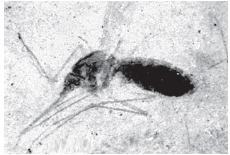
Jurassic Park’s iconic image of a fossilized blood
filled mosquito was thought to be fiction — until now. For
the first time, researchers have identified a fossil of a
female mosquito with traces of blood in its engorged
[5] abdomen. A team led by Dale Greenwalt at the US
National Museum of Natural History in Washington DC
reported the fossil discovery in Proceedings of the
National Academy of Sciences.
Although scientists have found fossils of suspected
[10] blood-sucking insects, the creatures’ feeding habits have
mostly been inferred from their anatomy or the presence
of blood-borne parasites in their guts. But Greenwalt’s
fossilized mosquito contains molecules that provide strong
evidence of blood-feeding among ancient insects back
[15] to 46 million years ago. It is a fortunate find. “The abdomen
of a blood-engorged mosquito is like a balloon ready to
burst. It is very fragile,” says Greenwalt. “The chances
that it wouldn’t have disintegrated prior to fossilization
were infinitesimally small.”
[20] The insect was found not in amber, as depicted
in Jurassic Park, but in shale rock sediments from
Montana. After 46 million years, any DNA would be long
degraded, but other molecules can survive. Greenwalt’s
team showed that the insect’s abdomen still contains
[25] large traces of iron and the organic molecule porphyrin
— both constituents of hemoglobin, the oxygen-carrying
pigment found in vertebrate blood. These molecules were
either rare or absent in the abdomen of a fossilized male
mosquito (which does not drink blood) of the same age,
[30] found at the same location. “This shows that details of a
blood-sucking mosquito can be nicely preserved in a
medium other than amber,” says George Poinar, who
studies fossilized insects at Oregon State University in
Corvallis. “It also shows that some porphyrin compounds
[35] in vertebrate blood can survive under the right conditions
for millions of years.”
YOUNG. Ed. Disponível em: . Acesso em: 24 jun. 2016.
The text says that DNA
Questão 16 271941
Unit-AL 2017TEXTO:
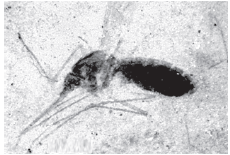
Jurassic Park’s iconic image of a fossilized blood
filled mosquito was thought to be fiction — until now. For
the first time, researchers have identified a fossil of a
female mosquito with traces of blood in its engorged
[5] abdomen. A team led by Dale Greenwalt at the US
National Museum of Natural History in Washington DC
reported the fossil discovery in Proceedings of the
National Academy of Sciences.
Although scientists have found fossils of suspected
[10] blood-sucking insects, the creatures’ feeding habits have
mostly been inferred from their anatomy or the presence
of blood-borne parasites in their guts. But Greenwalt’s
fossilized mosquito contains molecules that provide strong
evidence of blood-feeding among ancient insects back
[15] to 46 million years ago. It is a fortunate find. “The abdomen
of a blood-engorged mosquito is like a balloon ready to
burst. It is very fragile,” says Greenwalt. “The chances
that it wouldn’t have disintegrated prior to fossilization
were infinitesimally small.”
[20] The insect was found not in amber, as depicted
in Jurassic Park, but in shale rock sediments from
Montana. After 46 million years, any DNA would be long
degraded, but other molecules can survive. Greenwalt’s
team showed that the insect’s abdomen still contains
[25] large traces of iron and the organic molecule porphyrin
— both constituents of hemoglobin, the oxygen-carrying
pigment found in vertebrate blood. These molecules were
either rare or absent in the abdomen of a fossilized male
mosquito (which does not drink blood) of the same age,
[30] found at the same location. “This shows that details of a
blood-sucking mosquito can be nicely preserved in a
medium other than amber,” says George Poinar, who
studies fossilized insects at Oregon State University in
Corvallis. “It also shows that some porphyrin compounds
[35] in vertebrate blood can survive under the right conditions
for millions of years.”
YOUNG. Ed. Disponível em: . Acesso em: 24 jun. 2016.
Fill in the parentheses with T (True) or F (False).
About the fossilized mosquito, its correct to say:
( ) This is the first time that the fossil of a surpected blood-feeding insect has been found.
( ) The fossilized mosquito contains traces of the blood of an unknown ancient creature.
( ) It’s not old enough to be filled with dinosaur blood.
( ) The findings are definitive evidence that the fossilized mosquito had blood in its belly.
The correct sequence, from top to bottom, is
Questão 44 250001
Unit-SE Medicina - Caderno 1 2017TEXTO:
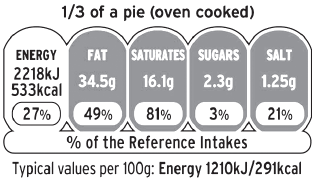
Traffic light-coded food labels indicating how much
fat, salt and sugar an item contains are to appear on
most food that is eaten in Britain in a move hailed by
health campaigners as ending shoppers’ confusion over
[5] what to buy.
All the main supermarket chains and some of the
biggest producers of snack food, such as PepsiCo and
Nestlé, have agreed with ministers to use front-of-pack
nutritional labels colored red, amber or green on some
[10] or all of their products in an effort to make it easier for
consumers to choose healthier options.
The traffic-light labels, which many food
campaigners and medical organizations have long called
for, will be part of a new hybrid nutritional labeling scheme
[15] that combines them with guideline daily amounts (GDAs),
which doctors have criticized as deceptive and utterly
baffling to most consumers.
The new labels are intended to help shoppers know
at a glance whether a product contains a low (green),
[20] medium (amber) or high (red) amount of fat, saturated
fat, salt, sugar and calories. The labels are not designed
to demonize foods with lots of reds but to have people
consider what they are eating and make sure it’s part of
a balanced diet. “Businesses that have signed up to using
[25] the new label today already account for more than 60%
of the food that is sold in the UK,” a spokesman added.
The UK public health minister, Anna Soubry, said
shoppers were confused by existing food labels:
“Research shows that, of all the current schemes, people
[30] like this [hybrid] label the most and can use the
information to make healthier choices.”
Disponível em: . Acesso em: 12 out. 2016.
As far as food labels are concerned, Anna Soubry says that shoppers prefer the one that uses ________ GDAs ______ traffic light-coded labels.
The alternative that suitably completes these blanks is
Questão 36 249972
Unit-SE Medicina - Caderno 1 2017TEXTO:

Coffee isn’t just warm and energizing, it may also
be extremely good for you. In recent years and decades,
scientists have studied the effects of coffee on various
aspects of health and their results have been nothing
[5] short of amazing.
Coffee doesn’t just keep you awake, it may literally
make you smarter as well. The active ingredient in coffee
is caffeine, which is a stimulant and the most commonly
consumed psychoactive substance in the world.
[10] Caffeine’s primary mechanism in the brain is blocking
the effects of an inhibitory neurotransmitter called
Adenosine. By blocking the inhibitory effects of
Adenosine, caffeine actually increases neuronal firing in
the brain and the release of other neurotransmitters like
[15] dopamine and norepinephrine. Many controlled trials have
examined the effects of caffeine on the brain,
demonstrating that caffeine can improve mood, reaction
time, memory, vigilance and general cognitive function.
There’s a good reason why you will find caffeine in
[20] most commercial fat burning supplements. Caffeine,
partly due to its stimulant effect on the central nervous
system, both raises metabolism and increases the
oxidation of fatty acids. Caffeine can also improve athletic
performance by several mechanisms, including by
[25] mobilizing fatty acids from the fat tissues.
Type II diabetes is a lifestyle-related disease
that has reached epidemic proportions, having increased
10-fold in a few decades and now afflicting about 300
million people. In observational studies, coffee has been
[30] repeatedly associated with a lower risk of diabetes. The
reduction in risk ranges from 23% all the way up to 67%.
A massive review article looked at 18 studies with a total
of 457.922 participants. Each additional cup of coffee
per day lowered the risk of diabetes by 7%. The more
[35] coffee people drank, the lower their risk.
Disponível em: . Acesso em: 12 out. 2016.
Caffeine can improve ______________
According to the text, the alternative that does not complete this blank correctly is
06