


![[Marketing] Questao Topo - deslogado](https://storage.estuda.com.br/banners/0_6b7ebee90b03af1c560c73bb8bcce34a_banner_deslogado_70_dias.png)
Questões de Inglês
19.971 Questões
Questão 38 280318
EPCAR 2017Directions: Read the text below and answer question according to it.
Most Common Prejudices
What are some of the most common ways
people discriminate against each other? Some of the
areas where people show their intolerance are wellknown,
such as race. But others are less
[5] acknowledged1, even if more common:
Age: Ageism is more common than you think. Older
people are thought to be inflexible and stuck2 in the
past, while younger people are seen as inexperienced
and naive. One-fifth of working adults say they
[10] experience ageism in the workplace.
Class: Classism usually takes the form of
discrimination by wealthier people against those who
are less well off. However, classism goes both ways—
people of lower economic status can see the wealthy
[15] as elite snobs who, while monetarily secure, are
morally bankrupt3.
Color: Different from racism, colorism is discrimination
based only on the color of a person’s skin; how
relatively dark or light they are. Colorism takes place
[20] within and between races. It is common in multi-ethnic
and non-white societies and societies with historical
racial prejudice.
Ability: Usually called ableism, a less well-known form
of prejudice is discrimination against people with visible
[25] disabilities such as those in wheelchairs or with a
learning disability. The disabled face discrimination not
only from their peers4, but from institutions, schools,
employers, and landowners5 who are hesitant to
accommodate the disabled.
[30] Sex/Gender: Possibly the most universal and long
running prejudice is that based on a person’s gender or
sex. Historically, sexism has placed men in a more
advantageous position than women.
Weight/Size: In short, sizeism is discrimination based
[35] on a person’s body size or weight. Sizeism works with
social standards of beauty and usually takes the form
of discrimination against the overweight — anti-fat
prejudice.
Religion: Religious discrimination and persecution has
[40] been common throughout history. But prejudice based
on religious affiliation doesn’t end with organized
religion; atheists are prone6 to discrimination and being
discriminated against.
Sexual Orientation: Most commonly, prejudice based
[45] on sexual orientation includes discrimination against
those of a non-heterosexual orientation. Discrimination
against the non-heterosexual takes many forms
depending on the society. In some societies prejudice
is open and tolerated, but in most Western societies,
[50] bias7 against the non-heterosexual is more discreet.
Country of Origin: Nativism is a common form of
discrimination against immigrants to a country. Unlike
many other forms of discrimination, nativism is many
times encouraged and enforced by some public
[55] entities.
Which prejudice do you have? Which prejudice have
you experienced?
Adapted from https://aloftyexistence.wordpress.com
Glossary:
1 - acknowledged – reconhecidos (as)
2 - stuck – presos (as)
3 - bankrupt – falidos (as)
4 - peers - pares; colegas
5 - landowners – proprietários (as)
6 - prone – propensos (as)
7 - bias – julgamento ou opinião parcial
The sentence “one-fifth of working adults say they experience ageism in the workplace” (lines 9 and 10) means that
Questão 37 280316
EPCAR 2017Directions: Read the text below and answer question according to it.
Most Common Prejudices
What are some of the most common ways
people discriminate against each other? Some of the
areas where people show their intolerance are wellknown,
such as race. But others are less
[5] acknowledged1, even if more common:
Age: Ageism is more common than you think. Older
people are thought to be inflexible and stuck2 in the
past, while younger people are seen as inexperienced
and naive. One-fifth of working adults say they
[10] experience ageism in the workplace.
Class: Classism usually takes the form of
discrimination by wealthier people against those who
are less well off. However, classism goes both ways—
people of lower economic status can see the wealthy
[15] as elite snobs who, while monetarily secure, are
morally bankrupt3.
Color: Different from racism, colorism is discrimination
based only on the color of a person’s skin; how
relatively dark or light they are. Colorism takes place
[20] within and between races. It is common in multi-ethnic
and non-white societies and societies with historical
racial prejudice.
Ability: Usually called ableism, a less well-known form
of prejudice is discrimination against people with visible
[25] disabilities such as those in wheelchairs or with a
learning disability. The disabled face discrimination not
only from their peers4, but from institutions, schools,
employers, and landowners5 who are hesitant to
accommodate the disabled.
[30] Sex/Gender: Possibly the most universal and long
running prejudice is that based on a person’s gender or
sex. Historically, sexism has placed men in a more
advantageous position than women.
Weight/Size: In short, sizeism is discrimination based
[35] on a person’s body size or weight. Sizeism works with
social standards of beauty and usually takes the form
of discrimination against the overweight — anti-fat
prejudice.
Religion: Religious discrimination and persecution has
[40] been common throughout history. But prejudice based
on religious affiliation doesn’t end with organized
religion; atheists are prone6 to discrimination and being
discriminated against.
Sexual Orientation: Most commonly, prejudice based
[45] on sexual orientation includes discrimination against
those of a non-heterosexual orientation. Discrimination
against the non-heterosexual takes many forms
depending on the society. In some societies prejudice
is open and tolerated, but in most Western societies,
[50] bias7 against the non-heterosexual is more discreet.
Country of Origin: Nativism is a common form of
discrimination against immigrants to a country. Unlike
many other forms of discrimination, nativism is many
times encouraged and enforced by some public
[55] entities.
Which prejudice do you have? Which prejudice have
you experienced?
Adapted from https://aloftyexistence.wordpress.com
Glossary:
1 - acknowledged – reconhecidos (as)
2 - stuck – presos (as)
3 - bankrupt – falidos (as)
4 - peers - pares; colegas
5 - landowners – proprietários (as)
6 - prone – propensos (as)
7 - bias – julgamento ou opinião parcial
Mark the concept that is mentioned in the text.
Questão 56 278368
UNIFOR Bacharelado 2017/2Reporting on Zika Families — and Their Resilience
By STEPHEN HILTNER MARCH 11, 2017

Íris Adriane do Nascimento Santos and her baby daughter, Alícia.
It was the mothers’ tenacity that struck Adriana Zehbrauskas more than anything else.
Ms. Zehbrauskas, the photographer who captured the images published in today’s front-page article about Brazil’s Zika epidemic, wasn’t sure what to expect when she arrived in Escada.
On one hand, this was a homecoming of sorts: Ms. Zehbrauskas, who lives in Mexico City but was born and raised in Brazil, knew that her familiarity with the language and the culture there would come in handy when working with her subjects.
On the other hand, she knew this would be an especially difficult assignment, one that would force her to confront the uncertainties and hardships faced by families whose children are afflicted with microcephaly and other Zika-related illnesses.
But what she found, to her surprise, was a transformative sense of resilience.
“These women, they’re incredible,” Ms. Zehbrauskas said. “Their routines are so intense, so difficult, that I felt I had to work 20 hours a day to do justice to their stories.”
Far from shying away from the spotlight, many of the women profiled in the article were eager, in the end, to share their experiences — though it often took several visits to gain their trust.
“There was a lot of press a year ago, and many women got a lot of financial help — people would send donations,” Ms. Zehbrauskas explained. “But people don’t talk about Zika like they used to. Many families now feel that they’re facing this alone.”
Pam Belluck, who wrote today’s article, also felt a poignant sense of hope throughout her time in Brazil. Ms. Belluck, after all, has two daughters who are close in age to one of the women, Íris Adriane do Nascimento Santos, profiled in the piece. (Íris gave birth, at age 14, to a daughter who exhibits microcephaly and a range of other complications, including seizures.)
“Here’s this girl, who’s the same age as my kids, and who’s had to give up on her schooling and completely change her life for a future that’s so different than what you’d want for any teenager,” Ms. Belluck said. “I’m full of admiration for how strong she is, and how self-assured she seems to be about her baby’s treatment — asking question after question, getting up at dawn and going to four appointments a day.”
Tenacity, though, wasn’t all Ms. Zehbrauskas and Ms. Belluck witnessed. There were challenging moments, too — as when Íris described the depression she felt shortly after giving birth.
“In the moment, when I’m photographing, my camera works as a shield,” Ms. Zehbrauskas explained. “I have to be very attentive to details, to technical details — and for me that dulls the emotions a bit.”
“It’s only afterwards that everything sinks in,” she said.
As a reporter, Ms. Belluck had no such shield. And because she conducted most of her interviews through an interpreter, she had more time — when waiting to understand what someone had said — to experience a given moment’s emotional freight.
“The waiting made it feel like I was somehow more involved, and more exposed,” she said. “All of these other sensations — things I was seeing, hearing, smelling — had time to seep in. It all felt more visceral.”
Ms. Zehbrauskas traveled to Brazil twice for the story, first on a 10-day trip this past September with Ms. Belluck and Tania Franco, an interpreter, and again on a five-day solo trip in January.
Between the two trips, she kept in contact with the women she’d photographed, talking and exchanging messages via WhatsApp. Many of the women sent updates on their babies’ health; Ms. Zehbrauskas also shared stories with them about her own son, who’s 14.
“They’re very present in my life,” Ms. Zehbrauskas said. “All of them.”
And she plans to keep in touch with the women in the months and years ahead. “I hope that this story might help in some way, that it might bring some ongoing attention to the situation,” Ms. Zehbrauskas said.
“Because for many of these women,” she added, “this is just the start of a new life. For them it’s a story that’s just beginning.”
https://www.nytimes.com/2017/03/11/insider/reporting-on-zika-families-and-their-resilience.html
Selecione a opção que melhor resume a ideia principal do texto.
Questão 50 276187
UniCesumar Medicina 2017Change your eating, change your life
Nutrition experts dole out a ton of advice about how to eat well - and, most importantly, not lose your mind doing it. But there are some tips that stand the test of time. Here is the most important one. It will change the way you eat.
Don't give anything up.
Eat all the foods you enjoy - but the key is to do it in smaller quantities, says Elisa Zied, Registered Dietitian and Nutritionist, who has lost and kept off more than 30 pounds since her highest weight in high school. In fact, she says it's the number one change she made that's helped her maintain her smaller frame. "I didn't want to feel deprived as I had in previous attempts to lose weight," she says. The worst thing you can do is be too strict, then rebound by overeating because you're not satisfied.
(Adapted from www.health.com)
Conforme afirma a nutricionista Elisa Zied,
Questão 45 274767
FACASPER 2017REVIEW: ‘MULTITUDINOUS HEART,’ NEWLY TRANSLATED POETRY BY CARLOS DRUMMOND DE ANDRADE
Books of The Times By Dwight Garner JULY 2, 2015
Carlos Drummond de Andrade (1902-1987) is widely considered the greatest poet in the history of Brazil, a country where poets are taken seriously. One of his poems, “Canção Amiga” (“Friendly Song”), was once printed on the 50 cruzados bill.
Mr. Drummond’s bald, equine, bespectacled visage appears on T-shirts and book bags in Brazil. Since 2002 there has been a statue of him on the Copacabana in Rio de Janeiro, his adopted hometown. This statue faces away from, not toward, the ocean. This was a witty decision (he was an inward poet) that annoys the unintelligentsia, who want him spun around.
Now we have “Multitudinous Heart,” an expanded, reshuffled and welcome selection of Mr. Drummond’s verse. In new translations by Richard Zenith, we meet a sophisticated and cerebral poet who, true to this book’s title, speaks in many registers. He is by turns melancholy and ironic, sentimental and self-deprecating, remote and boyish.
His wealthy father owned ranches in the mountainous state of Minas Gerais, and the poet was the fifth of six children to reach adulthood. He was used to hubbub. Large family meals are recalled, and there is a constant sense of a raucous daily grind: “Weddings, mortgages,/the cousins with TB,/ the crazy aunt.”
Yet the poems more often contain a measured sense of solitude. Mr. Drummond studied to become a pharmacist but worked most of his life as a civil servant in the Ministry of Education. He was said to be anything but gregarious; he was never a “smiling public man,” in Yeats’s locution.
He was animated on the inside. One of his favorite words was “twisted.” He thought we humans were mostly impertinent and odd.
He felt wizened before his time. In a 1945 poem, he speaks of “the old man in me./He began to harass me in childhood.” In a 1951 poem, “The Table,” he writes:
A bunch of louts in our fifties,
balding, used up, burned out,
yet in our chests we preserve
intact that boyish candor,
that scampering into the woods,
that craving for things forbidden.
Mr. Drummond is worth encountering on the page. You probably need this volume and the earlier one, alas, to glimpse him in full. In a satirical 1945 poem titled “In Search of Poetry,” he offered this advice for the apprentice poet:
Don’t dramatize, don’t invoke,
don’t inquire. Don’t waste time lying.
Don’t get cross.
Your ivory yacht, your diamond shoe,
your mazurkas and superstitions, your family skeletons
all vanish in the curve of time, they’re worthless.
Ha. The good news about “Multitudinous Heart” is that it proves Mr. Drummond didn’t believe a word of that hooey.
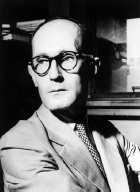
Source: http://www.nytimes.com/2015/07/03/books/review-multitudinous-heart-newly-translated- -poetry-by-carlos-drummond-de-andrade.html Access October 15, 2016. Adapted.
The book “Multitudinous Heart’, according to the review, :
Questão 43 274744
FACASPER 201710 YEARS AFTER AN INCONVENIENT TRUTH,
AL GORE MAY ACTUALLY BE WINNING
ISSIE LAPOWSKY SCIENCE 05.24.16 6:50 AM
AL GORE SNEEZES a hefty achoo. “Excuse me,” the former vice president says, dabbing a tissue at his nose before offering up an explanation. “Spring.”
Outside Gore’s New York City office, spring has certainly sprung—early too. This March was the hottest one ever, beating the prior record set in March 2015. The same goes for February and January of this year, and, oh, the eight consecutive months before. Gore knows these statistics by heart. The fact that you might know them too is likely because of him. These kinds of numbers— and the scary story they tell about the future of Earth—have been Gore’s chief motivation since he failed to win the presidency in 2000. Gore emerged from that weird, disputed election armed with what is now possibly the most famous slide¬show in human history. He has traveled the world delivering that deck to hundreds of people at a time, showing in irrefutable detail just how mind-bogglingly badly we have treated our planet and what we might be able to do about it.
Ten years ago, the slide¬show became An Inconvenient Truth, the documentary that spread those ideas to millions. Gore says he still tinkers with the slide¬show every day, because, well, the numbers keep changing. Not always for the better. Yet this year Gore and his fellow activists have a rare reason to celebrate. In April, 175 world leaders gathered at the United Nations to sign the Paris Agreement, a global pact that aims to keep global temperatures from rising more than 2 degrees Celsius above preindustrial levels. Now, a decade after his movie sounded the alarm about climate change and 16 years after he ran for president, it looks like Al Gore might finally be … winning?
WIRED: Why did you want to make An Inconvenient Truth?
GORE: I have to admit to you that initially I did not want to do a documentary.
What? Why not?
It’s a dumb reason. I didn’t think a slide¬show could translate into a movie. (…) Participant Media and Davis Guggenheim had to convince me it was a good idea, and I’m so glad they found ways to reveal to me the depths of my ignorance about moviemaking. It’s a message that has to be heard. Sorry to risk sounding grandiose, but the future of human civilization is at stake.
The Paris Agreement must feel like a big point of progress.
It really does. Sometimes in sports you can sense a palpable shift in the momentum of the contest. A team will be behind on the scoreboard, but the shift in momentum is so obvious and dramatic that you just have the feeling they’re going to win. That’s where we are in solving the climate crisis. We’re still behind on the scoreboard, but the momentum has shifted. We are winning
When renewable electricity becomes cheaper than electricity that comes from burning coal or gas, then that changes everything. The marketplace makes it the default option, and you get what you saw in the world in 2015—90 percent of the new electricity generated in the world last year was from renewables. That is an astonishing change. The Paris Agreement exceeded the upper range of my expectations. Does it go far enough? No, of course not. Can it be improved? Yes, it’s designed to be constantly improved, and that’s what I’m focused on now.
You’ve been at this a long time. Was it lonely fighting for this stuff in government in the 1980s and 1990s?
It was certainly a different time and a different environment. But I don’t ever remember feeling lonely, because I was always focused on reaching more and more people. Building a global grassroots movement is really the only way to solve this, because so many political systems have been captured by legacy industries. And that influence over policymaking has to be counterbalanced by a grassroots awareness.
It’s sometimes tough for people to get climate change because they’re not seeing its effects every day—or at least they don’t realize they are. What have you seen that has stuck with you?
In March, I went to Tacloban in the Philippines and talked with survivors there who endured the ravages of Super Typhoon Haiyan. When you see how their lives were utterly transformed and feel the painful losses they suffered, it certainly will stick with you. I conducted a training in Miami last fall during one of the highest high tides and saw fish from the ocean swimming in the streets in Miami Beach and Fort Lauderdale on a sunny day.
You talk a lot about “winning” the fight against climate change. How do you define a win?
Winning means avoiding catastrophic consequences that could utterly disrupt the future of human civilization. It means bending the curves downward so that the global warming pollution stops accumulating in the atmosphere and begins to reduce in volume. It means creating tens of millions of new jobs to retrofit buildings, to transform energy systems and install advanced batteries, to transform agriculture and forestry, and to make the solutions to the climate crisis the central organizing principle of our civilization.
Source: https://www.wired.com/2016/05/wired-al-gore-climate-change/ Access October 16, 2016. Adapted.
Building a global grassroots movement was:
06