


![[Marketing] Questao Topo - deslogado](https://storage.estuda.com.br/banners/0_6b7ebee90b03af1c560c73bb8bcce34a_banner_deslogado_70_dias.png)
Questões de Inglês
19.971 Questões
Questão 43 472292
IFRS Superior 2017/1[1] The ideas began with what seemed to be a minor difference of opinion between John and me on
[2] a matter of small importance: how much one should maintain one's own motorcycle. It seems natural
[3] and normal to me to make use of the small tool kits and instruction booklets supplied with each
[4] machine, and keep it tuned and adjusted myself. John demurs. He prefers to let a competent mechanic
[5] take care of these things so that they are done right. Neither viewpoint is unusual, and this minor
[6] difference would never have become magnified if we didn't spend so much time riding together and
[7] sitting in country roadhouses drinking beer and talking about whatever comes to mind. What comes to
[8] mind, usually, is whatever we've been thinking about in the half hour or forty-five minutes since we last
[9] talked to each other. When it's roads or weather or people or old memories or what's in the newpapers,
[10] the conversation just naturally builds pleasantly. But whenever the performance of the machines has been
[11] on my mind and gets into the conversation, the building stops. The conversation no longer moves
[12] forward. There is a silence and a break in the continuity. It is as though two old friends, a Catholic and
[13] Protestant, were sitting drinking beer, enjoying life, and the subject of birth control somehow came up.
[14] Big freeze-out.
[15] (…)
[16] When you're talking birth control, what blocks it and freezes it out is that it's not a matter of more
[17] or fewer babies being argued. That's just on the surface. What's underneath is a conflict of faith, of faith
[18] in empirical social planning versus faith in the authority of God as revealed by the teachings of the
[19] Catholic Church. You can prove the practicality of planned parenthood till you get tired of listening to
[20] yourself and it's going to go nowhere because your antagonist isn't buying the assumption that
[21] anything socially practical is good per se. Goodness for him has other sources which he values as
[22] much as or more than social practicality.
(Excerpt from Zen and the Art of Motorcycle Maintenance, By Robert M. Pirsig. New York: Harpertorch, 1974)
Considere as afirmações abaixo.
I - “began” (l. 01) e “didn't spend” (l. 06) estão no passado simples.
II - “seems” (l. 02) e “prefers” (l. 04) estão no presente simples.
III - “would never have become” (l. 06) é uma estrutura usada para algo que não teria acontecido com uma condição, expressa por uma outra oração com o verbo no passado simples.
IV - “we´ve been thinking” (l. 08) e “has been” (l. 10) estão no presente perfeito contínuo.
Assinale a alternativa correta.
Questão 42 472291
IFRS Superior 2017/1[1] The ideas began with what seemed to be a minor difference of opinion between John and me on
[2] a matter of small importance: how much one should maintain one's own motorcycle. It seems natural
[3] and normal to me to make use of the small tool kits and instruction booklets supplied with each
[4] machine, and keep it tuned and adjusted myself. John demurs. He prefers to let a competent mechanic
[5] take care of these things so that they are done right. Neither viewpoint is unusual, and this minor
[6] difference would never have become magnified if we didn't spend so much time riding together and
[7] sitting in country roadhouses drinking beer and talking about whatever comes to mind. What comes to
[8] mind, usually, is whatever we've been thinking about in the half hour or forty-five minutes since we last
[9] talked to each other. When it's roads or weather or people or old memories or what's in the newpapers,
[10] the conversation just naturally builds pleasantly. But whenever the performance of the machines has been
[11] on my mind and gets into the conversation, the building stops. The conversation no longer moves
[12] forward. There is a silence and a break in the continuity. It is as though two old friends, a Catholic and
[13] Protestant, were sitting drinking beer, enjoying life, and the subject of birth control somehow came up.
[14] Big freeze-out.
[15] (…)
[16] When you're talking birth control, what blocks it and freezes it out is that it's not a matter of more
[17] or fewer babies being argued. That's just on the surface. What's underneath is a conflict of faith, of faith
[18] in empirical social planning versus faith in the authority of God as revealed by the teachings of the
[19] Catholic Church. You can prove the practicality of planned parenthood till you get tired of listening to
[20] yourself and it's going to go nowhere because your antagonist isn't buying the assumption that
[21] anything socially practical is good per se. Goodness for him has other sources which he values as
[22] much as or more than social practicality.
(Excerpt from Zen and the Art of Motorcycle Maintenance, By Robert M. Pirsig. New York: Harpertorch, 1974)
Considere as afirmações abaixo.
I - A frase “John demurs.” (l. 04), significa, “John discorda.”, visto que ele tem atitude contrária a do narrador sobre a manutenção de motocicletas.
II - A forma nominal “building” na frase “The building stops” (l. 11) refere-se à conversa que se desenrola na frase “the conversation just naturally builds pleasantly” (l. 10) e que é interrompida.
III - As palavras “surface” (l. 17) e “underneath” (l. 17) têm sentidos opostos, sendo seus significados, respectivamente, “superfície” e “sob a superfície”.
Assinale a alternativa correta.
Questão 41 472277
IFRS Superior 2017/1[1] The ideas began with what seemed to be a minor difference of opinion between John and me on
[2] a matter of small importance: how much one should maintain one's own motorcycle. It seems natural
[3] and normal to me to make use of the small tool kits and instruction booklets supplied with each
[4] machine, and keep it tuned and adjusted myself. John demurs. He prefers to let a competent mechanic
[5] take care of these things so that they are done right. Neither viewpoint is unusual, and this minor
[6] difference would never have become magnified if we didn't spend so much time riding together and
[7] sitting in country roadhouses drinking beer and talking about whatever comes to mind. What comes to
[8] mind, usually, is whatever we've been thinking about in the half hour or forty-five minutes since we last
[9] talked to each other. When it's roads or weather or people or old memories or what's in the newpapers,
[10] the conversation just naturally builds pleasantly. But whenever the performance of the machines has been
[11] on my mind and gets into the conversation, the building stops. The conversation no longer moves
[12] forward. There is a silence and a break in the continuity. It is as though two old friends, a Catholic and
[13] Protestant, were sitting drinking beer, enjoying life, and the subject of birth control somehow came up.
[14] Big freeze-out.
[15] (…)
[16] When you're talking birth control, what blocks it and freezes it out is that it's not a matter of more
[17] or fewer babies being argued. That's just on the surface. What's underneath is a conflict of faith, of faith
[18] in empirical social planning versus faith in the authority of God as revealed by the teachings of the
[19] Catholic Church. You can prove the practicality of planned parenthood till you get tired of listening to
[20] yourself and it's going to go nowhere because your antagonist isn't buying the assumption that
[21] anything socially practical is good per se. Goodness for him has other sources which he values as
[22] much as or more than social practicality.
(Excerpt from Zen and the Art of Motorcycle Maintenance, By Robert M. Pirsig. New York: Harpertorch, 1974)
Assinale a frase que melhor resume o trecho em inglês, de acordo com o relato do narrador.
Questão 31 461522
UNIPE 1° Dia 2017/1TEXTO:
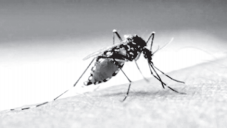
Scientists have found a potential treatment option
for Zika that may protect babies from developing a severe
birth defect, according to a new study from Yale University.
The researchers found that the virus disrupts pTBK1,
[5] a protein that helps spur cell division in the growing brain.
This causes the cells—which are essential for setting
up the structure of the brain—to die, instead of multiply,
and the virus also attacks these neural stem cells directly.
Without these crucial cells, the brain isn’t able to fully
[10] develop, and microcephaly occurs.
Armed with this new understanding, the researchers
decided to test out a few existing antiviral treatments.
Some of these treatments were ineffective on the lab
cells, others actually made the infection worse, but two
[15] managed to stop the replication of Zika virus cells,
protecting the neural stem cells from further damage.
One of the treatments, Sofosbuvir, is already an FDAapproved
drug used to treat Hepatitis C. Though this is
promising, a lot more work needs to be done before a
[20] Zika treatment is confirmed, the researchers cautioned.
Zika has been spreading rapidly throughout Latin
America since the outbreak was first identified in Brazil
last year. Currently, 56 nations are
experiencing outbreaks, according to the CDC (Centers
[25] for Disease Control), and local transmission arrived in
Miami earlier this summer. Though the vast majority of
people infected with Zika have no symptoms, or only get
a mild flu-like infection, Zika can cause microcephaly in
some pregnant women and that threat has caused the
[30] greatest concern. Children born with microcephaly can
have physical and developmental disabilities or face early
death or miscarriage.
Luckily, research like this helps us understand how
Zika works, which means that, even if Sofusbuvir isn’t
[35] the right option, scientists now have a better chance at
finding a treatment that does work. Combined with
ongoing research on vector control and the rapid
development of a vaccine, there’s hope that future children
can be protected from Zika.
SCIENTISTS have. Disponível em: <motherboard.vice.com/read/scientistshave-found-a-possible-way-to-protect babies-from-zika>. Acesso em: 12 out. 2016
As to using the medication Sofosbuvir with people currently facing Zika, the researchers say it is
Questão 30 461521
UNIPE 1° Dia 2017/1TEXTO:
Scientists have found a potential treatment option
for Zika that may protect babies from developing a severe
birth defect, according to a new study from Yale University.
The researchers found that the virus disrupts pTBK1,
[5] a protein that helps spur cell division in the growing brain.
This causes the cells—which are essential for setting
up the structure of the brain—to die, instead of multiply,
and the virus also attacks these neural stem cells directly.
Without these crucial cells, the brain isn’t able to fully
[10] develop, and microcephaly occurs.
Armed with this new understanding, the researchers
decided to test out a few existing antiviral treatments.
Some of these treatments were ineffective on the lab
cells, others actually made the infection worse, but two
[15] managed to stop the replication of Zika virus cells,
protecting the neural stem cells from further damage.
One of the treatments, Sofosbuvir, is already an FDAapproved
drug used to treat Hepatitis C. Though this is
promising, a lot more work needs to be done before a
[20] Zika treatment is confirmed, the researchers cautioned.
Zika has been spreading rapidly throughout Latin
America since the outbreak was first identified in Brazil
last year. Currently, 56 nations are
experiencing outbreaks, according to the CDC (Centers
[25] for Disease Control), and local transmission arrived in
Miami earlier this summer. Though the vast majority of
people infected with Zika have no symptoms, or only get
a mild flu-like infection, Zika can cause microcephaly in
some pregnant women and that threat has caused the
[30] greatest concern. Children born with microcephaly can
have physical and developmental disabilities or face early
death or miscarriage.
Luckily, research like this helps us understand how
Zika works, which means that, even if Sofusbuvir isn’t
[35] the right option, scientists now have a better chance at
finding a treatment that does work. Combined with
ongoing research on vector control and the rapid
development of a vaccine, there’s hope that future children
can be protected from Zika.
SCIENTISTS have. Disponível em: <motherboard.vice.com/read/scientistshave-found-a-possible-way-to-protect babies-from-zika>. Acesso em: 12 out. 2016
About the antiviral treatments tested out to fight the Zika virus, the text says that
Questão 29 461518
UNIPE 1° Dia 2017/1TEXTO:
Scientists have found a potential treatment option
for Zika that may protect babies from developing a severe
birth defect, according to a new study from Yale University.
The researchers found that the virus disrupts pTBK1,
[5] a protein that helps spur cell division in the growing brain.
This causes the cells—which are essential for setting
up the structure of the brain—to die, instead of multiply,
and the virus also attacks these neural stem cells directly.
Without these crucial cells, the brain isn’t able to fully
[10] develop, and microcephaly occurs.
Armed with this new understanding, the researchers
decided to test out a few existing antiviral treatments.
Some of these treatments were ineffective on the lab
cells, others actually made the infection worse, but two
[15] managed to stop the replication of Zika virus cells,
protecting the neural stem cells from further damage.
One of the treatments, Sofosbuvir, is already an FDAapproved
drug used to treat Hepatitis C. Though this is
promising, a lot more work needs to be done before a
[20] Zika treatment is confirmed, the researchers cautioned.
Zika has been spreading rapidly throughout Latin
America since the outbreak was first identified in Brazil
last year. Currently, 56 nations are
experiencing outbreaks, according to the CDC (Centers
[25] for Disease Control), and local transmission arrived in
Miami earlier this summer. Though the vast majority of
people infected with Zika have no symptoms, or only get
a mild flu-like infection, Zika can cause microcephaly in
some pregnant women and that threat has caused the
[30] greatest concern. Children born with microcephaly can
have physical and developmental disabilities or face early
death or miscarriage.
Luckily, research like this helps us understand how
Zika works, which means that, even if Sofusbuvir isn’t
[35] the right option, scientists now have a better chance at
finding a treatment that does work. Combined with
ongoing research on vector control and the rapid
development of a vaccine, there’s hope that future children
can be protected from Zika.
SCIENTISTS have. Disponível em: <motherboard.vice.com/read/scientistshave-found-a-possible-way-to-protect babies-from-zika>. Acesso em: 12 out. 2016
Considering the structure of a fetus’s developing brain, the Zika virus ____________
The only alternative that does not complete this blank correctly is
06