


![[Marketing] Questao Topo - deslogado](https://storage.estuda.com.br/banners/0_6b7ebee90b03af1c560c73bb8bcce34a_banner_deslogado_70_dias.png)
Questões de Inglês
19.971 Questões
Questão 66 13097520
UECE 2ª Fase 1° Dia 2017/1T E X T
1 Can public health officials force
2 Americans to break their soda habit?
3 The answer may come soon from the
4 University of California, San Francisco, a
5 health sciences center that has more than
6 24,000 employees on its sprawling campus.
7 Last year, U.C.S.F. removed sugar-sweetened
8 beverages from every store, food truck and
9 vending machine on its campus. Even
10 popular fast-food chains on the campus, like
11 Subway and Panda Express, have stopped
12 selling Sprite, Coca-Cola and their sugary
13 brethren at the university’s request.
14 The institution is believed to be one of
15 the largest employers to remove sugary
16 drinks from the workplace. With sugary sodas
17 now a rare sight on campus, the university
18 found that it had the perfect conditions to
19 study what happens when people who were
20 drinking large amounts of sugar during their
21 workday suddenly stop.
22 Researchers there have enrolled 214 of
23 the school’s employees into a rigorous study,
24 collecting blood samples to see if there have
25 been any major metabolic changes in the
26 people who lowered their soda intake. While
27 they expect to publish complete results soon,
28 early indicators are promising.
29 Since the policy went into effect a
30 year ago, the university says it has recorded a
31 significant drop in soft drink consumption
32 among its employees, particularly service
33 workers, who were the biggest consumers. A
34 university survey of 2,500 employees found
35 that some service workers and support staff
36 members had been drinking up to a liter of
37 soda at work and at home each day, or almost
38 three cans. Six months after the policy went
39 into effect, these workers had reduced their
40 consumption by about a quarter.
41 “We’re a public health institution, and
42 there’s something not right about us making
43 money off of products that we know are
44 making people sick,” said Laura Schmidt, a
45 professor at the medical school who
46 spearheaded the beverage initiative. “How
47 dare we profit off of a product that our own
48 doctors say causes metabolic disease?”
49 The university’s experiment comes at a
50 time of growing battles over policies aimed
51 at curbing soda consumption. On Tuesday,
52 three cities in Northern California and one in
53 Colorado will be voting on whether to tax soft
54 drinks. The cities of Berkeley and Philadelphia
55 have already approved taxes on sugary
56 beverages. One recent study found that the
57 Berkeley tax was working: In low-income
58 areas, sugary drink consumption fell and
59 water consumption rose after the tax went
60 60into effect. Last month, the World Health
61 Organization urged countries around the world
62 to impose a tax on sugary drinks, presenting
63 research that showed just a 20 percent
64 increase in soda prices would result in a
65 proportionate reduction in their consumption.
66 The beverage industry has been fighting
67 back, spending millions on ad campaigns
68 against the proposed taxes in California and
69 Colorado, which it calls a regressive “grocery
70 tax” that hurts the poor. In September, the
71 industry filed a lawsuit against Philadelphia,
72 calling its soda tax illegal.
73 As the fights over soda taxes play out,
74 many hospitals and health organizations have
75 taken matters into their own hands, banning
76 sugary drinks from their own workplaces.
77 Nationwide, at least 30 medical centers have
78 restricted the sale of soda and full-calorie
79 sports drinks, including the Cleveland Clinic in
80 Ohio and the University of Michigan Health
81 System.
82 U.C.S.F.’s policy may be the most far-
83reaching. It applies not only to its medical
84 center, but the entire university, including the
85 aforementioned 24,000 employees and its
86 8,500 visitors and patients each year. Visitors
87 to the campus now will find only bottled
88 water, diet drinks, unsweetened teas, and in
89 some cases 100 percent fruit juice with no
90 added sugar.
91 Michael Flanders, an assistant specialist
92 in the medical center’s division of hematology
93 and oncology, said he had been consuming
94 “tons” of added sugar daily from San
95 Pellegrino Limonatas and other sugary drinks.
96 But when the policy went into effect and the
97 drinks disappeared, sparkling water became
98 his drink of choice.
99 “It took my taste buds a couple months
100 to adjust, but I’ve come to genuinely enjoy
101 black coffee and unflavored fizzy water,” he
102 said. “Soda and sugary coffee drinks now
103 seem overwhelmingly sweet.”
104 But while the university says it hopes its
105 policy will become a model for other large
106 employers to follow, the beverage industry
107 argues that the strategy is flawed. It points
108 out that obesity rates have been climbing
109 even as America’s soda intake has declined in
110 recent years. And it says that focusing blame
111 on soda alone, rather than calories from all
112 foods, is misguided.
113 But Ms. Schmidt said it doesn’t make
114 sense for doctors to urge patients to cut back
115 on sweetened beverages while a university
116 medical center continues to sell those same
117 drinks.
118 Getting the university to stop selling
119 sugary drinks was surprisingly easy, Ms.
120 Schmidt and her colleagues say. The school’s
121 chancellor, after some initial reluctance,
122 decided that the goal was important, and
123 many faculty members supported the idea.
124 The university’s beverage supplier then
125 agreed to stock the campus stores and
126 cafeterias with mostly water and zero-calorie
127 drinks. One exception was made for 100
128 percent fruit juices, which have natural but
129 not added sugars.
130 The policy was announced last July and
131 phased in over a four-month period as the
132 university handed out pamphlets and other
133 educational materials to students and staff
134 members.
135 “We educated everyone and explained
136 to people how harmful sugar sweetened
137 beverages can be to health,” said Leeane
138 Jensen, the director of well-being at the
139 university. “People got it right away, and they
140 were all in support of it.”
141 Robert W. Jones, who owns two Subway
142 franchises on the campus, said that when the
143 school asked him to stop selling soda, he
144 worried that it would upset his customers. Mr.
145 Jones said that his beverage sales declined by
146 about 10 percent in the first two months after
147 the soda was removed, but that he recovered
148 most of the business through sales of diet
149 drinks and bottled water.
150 Whether the policy will have any
151 measurable impact on health remains to be
152 seen. Elissa Epel, the associate director of the
153 university’s Nutrition and Obesity Research
154 Center, said she and her colleagues want to
155 find out if employees who manage to reduce
156 their overall sugary drink intake saw any
157 impact on things like weight loss, liver health,
158 insulin resistance and telomeres, the stretches
159 of DNA that are linked to longevity.
160 One employee who is enrolled in the
161 study, Kristine Obiniana, an analyst at the
162 medical center, said she had been consuming
163 as many as three sugary drinks per day. Ms.
164 Obiniana said that when the policy first went
165 into effect last year, she found herself
166 bringing ginger ale, Dr. Pepper and Capri Sun
167 juices to work. Eventually, she stopped
168 bringing soda to work and started drinking
169 water, tea and zero-calorie flavored drinks
170 instead. She has lost five pounds and hopes to
171 lose at least 20 more.
The World Health Organization has presented research evidencing that an increase in soda prices
Questão 64 13066209
UECE 2ª Fase 1° Dia 2017/1T E X T
1 Can public health officials force
2 Americans to break their soda habit?
3 The answer may come soon from the
4 University of California, San Francisco, a
5 health sciences center that has more than
6 24,000 employees on its sprawling campus.
7 Last year, U.C.S.F. removed sugar-sweetened
8 beverages from every store, food truck and
9 vending machine on its campus. Even
10 popular fast-food chains on the campus, like
11 Subway and Panda Express, have stopped
12 selling Sprite, Coca-Cola and their sugary
13 brethren at the university’s request.
14 The institution is believed to be one of
15 the largest employers to remove sugary
16 drinks from the workplace. With sugary sodas
17 now a rare sight on campus, the university
18 found that it had the perfect conditions to
19 study what happens when people who were
20 drinking large amounts of sugar during their
21 workday suddenly stop.
22 Researchers there have enrolled 214 of
23 the school’s employees into a rigorous study,
24 collecting blood samples to see if there have
25 been any major metabolic changes in the
26 people who lowered their soda intake. While
27 they expect to publish complete results soon,
28 early indicators are promising.
29 Since the policy went into effect a
30 year ago, the university says it has recorded a
31 significant drop in soft drink consumption
32 among its employees, particularly service
33 workers, who were the biggest consumers. A
34 university survey of 2,500 employees found
35 that some service workers and support staff
36 members had been drinking up to a liter of
37 soda at work and at home each day, or almost
38 three cans. Six months after the policy went
39 into effect, these workers had reduced their
40 consumption by about a quarter.
41 “We’re a public health institution, and
42 there’s something not right about us making
43 money off of products that we know are
44 making people sick,” said Laura Schmidt, a
45 professor at the medical school who
46 spearheaded the beverage initiative. “How
47 dare we profit off of a product that our own
48 doctors say causes metabolic disease?”
49 The university’s experiment comes at a
50 time of growing battles over policies aimed
51 at curbing soda consumption. On Tuesday,
52 three cities in Northern California and one in
53 Colorado will be voting on whether to tax soft
54 drinks. The cities of Berkeley and Philadelphia
55 have already approved taxes on sugary
56 beverages. One recent study found that the
57 Berkeley tax was working: In low-income
58 areas, sugary drink consumption fell and
59 water consumption rose after the tax went
60 60into effect. Last month, the World Health
61 Organization urged countries around the world
62 to impose a tax on sugary drinks, presenting
63 research that showed just a 20 percent
64 increase in soda prices would result in a
65 proportionate reduction in their consumption.
66 The beverage industry has been fighting
67 back, spending millions on ad campaigns
68 against the proposed taxes in California and
69 Colorado, which it calls a regressive “grocery
70 tax” that hurts the poor. In September, the
71 industry filed a lawsuit against Philadelphia,
72 calling its soda tax illegal.
73 As the fights over soda taxes play out,
74 many hospitals and health organizations have
75 taken matters into their own hands, banning
76 sugary drinks from their own workplaces.
77 Nationwide, at least 30 medical centers have
78 restricted the sale of soda and full-calorie
79 sports drinks, including the Cleveland Clinic in
80 Ohio and the University of Michigan Health
81 System.
82 U.C.S.F.’s policy may be the most far-
83reaching. It applies not only to its medical
84 center, but the entire university, including the
85 aforementioned 24,000 employees and its
86 8,500 visitors and patients each year. Visitors
87 to the campus now will find only bottled
88 water, diet drinks, unsweetened teas, and in
89 some cases 100 percent fruit juice with no
90 added sugar.
91 Michael Flanders, an assistant specialist
92 in the medical center’s division of hematology
93 and oncology, said he had been consuming
94 “tons” of added sugar daily from San
95 Pellegrino Limonatas and other sugary drinks.
96 But when the policy went into effect and the
97 drinks disappeared, sparkling water became
98 his drink of choice.
99 “It took my taste buds a couple months
100 to adjust, but I’ve come to genuinely enjoy
101 black coffee and unflavored fizzy water,” he
102 said. “Soda and sugary coffee drinks now
103 seem overwhelmingly sweet.”
104 But while the university says it hopes its
105 policy will become a model for other large
106 employers to follow, the beverage industry
107 argues that the strategy is flawed. It points
108 out that obesity rates have been climbing
109 even as America’s soda intake has declined in
110 recent years. And it says that focusing blame
111 on soda alone, rather than calories from all
112 foods, is misguided.
113 But Ms. Schmidt said it doesn’t make
114 sense for doctors to urge patients to cut back
115 on sweetened beverages while a university
116 medical center continues to sell those same
117 drinks.
118 Getting the university to stop selling
119 sugary drinks was surprisingly easy, Ms.
120 Schmidt and her colleagues say. The school’s
121 chancellor, after some initial reluctance,
122 decided that the goal was important, and
123 many faculty members supported the idea.
124 The university’s beverage supplier then
125 agreed to stock the campus stores and
126 cafeterias with mostly water and zero-calorie
127 drinks. One exception was made for 100
128 percent fruit juices, which have natural but
129 not added sugars.
130 The policy was announced last July and
131 phased in over a four-month period as the
132 university handed out pamphlets and other
133 educational materials to students and staff
134 members.
135 “We educated everyone and explained
136 to people how harmful sugar sweetened
137 beverages can be to health,” said Leeane
138 Jensen, the director of well-being at the
139 university. “People got it right away, and they
140 were all in support of it.”
141 Robert W. Jones, who owns two Subway
142 franchises on the campus, said that when the
143 school asked him to stop selling soda, he
144 worried that it would upset his customers. Mr.
145 Jones said that his beverage sales declined by
146 about 10 percent in the first two months after
147 the soda was removed, but that he recovered
148 most of the business through sales of diet
149 drinks and bottled water.
150 Whether the policy will have any
151 measurable impact on health remains to be
152 seen. Elissa Epel, the associate director of the
153 university’s Nutrition and Obesity Research
154 Center, said she and her colleagues want to
155 find out if employees who manage to reduce
156 their overall sugary drink intake saw any
157 impact on things like weight loss, liver health,
158 insulin resistance and telomeres, the stretches
159 of DNA that are linked to longevity.
160 One employee who is enrolled in the
161 study, Kristine Obiniana, an analyst at the
162 medical center, said she had been consuming
163 as many as three sugary drinks per day. Ms.
164 Obiniana said that when the policy first went
165 into effect last year, she found herself
166 bringing ginger ale, Dr. Pepper and Capri Sun
167 juices to work. Eventually, she stopped
168 bringing soda to work and started drinking
169 water, tea and zero-calorie flavored drinks
170 instead. She has lost five pounds and hopes to
171 lose at least 20 more.
The decision made by the U.C.S.F. is in the context of policies toward reducing the consumption of sugary beverages in the US, where cities like Philadelphia and Berkeley have already decided to
Questão 61 13065843
UECE 2ª Fase 1° Dia 2017/1T E X T
1 Can public health officials force
2 Americans to break their soda habit?
3 The answer may come soon from the
4 University of California, San Francisco, a
5 health sciences center that has more than
6 24,000 employees on its sprawling campus.
7 Last year, U.C.S.F. removed sugar-sweetened
8 beverages from every store, food truck and
9 vending machine on its campus. Even
10 popular fast-food chains on the campus, like
11 Subway and Panda Express, have stopped
12 selling Sprite, Coca-Cola and their sugary
13 brethren at the university’s request.
14 The institution is believed to be one of
15 the largest employers to remove sugary
16 drinks from the workplace. With sugary sodas
17 now a rare sight on campus, the university
18 found that it had the perfect conditions to
19 study what happens when people who were
20 drinking large amounts of sugar during their
21 workday suddenly stop.
22 Researchers there have enrolled 214 of
23 the school’s employees into a rigorous study,
24 collecting blood samples to see if there have
25 been any major metabolic changes in the
26 people who lowered their soda intake. While
27 they expect to publish complete results soon,
28 early indicators are promising.
29 Since the policy went into effect a
30 year ago, the university says it has recorded a
31 significant drop in soft drink consumption
32 among its employees, particularly service
33 workers, who were the biggest consumers. A
34 university survey of 2,500 employees found
35 that some service workers and support staff
36 members had been drinking up to a liter of
37 soda at work and at home each day, or almost
38 three cans. Six months after the policy went
39 into effect, these workers had reduced their
40 consumption by about a quarter.
41 “We’re a public health institution, and
42 there’s something not right about us making
43 money off of products that we know are
44 making people sick,” said Laura Schmidt, a
45 professor at the medical school who
46 spearheaded the beverage initiative. “How
47 dare we profit off of a product that our own
48 doctors say causes metabolic disease?”
49 The university’s experiment comes at a
50 time of growing battles over policies aimed
51 at curbing soda consumption. On Tuesday,
52 three cities in Northern California and one in
53 Colorado will be voting on whether to tax soft
54 drinks. The cities of Berkeley and Philadelphia
55 have already approved taxes on sugary
56 beverages. One recent study found that the
57 Berkeley tax was working: In low-income
58 areas, sugary drink consumption fell and
59 water consumption rose after the tax went
60 60into effect. Last month, the World Health
61 Organization urged countries around the world
62 to impose a tax on sugary drinks, presenting
63 research that showed just a 20 percent
64 increase in soda prices would result in a
65 proportionate reduction in their consumption.
66 The beverage industry has been fighting
67 back, spending millions on ad campaigns
68 against the proposed taxes in California and
69 Colorado, which it calls a regressive “grocery
70 tax” that hurts the poor. In September, the
71 industry filed a lawsuit against Philadelphia,
72 calling its soda tax illegal.
73 As the fights over soda taxes play out,
74 many hospitals and health organizations have
75 taken matters into their own hands, banning
76 sugary drinks from their own workplaces.
77 Nationwide, at least 30 medical centers have
78 restricted the sale of soda and full-calorie
79 sports drinks, including the Cleveland Clinic in
80 Ohio and the University of Michigan Health
81 System.
82 U.C.S.F.’s policy may be the most far-
83reaching. It applies not only to its medical
84 center, but the entire university, including the
85 aforementioned 24,000 employees and its
86 8,500 visitors and patients each year. Visitors
87 to the campus now will find only bottled
88 water, diet drinks, unsweetened teas, and in
89 some cases 100 percent fruit juice with no
90 added sugar.
91 Michael Flanders, an assistant specialist
92 in the medical center’s division of hematology
93 and oncology, said he had been consuming
94 “tons” of added sugar daily from San
95 Pellegrino Limonatas and other sugary drinks.
96 But when the policy went into effect and the
97 drinks disappeared, sparkling water became
98 his drink of choice.
99 “It took my taste buds a couple months
100 to adjust, but I’ve come to genuinely enjoy
101 black coffee and unflavored fizzy water,” he
102 said. “Soda and sugary coffee drinks now
103 seem overwhelmingly sweet.”
104 But while the university says it hopes its
105 policy will become a model for other large
106 employers to follow, the beverage industry
107 argues that the strategy is flawed. It points
108 out that obesity rates have been climbing
109 even as America’s soda intake has declined in
110 recent years. And it says that focusing blame
111 on soda alone, rather than calories from all
112 foods, is misguided.
113 But Ms. Schmidt said it doesn’t make
114 sense for doctors to urge patients to cut back
115 on sweetened beverages while a university
116 medical center continues to sell those same
117 drinks.
118 Getting the university to stop selling
119 sugary drinks was surprisingly easy, Ms.
120 Schmidt and her colleagues say. The school’s
121 chancellor, after some initial reluctance,
122 decided that the goal was important, and
123 many faculty members supported the idea.
124 The university’s beverage supplier then
125 agreed to stock the campus stores and
126 cafeterias with mostly water and zero-calorie
127 drinks. One exception was made for 100
128 percent fruit juices, which have natural but
129 not added sugars.
130 The policy was announced last July and
131 phased in over a four-month period as the
132 university handed out pamphlets and other
133 educational materials to students and staff
134 members.
135 “We educated everyone and explained
136 to people how harmful sugar sweetened
137 beverages can be to health,” said Leeane
138 Jensen, the director of well-being at the
139 university. “People got it right away, and they
140 were all in support of it.”
141 Robert W. Jones, who owns two Subway
142 franchises on the campus, said that when the
143 school asked him to stop selling soda, he
144 worried that it would upset his customers. Mr.
145 Jones said that his beverage sales declined by
146 about 10 percent in the first two months after
147 the soda was removed, but that he recovered
148 most of the business through sales of diet
149 drinks and bottled water.
150 Whether the policy will have any
151 measurable impact on health remains to be
152 seen. Elissa Epel, the associate director of the
153 university’s Nutrition and Obesity Research
154 Center, said she and her colleagues want to
155 find out if employees who manage to reduce
156 their overall sugary drink intake saw any
157 impact on things like weight loss, liver health,
158 insulin resistance and telomeres, the stretches
159 of DNA that are linked to longevity.
160 One employee who is enrolled in the
161 study, Kristine Obiniana, an analyst at the
162 medical center, said she had been consuming
163 as many as three sugary drinks per day. Ms.
164 Obiniana said that when the policy first went
165 into effect last year, she found herself
166 bringing ginger ale, Dr. Pepper and Capri Sun
167 juices to work. Eventually, she stopped
168 bringing soda to work and started drinking
169 water, tea and zero-calorie flavored drinks
170 instead. She has lost five pounds and hopes to
171 lose at least 20 more.
According to the text, last year the University of California, San Francisco, decided to
Questão 57 11560839
APMBB 2017Leia o texto para responder à questão.
Domestic violence victims denied justice: state of Roraima fails to investigate, prosecute abusers
June 21, 2017
The authorities in the Brazilian state of Roraima are failing to investigate or prosecute domestic violence cases, leaving women at further risk of abuse, Human Rights Watch said in a report released today. The serious problems in Roraima, the state with the highest rate of killings of women in Brazil, reflect nationwide failures to provide victims of domestic violence with access to justice and protection.
Killings of women rose 139 percent from 2010 to 2015 in Roraima, reaching 11.4 homicides per 100,000 women that year, the latest for which there is data available. The national average is 4.4 killings per 100,000 women—already one of the highest in the world. Studies in Brazil and worldwide estimate that a large percentage of women who suffer violent deaths are killed by partners or former partners.
Only a quarter of women who suffer violence in Brazil report it, according to a February 2017 survey that does not provide state-by-state data. Human Rights Watch found in Roraima that when women do call police they face considerable barriers to having their cases heard. Military police told Human Rights Watch that, for lack of personnel, they do not respond to all emergency calls from women who say they are experiencing domestic violence. Other women are turned away at police stations. Some civil police officers in Boa Vista, the state´s capital, decline to register domestic violence complaints or to request protection orders. Instead, they direct victims to the single “women’s police station” in the state – which specializes in crimes against women – even at times when that station is closed. Even when police receive their complaints, women must tell their story of abuse, including sexual abuse, in open reception areas, as there are no private rooms to take statements in any police station in the state.
Not a single civil police officer in Roraima receives training in how to handle domestic violence cases. Some police officers, when receiving women seeking protection orders, take statements so carelessly that judges lack the basic information they need to decide whether to issue the order. Civil police are unable to keep up with the volume of complaints they do receive. In Boa Vista, the police have failed to do investigative work on a backlog of 8,400 domestic violence complaints.
(Human Rights Watch. www.hrw.org/news/2017/06/21/ brazil-domestic-violence-victims-denied-justice. Adaptado)
De acordo com o terceiro parágrafo, um dos problemas enfrentados, na cidade de Boa Vista, pelas mulheres que sofrem de violência é que
Questão 55 11560613
APMBB 2017Leia o texto para responder à questão.
Domestic violence victims denied justice: state of Roraima fails to investigate, prosecute abusers
June 21, 2017
The authorities in the Brazilian state of Roraima are failing to investigate or prosecute domestic violence cases, leaving women at further risk of abuse, Human Rights Watch said in a report released today. The serious problems in Roraima, the state with the highest rate of killings of women in Brazil, reflect nationwide failures to provide victims of domestic violence with access to justice and protection.
Killings of women rose 139 percent from 2010 to 2015 in Roraima, reaching 11.4 homicides per 100,000 women that year, the latest for which there is data available. The national average is 4.4 killings per 100,000 women—already one of the highest in the world. Studies in Brazil and worldwide estimate that a large percentage of women who suffer violent deaths are killed by partners or former partners.
Only a quarter of women who suffer violence in Brazil report it, according to a February 2017 survey that does not provide state-by-state data. Human Rights Watch found in Roraima that when women do call police they face considerable barriers to having their cases heard. Military police told Human Rights Watch that, for lack of personnel, they do not respond to all emergency calls from women who say they are experiencing domestic violence. Other women are turned away at police stations. Some civil police officers in Boa Vista, the state´s capital, decline to register domestic violence complaints or to request protection orders. Instead, they direct victims to the single “women’s police station” in the state – which specializes in crimes against women – even at times when that station is closed. Even when police receive their complaints, women must tell their story of abuse, including sexual abuse, in open reception areas, as there are no private rooms to take statements in any police station in the state.
Not a single civil police officer in Roraima receives training in how to handle domestic violence cases. Some police officers, when receiving women seeking protection orders, take statements so carelessly that judges lack the basic information they need to decide whether to issue the order. Civil police are unable to keep up with the volume of complaints they do receive. In Boa Vista, the police have failed to do investigative work on a backlog of 8,400 domestic violence complaints.
(Human Rights Watch. www.hrw.org/news/2017/06/21/ brazil-domestic-violence-victims-denied-justice. Adaptado)
The main issue of the text is
Questão 57 10102911
CEFSA Conhecimentos Gerais 2017/1Leia o texto para responder à questão.
Explained: What is the Internet of Things (IoT)?
Bridget Botelho, Editorial Director
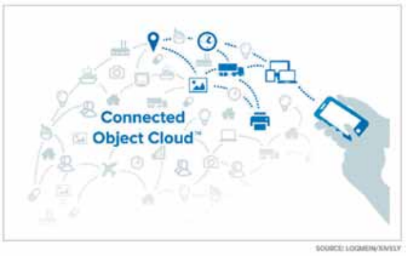
So what is the Internet of Things? Simply put, it’s machine-to-machine communication, but it’s much more than just connected devices. What is the Internet of Things, exactly? It is an ambiguous term, but it is fast becoming a tangible technology that can be applied in data centers to collect information on just about anything that Information Technology (IT) wants to control. The Internet of Things (IoT) is essentially a system of machines or objects outfitted with data-collecting technologies so that those objects can communicate with one another. The machine-to-machine (M2M) data that is generated has a wide range of uses, but is commonly seen as a way to determine the health and status of things – inanimate or living.
IT administrators can use the IoT for anything in their physical environment that they want information about. In fact, they already do. In one case, IoT is being used to stymie deforestation in the Amazon rainforest. A Brazilian location-services company called Cargo Tracck places M2M sensors from security company Gemalto in trees in protected areas. When a tree is cut or moved, law enforcement receives a message with its GPS location, allowing authorities to track down the illegally removed tree.
One analyst explained the IoT using the iPhone as an analogy. Disconnected third-party applications that are hosted in the cloud can be connected, and users can access all sorts of data from the device, according to Sam Lucero, senior principal analyst, M2M and Internet of Things, at IHS Electronics & Media in Tempe, Ariz.
How the Internet of Things works
While some consider IoT to be M2M communication over a closed network, that model is really just an intranet of things, Lucero said. With an Intranet of Things, apps are mobilized for a specific purpose and don’t interact outside of that network. The true IoT is where different applications are mobilized for specific reasons and the data collected from the machines and objects being monitored are made available to third-party applications. The expectation is that true IoT will provide more value than what can be derived from secluded islands of information, Lucero said.
For the IoT to work in data centers, platforms from competing vendors need to be able to communicate with one another. This requires standard APIs that all vendors and equipment can plug into, for both the systems interfaces as well as various devices, said Mike Sapien, a principal analyst with Ovum.
(http://internetofthingsagenda.techtarget.com/feature/Explained -What-is-the-Internet-of-Things. Adaptado)
No trecho do primeiro parágrafo – The Internet of Things (IoT) is essentially a system of machines or objects outfitted with data-collecting technologies so that those objects can communicate with one another –, a expressão em destaque introduz
06