


![[Marketing] Questao Topo - deslogado](https://storage.estuda.com.br/banners/0_6b7ebee90b03af1c560c73bb8bcce34a_banner_deslogado_70_dias.png)
Questões de Inglês
19.971 Questões
Questão 29 179677
FATEC 2018/1Technology brought us fake news — and it will help us kill it
“Fake news” - websites disseminating news stories that are false but are believed to be true – was a major feature of the U.S. election season. Some observers believe that it determined the outcome of the election, although there is no way to definitively ascertain its effect on voting.
Fake news is news that affects the digital universe profoundly. Fake news grew because of the ease of creating and disseminating websites and stories that look and read as credible as real news sites (at least to many people). It is disseminated on social media platforms just because dissemination of information without vetting has always been a feature of those platforms. This was designed tofacilitate communication - no one removes a negative comment about a restaurant on Facebook.
On the positive side, this means that everyone’s opinion can be disseminated. The awareness of fake news, though, reveals a downside – or perhaps a loophole – of the freedom to post. And fake news may beget1 fake news. Facebook is not the only media company to be an inadvertent host for fake news, but it is by far the largest, with roughly 2 billion users each month.
Forbes indicates that the fallout2 from fake news during the election cycle may cause advertisers topull back from Facebook, as it is less “brand safe” than formerly. If unchecked, fake news could impact the perceived credibility of online sites where fake news runs. Since the election, Facebook has announced plans to refine and increase automated detection of fake news and to make reporting of suspected stories easier for Facebook users. It has also indicated that the current ad system will be changed, to interfere with fake news sites receiving revenue from Facebook.
https://tinyurl.com/y8jfq2t4 Acesso em: 07.11.2017. Adaptado.
Glossáriobeget1: gerar, criar, produzir.
fallout 2: efeitos negativos.
A palavra unchecked, presente no quarto parágrafo, é formada por meio da adição do prefixo un- ao termo checked.
A alternativa que apresenta uma palavra gramaticalmente correta e formada pelo processo de prefixação, tal como unchecked, é
Questão 27 179671
FATEC 2018/1Technology brought us fake news — and it will help us kill it
“Fake news” - websites disseminating news stories that are false but are believed to be true – was a major feature of the U.S. election season. Some observers believe that it determined the outcome of the election, although there is no way to definitively ascertain its effect on voting.
Fake news is news that affects the digital universe profoundly. Fake news grew because of the ease of creating and disseminating websites and stories that look and read as credible as real news sites (at least to many people). It is disseminated on social media platforms just because dissemination of information without vetting has always been a feature of those platforms. This was designed tofacilitate communication - no one removes a negative comment about a restaurant on Facebook.
On the positive side, this means that everyone’s opinion can be disseminated. The awareness of fake news, though, reveals a downside – or perhaps a loophole – of the freedom to post. And fake news may beget1 fake news. Facebook is not the only media company to be an inadvertent host for fake news, but it is by far the largest, with roughly 2 billion users each month.
Forbes indicates that the fallout2 from fake news during the election cycle may cause advertisers topull back from Facebook, as it is less “brand safe” than formerly. If unchecked, fake news could impact the perceived credibility of online sites where fake news runs. Since the election, Facebook has announced plans to refine and increase automated detection of fake news and to make reporting of suspected stories easier for Facebook users. It has also indicated that the current ad system will be changed, to interfere with fake news sites receiving revenue from Facebook.
https://tinyurl.com/y8jfq2t4 Acesso em: 07.11.2017. Adaptado.
Glossáriobeget1: gerar, criar, produzir.
fallout 2: efeitos negativos.
A respeito do papel do Facebook na disseminação de fake news, pode-se afirmar corretamente, tendo por base o texto apresentado, que
Questão 26 179668
FATEC 2018/1Technology brought us fake news — and it will help us kill it
“Fake news” - websites disseminating news stories that are false but are believed to be true – was a major feature of the U.S. election season. Some observers believe that it determined the outcome of the election, although there is no way to definitively ascertain its effect on voting.
Fake news is news that affects the digital universe profoundly. Fake news grew because of the ease of creating and disseminating websites and stories that look and read as credible as real news sites (at least to many people). It is disseminated on social media platforms just because dissemination of information without vetting has always been a feature of those platforms. This was designed tofacilitate communication - no one removes a negative comment about a restaurant on Facebook.
On the positive side, this means that everyone’s opinion can be disseminated. The awareness of fake news, though, reveals a downside – or perhaps a loophole – of the freedom to post. And fake news may beget1 fake news. Facebook is not the only media company to be an inadvertent host for fake news, but it is by far the largest, with roughly 2 billion users each month.
Forbes indicates that the fallout2 from fake news during the election cycle may cause advertisers topull back from Facebook, as it is less “brand safe” than formerly. If unchecked, fake news could impact the perceived credibility of online sites where fake news runs. Since the election, Facebook has announced plans to refine and increase automated detection of fake news and to make reporting of suspected stories easier for Facebook users. It has also indicated that the current ad system will be changed, to interfere with fake news sites receiving revenue from Facebook.
https://tinyurl.com/y8jfq2t4 Acesso em: 07.11.2017. Adaptado.
Glossáriobeget1: gerar, criar, produzir.
fallout 2: efeitos negativos.
Assinale a alternativa que apresenta, de acordo com o texto, elementos que podem ser considerados razões para a disseminação ou o aumento de fake news.
Questão 2 179443
FATEC 2018/1Leia a tirinha que mostra o diálogo do personagem Dilbert (de óculos, sentado ao computador) com o seu chefe.

Na última quadrícula, o chefe menciona “habilidades de comunicação” (communication skills) com a intenção de
Questão 29 173659
UEL 2° Fase 2018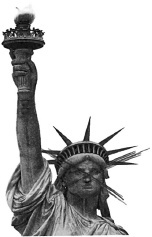
What poem would Trump like to see on the Statue of Liberty?
Donald Trump recently proposed to cut legal immigration to the US by half over in the next decade and to establish a merit-based immigration program. Under the plan, applicants with certain credentials, such as English proficiency, doctorates, high salaries, Olympic medalists and Nobel prizes winners would be given preference.
Many people viewed the proposal as an attack on American values like equality and opportunity. Trump’s plan also led to a heated exchange in a press briefing when CNN’s Jim Acosta asked White House aide Stephen Miller if the Emma Lazarus poem The New Colossus that is at the base of the Statue of Liberty is still relevant. In response, we’d like you to write poems that riff on the final lines Lazarus’s work:
Give me your tired, your poor,
Your huddled masses yearning to breathe free,
The wretched refuse of your teeming shore.
Send these, the homeless, tempest-tost to me,
I lift my lamp beside the golden door!
We’d like to invite our readers to join the Guardian’s Lady Liberty poetry challenge What poem would Trump like to see at the base of the Statue of Liberty? How would Trump rewrite the message of American compassion? We’ll publish a selection of our favorite reader-submitted poems. The Guardian also asked 21 American poets to imagine in writing what type of poem would Trump like to see at the statue? For inspiration, read the submission from the poet John Yau below.
The New Colossus as Donald Trump
I don’t need more tired or poor
Let the mucky masses camp on their own dirty shore
Let them stay wretched, it is what they deserve
Send me only those who know how to bow, scrape and
serve
Or else I will close the gate to my golden hotel
— John Yau
(Adaptado de: What poem would Trump like to see on the Statue of Liberty? The Guardian. (Online) 10 ago. 2017. Disponível em: https://www.theguardian.com/us-news/2017/aug/10/trump-poem-statue-of-liberty#top Acesso em 10 ago. 2017. Huddled masses? Losers! Trump v the Statue of Liberty. The Guardian. (Online) 10 ago. 2017. Disponível em: https://www.theguardian.com/usnews/ng-interactive/2017/aug/10/the-new-colossus-emma-lazarus-poems-donald-trump-immigration. Acesso em: 10 ago. 2017.)
A partir da leitura dos dois poemas presentes no texto, atribua V (verdadeiro) ou F (falso) às afirmativas a seguir.
( ) Em seu poema, John Yau usou o mesmo eu-lírico do poema de Lazarus como estratégia para acrescentar ênfase às atuais mudanças ideológicas.
( ) No poema de Yau, o uso de “or else”, no início do último verso, reflete o temor do eu-lírico frente à ameaça da chegada de imigrantes.
( ) No verso “Give me your tired, your poor” do poema da Lazarus, a escolha verbal enfatiza o desejo de acolher os imigrantes. A oposição a essa vontade é expressa pelos versos “Let the mucky masses. . . ” e “Let them stay wretched...”, no poema de Yau.
( ) No último verso do poema de Lázarus, “the golden door” refere-se literalmente à passagem pelo departamento de imigração americano.
( ) No poema de John Yau, o verso “Let the mucky masses camp on their own dirty shore” denota o desprezo que o eu-lírico tem pelos imigrantes e suas origens.
Assinale a alternativa que contém, de cima para baixo, a sequência correta
Questão 80 14066850
UECE 2º Fase 1º Dia 2017/2T E X T
Researchers used genetic
information from Zika virus to follow its
spread among affected regions in South
and Central America and the Caribbean.
[5] The Zika virus probably arrived in
the Western Hemisphere from
somewhere in the Pacific more than a
year before it was detected, a new
genetic analysis of the epidemic shows.
[10] Researchers also found that as Zika
fanned outward from Brazil, it entered
neighboring countries and South Florida
multiple times without being noticed.
Although Zika quietly took root in
[15] northeastern Brazil in late 2013 or early
2014, many months passed before
Brazilian health authorities received
reports of unexplained fever and skin
rashes. Zika was finally confirmed as the
[20] culprit in April 2015.
The World Health Organization did
not declare the epidemic a public health
emergency until February 2016, after
babies of Zika-infected mothers began to
[25] be born with severe neurological
problems. Zika, which is carried by
mosquitoes, infected an estimated 1
million people in Brazil alone in 2015, and
is now thought to be transmitted in 84
[30] countries worldwide.
Although Zika’s path was
documented starting in 2015 through
records of human cases, less was known
about how the virus spread so silently
[35] before detection, or how outbreaks in
different parts of Central and South
America were connected. Now two groups
working independently, reporting online
May 24 in Nature, have compared
[40] samples from different times and
locations to read the history recorded in
random mutations of the virus’s 10
genes.
One team, led by scientists in the
[45] United Kingdom and Brazil, drove more
than 1,200 miles across Brazil — “a Top
Gear–style road trip,” one scientist
quipped — with a portable device that
could produce a complete catalog of the
[50] virus’s genes in less than a day. A second
team, led by researchers at the Broad
Institute of MIT and Harvard, analyzed
more than 100 Zika genomes from
infected patients and mosquitoes in nine
[55] countries and Puerto Rico. Based on
where the cases originated, and the
estimated rate at which genetic changes
appear, the scientists re-created Zika’s
evolutionary timeline. Together, the
[60] studies revealed an epidemic that was
silently churning long before anyone
knew. “We found that in each of the
regions we could analyze, Zika virus
circulated undetected for many months,
[65] up to a year or longer, before the first
locally transmitted cases were reported,”
says Bronwyn MacInnis, an infectious
disease geneticist at the Broad Institute,
in Cambridge, Mass. “This means the
[70] outbreak in these regions was under way
much earlier than previously thought.”
Although the epidemic exploded out
of Brazil, the scientists also found a
remote possibility of early settlement in
[75] the Caribbean. “It’s not immediately clear
whether Zika stopped off somewhere else
in the Americas before it got to northeast
Brazil,” said Oliver Pybus, who studies
evolution and infectious disease at the
[80] University of Oxford in England.
In a third study reported in Nature,
researchers from 30 different institutions
followed a trail of genetic clues to
determine when and how Zika made its
[85] way to Florida. Those researchers
concluded that Zika was introduced
multiple times into the Miami area, most
likely from the Caribbean, before local
mosquitoes picked it up. The number of
[90] human cases increased in step with the
rise in mosquito populations, said Kristian
Andersen, an infectious disease
researcher at the Scripps Research
Institute in La Jolla, Calif. “Focusing on
[95] getting rid of mosquitoes is an effective
way of preventing human cases,” he
says.
Previous studies have found traces
of the virus’s footprints across the
[100] Americas, but none included so many
different samples, says Young-Min Lee of
Utah State University, who has also
studied Zika’s genes. The current studies
provide a higher-resolution look at the
[105] timing of the epidemic’s spread, he says,
but in terms of Zika’s origins and
progression from country to country,
“overall the big picture is consistent with
what we suspected.”
[110] In addition to revealing Zika’s
history, genetic studies are also valuable
in fighting current and future disease
outbreaks. Since diagnostic tests and
even vaccine development are based on
[115] Zika’s genetics, it’s important to monitor
mutations during an outbreak.
Researchers developed quick-turnaround
genomic analyses for Ebola in recent
years, for example, that could aid a
[120] faster response during the next
outbreak.
In the future, faster analysis of viral
threats in the field might improve the
odds of stopping the next epidemic, Lee
[125] says. It’s possible for a single infected
traveler stepping off a plane to spark an
epidemic long before doctors notice. “If
one introduction [of a virus] can cause an
outbreak, you have a very narrow
window to try to contain it.”
Science News, Magazine of the Society for Science & the Public. The Zica epidemic began long before anyone noticed. Vol.191, No.12, May 24, 2017, p. 12.
The sentences “Previous studies have found traces of the virus’s footprints across the Americas, but none included so many different samples” (lines 98-101) and “Although the epidemic exploded out of Brazil, the scientists also found a remote possibility of early settlement in the Caribbean” (lines 72-75) are respectively classified as
06