


![[Marketing] Questao Topo - deslogado](https://storage.estuda.com.br/banners/0_6b7ebee90b03af1c560c73bb8bcce34a_banner_deslogado_70_dias.png)
Questões de Inglês
19.971 Questões
Questão 7 218600
UNINTA Medicina 2018/1
You may think whole grains and fiber are equivalent,
since the main reason why health experts recommend
whole grains is to boost fiber intake, but that’s not always
the case. For the most part, whole grains do contain
{5} more fiber, which can help to keep weight in check by
making you feel full. But many products with whole grains
that claim to be high in fiber contain added fiber, in the
form of cellulose. Researchers still don’t know whether
the health benefits of added fiber can mimic those of
{10} fiber gleaned from whole grains. “It’s somewhat
questionable whether that fiber has the same functionality
as that in whole grains,” says Alice Lichtenstein,
professor of nutrition science at Tufts University.
“Multigrain” is another very tricky word. It’s tempting
{15} to think multigrain products are better than whole grain
ones, because more is better, right? Not exactly.
Multigrain says nothing about whether the grains are
whole vs. excessively milled, and it also doesn’t specify
whether those grains are nutritious — some grains are,
{20} some grains aren’t. All it says is that the product contains
more than one grain. Any secondary grains could be
present in negligible amounts
It should now be clear that just because a
food says it contains whole grains doesn’t mean it’s
{25} fiber-rich or even healthy. Foods like cereals and
crackers that contain whole grains can also be loaded
with sugar, salt and other artificial ingredients, and very
little fiber. “Better for you doesn’t mean good for you,”
says Lichtenstein about these foods.
PARK, Alice. Disponível em: <time.com/4639314/the-case-against-wholewheat- and-whole-grain-bread>. Acesso em: 21 set. 2017. Adaptado
.As far as added fiber is considered, health researchers
Questão 6 218589
UNINTA Medicina 2018/1
You may think whole grains and fiber are equivalent,
since the main reason why health experts recommend
whole grains is to boost fiber intake, but that’s not always
the case. For the most part, whole grains do contain
{5} more fiber, which can help to keep weight in check by
making you feel full. But many products with whole grains
that claim to be high in fiber contain added fiber, in the
form of cellulose. Researchers still don’t know whether
the health benefits of added fiber can mimic those of
{10} fiber gleaned from whole grains. “It’s somewhat
questionable whether that fiber has the same functionality
as that in whole grains,” says Alice Lichtenstein,
professor of nutrition science at Tufts University.
“Multigrain” is another very tricky word. It’s tempting
{15} to think multigrain products are better than whole grain
ones, because more is better, right? Not exactly.
Multigrain says nothing about whether the grains are
whole vs. excessively milled, and it also doesn’t specify
whether those grains are nutritious — some grains are,
{20} some grains aren’t. All it says is that the product contains
more than one grain. Any secondary grains could be
present in negligible amounts
It should now be clear that just because a
food says it contains whole grains doesn’t mean it’s
{25} fiber-rich or even healthy. Foods like cereals and
crackers that contain whole grains can also be loaded
with sugar, salt and other artificial ingredients, and very
little fiber. “Better for you doesn’t mean good for you,”
says Lichtenstein about these foods.
PARK, Alice. Disponível em: <time.com/4639314/the-case-against-wholewheat- and-whole-grain-bread>. Acesso em: 21 set. 2017. Adaptado
.Fill in the parentheses with T (True) or F (False). It’s stated in the text:
( ) Fiber content advertised by manufacturers in their food products can be misleading .
( ) The expression “whole grain” doesn’t automatically mean that the product is high in fiber.
( ) Whole grains are usually recommended to lower our fiber ingestion.
( ) Whole grains play a role in weight loss as increase the feeling of satiety.
The correct sequence, from top to bottom, is
Questão 50 212769
UEMG 2018Brazil must legalise drugs – its existing policy just destroys lives
For decades, guns and imprisonment have been the hallmarks of Brazil’s war against the drug trafficking. But the only way to beat the gangs is to stop creating criminals, says a top Brazilian judge
“The war raging in Rocinha, Latin America’s largest favela, has already been lost. Rooted in a dispute between gangs for control of drug trafficking, it has disrupted the daily life of the community in Rio de Janeiro since mid-September. With the sound of shots coming from all sides, schools and shops are constantly forced to close. Recently, a stray bullet killed a Spanish tourist. The war is not the only thing being lost.
For decades, Brazil has had the same drug policy approach. Police, weapons and numerous arrests. It does not take an expert to conclude the obvious: the strategy has failed. Drug trafficking and consumption have only increased. […]
In a case still before the Brazilian supreme court, I voted for decriminalising the possession of marijuana for private consumption. […]
Drugs are an issue that has a profound impact on the criminal justice system, and it is legitimate for the supreme court to participate in the public debate. So here are the reasons for my views.
First, drugs are bad and it is therefore the role of the state and society to discourage consumption, treat dependents and repress trafficking. The rationale behind legalisation is rooted in the belief that it will help in achieving these goals.
Second, the war on drugs has failed. Since the 1970s, under the influence and leadership of the US, the world has tackled this problem with the use of police forces, armies, and armaments. The tragic reality is that 40 years, billions of dollars, hundreds of thousands of prisoners and thousands of deaths later, things are worse. At least in countries like Brazil.
With these points in mind, what would legalisation achieve?
In most countries in North America and Europe, the greatest concern of the authorities is users and the impact drugs have on their lives and on society. These are all important considerations. In Brazil, however, the principal focus must be ending the dominance drug dealers exercise over poor communities. Gangs have become the main political and economic power in thousands of modest neighbourhoods in Brazil. This scenario prevents a family of honest and hard-working people from educating their children away from the influence of criminal factions, who intimidate, co-opt and exercise an unfair advantage over any lawful activity. Crucially, this power of trafficking comes from illegality.
Another benefit of legalisation would be to prevent the mass incarceration of impoverished young people with no criminal record who are arrested for trafficking because they are caught in possession of negligible amounts of marijuana. A third of detainees in Brazil are imprisoned for drug trafficking. Once arrested, young prisoners will have to join one of the factions that control the penitentiaries – and on that day, they become dangerous.
[…]
We cannot be certain that a progressive and cautious policy of decriminalisation and legalisation will be successful. What we can affirm is that the existing policy of criminalisation has failed. We must take chances; otherwise, we risk simply accepting a terrible situation. As the Brazilian navigator Amyr Klink said: “The worst shipwreck is not setting off at all.”
Disponível em: <https://www.theguardian.com/global-development/ 2017/nov/15/brazil-must-legalise-drugs-existing-policy- destroys-lives-luis-roberto-barroso-supreme-court-judge>. Acesso em: 14 nov. 2017.
Taking into account the excerpt: “Brazil must legalise drugs”, mark the option which best describes the word “must” in the aforementioned context.
Questão 8 212675
Unioeste 1° Dia 2018
How does Hurricane Harvey compare with Katrina? Here’s what we know
Although it is still unfolding, Harvey, now a tropical storm, evokes comparisons to Hurricane Katrina in 2005. Here’s a quick rundown of what we know about similarities and differences between the two.
• The Cities
Katrina: Before the storm, New Orleans was a small city of about 455,000 people that lay in large part below sea level, ostensibly protected by a system of levee walls. Its population never fully recovered from the evacuation and destruction and remains below 400,000.
Harvey: Houston is a sprawling, car-dependent, low-lying but not below sea level city. It has a population of more than two million people, with a system of bayous and waterways to manage flooding.
• The Storms
Katrina: It made landfall near the Louisiana/Mississippi border on Aug. 29, 2005, as a Category 3 storm and measured 350 miles across. However, the relatively low classification, was deceptive because Katrina produced the highest storm surge ever recorded in the U.S.
Harvey: It made landfall in Rockport, Tex., on Friday as a Category 4 storm, measuring 200 miles across, but was quickly downgraded. As of Monday, it was expected to linger for days, causing the National Weather Service to warn, “This event is unprecedented and all impacts are unknown.”
• Deaths and Damage
Katrina: One of the deadliest hurricanes ever to strike the U.S., Katrina was responsible for 1,833 deaths, and some bodies were untouched for days. The storm inflicted more than $100 billion in damage, with most of it caused by wind, storm surge and the failure of the levees.
Harvey: Local officials have reported at least 10 deaths in Texas since the storm began, but heavy rains and flooding are expected to continue at least through Friday. Most of the damage could be caused by flooding. As for the economy, the Gulf region’s capacity as an oil and gas does not appear to have been seriously compromised.
• Assistance
Katrina: The storm displaced over a million people and damaged or destroyed 275,000 homes. Almost a million households received individual assistance from the Federal Emergency Management Agency.
Harvey: We don’t know yet how many people will be forced out of their homes. But the vast majority of homes in Harvey’s path are not insured against flooding, according to figures from the National Flood Insurance Program. It is estimated that 450,000 people were likely to seek federal aid.
Fonte: adaptado de < https://www.nytimes.com/2017/08/28/us/hurricane-katrina-harvey.html>
Considerando o texto, assinale a alternativa que melhor traduz o trecho: Houston is a sprawling, car-dependent, low-lying but not below sea level city.
Questão 4 211856
UEG 2018/1Observe o infográfico a seguir e responda
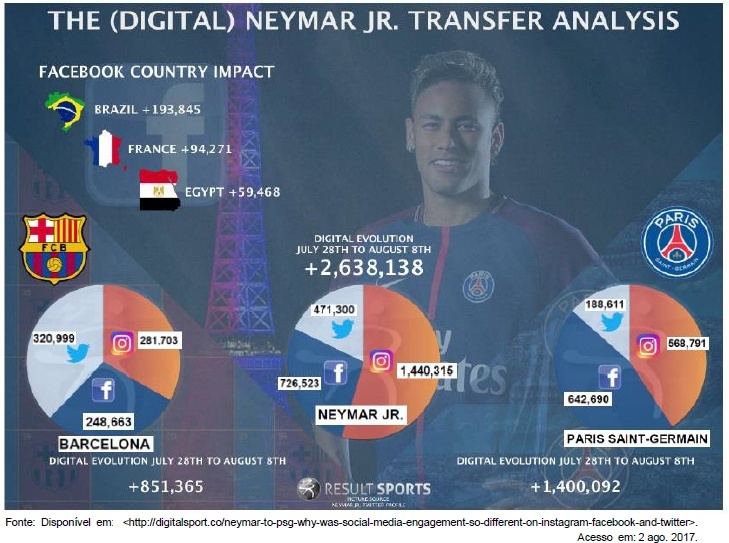
According to the information expressed in the image and data,
Questão 2 211854
UEG 2018/1The true potential of technology to change behavior
Technology could successfully change behaviours where decades of campaigns and legislation have failed. With the quantified self already walking among us and the internet of things within easy reach, digital technology is creating unprecedented opportunities to encourage, enable and empower more sustainable behaviours.
If we are to unlock the power of technology we must be more ambitious than simply digitising analogue strategies or creating another communications channel.
The true potential of technology lies in its ability to do things that nothing else can do. In behaviour change terms, the potential to succeed where decades of education programmes, awareness campaigns and product innovation have failed; to make a difference where government policy and legislation has had limited impact.
Using behavioural insights, it is possible to highlight the bottlenecks, drop out points and achilles heels of traditional behaviour change efforts — the reasons why we have failed in the past — and apply the unique possibilities of technology to these specific challenges.
Overcoming our limitations
Luckily, the history of the human race is almost defined by its ability to invent stuff that bolsters its feeble capabilities. That stuff is, of course, what we generically refer to as 'technology'. And in the same way that the internal combustion engine and the light bulb allow us to overcome our relatively feeble powers of motion and perception, so digital technology can be directed to overcoming our relatively feeble powers of reasoning, self-control, motivation, self-awareness and agency—the factors that make behaviour change so difficult.
Herein lies the true potential of technology: not in the laboratory or the workshop, but in an understanding of the behavioural dynamics that define the human condition, both generally and within the context of a specific user-group, market segment or community.
Fonte: JOHNSON, Steven. Recognising the true potential of technology to change behaviour. Disponível em: <https://www.theguardian.com/sustainable-business/behavioural-insights/true-potential-technology-change-behaviour>. Acesso em: 23 ago. 2017. (Adaptado).
Analisando-se aspectos linguísticos e estruturais do texto, constata-se que
06