


![[Marketing] Questao Topo - deslogado](https://storage.estuda.com.br/banners/0_6b7ebee90b03af1c560c73bb8bcce34a_banner_deslogado_70_dias.png)
Questões de Inglês
19.971 Questões
Questão 17 242832
UEFS Caderno 1 2018/1Twitter’s testing a 280-character limit for tweets
Twitter chief executive Jack Dorsey last year made a definitive announcement about the company’s famous 140-character count amid rumors that the firm would substantially relax the limit. “It’s staying, It’s a good constraint for us.”
On Tuesday, the company took it back – for some people, at least.
Twitter is testing a feature to let some users double the amount of characters allowed in a tweet. The 280-character limit will be available to a small group of people on the site. When asked for more information, Twitter said it would be a “single-digit percentage” of its 328 million users – so, millions – who will be “randomly chosen.”
The company declined to comment directly on how it’s choosing those people or why it changed its mind about its 140-character limit. But in a company blog post, product manager Aliza Rosen and senior software engineer Ikuhiro Ihara said the team started looking into the restrictions of the 140-character limit after noticing differences among languages. Some languages – specifically Chinese, Japanese and Korean – allow for greater expression in fewer characters.
“We see that a small percent of tweets sent in Japanese have 140 characters (only 0.4%). But in English, a much higher percentage of tweets have 140 characters (9%). Most Japanese tweets are 15 characters while most English tweets are 34,” the post said.
The 280-character test will roll out in all languages except for Chinese, Japanese and Korean. It’s true that some languages allow each character to count for more. My own last name, Tsukayama, is nine letters in English; phonetically in Japanese, it’s four letters. If you use Japanese kanji characters, it’s three.
But Twitter users in other languages have found workarounds to bypass the 140-character limit. It’s common to see someone send out a thread, or “Twitterstorm,” by signaling that their thoughts are going to come in several bite-sized chunks. Twitter itself did this when addressing why it hasn’t suspended President Trump from its platform. Dorsey himself has used a common workaround – posting an image of longer text – to get around the character limit, even while extolling the virtues of brevity early last year.
“Although we feel confident about our data and the positive impact this change will have, we want to try it out with a small group of people before we make a decision to launch to everyone,” the blog post said. “We understand since many of you have been tweeting for years, there may be an emotional attachment to 140 characters – we felt it, too. But we tried this, saw the power of what it will do, and fell in love with this new, still brief, constraint.”
(Hayley Tsukayama. www.washingtonpost.com, 26.09.2017. Adaptado.)
According to the text, what first motivated the company to make the announced changes in Twitter was the fact that
Questão 30 242659
UNICENTRO 2018Re-Planting a Forest, One Drone at a Time
That funny little buzz you hear in the forest may not just be the hum of summer insects. In the near future it could be a small fleet of drones, coming to replant and restore forests that have been stripped of trees by industrial-scale deforestation.
It’s all part of an ambitious plan by BioCarbon Engineering, a U.K.-based startup on a global mission to battle widespread clear-cutting, which strips more than 26 billion trees off the planet each year. CEO Lauren Fletcher, who spent 20 years as an engineer with NASA, says the only way to fight industrial-scale deforestation is with industrial-scale reforestation. Their idea: plant 1 billion trees a year. The first targets are in South Africa and the Amazonian jungles, both of which have suffered from widespread forest eradication.
BioCarbon’s reforestation scheme is simple and efficient. Here’s a quick look at how it plans to deploy its drone fleet:
1 Do a 3-D aerial survey. First, drones are sent to fly over a potential planting zone, snapping photos that create 3-D maps of the area to be reforested. The number of drones will vary depending up on the size of the seeding.
2 Create a seeding plan. Once all that terrain data has been analyzed, it then generates a seeding pattern that best suits the terrain.
3 Load the seed pods. The drones, which are equipped with guidance and control software, carry pressurized canisters of seed pods with germinated seeds immersed in a nutrient-rich gel.
4 Hover and plant. Flying at a height of 1 or 2 meters, the drones follow the planting patterns, firing the biodegradable seed pods down to the ground. The pods break open upon impact, allowing the germinated seed a chance to take root.
5 Monitor growth. After planting, the drones do low-level flights to assess the health of the sprouts and saplings.
Such “precision forestry,” as BioCarbon calls it, is extremely efficient. A farmer might hand plant as many as 3,000 seeds a day; Fletcher says his drones can drop up to 36,000 seed pods daily, often in areas where a human can’t reach. Working with local ecologists, BioCarbon will use the drones to spread a variety of tree species, as well as microorganisms and fungi designed to improve the soil quality. “The central focus is ecosystem restoration,” Fletcher says.
On a planetary climatological scale, Morton notes that “tropical deforestation plays a big role in global climate cycles,” claiming the accelerated pace of cutting and burning of forests accounted for 20 percent of greenhouse gas emissions in the 1990s.
Fletcher and his team want to help reverse that trend. “By planting at the scale we’re looking at,” he says, “we can make a real long-term impact. We hope to do a lot of good in the world.”
(Adapted from https://www.wired.com/brandlab/2015/07/re-planting-forest-one-drone-time/. Access on 22/8/2017)
Choose the best answer, according to the text. Refer to the words in bold when necessary:
Questão 26 242625
UNICENTRO 2018Re-Planting a Forest, One Drone at a Time
That funny little buzz you hear in the forest may not just be the hum of summer insects. In the near future it could be a small fleet of drones, coming to replant and restore forests that have been stripped of trees by industrial-scale deforestation.
It’s all part of an ambitious plan by BioCarbon Engineering, a U.K.-based startup on a global mission to battle widespread clear-cutting, which strips more than 26 billion trees off the planet each year. CEO Lauren Fletcher, who spent 20 years as an engineer with NASA, says the only way to fight industrial-scale deforestation is with industrial-scale reforestation. Their idea: plant 1 billion trees a year. The first targets are in South Africa and the Amazonian jungles, both of which have suffered from widespread forest eradication.
BioCarbon’s reforestation scheme is simple and efficient. Here’s a quick look at how it plans to deploy its drone fleet:
1 Do a 3-D aerial survey. First, drones are sent to fly over a potential planting zone, snapping photos that create 3-D maps of the area to be reforested. The number of drones will vary depending up on the size of the seeding.
2 Create a seeding plan. Once all that terrain data has been analyzed, it then generates a seeding pattern that best suits the terrain.
3 Load the seed pods. The drones, which are equipped with guidance and control software, carry pressurized canisters of seed pods with germinated seeds immersed in a nutrient-rich gel.
4 Hover and plant. Flying at a height of 1 or 2 meters, the drones follow the planting patterns, firing the biodegradable seed pods down to the ground. The pods break open upon impact, allowing the germinated seed a chance to take root.
5 Monitor growth. After planting, the drones do low-level flights to assess the health of the sprouts and saplings.
Such “precision forestry,” as BioCarbon calls it, is extremely efficient. A farmer might hand plant as many as 3,000 seeds a day; Fletcher says his drones can drop up to 36,000 seed pods daily, often in areas where a human can’t reach. Working with local ecologists, BioCarbon will use the drones to spread a variety of tree species, as well as microorganisms and fungi designed to improve the soil quality. “The central focus is ecosystem restoration,” Fletcher says.
On a planetary climatological scale, Morton notes that “tropical deforestation plays a big role in global climate cycles,” claiming the accelerated pace of cutting and burning of forests accounted for 20 percent of greenhouse gas emissions in the 1990s.
Fletcher and his team want to help reverse that trend. “By planting at the scale we’re looking at,” he says, “we can make a real long-term impact. We hope to do a lot of good in the world.”
(Adapted from https://www.wired.com/brandlab/2015/07/re-planting-forest-one-drone-time/. Access on 22/8/2017)
According to the text, the drones can:
Questão 25 242620
UNICENTRO 2018The word input is closest in meaning to
Questão 57 223285
PUC-SP Verão 2018Children 'geo-fenced' as worried parents create summer surge in demand for GPS tracking devices
By Steve Bird and Flora Carr

http://www.telegraph.co.uk/ Acessado em 20/08/2017.
As informações acima permitem compreender que
Questão 8 218602
UNINTA Medicina 2018/1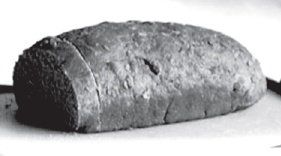
You may think whole grains and fiber are equivalent,
since the main reason why health experts recommend
whole grains is to boost fiber intake, but that’s not always
the case. For the most part, whole grains do contain
{5} more fiber, which can help to keep weight in check by
making you feel full. But many products with whole grains
that claim to be high in fiber contain added fiber, in the
form of cellulose. Researchers still don’t know whether
the health benefits of added fiber can mimic those of
{10} fiber gleaned from whole grains. “It’s somewhat
questionable whether that fiber has the same functionality
as that in whole grains,” says Alice Lichtenstein,
professor of nutrition science at Tufts University.
“Multigrain” is another very tricky word. It’s tempting
{15} to think multigrain products are better than whole grain
ones, because more is better, right? Not exactly.
Multigrain says nothing about whether the grains are
whole vs. excessively milled, and it also doesn’t specify
whether those grains are nutritious — some grains are,
{20} some grains aren’t. All it says is that the product contains
more than one grain. Any secondary grains could be
present in negligible amounts
It should now be clear that just because a
food says it contains whole grains doesn’t mean it’s
{25} fiber-rich or even healthy. Foods like cereals and
crackers that contain whole grains can also be loaded
with sugar, salt and other artificial ingredients, and very
little fiber. “Better for you doesn’t mean good for you,”
says Lichtenstein about these foods.
PARK, Alice. Disponível em: <time.com/4639314/the-case-against-wholewheat- and-whole-grain-bread>. Acesso em: 21 set. 2017. Adaptado
.According to the author, if you find the word “multigrain” on food labels, that
06