


![[Marketing] Questao Topo - deslogado](https://storage.estuda.com.br/banners/0_6b7ebee90b03af1c560c73bb8bcce34a_banner_deslogado_70_dias.png)
Questões de Inglês
19.971 Questões
Questão 61 307385
FACERES 2018/1Use the comic strip bellow to answer question:

Considering the stretch “… look… every year you pull the same trick on me”, what does “pull the same trick” mean in the context?
Questão 54 306543
ESPM 2018/3Em 1773, um grupo de colonos disfarçados de índios, atacou navios ingleses ancorados no porto de Boston e atirou o carregamento de chá ao mar. Esse acontecimento, conhecido como The Boston Tea Party, produziu:
Questão 48 306533
ESPM 2018/3Facebook just became the ultimate dystopia
By Chris Taylor
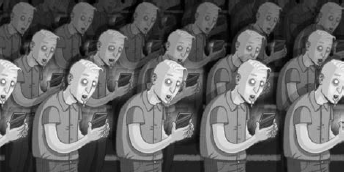
When constructing a dystopia, it takes some doing to be both Orwellian and Huxleyan at the same time. But with the changes he just announced to the Facebook News Feed, Mark Zuckerberg seems to have managed this extraordinary feat.
The nightmare worlds of George Orwell (Nineteen Eighty-Four) and Aldous Huxley (Brave New World) are in many ways polar opposites. One is a surveillance state that controls what people see of history by literally rewriting newspapers. The other controls its citizenry by blissing them out on a dissociative drug called soma.
In his ongoing effort to “improve” Facebook, Zuckerberg is trying both tactics. He’s reducing your access to real news while increasing the likelihood that you’ll only see the outrageous fake news posted by your crazy uncle. Because hey, content posted by family makes you happy, and we only want you to be happy, right?
The algorithm, we already knew, watches you as closely as Big Brother ever did. Every friendship, every like, the length of time you spend reading a story, whether you interact with it — all of this goes on your permanent record.
The fact that Facebook is going to simply show you less news makes it more efficient than Orwell’s totalitarian state. Party bosses at the Ministry of Truth must be slapping their foreheads: get billions of people to consume their news via social
media, then simply eliminate that news content? No rewriting of The Times, just make the news vanish digitally? Why didn’t we think of that?
A brief reminder of why this matters. As of August 2017, according to the Pew Research Center, 67 percent of Americans got their news on social media — a 5 percent increase from the previous year. On Facebook, 68 percent of users got their news from the site. For the first time in the Pew survey, a majority of Americans older than 50 turned to social media services for news.
To become such a major source of information so fast, and then to simply yank that news away, isn’t just an outrageous abnegation of civic responsibility. It’s straight out of the dystopian playbook.
An oft-forgotten part of Orwell’s classic: the vast majority of Oceania’s society, the Proles, weren’t given any news at all, not even the fake kind. They were kept happy on a constant diet of cheap songs and lurid stories. Facebook feeds will likewise be full of equally crappy, thin-gruel content, but “the Proles” will be producing it themselves. And Facebook gets to monetize it!
Brave New News Feed
“The warm, the richly coloured, the infinitely friendly world of soma-holiday. How kind, how good-looking, how delightfully amusing everyone was!” — Aldous Huxley, Brave New World
Replace “soma-holiday” with “social media,” and you can see why Huxley was even more prophetic than we’ve given him credit for.
The fictional drug soma made you social. It made you feel connected with friends and strangers alike — in a supremely false way. It took you on what the book’s characters repeatedly describe as a “perfect holiday.”
The Facebook that Zuckerberg now seems to be envisioning will do the same. People present their best selves on the service; they post carefully curated photos of their “perfect” vacations. And now they will be able to do so without any of that nasty news intruding!
“The research shows that when we use social media to connect with people we care about, it can be good for our wellbeing,” Zuckerberg wrote. He forgot to mention the research that shows Facebook actually makes you more depressed when you’re looking at other people’s vacation snaps or pictures of their perfect babies.
No matter how much you care about the person in question, Facebook invites comparison — which in turn leads to status anxiety. We may post “congratulations” in the comments, which the algorithm counts as a huge win. Major engagement points! But what we’re really thinking or feeling in the face of these richly colored snapshots — the sudden amping up of our envy, our self-loathing, our depression — stays hidden from Facebook’s all-seeing eye.
Like in some kind of twisted experiment, however, we keep hitting that lever. Let the soma of Facebook help us annihilate ourselves and carry us away on the perfect holiday of others — how kind, how good looking, how delightfully amusing they are.
Now Zuckerberg wants us to stay in that mental state without the horrid intrusion of “passive experience” — his words for what happens when you’re reading or watching anything that makes you sit and think, rather than mindlessly typing “congratulations!”
The worst of it is, Zuck thinks he’s being noble. He literally thinks he’s “doing the right thing.” He wants his infant children to look back one day and say that Facebook saved the world.
Perhaps they will. Because with everyone consuming content on Facebook, with media companies that reach for objective truth driven out of News Feeds and out of business, there will be no one left to point out the inanity of all this fake connection. The next generation of Zuckerbergs may well spend their lives on endless soma holidays.
Congratulations, Mark!
(Adapted from http://mashable.com, Jan 12, 2018)
The referent of the pronoun “we” in “Why didn’t we think of that?” (boldfaced in paragraph 5) is:
Questão 47 306530
ESPM 2018/3Facebook just became the ultimate dystopia
By Chris Taylor
When constructing a dystopia, it takes some doing to be both Orwellian and Huxleyan at the same time. But with the changes he just announced to the Facebook News Feed, Mark Zuckerberg seems to have managed this extraordinary feat.
The nightmare worlds of George Orwell (Nineteen Eighty-Four) and Aldous Huxley (Brave New World) are in many ways polar opposites. One is a surveillance state that controls what people see of history by literally rewriting newspapers. The other controls its citizenry by blissing them out on a dissociative drug called soma.
In his ongoing effort to “improve” Facebook, Zuckerberg is trying both tactics. He’s reducing your access to real news while increasing the likelihood that you’ll only see the outrageous fake news posted by your crazy uncle. Because hey, content posted by family makes you happy, and we only want you to be happy, right?
The algorithm, we already knew, watches you as closely as Big Brother ever did. Every friendship, every like, the length of time you spend reading a story, whether you interact with it — all of this goes on your permanent record.
The fact that Facebook is going to simply show you less news makes it more efficient than Orwell’s totalitarian state. Party bosses at the Ministry of Truth must be slapping their foreheads: get billions of people to consume their news via social
media, then simply eliminate that news content? No rewriting of The Times, just make the news vanish digitally? Why didn’t we think of that?
A brief reminder of why this matters. As of August 2017, according to the Pew Research Center, 67 percent of Americans got their news on social media — a 5 percent increase from the previous year. On Facebook, 68 percent of users got their news from the site. For the first time in the Pew survey, a majority of Americans older than 50 turned to social media services for news.
To become such a major source of information so fast, and then to simply yank that news away, isn’t just an outrageous abnegation of civic responsibility. It’s straight out of the dystopian playbook.
An oft-forgotten part of Orwell’s classic: the vast majority of Oceania’s society, the Proles, weren’t given any news at all, not even the fake kind. They were kept happy on a constant diet of cheap songs and lurid stories. Facebook feeds will likewise be full of equally crappy, thin-gruel content, but “the Proles” will be producing it themselves. And Facebook gets to monetize it!
Brave New News Feed
“The warm, the richly coloured, the infinitely friendly world of soma-holiday. How kind, how good-looking, how delightfully amusing everyone was!” — Aldous Huxley, Brave New World
Replace “soma-holiday” with “social media,” and you can see why Huxley was even more prophetic than we’ve given him credit for.
The fictional drug soma made you social. It made you feel connected with friends and strangers alike — in a supremely false way. It took you on what the book’s characters repeatedly describe as a “perfect holiday.”
The Facebook that Zuckerberg now seems to be envisioning will do the same. People present their best selves on the service; they post carefully curated photos of their “perfect” vacations. And now they will be able to do so without any of that nasty news intruding!
“The research shows that when we use social media to connect with people we care about, it can be good for our wellbeing,” Zuckerberg wrote. He forgot to mention the research that shows Facebook actually makes you more depressed when you’re looking at other people’s vacation snaps or pictures of their perfect babies.
No matter how much you care about the person in question, Facebook invites comparison — which in turn leads to status anxiety. We may post “congratulations” in the comments, which the algorithm counts as a huge win. Major engagement points! But what we’re really thinking or feeling in the face of these richly colored snapshots — the sudden amping up of our envy, our self-loathing, our depression — stays hidden from Facebook’s all-seeing eye.
Like in some kind of twisted experiment, however, we keep hitting that lever. Let the soma of Facebook help us annihilate ourselves and carry us away on the perfect holiday of others — how kind, how good looking, how delightfully amusing they are.
Now Zuckerberg wants us to stay in that mental state without the horrid intrusion of “passive experience” — his words for what happens when you’re reading or watching anything that makes you sit and think, rather than mindlessly typing “congratulations!”
The worst of it is, Zuck thinks he’s being noble. He literally thinks he’s “doing the right thing.” He wants his infant children to look back one day and say that Facebook saved the world.
Perhaps they will. Because with everyone consuming content on Facebook, with media companies that reach for objective truth driven out of News Feeds and out of business, there will be no one left to point out the inanity of all this fake connection. The next generation of Zuckerbergs may well spend their lives on endless soma holidays.
Congratulations, Mark!
(Adapted from http://mashable.com, Jan 12, 2018)
The author presents an analogy of the Facebook experience and:
Questão 46 306527
ESPM 2018/3Facebook just became the ultimate dystopia
By Chris Taylor
When constructing a dystopia, it takes some doing to be both Orwellian and Huxleyan at the same time. But with the changes he just announced to the Facebook News Feed, Mark Zuckerberg seems to have managed this extraordinary feat.
The nightmare worlds of George Orwell (Nineteen Eighty-Four) and Aldous Huxley (Brave New World) are in many ways polar opposites. One is a surveillance state that controls what people see of history by literally rewriting newspapers. The other controls its citizenry by blissing them out on a dissociative drug called soma.
In his ongoing effort to “improve” Facebook, Zuckerberg is trying both tactics. He’s reducing your access to real news while increasing the likelihood that you’ll only see the outrageous fake news posted by your crazy uncle. Because hey, content posted by family makes you happy, and we only want you to be happy, right?
The algorithm, we already knew, watches you as closely as Big Brother ever did. Every friendship, every like, the length of time you spend reading a story, whether you interact with it — all of this goes on your permanent record.
The fact that Facebook is going to simply show you less news makes it more efficient than Orwell’s totalitarian state. Party bosses at the Ministry of Truth must be slapping their foreheads: get billions of people to consume their news via social
media, then simply eliminate that news content? No rewriting of The Times, just make the news vanish digitally? Why didn’t we think of that?
A brief reminder of why this matters. As of August 2017, according to the Pew Research Center, 67 percent of Americans got their news on social media — a 5 percent increase from the previous year. On Facebook, 68 percent of users got their news from the site. For the first time in the Pew survey, a majority of Americans older than 50 turned to social media services for news.
To become such a major source of information so fast, and then to simply yank that news away, isn’t just an outrageous abnegation of civic responsibility. It’s straight out of the dystopian playbook.
An oft-forgotten part of Orwell’s classic: the vast majority of Oceania’s society, the Proles, weren’t given any news at all, not even the fake kind. They were kept happy on a constant diet of cheap songs and lurid stories. Facebook feeds will likewise be full of equally crappy, thin-gruel content, but “the Proles” will be producing it themselves. And Facebook gets to monetize it!
Brave New News Feed
“The warm, the richly coloured, the infinitely friendly world of soma-holiday. How kind, how good-looking, how delightfully amusing everyone was!” — Aldous Huxley, Brave New World
Replace “soma-holiday” with “social media,” and you can see why Huxley was even more prophetic than we’ve given him credit for.
The fictional drug soma made you social. It made you feel connected with friends and strangers alike — in a supremely false way. It took you on what the book’s characters repeatedly describe as a “perfect holiday.”
The Facebook that Zuckerberg now seems to be envisioning will do the same. People present their best selves on the service; they post carefully curated photos of their “perfect” vacations. And now they will be able to do so without any of that nasty news intruding!
“The research shows that when we use social media to connect with people we care about, it can be good for our wellbeing,” Zuckerberg wrote. He forgot to mention the research that shows Facebook actually makes you more depressed when you’re looking at other people’s vacation snaps or pictures of their perfect babies.
No matter how much you care about the person in question, Facebook invites comparison — which in turn leads to status anxiety. We may post “congratulations” in the comments, which the algorithm counts as a huge win. Major engagement points! But what we’re really thinking or feeling in the face of these richly colored snapshots — the sudden amping up of our envy, our self-loathing, our depression — stays hidden from Facebook’s all-seeing eye.
Like in some kind of twisted experiment, however, we keep hitting that lever. Let the soma of Facebook help us annihilate ourselves and carry us away on the perfect holiday of others — how kind, how good looking, how delightfully amusing they are.
Now Zuckerberg wants us to stay in that mental state without the horrid intrusion of “passive experience” — his words for what happens when you’re reading or watching anything that makes you sit and think, rather than mindlessly typing “congratulations!”
The worst of it is, Zuck thinks he’s being noble. He literally thinks he’s “doing the right thing.” He wants his infant children to look back one day and say that Facebook saved the world.
Perhaps they will. Because with everyone consuming content on Facebook, with media companies that reach for objective truth driven out of News Feeds and out of business, there will be no one left to point out the inanity of all this fake connection. The next generation of Zuckerbergs may well spend their lives on endless soma holidays.
Congratulations, Mark!
(Adapted from http://mashable.com, Jan 12, 2018)
The article´s main idea is that the incoming changes on Facebook:
Questão 18 304731
FCM PB 2018/1TEXTO II
Wild and Captive Chimpanzees Share Personality Traits With Humans
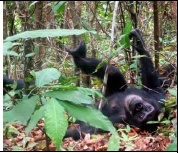
A chimpanzee in Gombe National Park in Tanzania. Researchers have found that wild and captive chimps share personality traits much like those observed in humans. Credit: Alexander Weiss
"In the late 1950s and early 1960s, Jane Goodall started attributing personalities to the chimpanzees she followed in Gombe National Park in what is now Tanzania. In her descriptions, some were more playful or aggressive, affectionate or nurturing.
Many scientists at the time were horrified, she recalled. Considered an amateur — she didn’t yet have her Ph.D. — they contended she was inventing personality traits for animals. Dr. Goodall, now 83 years old, said in a phone interview on Monday from her home in England that scientists thought “I was guilty of the worst kind of anthropomorphism.”
But time has borne out her insights. Chimpanzees in the wild have personalities similar to those in captivity, and both strongly overlap with traits that are familiar in humans, a new study published in Scientific Data confirms. The new examination of chimpanzees at Gombe updates personality research conducted on 24 animals in 1973 to include more than 100 additional chimps that were evaluated a few years ago. The animals were individually assessed by graduate students in the earlier study, and in the latest by Tanzanian field assistants, on personality traits like agreeableness, extroversion, depression, aggression and self-control.
Researchers used different questionnaires to assess the chimps’ traits in the two studies, but most of the personality types were consistent across the two studies. These traits seen among wild chimps matched ones seen among captive animals, the study found, and are similar to those described in people. Dr. Goodall, who is promoting a new documentary, “Jane,” about those early days of her research, said she’s not surprised. She knew from childhood experiences with guinea pigs, tortoises and her favorite dog, Rusty, that animals have personalities that are quite familiar. “I honestly don’t think you can be close to any animals and not realize their very vivid personalities,” she said.
Clive Wynne, a professor and director of the Canine Science Collaboratory at Arizona State University in Tempe, who was not involved in the research, said the new study offered a “really rich picture” of the overlap among species. “It’s backing up and reinforcing a number of things that we assume about animal personality that are seldom established with this degree of security in substantial wild-living populations,” said Dr. Wynne, who concurs that dogs, his area of specialty, also have similar personality traits.
Robert Latzman, an associate professor at Georgia State University, who was not involved in the study, said his research with chimpanzees in zoos has always left open the question of whether animals in the wild are somehow different. “What’s exciting about these data is there’s some suggestion that wild apes look very similar to what we would expect in terms of basic dispositional traits and continuity of those traits — and I don’t mean just to captive chimpanzees, but to humans,” he said. “The work in the wild underscores how similar these animals truly are to humans.”
Alexander Weiss, who led the new study, said he was particularly interested in examining the personality traits of animals in the wild. His findings were in line with previous research he’s done on chimpanzees in captivity. “The fact that we’re showing this consistency in the wild is nice, because it allows us to draw more general conclusions,” said Dr. Weiss, a senior lecturer at the University of Edinburgh. “It’s not just being in a zoo that’s causing these individual traits to be stable.” The study’s underlying data will be made publicly available so other scientists can use them in their own research, he said.
Although most of the animals tested in 1973 had died by the time the recent analysis was conducted, the study also concluded that an animal’s personality traits were generally consistent over time. Dr. Goodall said that fits what she’s seen, too. She only visits Gombe twice a year now, and only two animals are still alive from the days when she knew them as individuals. One, a mother of twins named Gremlin, has changed a bit, Dr. Goodall said. “I think the main difference in her personality is she’s become more confident as she gets older, just like people do,” she said.
Dr. Goodall added that she’s pleased that researchers are still finding so much of interest at Gombe, and tapping into the expertise of Tanzanian field workers. And, of course, she’s happy that the academic perspective has shifted from the time when she was told only humans had personalities, minds and emotions. “Today you can get your Ph.D. studying animal personality. I think we’ve come around full-cycle,” she said. “It absolutely vindicates all that I’ve ever believed.”
(Adapted from https://www.nytimes.com/2017/10/24/science/chimpanzees-goodall.html)
The sentence “But time has borne out her insights”, means:
06