


![[Marketing] Questao Topo - deslogado](https://storage.estuda.com.br/banners/0_6b7ebee90b03af1c560c73bb8bcce34a_banner_deslogado_70_dias.png)
Questões de Inglês
19.971 Questões
Questão 13 8396050
UFAM PSC 3ª Etapa 2020A questão se referem ao texto a seguir:
One of the most dangerous bugs you need to watch out for during summer is mosquitoes. But no matter how you try to avoid them, some people naturally attract mosquitoes more than others. One of the most important facts to remember is that mosquitoes track people down by smell and body odour, according to Bart Knols, PhD, a vector biologist dedicated to the study of mosquitoes. The carbon dioxide people exhale, along with chemicals from the skin, create an "odour plume" that mosquitoes can detect from up to almost 100 feet away, Knols says. "Each person gives off more than 300 chemicals from the skin, more than 100 in exhaled breath," Knols says. The specific compounds on the skin that mosquitoes respond to vary by species. The yellow fever mosquito and Asian tiger mosquito, for example, respond well to lactic acid from skin. African malaria mosquitoes respond to a blend of fatty acids, according to Knols. Your individual mix of compounds and smells determine how much of a mosquito magnet you are, depending on the mosquito species. The blend of chemicals you produce are only partially in your control. These chemicals depend on your genetic make-up, health status, diet, skin pH, and microflora, Knols says. ―Bacteria on the skin break down the compounds that we give off through our pores, and these are the attractive smells,‖ Knols says. "So it is not actually us that attract mosquitoes, but the bacteria on our skin." Although this is a complex and partially understood phenomenon, Knols says that we do all have a unique smell based on our bacteria flora species and the density of bacteria. There are many myths and folklore stories about why some people are more or less attractive to mosquitoes. Some people falsely think having "sweet blood" or your blood group are factors, and others believe taking vitamin B or eating garlic makes people less attractive to mosquitoes – but Knols notes there’s no scientific data backing these claims. If you are a mosquito magnet, you’ll want to invest in a proper repellent to apply to all exposed body parts. "DEET, picaridin, or lemon-eucalyptus oil (with elevated concentration of citriodiol) are good repellents," Knols says. Citronella, another popular option, only protects for a short amount of time.
By Emily DiNuzzo, RD.com. https://www.readersdigest.ca. Acessado em 24 de agosto de 2019.
De acordo com o texto, o mosquito é um:
Questão 14 8105054
UNICEUB Medicina 2020/1Consider an experiment by sociologist Devah Pager, who sent pairs of experimenters — one black and one white — to apply for 340 job ads in New York City. She gave them resumes altered to have identical qualifications. She gave them scripts so that the applicants said the same things when handing in their applications. She even dressed them alike. She found that black applicants got half the call backs that white applicants got with the same qualifications.
(Keith Payne. www.scientificamerican.com, 18.07.2019. Adaptado.)
The experiment results suggest the existence of
Questão 11 8105028
UNICEUB Medicina 2020/1Leia o texto para responder à questão.
Is there a scientific explanation for
out-of-body experiences?
Imagine feeling as though you are floating above your body, looking down upon your physical self. Some argue that such out-of-body experiences (OBEs) prove that the conscious mind — or even the soul — can leave the body. Supporting this interpretation, people who have survived a near-death experience often recall experiencing this out-ofbody sensation — as if their spiritual essence had separated from their corporeal existence.
However, the scientific explanation for OBEs is more terrestrial. Neuroscientists and psychologists believe it has to do with neural processes going wrong. In those who come close to death, such as cardiac arrest survivors, it is the lack of oxygen to the brain, and the release of certain neurochemicals triggered by trauma, that interferes with the sensory functions that support our usual feelings of embodiment. People’s recollections of seeing themselves from above — such as observing surgeons working on their body — could be a form of hallucination or false memory, as they try to make sense of their experiences.
Researchers have induced out-of-body states in healthy volunteers simply by confusing their sensory systems. For instance, scientists at the Karolinska Institute in Stockholm asked volunteers to wear goggles that showed the perspective of a camera placed behind them (so that they could see themselves from behind). When a researcher prodded the camera with a baton at the same time as prodding the person’s chest, the volunteer had the sensation that they were floating behind their physical body. The fact it is possible to induce an OBE argues against more mystical explanations.
(Christian Jarret. www.sciencefocus.com, 2019. Adaptado.)
No trecho do segundo parágrafo “could be a form of hallucination”, o termo sublinhado implica
Questão 9 8105014
UNICEUB Medicina 2020/1Leia o texto para responder à questão.
Is there a scientific explanation for
out-of-body experiences?
Imagine feeling as though you are floating above your body, looking down upon your physical self. Some argue that such out-of-body experiences (OBEs) prove that the conscious mind — or even the soul — can leave the body. Supporting this interpretation, people who have survived a near-death experience often recall experiencing this out-ofbody sensation — as if their spiritual essence had separated from their corporeal existence.
However, the scientific explanation for OBEs is more terrestrial. Neuroscientists and psychologists believe it has to do with neural processes going wrong. In those who come close to death, such as cardiac arrest survivors, it is the lack of oxygen to the brain, and the release of certain neurochemicals triggered by trauma, that interferes with the sensory functions that support our usual feelings of embodiment. People’s recollections of seeing themselves from above — such as observing surgeons working on their body — could be a form of hallucination or false memory, as they try to make sense of their experiences.
Researchers have induced out-of-body states in healthy volunteers simply by confusing their sensory systems. For instance, scientists at the Karolinska Institute in Stockholm asked volunteers to wear goggles that showed the perspective of a camera placed behind them (so that they could see themselves from behind). When a researcher prodded the camera with a baton at the same time as prodding the person’s chest, the volunteer had the sensation that they were floating behind their physical body. The fact it is possible to induce an OBE argues against more mystical explanations.
(Christian Jarret. www.sciencefocus.com, 2019. Adaptado.)
O termo “however” torna explícita a relação entre o primeiro e segundo parágrafos e indica
Questão 8 8104985
UNICEUB Medicina 2020/1Leia o texto para responder à questão.
Is there a scientific explanation for
out-of-body experiences?
Imagine feeling as though you are floating above your body, looking down upon your physical self. Some argue that such out-of-body experiences (OBEs) prove that the conscious mind — or even the soul — can leave the body. Supporting this interpretation, people who have survived a near-death experience often recall experiencing this out-ofbody sensation — as if their spiritual essence had separated from their corporeal existence.
However, the scientific explanation for OBEs is more terrestrial. Neuroscientists and psychologists believe it has to do with neural processes going wrong. In those who come close to death, such as cardiac arrest survivors, it is the lack of oxygen to the brain, and the release of certain neurochemicals triggered by trauma, that interferes with the sensory functions that support our usual feelings of embodiment. People’s recollections of seeing themselves from above — such as observing surgeons working on their body — could be a form of hallucination or false memory, as they try to make sense of their experiences.
Researchers have induced out-of-body states in healthy volunteers simply by confusing their sensory systems. For instance, scientists at the Karolinska Institute in Stockholm asked volunteers to wear goggles that showed the perspective of a camera placed behind them (so that they could see themselves from behind). When a researcher prodded the camera with a baton at the same time as prodding the person’s chest, the volunteer had the sensation that they were floating behind their physical body. The fact it is possible to induce an OBE argues against more mystical explanations.
(Christian Jarret. www.sciencefocus.com, 2019. Adaptado.)
According to the text,
Questão 59 8060605
FMC Medicina 2020/1Text
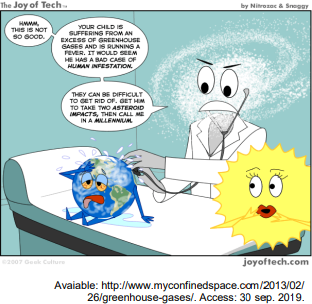
“Human Infestation” is presented by the “doctor” as
06