


![[Marketing] Questao Topo - deslogado](https://storage.estuda.com.br/banners/0_6b7ebee90b03af1c560c73bb8bcce34a_banner_deslogado_70_dias.png)
Questões de Inglês
19.971 Questões
Questão 21 600487
UNIC 2018/1TEXTO:

Since the outbreak of the most recent Ebola
epidemic in West Africa, more than 11,000 people have
died and more than 15,000 people have been infected
with the virus. While some drug treatments have been
[5] marginally effective, no vaccine to protect against infection
has yet been developed, although a number are currently
being tested.
One of those, developed by the Public Health Agency
of Canada, showed early promise in 2015. Now, a new
[10] report published in the journal Lancet provides even more
encouraging results that suggest it may be the first
vaccine to prevent infection with Ebola.
The trial involved more than 11,000 people living
in Guinea. Once a case of Ebola was confirmed, a list of
[15] people who had come in contact with the patient was
compiled, and they were randomly assigned to either
receive the vaccine immediately or three weeks later. All
participants were tested for presence of Ebola. After 10
days, there were no cases of Ebola infection among those
[20] who were vaccinated, while 23 people were diagnosed
with Ebola in the group that did not receive the vaccine
immediately.
The positive results led the study organizers to
provide the vaccine to all people who had come in contact
[25] with Ebola patients. That included family members who
lived with patients and were exposed to their clothing or
linens, as well as the next ring of people who had
interacted with these contacts. Side effects from the
vaccine were relatively rare and included headache,
[30] muscle pain, fever and allergy to the drug.
More studies will be conducted on the people who
were vaccinated to see if their immune responses indeed
were boosted by the shot. If the positive results are
confirmed and repeated, the vaccine could play a critical
[35] role in stopping the Ebola epidemic and preventing future
outbreaks.
PARK, Alice. Disponível em: <time.com/4611239/ebola-vaccine-infectionvirus/>. Acesso em: 12 out. 2017. Adaptado.
Considering the results of the new vaccine, scientists feel
Questão 19 600484
UNIC 2018/1TEXTO:
Since the outbreak of the most recent Ebola
epidemic in West Africa, more than 11,000 people have
died and more than 15,000 people have been infected
with the virus. While some drug treatments have been
[5] marginally effective, no vaccine to protect against infection
has yet been developed, although a number are currently
being tested.
One of those, developed by the Public Health Agency
of Canada, showed early promise in 2015. Now, a new
[10] report published in the journal Lancet provides even more
encouraging results that suggest it may be the first
vaccine to prevent infection with Ebola.
The trial involved more than 11,000 people living
in Guinea. Once a case of Ebola was confirmed, a list of
[15] people who had come in contact with the patient was
compiled, and they were randomly assigned to either
receive the vaccine immediately or three weeks later. All
participants were tested for presence of Ebola. After 10
days, there were no cases of Ebola infection among those
[20] who were vaccinated, while 23 people were diagnosed
with Ebola in the group that did not receive the vaccine
immediately.
The positive results led the study organizers to
provide the vaccine to all people who had come in contact
[25] with Ebola patients. That included family members who
lived with patients and were exposed to their clothing or
linens, as well as the next ring of people who had
interacted with these contacts. Side effects from the
vaccine were relatively rare and included headache,
[30] muscle pain, fever and allergy to the drug.
More studies will be conducted on the people who
were vaccinated to see if their immune responses indeed
were boosted by the shot. If the positive results are
confirmed and repeated, the vaccine could play a critical
[35] role in stopping the Ebola epidemic and preventing future
outbreaks.
PARK, Alice. Disponível em: <time.com/4611239/ebola-vaccine-infectionvirus/>. Acesso em: 12 out. 2017. Adaptado.
The new vaccine was
Questão 25 600314
UNIC 2018/2TEXTO:
People can successfully lose weight using a variety
of methods. About 45% of people in the National Weight
Control Registry say they lost weight following various
diets on their own, and 55% say they used a structured
[5] weight-loss program. Most of the men and women say
they had to try more than one diet before they were
able to keep the weight off long term. There’s currently
a push for weight loss plans to allow flexibility for people
to find what type of lifestyle suits them. Dr. Yoni
[10] Freedhoff, an obesity expert, starts men and women at
his clinic on the same plan, but lets everyone diverge
from it. “We have a plan that involves getting enough
calories and protein and so forth, but we are not married
to it,” he said. “Everyone here is doing things slightly
[15] differently.
PEOPLE CAN... Disponível em: <time.com/4937456/weight-lossmyths/>. Acesso em: 13 jun. 2018.
Fill in the parentheses with T (True) or F (False).
It’s stated in the text:
( ) People who follow their own diets are more likely to gain weight.
( ) Following a diet plan can help you maintain the weight loss over a long period of time.
( ) Trying different diets has shown to be effective for lots of people involved in weight loss plans.
( ) Nowadays, people are advised to choose the diet they find to be the most convenient for them.
The correct sequence, from top to bottom, is
Questão 23 600298
UNIC 2018/2TEXTO:
New research finds that earplugs make a dramatic
difference in preventing hearing loss, especially when
it comes to recreational exposure. The study involved
50 participants, recruited on social media, who attended
[5] a music festival in Amsterdam. Through random
assignments, the researchers gave half the group
earplugs. The researchers found temporary threshold
shift (a measure of hearing loss) in 8 % of participants
who wore earplugs during the show, versus 42 percent
[10] who did not wear them. They also found that tinnitus –
ringing in the ears – occurred in 40 % of volunteers
who didn’t wear earplugs and 12% who did.
Most people don’t realize that even short-term
exposure — a single night at a loud dance club — is
[15] enough to cause what’s known as acoustic trauma. In
a person with normal hearing, sound moves from the
pinna — the cartilage at the top of the ear — and makes
its way through the ear canal to the eardrum, which
causes it to vibrate. This vibration is sent to three small
[20] bones within the ear called the malleus, incus and
stapes. Then these vibrations are passed on to the
cochlea. When the vibrations hit the cochlea, they cause
tiny hair cells attached to nerves to bend, which sends
an electric signal to the brain that’s recognized as sound.
[25] Loud noise disrupts the process, causing
overstimulation of the tiny hairs and eventually leads to
cell death in the inner ear. Most people recoup their
hearing after temporary loss due to exposure to loud
music and other overwhelming noise (including
[30] gunshots and firecrackers). Still, the researchers say,
chronic exposure to such overwhelming sound can
eventually cause irreversible damage, which is
something every passionate music lover needs to hear.
FIRGER, Jessica. Disponível em: . Acesso em: 13 jun. 2018.
Hearing loss because of exposure to loud noise is usually
Questão 16 600287
UNIC 2018/2TEXTO:
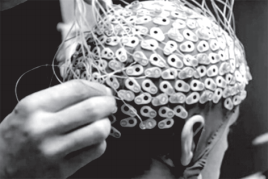
Upgrading our biology may sound like science
fiction, but attempts to improve humanity actually date
back thousands of years. Every day, we enhance
ourselves through seemingly mundane activities such
[5] as exercising, meditating, or consuming performanceenhancing
drugs, such as caffeine or adderall. However,
the tools with which we upgrade our biology are
improving at an accelerating rate and becoming
increasingly invasive.
[10] Not long ago, Elon Musk announced a new
company, Neuralink, with the goal of merging the human
mind with AI (Artificial Intelligence). The past few years
have seen remarkable developments in both the
hardware and software of brain-machine interfaces.
[15] Experts are designing more intricate electrodes while
programming better algorithms to interpret neural
signals. Scientists have already succeeded in
enabling paralyzed patients to type with their minds, and
are even allowing brains to communicate with one
[20] another purely through brainwaves.
A major ethical concern is equality. As with any
other emerging technology, there are valid concerns
that cognitive enhancement tech will benefit only the
wealthy, thus exacerbating current inequalities. It’s
[25] important to discuss these risks, not so that we begin
to fear and avoid such technologies, but so that we
continue to advance in a way that minimizes harm and
allows us to optimize the benefits.
BIDSHAHRI, Raya. Disponível em: https://geneticliteracyproject.org/ 2018/02/20/brain-machine-interfaces-biology-body-upgrades-waywill-handle/. Acesso em: 13 jun. 2018.
According to the text, trials to improve humans’ biology have
Questão 55 598762
FCMMG Medicina 2018/2Question will be based on the text below. Read it carefully and then choose the best alternative that answers the question placed immediately after it.
What causes antibiotic resistance?
§1 Most of us will have taken antibiotics at some point in our lives. But what if nothing happens the next time you pop one of those little bug-busting pills? Your life could be in serious danger.
§2 The WHO (World Health Organization) calls antibiotic resistance ‘one of the biggest threats to global health.’ The need for new drugs is great.
§3 Bacteria are an integral part of our ecosystem and we share our bodies with many of these tiny creatures. However, they can be the root of serious health problems.
§4 There are roughly as many human cells as bacterial cells in our bodies, and our microscopic passengers pay their way by helping our immune system and contributing to our metabolism.
§5 But bacteria come in all manner of guises. Some can turn from friend to foe, while others are just plain nasty and will make us sick at any chance they get.
§6 Since their discovery in the 1920s and their introduction into mainstream medicine after World War Two, we’ve been relying on antibiotics to keep pathogenic bacteria at bay.
§7 Antibacterial resistance is on the rise, however. According to the Centers for Disease Control and Prevention (CDC), each year in the United States, at least 2,049,442 illnesses are caused by resistance to medicines prescribed to treat bacterial or fungal infections. What is more, 23,000 people die each year when these drugs fail to work.
§8 So, why have our once reliable antibacterials stopped working, and how do the pesky bugs manage to outfox us? It’s all about mutations. Mutations are a ‘natural phenomenon’.
§9 Bacteria are prone to DNA mutations. This is part of their natural evolution and allows them to constantly adapt their genetic makeup. When one bug naturally becomes resistant to a drug, it survives when all others are killed.
§10 Now it’s a race against the clock. How quickly can this one bacterium adapt to the new mutation, and how quickly can it replicate in the face of species eradication? If the bug comes on out top, it’s bad news for the infected individual and bad news for society at large: the drug-resistant bacterium will likely spread.
§11 Not only has it evaded the grim reaper, but it can also now spread the love by passing the resistance to its numerous offspring, who will soon be the dominant species on the block.
§12 Bacteria are also able to pass genes to other bacteria. This is known as horizontal gene transfer, or “bacterial sex.” While this process is actually quite rare, bacteria are highly mobile creatures, which gives them plenty of opportunity to come into contact with other microbes and pass on their mutated genes.
§13 But how do genetic mutations equip bacteria with the skills to outsmart antibiotics?
§14 A study recently published in Nature Communications sheds new light on how Echerichia coli and other members of the Enterobacteria family fight off commonly used antibiotics. A gene called mar is commonly shared by family members. Some of the proteins encoded in this gene can switch on other genes, explain researchers from the University of Birmingham’s Institute of Microbiology and Infection in the United Kingdom.
§15 “We found two completely unexpected mechanisms,” says senior study author Prof. David Grainger, “that bacteria use to protect themselves from antibiotics. One protected their DNA from the harmful effects of fluoroquinolone antibiotics, and the other prevented doxycyline getting inside bacteria.” But finding out how Enterobacteria combat antibiotics is only the first step in this decade-long research project.
§16 First study author Prateek Sharma, Ph.D., says that “the resistance mechanisms that we identified are found in many different species of bacteria therefore, our research could lead to the discovery of molecules that could be developed into new drugs that can treat bacterial infections.”
§17 This week is World Antibiotic Awareness Week. The WHO aims to warn people that inappropriate use of antimicrobials makes drug resistance worse. This includes both overuse and underuse. This year, they urge everyone to “seek advice from a qualified healthcare professional before taking antibiotics.”
(Published on 14 November 2017 By Yella Hewings-Martin PhD Fact checked by Jasmin Collier) (Adapted from https://www.medicalnewstoday.com/articles/320070.php)
We can NOT say, according to the text above, that:
06