


![[Marketing] Questao Topo - deslogado](https://storage.estuda.com.br/banners/0_6b7ebee90b03af1c560c73bb8bcce34a_banner_deslogado_70_dias.png)
Questões de Inglês
19.971 Questões
Questão 20 6608628
FACISB 2018Read the text to answer question.
Exercising… but how?
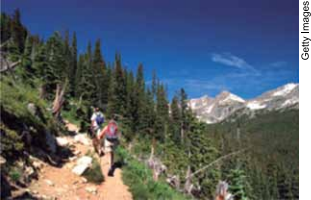
We all know that, for optimal health, we need to move. But research and anecdotal experience indicate that people rarely exercise if they do not enjoy it. Workouts, for many, are something like possessions: If they don’t spark joy, they tend to be discarded.
Most experts agree that a workout’s intensity and its duration have the greatest influence on our feelings about it. In recent years, attention has been focused on short, intense workouts, typically called high-intensity interval training, because the duration is so slight, lessening the likelihood that people will be too busy to exercise. But while many people who take up high-intensity interval training report being pleased by the workouts’ brevity, they often also say that the intensity is not fun for them, which, over the long term, could discourage them from continuing.
In a new study, researchers at the University of Innsbruck in Austria decided to investigate whether emphasizing a workout´s length while playing down its intensity might increase people’s enjoyment and, potentially, participation. To find out, they recruited about 40 healthy men and women and asked them to complete a series of detailed questionnaires about their moods and level of anxiety, both at that moment and in general. Then they asked each volunteer to complete several prolonged workouts.
One of these involved hiking in the mountains. Wearing heart rate monitors, the volunteers walked in groups of three or four along a popular mountain trail that climbs sinuously and persistently; they were told to move at a brisk but not punishing pace, so that they were breathing rapidly but could converse with one another. Midway through the hike, they stopped and told researchers how strenuous the walking had felt, on a scale of 1 to 20, before descending and repeating the questionnaires about their moods. The entire walk lasted about three hours.
On a separate day, each volunteer completed virtually the same workout on a treadmill at a gym. The machines’ inclines were set to simulate the uphill hike for the first half of the workout, with flat walking after that (since the machines could not be set for negative altitude gain). Volunteers walked next to one another and were encouraged to chat. They all also completed the estimations of effort and mood.
Then on a final day, as a control session, they all sat for about three hours in a communal room at the university equipped with computers, magazines and couches, where they could surf or talk and, before and after, assess their moods. At the end, the scientists compared their mood scores and other assessments.
Although the mountain hiking turned out to have been, objectively, the most strenuous of the workouts, interestingly, almost all the participants reported that the outdoor effort had felt less strenuous to them than their time on the treadmill. And their mood scores were much higher after the outdoor hike than the treadmill workout. On the other hand, the long walk in the gym had left them almost uniformly happier and more relaxed than after sitting and using a computer or chatting for several hours. These results could have particular resonance for people who have tried brief, intense workouts and disliked them. But, of course, this study looked only at a single instance of each workout: it did not follow people to see if they would voluntarily keep walking or measure the extent to which the prolonged hikes affected their health and fitness.
(Gretchen Reynolds. www.nytimes.com, 28.06.2017. Adaptado.)
When the last paragraph mentions that “the results could have particular resonance for people”, we understand the resonance to refer to people´s possible willingness, from now on, to
Questão 16 6608557
FACISB 2018Read the text to answer question.
Exercising… but how?
We all know that, for optimal health, we need to move. But research and anecdotal experience indicate that people rarely exercise if they do not enjoy it. Workouts, for many, are something like possessions: If they don’t spark joy, they tend to be discarded.
Most experts agree that a workout’s intensity and its duration have the greatest influence on our feelings about it. In recent years, attention has been focused on short, intense workouts, typically called high-intensity interval training, because the duration is so slight, lessening the likelihood that people will be too busy to exercise. But while many people who take up high-intensity interval training report being pleased by the workouts’ brevity, they often also say that the intensity is not fun for them, which, over the long term, could discourage them from continuing.
In a new study, researchers at the University of Innsbruck in Austria decided to investigate whether emphasizing a workout´s length while playing down its intensity might increase people’s enjoyment and, potentially, participation. To find out, they recruited about 40 healthy men and women and asked them to complete a series of detailed questionnaires about their moods and level of anxiety, both at that moment and in general. Then they asked each volunteer to complete several prolonged workouts.
One of these involved hiking in the mountains. Wearing heart rate monitors, the volunteers walked in groups of three or four along a popular mountain trail that climbs sinuously and persistently; they were told to move at a brisk but not punishing pace, so that they were breathing rapidly but could converse with one another. Midway through the hike, they stopped and told researchers how strenuous the walking had felt, on a scale of 1 to 20, before descending and repeating the questionnaires about their moods. The entire walk lasted about three hours.
On a separate day, each volunteer completed virtually the same workout on a treadmill at a gym. The machines’ inclines were set to simulate the uphill hike for the first half of the workout, with flat walking after that (since the machines could not be set for negative altitude gain). Volunteers walked next to one another and were encouraged to chat. They all also completed the estimations of effort and mood.
Then on a final day, as a control session, they all sat for about three hours in a communal room at the university equipped with computers, magazines and couches, where they could surf or talk and, before and after, assess their moods. At the end, the scientists compared their mood scores and other assessments.
Although the mountain hiking turned out to have been, objectively, the most strenuous of the workouts, interestingly, almost all the participants reported that the outdoor effort had felt less strenuous to them than their time on the treadmill. And their mood scores were much higher after the outdoor hike than the treadmill workout. On the other hand, the long walk in the gym had left them almost uniformly happier and more relaxed than after sitting and using a computer or chatting for several hours. These results could have particular resonance for people who have tried brief, intense workouts and disliked them. But, of course, this study looked only at a single instance of each workout: it did not follow people to see if they would voluntarily keep walking or measure the extent to which the prolonged hikes affected their health and fitness.
(Gretchen Reynolds. www.nytimes.com, 28.06.2017. Adaptado.)
In the excerpt from the fifth paragraph “with flat walking after that”, the word in bold refers to the
Questão 82 6538374
FAMECA 2018Leia o texto para responder a questão.
Once fat cells are formed, can you ever get rid of them?

The number of fat cells in a person’s body seems to be able to change in only one direction: up. Fat cell number increases through childhood and adolescence and generally stabilizes in adulthood.
But this doesn’t mean that fat cells, or adipocytes, are stagnant. The size of individual fat cells is remarkably variable, expanding and contracting with weight gain or weight loss. And as with most cell types in the body, adipocytes die eventually. “Usually when old ones die, they are replaced by new fat cells,” said Dr. Michael Jensen, an endocrinologist and obesity researcher at the Mayo Clinic. Cell death and production appear to be tightly coupled, so although about 10 percent of adipocytes die each year, they’re replaced at the same rate.
Even among bariatric surgery patients, who can lose massive amounts of weight, the number of fat cells tends to remain the same, although the cells shrink in size, studies show. Liposuction reduces the number of fat cells in a person’s body, but studies show the weight lost is typically regained within a year. It isn’t known whether this regain occurs through the production of new fat cells or expansion of existing ones.
People who are obese tend to have more fat cells than those who are not, and several studies have found an increase in fat cell number with weight regain following weight loss. The fact that fat cell number can be increased but not decreased most likely contributes to the body’s drive to regain weight after weight loss, said Dr. Kirsty L. Spalding, a cell biologist at the Karolinska Institute in Sweden and the lead author of a 2008 study showing that fat cells die and are replaced. Beyond their role in storing fat, adipocytes secrete proteins and hormones that affect energy metabolism.
(Alice Callahan. https://well.blogs.nytimes.com, 17.02.2017. Adaptado.)
In the excerpt from the second paragraph “adipocytes die eventually”, the word in bold means
Questão 35 6481778
PUC-Campinas 2018As convicções de Mahatma Ghandhi, a que o texto de Percival de Lima Souto se refere, podem ser identificadas em:
Questão 25 6481528
PUC-Campinas 2018Para responder a questão, considere o texto abaixo.
Walter Elias Disney was born on December 5, 1901 in Chicago, Illinois. At age 16, during World War I, he faked his age to join the American Red Cross. He soon returned home, where he won a scholarship to the Kansas City Art Institute. There, he met a fellow animator, Ub Iwerks. The two soon set up their own company. In the early 1920s, they made a series of animated shorts for the Newman theater chain, entitled Newman's Laugh-O-Grams. Their company soon went bankrupt, however.
The two then went to Hollywood in 1923. They started work on a new series, about a live-action little girl who journeys to a world of animated characters. Entitled the Alice Comedies, they were distributed by M. J. Winkler (Margaret). Walt was backed up financially only by Winkler and his older brother Roy O. Disney, who remained his business partner for the rest of his life. Hundreds of Alice Comedies were produced between 1923 and 1927, before they lost popularity
Walt then started work on a series around a new animated character, Oswald the Lucky Rabbit. This series was successful, but in 1928, Walt discovered that M.J. Winkler and her husband, Charles Mintz, had stolen the rights to the character away from him. They had also stolen all his animators, except for Ub Iwerks. While taking the train home, Walt started doodling on a piece of paper. The result of these doodles was a mouse named Mickey. With only Walt and Ub to animate, three Mickey Mouse cartoons were quickly produced. The first two didn't sell, so Walt added synchronized sound to the last one, Steamboat Willie (1928), and it was immediately picked up. With Walt as the voice of Mickey, it premiered to great success. Many more cartoons followed. Walt was now in the big time
In 1929, he created the Silly Symphonies, a cartoon series that didn't have a continuous character. They were another success. One of them, Flowers and Trees (1932), was the first cartoon to be produced in color and the first cartoon to win an Oscar; another, Three Little Pigs (1933), was so popular it was often billed above the feature films it accompanied.
In 1934, Walt started work on another new idea: a cartoon that ran the length of a feature film. Everyone in Hollywood was calling it "Disney's Folly", but Snow White and the Seven Dwarfs (1937) was anything but, winning one big and seven little special Oscars for Walt. While continuing to produce cartoon shorts, he also started producing more of the animated features. Pinocchio (1940), Dumbo (1941), and Bambi (1942) were all successes; not even a flop like Fantasia (1940) and a studio animators' strike in 1941 could stop Disney now
(Adapted from http://www.imdb.com)
Conforme empregado no texto, o trecho was anything but pode ser corretamente completado por
Questão 23 6481471
PUC-Campinas 2018Instruções: Leia atentamente o texto abaixo para responder à questão.
Lembrando e pensando a TV
Houve um tempo em que a TV − acreditem, ó jo-
vens! − ainda não existia. Ouvia-se rádio, ia-se ao cine-
ma. Mas um dia chegou às casas das pessoas um apa-
relho com o som vivo do rádio acoplado a vivas ima-
[5] gens, diferentes das do cinema, imagens chegadas de
algum lugar do presente, “ao vivo”. Logo saberíamos
que todas as imagens do mundo, inclusive os filmes do
cinema, poderiam estar ao nosso alcance, naquela
telinha da sala. Modificaram-se os hábitos das famílias,
[10] seus horários, sua disponibilidade, seus valores. A TV
chegou para reinar.
A variedade da programação já indicava o amplo
alcance do novo veículo: notícias, reportagens, musi-
cais, desenhos animados, filmes, propagandas, seria-
[15] dos, esportes, programas humorísticos, peças de teatro
− tudo desfilava ali, diante dos nossos olhos, ainda no
tubo comandado por grandes válvulas e com imagem
em preto e branco. Boa parte dos primeiros aparelhos
de TV tinham telas de 16 a 21 polegadas, acondicio-
[20] nadas numa enorme e pesada caixa de madeira. Havia
uns três ou quatro canais, com alcance bastante limitado
e programação restrita a cinco ou seis horas por dia.
Mais tarde as transmissões passariam a ser via satélite
e ocupariam as 24 horas do dia.
[´25] Os custos da programação eram pagos pela publi-
cidade, que tomava boa parte do tempo de transmissão.
Vendia-se de tudo, de automóveis a margarina, de xaro-
pes para tosse a apartamentos. Filmetes gravados e
propagandas ao vivo sucediam-se e misturavam-se a
[30] notícias sobre exploração espacial, enquanto docume-
ntários estrangeiros falavam da revolução russa, da
II Guerra, do nazismo e do fascismo, das convicções
pacifistas de Ghandi, das ideias do físico Einstein sobre
a criação e a legitimação da ONU etc. etc. Já as incur-
[35] sões históricas propiciadas pelos filmes nos levavam ao
tempo de Moisés e do Egito Antigo, ao Império Romano
e advento do Cristianismo, tudo entremeando-se ao
humor de Chaplin, às caretas de Jerry Lewis e às trapa-
lhadas das primeiras comédias nacionais do gênero
[40] chanchada. Houve também o tempo em que as famílias
se agrupariam diante dos festivais da canção, torcendo
por músicas de protesto, baladas românticas ou de
ritmos populares “de raiz”. Enfim, a TV oferecia a um pú-
blico extasiado um espetáculo variadíssimo, tudo nas
[45] poucas polegadas do aparelho, que não tardou a incor-
porar outras medidas, outros sistemas de funcioname-
nto, projeção em cores e controle remoto.
As telas de plasma, o processo digital e a interface
com a informática foram dotando a TV de muitos outros
[50] recursos, até que, bem mais tarde, tivesse que enfrentar
a concorrência de outras telas, muito menores, portáteis,
disponíveis nos celulares, carregados de aplicativos e
serviços. Apesar disso, nada indica que a curto prazo
desapareçam da casa os aparelhos de TV, enriquecidos
[55] agora por incontáveis dispositivos.
No plano da cultura e da educação, a televisão
teve e tem papel importante. Os telecursos propiciam
informação escolar específica nas áreas de Matemática,
Física, História, Química, Língua e Literatura, fazendo
[60] as vezes da educação formal por meio de incontáveis
dispositivos pedagógicos, inclusive a dramatização de
conteúdos. Aqui e ali há entrevistas com artistas, polí-
ticos, pensadores e personalidades várias, atualizando
ideias e promovendo seu debate. No campo da política,
[65] é relevante, às vezes decisivo, o papel que a TV tem na
formação da opinião pública. A ecologia conta, também,
com razoável cobertura, informando, por exemplo, sobre
os benefícios da reciclagem de lixo, da cultura de pro-
dutos orgânicos e da energia solar.
[70] Seja como forma de entretenimento, veículo de
informação, indução aos debates e repercussão atuali-
zada dos grandes temas de interesse social, a TV vem
garantindo seu espaço junto a bilhões de pessoas no
mundo todo. Por meio dela, acompanhamos ao vivo mo
[75] mentos agudos da política internacional, a divulgação
de um novo plano econômico do governo, a escalada da
violência urbana. Ao toque de uma tecla do controle re-
moto, você pode se transferir, aleatoriamente, do palco
de um ataque terrorista para o final meloso de uma co-
[80] média romântica.
Numa espécie de espelhamento multiplicativo e
fragmentário da nossa vida e dos poderes da nossa
imaginação, a TV vem acompanhando os passos da
vida moderna e ditando, mesmo, alguns deles, sem dar
[85] sinal de que deixará tão cedo de nos fazer companhia.
(Percival de Lima e Souto, inédito)
According to the main text,
06