


![[Marketing] Questao Topo - deslogado](https://storage.estuda.com.br/banners/0_6b7ebee90b03af1c560c73bb8bcce34a_banner_deslogado_70_dias.png)
Questões de Inglês
19.971 Questões
Questão 47 607446
ESPM 2019/1Beyonce, colorism, and why all of this needs to end
by Ernest Owens
Yes, the Super Bowl was on fire. As one who is very critical of halftime show performances, I cannot deny that Beyoncé brought the energy and attention. All of this led to her releasing her tour dates for the Mrs. Carter Show. As excited as I was to actually buy these tickets, something turned me off. The poster.
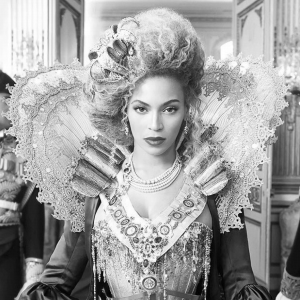
If you haven’t seen the photographs for Beyonce’s new world tour, you probably wouldn’t even recognize her. You will see an image of what looks like a Victorian white woman in the Elizabethan era. Her (prosthetic) blonde hair puffed and extended to reveal a face that is almost as white as snow. Lips red and her skin powdered. This is not the same bronze Beyonce that I saw rocking the stage in an all female band with her darker Destiny’s Child counterparts. I was only left with memories of previous patterns that the multi-Grammy award winning artist had done in previous years in regards to her skin. And I asked myself the question: why, Bey?
Let’s not act like this is something new. Over the years, it seems as though Beyonce has gotten lighter as she has gotten older. No, this is not genetics and let’s not pretend her skin color in her first Destiny’s Child album cover matches that of her latest album. Whether it is that highly controversial Revlon advertisement or her own album cover art, Beyonce has consistently been called out on alterations done to her pigments.
What does this say about our society for black women? It tells me that, an independent, confident and successful woman of color still struggles to have the confidence to fully embrace the skin she is in. If one of the most powerful women in entertainment feels she has to lighten her skin for projection, what does that say for the rest of us?
Believe it or not, colorism, the stigma associated with skin complexion, has been an ill that has not yet been dissolved by the black community. What was first given to us by slave masters in separating the house slaves from the field ones, has now taken place in how we objectify our women and each other.
This is pretty problematic in many ways. It’s first of all self-loathing and unnecessary for today’s times. The fact that our nation had an African-American first lady with a complexion that isn’t on the lighter side of the spectrum, nor does it try to be, shows a compelling advancement in appreciation for all women of color in many ways.
Furthermore, the only reason why such stigma in our country continues is contributed to our own behavior that is shaped by the influential people of color around us. It devastated me when I saw that Sammy Sosa had lightened his skin. As successful as he was in a field that was not necessarily fixated on male skin complexion, it saddened me to see him do it. In many ways, it even made me reflect back on the transition of the late great Michael Jackson and what explanations he had for such a more pale white appearance.
And why does all of this matter? Because I grew up hearing stories of young dark black girls getting their faces scrubbed with skin lightening soaps out of their free will. Tales of young women being abandoned by their mothers because they were too dark.
If this is the reality that had more implications back in the early 20th century than it does now, please stop it. Stop trying to explain why you are dating the ebony skin girl. Stop making it seem exceptional that a girl of a darker complexion is actually attractive. Celebrities, stop putting extraneous powders and lighteners on your skin: we all know what you used to look like and we still love you. And people of color: let’s not continue to perpetuate an oppressive cycle of self-loathing of our appearance and heritage. If this can be accomplished, then perhaps even in our own race we can truly make our lives not be judged by the color of our skin but by the content of our character.
(adapted from www.huffingtonpost.com, 14/02/2013)
According the article:
Questão 41 607423
ESPM 2019/1How James Brown Made Black Pride a Hit
It’s been 50 years since he wrote “Say It Loud, I’m Black and I’m Proud,” a song that is still necessary.
By Randall Kennedy
In the gym at Paul Junior High School in Washington, D.C., in the spring of 1968, not that long before the assassination of the Rev. Dr. Martin Luther King Jr., I asked a buddy whether he was interested in a certain girl. He told me that he was not because she was too dark.

He and I were African-American. (Then we would have called ourselves Negro.) So was she. All of us supported the Civil Rights Movement and idolized Dr. King, yet I did not hold my friend’s colorstruck judgment against him. And he did not state his opinion with embarrassment. We had both internalized our society’s derogation of blackness.
Indeed, we luxuriated in the denigration, spending hours trading silly, recycled but revealing insults: “Yo mama so black, she blend in with the chalkboard.” “Yeah, well, yo mama so black, she sweats chocolate.”
It was precisely because of widespread colorism that James Brown’s anthem “Say It Loud, I’m Black and I’m Proud” posed a challenge, felt so exhilarating, and resonated so powerfully. It still does. Much has changed over the past half century. But, alas, the need to defend blackness against derision continues.
Various musicians in the 1960s tapped into yearnings for black assertiveness, autonomy and solidarity. Curtis Mayfield and the Impressions sang “We’re a Winner.” Sly and the Family Stone offered “Stand.” Sam Cooke (and Aretha Franklin and Otis Redding) performed “A Change is Gonna Come.” But no entertainer equaled Brown’s vocalization of African-Americans’ newly triumphal sense of self-acceptance.
That Brown created the song most popularly associated with the Black is Beautiful movement is ironic. He generally stayed away from protest, endorsed the presidential re-election of Richard Nixon, lavishly praised Ronald Reagan, and consistently lauded Strom Thurmond.
His infrequent sallies into politics usually sounded in patriotic, lift-yourselfup-ism. In the song “America is My Home,” he proclaimed without embarrassment that the United States “is still the best country / And that’s without a doubt.” Alluding to his own trajectory, he challenged dissenters to name any other country in which a person could start out as a poor shoeshine boy but end up as a wealthy celebrity shaking hands with the president.
At the very time that in “Say It Loud,” Brown seemed to be affirming Negritude, he also sported a “conk” — a distinctive hairdo that involved chemically removing kinkiness on the way to creating a bouffant of straightened hair. Many AfricanAmerican political activists, especially those with a black nationalist orientation, decried the conk as an illustration of racial self-hatred. For a brief period, Brown abandoned the conk and adopted an Afro, but that was only temporary. The conk was part of the characteristic look of “The Godfather of Soul.”
Even though by 1968 uprisings against white supremacism had been erupting for a decade with great intensity and success — the Montgomery Bus Boycott, the Children’s’ Crusade in Birmingham, the protest against disenfranchisement in Selma — prejudice against blackness remained prevalent, including among African-Americans.
Champions of African-American uplift in the 1960s sought to liberate blackness from the layers of contempt, fear, and hatred with which it had been smeared for centuries. Brown’s anthem poignantly reflected the psychic problem it sought to address. People secure in their status don’t feel compelled to trumpet their pride. At the same time “Say it Loud!” was a rousing instance of a reclamation that took many forms. Instead of celebrating light skin, thin lips, and “good” (i.e., straight) hair, increasing numbers of African-Americans began valorizing dark skin, thick lips and “bad” (i.e., kinky) hair.
The reclamation of blackness in the sixties made tremendous headway quickly. By 1970 my friend would not have dared to repeat out loud what he had told me unapologetically two years before. Here, as elsewhere, however, changes wrought by the black liberation movement, though impressive, were only partial. Nearly four decades after the release of “Say It Loud,” Professors Jennifer Hochschild and Vesla Weaver, having synthesized the pertinent academic literature, declared authoritatively that compared to their lighter-skinned counterparts, dark-skinned blacks continue to be burdened by lower levels of education, income, and job status. They receive longer prison sentences and are less likely to own homes or to marry. Filmmakers, advertisers, modeling agencies, dating websites and other key gatekeepers demonstrate repeatedly the ongoing pertinence of the old saw: If you’re black get back. If you’re brown, stick around. If you’re white you’re alright.
Intraracial colorism in Black America is often seen as a topic that should, if possible, be avoided, especially in “mixed company.” That sense of embarrassment three decades ago prompted officials at Morehouse College to demand that Spike Lee cease filming on campus once they learned that his movie was exposing, among other things, black collegiate colorism. The impulse toward avoidance remains strong
With racial prejudice against all African-Americans still a potent force, many would just as soon ditch the discussion of “black on black” complexional bias. Colorism, however, remains a baleful reality
Half a century after James Brown’s proclamation, it remains imperative to assert what should have been assumed and uncontroversial all along: that black is beautiful and as worthy of pride and care and consideration as any other hue.
(Adapted from: www.nytimes.com, 20/07/2018)
An important idea brought by the text is that James Brown’s song “Say It Loud, I’m Black and I’m Proud” was a milestone in the defense of:
Questão 18 604540
FCM PB 2019/1TEXTO
Engaging Doctors in the Health Care Revolution
Despite wondrous advances in medicine and technology, health care regularly fails at the fundamental job of any business: to reliably deliver what its customers need. In the face of ever-increasing complexity, the hard work and best intentions of individual physicians can no longer guarantee efficient, high-quality care. Fixing health care will require a radical transformation, moving from a system organized around individual physicians to a team-based approach focused on patients. Doctors, of course, must be central players in the transformation: Any ambitious strategy that they do not embrace is doomed.
And yet, many physicians are deeply anxious about the changes under way and are mourning real or anticipated losses of autonomy, respect, and income. They are being told that they must accept new organizational structures, ways of working, payment models, and performance goals. They struggle to care for the endless stream of patients who want to be seen, but they constantly hear that much of what they do is waste. They’re moving at various rates through the stages of grief: A few are still in denial, but many are in the second stage—anger. Bursts of rage over relatively small issues are common.
Given doctors’ angst, how can leaders best engage them in redesigning care? In our roles in senior management of two large U.S. health care systems, and as observers and partners of many others, we have seen firsthand that winning physicians’ support takes more than simple incentives. Leaders at all levels must draw on reserves of optimism, courage, and resilience. They must develop an understanding of behavioral economics and social capital and be ready to part company with clinicians who refuse to work with their colleagues to improve outcomes and efficiency.
To help health care leaders engage physicians in the pursuit of their organizations’ greater goals, we suggest a framework based on the writings of the economist and sociologist Max Weber, who described four motivations that drive social action (that is, action in response to others’ behavior). Adapted for health care professionals, these are: shared purpose, self-interest, respect, and tradition. Leaders can use these levers to earn doctors’ buy-in and bring about the change the system so urgently needs.
(Adapted from www.hbr.org)
What is the main idea of the text?
Questão 14 604526
FCM PB 2019/1TEXTO
Understanding Anxiety Disorder
Many of us worry from time to time. We fret over finances, feel anxious about job interviews, or get nervous about social gatherings. These feelings can be normal or even helpful. They may give us a boost of energy or help us focus. But for people with anxiety disorders, they can be overwhelming.
Anxiety disorders affect nearly 1 in 5 American adults each year. People with these disorders have feelings of fear and uncertainty that interfere with everyday activities and last for 6 months or more. Anxiety disorders can also raise your risk for other medical problems such as heart disease, diabetes, substance abuse, and depression.
The good news is that most anxiety disorders get better with therapy. The course of treatment depends on the type of anxiety disorder. Medications, psychotherapy (“talk therapy”), or a combination of both can usually relieve troubling symptoms.
“Anxiety disorders are one of the most treatable mental health problems we see,” says Dr. Daniel Pine, an NIH neuroscientist and psychiatrist. “Still, for reasons we don’t fully understand, most people who have these problems don’t get the treatments that could really help them.”
One of the most common types of anxiety disorder is social anxiety disorder, or social phobia. It affects both women and men equally—a total of about 15 million U.S. adults. Without treatment, social phobia can last for years or even a lifetime. People with social phobia may worry for days or weeks before a social event. They’re often embarrassed, selfconscious, and afraid of being judged. They find it hard to talk to others. They may blush, sweat, tremble, or feel sick to their stomach when around other people.
(Adapted from: www.newsinhealth.nih.gov)
The word “uncertainty” used on the second paragraph is part of what grammatical class:
Questão 38 390691
EEAR 2019/1The following text refers to question.
The following are examples of types of air traffic
controllers:
Tower controllers direct the movement of vehicles on
runways and taxiways. They check flight plans, give pilots
[5] clearance for takeoff or landing, and direct the movement of
aircraft and other traffic on the runways and other parts of the
airport. Most work from control towers, as they generally
must be able to see the traffic they control.
Approach and departure controllers ensure that aircraft
[10] traveling within an airport's airspace maintain minimum
separation for safety. They give clearances to enter controlled
airspace and hand off control of aircraft to en route
controllers. They use radar equipment to monitor flight paths
and work in buildings known as Terminal Radar Approach
[15] Control Centers (TRACON). They also provide information
to pilots, such as weather conditions and other critical
notices.
En route controllers monitor aircraft once they leave an
airport's airspace. They work at air route traffic control
[20] centers located throughout the country, which typically are
not located at airports.
Each center is assigned an airspace based on the
geography and altitude of the area in which it is located. As
an airplane approaches and flies through a center's airspace,
[25] en route controllers guide the airplane along its route. They
may adjust the flight path of aircraft for safety and collision
avoidance.
Adapted from: ttps://collegegrad.com/careers/air-traffic-controllers
Consider this excerpt from the text:
“They work at air route traffic control centers located throughout the country, which typically are not located at airports.” (lines 19, 20 and 21)
All the following sentences about the underlined word are correct, except:
Questão 78 13063026
UECE 2ª fase 1º dia 2018/2A Master Storyteller from 19th-Century
Brazil, Heir to the Greats and
Entirely Sui Generis
By Parul Sehgal
In a famous Hindu parable, three
blind men encounter an elephant for the
first time and try to describe it, each
touching a different part. “An elephant is
[05] like a snake,” says one, grasping the
trunk. “Nonsense; an elephant is a fan,”
says another, who holds an ear. “A tree
trunk,” insists a third, feeling his way
around a leg.
[10] In the Anglophone world, a similar
kind of confusion surrounds Joaquim
Maria Machado de Assis (1839-1908),
the son and sly chronicler of Rio de
Janeiro whom Susan Sontag once called
[15] “the greatest writer ever produced in
Latin America.” To Stefan Zweig,
Machado was Brazil’s answer to Dickens.
To Allen Ginsberg, he was another
Kafka. Harold Bloom called him a
[20] descendant of Laurence Sterne, and
Philip Roth compared him to Beckett.
Others cite Gogol, Poe, Borges and
Joyce. In the foreword to “The Collected
Stories of Machado de Assis,” published
[25] this month, the critic Michael Wood
invokes Henry James, Henry Fielding,
Chekhov, Sterne, Nabokov and Calvino
— all in two paragraphs.
To further complicate matters,
[30] Machado has always reminded me of
Alice Munro. What’s going on here?
What kind of writer induces such
rapturous and wildly inconsistent
characterizations? What kind of writer
[35] can star in so many different fantasies?
The protean, stubbornly
unclassifiable Machado was born into
poverty, the mixed-race grandson of
freed slaves. He had no formal education
[40] or training; like Twain, his
contemporary, he got his start as a
printer’s apprentice. Out of a regimen of
ferocious self-education, he established
himself, initially as a writer of slender
[45] romances for and about the women of
the ruling elite.
But in 1879, his style changed —
or rather, it arrived. Prolonged illness
(Machado was epileptic), and the near
[50] loss of his sight, snapped him to
attention. The gentle romantic
blossomed into a wicked ironist whose
authorial intrusions, jump cuts and sheer
mischief influenced American
[55] experimentalists like John Barth and
Donald Barthelme.
Five novels produced in this
period — including his masterpiece, “The
Posthumous Memoirs of Brás Cubas”
[60] (1881) — cemented his reputation. If
this collection of 76 stories (culled from
more than 200) cannot rise to their
ranks, it still offers a different and
valuable vantage point — especially for
[65] readers who like to keep an eye on the
life as well as the art.
“The Collected Stories” reveals
the arc of Machado’s career, from the
straightforward love stories to the
[70] cerebral and unpredictable later works.
One story is told from the point of view
of a needle. Political satire begins to
appear. In one tale, a dictator, bald
since youth, decrees that all his subjects
[75] must also shave their heads, arguing
that the “moral unity of the state
depended on all heads looking the
same.”
Machado’s stories pulse with life.
[80] The endings are frequently murky and
strange, often abruptly truncated. The
title of an early work characterizes them
well: “Much Heat, Little Light.” Certain
preoccupations persist: alluring widows,
[85] naïve young men, a fondness for
coincidence. Machado remained
fascinated by femininity and the
strictures governing the lives of women
— it’s why he reminds me of Munro. Like
[90] chess pieces, Rio’s well-born ladies could
make only a few authorized moves
(Machado was a chess fanatic), but
everything was theirs to win or lose.
Above all looms the figure of the
[95] bibliomane. “This is my family,” one
says, pointing to his bookshelf. These
are characters shaped by their reading,
sometimes even physically (“his head
jutted forward slightly from his long
[100] habit”).
It’s a curious feature of Machado’s
stories that Brazil is so absent. There are
few landmarks, few mentions of the
weather. But there are allusions to
[105] Molière and Goethe. Novels and authors
are the signposts. Like his characters,
Machado was a creature of literature;
ink ran in his veins. Though he never
roved far from his hometown he read
[110] widely, claiming all of culture, all of
Europe — giving his work that
remarkably open, cosmopolitan feel.
This creation of a personal
cartography — of anchoring himself in
[115] the life of the mind — might explain one
of the lingering frustrations with
Machado’s work: namely, his refusal to
write more explicitly about slavery. He
might not have dared; slavery ended in
[120] Brazil only in 1888. His stories stay
trained, sometimes monotonously, on
the elite, slaves flitting through in
silence.
Yet Machado is always writing
[125] about liberation in his way, which to him
begins with the freedom — the
obligation — to think. Few fiction writers
have written so affectionately about
ideas, as if they were real people; he is
[130] always describing how ideas emerge and
move, the way they can lose their way
and get caught in a crush with others.
The way they can appear “fully formed
and beautiful” at times, or grow
[135] “pregnant” with other ideas.
Ideas and fixations elevate and
distort in these stories. In one, a man
consumed by his pet bird becomes “pure
canary.” In another, a father intent on
[140] grooming his son to become “a bigwig”
demands he cultivate the necessary
vapidity: “I forbid you to arrive at any
conclusions that have not already been
reached by others. Avoid anything that
[145] has about it so much as a whiff of
reflection, originality or the like.”
To Machado, your identity and the
contours of your world are formed not
just by your circumstances but by what
[150] you think about habitually. You are what
you contemplate, so choose wisely.
These stories are a spectacular place to
start.
From: www.nytimes.com/June 6, 2018
The sentences “...it still offers a different and valuable vantage point — especially for readers who like to keep an eye on the life as well as the art” (lines 63-66) and “The gentle romantic blossomed into a wicked ironist whose authorial intrusions, jump cuts and sheer mischief influenced American experimentalists like John Barth and Donald Barthelme” (lines 51-56) contain, respectively, relative clauses which are
06