


![[Marketing] Questao Topo - deslogado](https://storage.estuda.com.br/banners/0_6b7ebee90b03af1c560c73bb8bcce34a_banner_deslogado_70_dias.png)
Questões de Inglês
19.971 Questões
Questão 26 14861790
PAS - UFLA 1 Etapa 2 Dia 2020-2022The passage is intended to
Questão 34 14730603
UPE SSA 1ª Fase - 1° Dia 2020Japanese Women Protest High Heels Rules
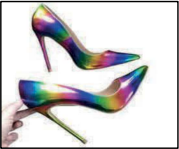
Should women be forced to wear high heels for their jobs? Yumi Ishikawa, a 32-year-old actress from Japan, says no. And she's collected the signatures of almost 30,000 people who agree with her.
Ms. Ishikawa has a part time job which requires her to stand in high heels for many hours. High heels can be painful. They are hard to walk in and nearly impossible to run in.
One day, Ms. Ishikawa noticed the shoes of a man who worked with her. She realized her job would be far easier if she was allowed to wear comfortable shoes like his. After work, she posted that idea on the social media site Twitter. Her post got a huge response — 67,000 people "liked" the post.
Using high heels for a long period of time can lead to injuries far more serious than just blisters or foot pain. High heels can cause ankle problems and change the shape of leg muscles, putting extra strain on them. Wearing high heels can also cause back pain.
Many women like the look of high heels and don't mind if the shoes are uncomfortable. But there's a difference between choosing to wear something and being forced to. One Japanese website reported that about 60% of Japanese women are forced to wear high heels at work.
Ms. Ishikawa created a petition — a request which other people sign to show their support. She asked Japan to make requiring high heels at work against the law. The petition explained the problems caused by high heels. It also pointed out that it was unfair that women were often required to wear high heels, but men were not.
Disponível em: https://www.theguardian.com/world/2019/jun/03/women-in-japan-protest-against-having-to-wear-high-heels-to-work-kutoo-
Note these sentences: "Should women be forced to wear high heels for their jobs?" and Wearing high heels can also cause back pain.
According to the grammar, the underlined words are
Questão 35 14727907
UPE SSA 2ª Fase - 1° Dia 2020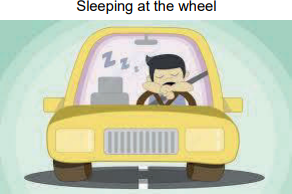
Tokyo, Japan — Japanese car rental companies have learned something interesting about their customers – many people in Japan don‘t rent cars to drive somewhere, they rent because they‘re looking for a quiet, private space.
The Japanese newspaper Asahi Shimbum says that in the summer of 2018, a car-sharing company called Orix Auto discovered that quite a few of its cars ―traveled no distance‖ when they were rented. The people at Orix couldn‘t explain it. ―The only thing we can say is that…a number of people rent cars without driving them,‖ they said.
Other car sharing and rental companies soon noticed the same thing. One car rental company learned that one out of every eight customers said they didn‘t rent their cars for driving.
The companies were curious. If customers weren‘t renting cars to drive them, then why were they renting? They began to ask their customers some questions to learn more about what was going on.
It turned out that customers were using the cars in many unexpected ways.
Besides driving, the most common use for rental cars was napping. It‘s likely that many Japanese people could use a nap. The Guardian newspaper points out that Japanese people report sleeping about 45 minutes less each day than the worldwide average. In one group of Japanese adults who were questioned, nearly 93% said they did not get enough sleep.
Disponível em: https://www.theguardian.com/world/2019/jul/15/asleep-at-wheel-japanese-rental-cars-used-anything-butdriving. Adapted. Acesso em: ago., 2019.
“It‟s likely that many Japanese people could use a nap”. This sentence means:
Questão 64 12412824
UECE 2ª Fase - 1º Dia 2020/1TEXTO
The Future Of Work: 5 Important Ways Jobs Will Change In The 4th Industrial Revolution
In many respects, the future of
work is already here. Amid the headlines
exclaiming the predicted loss of jobs due
to automation and other changes brought
[5] by artificial intelligence (AI), machine
learning and autonomous systems, it’s
clear that the way we work and live is
transforming. This evolution can be
unnerving. Since we know change is
[10] inevitable, let’s look at how work will
likely change and some ideas for how to
prepare for it.
At least 30% of the activities
associated with the majority of
[15] occupations in the United States could be
automated, which includes even
knowledge tasks that were previously
thought to be safe according to a
McKinsey Global Institute report. This
[20] echoes what executives see as well and
prompted Rick Jensen, Chief Talent
Officer at Intuit to say, “The workforce is
changing massively.” Here are just a few
of the ways:
[25] Within an organization, positions
will be more fluid, and a strict
organizational chart will likely be tossed
in favor of more project-based teams.
This is especially appealing to Generation
[30] Z employees since 75% of Generation Z
employees would be interested in having
multiple roles in one place of
employment. The “gig” economy will
continue to expand where professionals
[35] sign on as contractors or freelancers and
then move on to the next gig.
Thanks to mobile technology and
readily available internet access, remote
workers are already common. Employees
[40] won’t need to be in the same location.
This will make it easier for the next
generation workers to choose to live
anywhere, rather than find a job and then
move to a city with that job.
[45] People will need something more
than a paycheck as a motivation to work.
Many want to work for an organization
with a mission and purpose they believe
in. They will also want different incentives
[50] such as personal development
opportunities, the latest tech gadgets to
facilitate their work-from-anywhere
ambitions, and more.
Not only will employees want to
[55] learn throughout their career, but they
will also need to learn new skills.
Technology will continue to evolve the
role humans play in the workforce, so
everyone will be required to adapt their
[60] skills throughout their working lives.
Artificial intelligence algorithms
and intelligent machines will be co-
workers to humans. The human workforce
will need to develop a level of comfort
[65] and acceptance for how man and machine
can collaborate using the best that both
bring to the workplace.
Even though we can’t predict all
the changes that will occur in the future,
[70] we do have a fair amount of certainty that
there are some things people can do to
prepare for it. Rather than succumb to the
doomsday predictions that “robots will
take over all the jobs,” a more optimistic
[75] outlook is one where humans get the
opportunity to do work that demands
their creativity, imagination, social and
emotional intelligence, and passion.
Individuals will need to act and
[80] engage in lifelong learning, so they are
adaptable when the changes happen. The
lifespan for any given skill set is
shrinking, so it will be imperative for
individuals to continue to invest in
[85] acquiring new skills. The shift to lifelong
learning needs to happen now because
the changes are already happening.
In addition, employees will need
to shape their own career path. Gone are
[90] the days when a career trajectory is
outlined at one company with predictable
climbs up the corporate ladder. Therefore,
employees should pursue a diverse set of
work experiences and take the initiative
[95] to shape their own career paths.
Individuals will need to step into
the opportunity that pursuing your
passion provides rather than shrink back
to what had resulted in success in the
[100] past. This shift in work opens the
possibility to achieve more of our
potential. We need to begin to think of
work as more than a paycheck.
Employers need to think
[105] differently about how they recruit and
hire new employees. Companies need to
review a prospective employee’s potential
and assess skills that are less likely to be
automated any time soon, including
[110] emotional intelligence, critical thinking,
creativity, and problem-solving skills.
Another way employers will need
to adjust operations is to create a
structure and culture that honors lifelong
[115] learning, and that celebrates creativity.
It's time for employers to assess their
benefit and incentive programs to ensure
they are providing the motivation the
next generation of employees will want in
[120] order to attract the best talent.
While nothing is certain, it's
important for every human to begin
taking steps in the direction to prepare
for a future where machines become
[125] colleagues. If we don't begin to adapt to
the changes today, it will be challenging
to catch up later.
Fonte: https://www.forbes.com/2019/07/15
In relation to the fluidity of positions in a company, the text mentions that this change would be an attractive feature mainly to
Questão 34 12166836
UNIUBE Medicina 2020Leia o texto para responder à questão.
Powerful antibiotics discovered using AI

Escherichia coli bacteria, coloured green, in a scanning electron micrograph.
A pioneering machine-learning approach has identified powerful new types of antibiotic from a pool of more than 100 million molecules — including one that works against a wide range of bacteria, including tuberculosis and strains considered untreatable. The researchers say the antibiotic, called halicin, is the first discovered with artificial intelligence (AI). Although AI has been used to aid parts of the antibiotic- -discovery process before, they say that this is the first time it has identified completely new kinds of antibiotic from scratch, without using any previous human assumptions. The work, led by synthetic biologist Jim Collins at the Massachusetts Institute of Technology in Cambridge, is published in Cell.
“The study is remarkable”, says Jacob Durrant, a computational biologist at the University of Pittsburgh, Pennsylvania. “The team didn’t just identify candidates, but also validated promising molecules in animal tests”, he says. “What’s more, the approach could also be applied to other types of drugs, such as those used to treat cancer or neurodegenerative diseases”, says Durrant.
Bacterial resistance to antibiotics is rising dramatically worldwide, and researchers predict that unless new drugs are developed urgently, resistant infections could kill ten million people per year by 2050. But over the past few decades, the discovery and regulatory approval of new antibiotics has slowed. “People keep finding the same molecules over and over,” says Collins. “We need novel chemistries with novel mechanisms of action.”
(Jo Marchant. www.nature.com, 20.02.2020. Adaptado.)
No trecho do segundo parágrafo “such as those used to treat cancer or neurodegenerative diseases”, o termo sublinhado refere-se a
Questão 1 12165865
UNIUBE Medicina 2020Examine o cartum de Andy Babbitz, publicado em sua conta de Instagram em 12.09.2019.
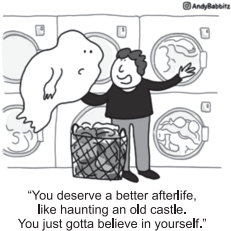
Para o homem, falta ao fantasma
06