


![[Marketing] Questao Topo - deslogado](https://storage.estuda.com.br/banners/0_6b7ebee90b03af1c560c73bb8bcce34a_banner_deslogado_70_dias.png)
Questões de Inglês
19.971 Questões
Questão 19 11561867
UNIG ITAPERUNA 2019TEXTO
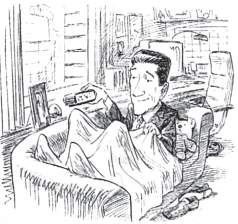
Power napping is good for the I.Q.
Health professionals increasingly recognize the
importance of eight hours’ sleep a night. Scientists
now believe that sleep is the single most important
factor for general health, more important than diet or
[5] exercise. Sleep is the only treatment that can claim to
restore, rejuvenate, and energize both the body and
the brain. The third of our lives that we spend asleep
has a profound effect on the two-thirds that we spend
awake – affecting our mood, memory, alertness, and
[10] performance.
Studies show that people in the developed
world increasingly spend less time asleep and more
time at work or traveling to and from work. Dr. Karine
Spiegel, at the University of Chicago, has found that
[15] the average length of sleep in developed nations has
declined from nine hours in 1910 to seven-and-a-half
hours today. However, we are biologically ill-equipped
to function on little sleep; and losing just one or two
hours’ sleep a night over a long period of time can
[20] have a serious effect on someone’s health.
According to Canadian scientist Dr. Stanley
Coren, every hour of sleep lost in a night also causes
us to drop one I.Q. point the next day. In a week of
five- or six-hour nights, the average person’s I.Q. could
[25] drop 15 points; thus, a normally intelligent person
starts to have a hard time functioning at all.
Most sleep experts agree that humans are
designed to sleep for at least eight hours, but this
should be in two stages: a long sleep at night and a
[30] shorter nap in the afternoon. American companies are
paying attention to this and are reporting increased
levels of alertness in employees who “power nap” at
some point during the afternoon, if only for 20 minutes.
The argument is that those who are not sleep-deprived
[35] are much more efficient at work.
The test used to determine sleep deprivation is
called the Multiple Sleep Latency Test, or MSLT. In
an MSLT, an individual remains in a darkened, quiet
room during the day. According to the theory, the
[40] more sleep-deprived the individual is, the less time it
takes that person to fall asleep. If it takes ten minutes
or longer to fall into a light sleep, the participant is
probably getting enough sleep; anything less shows
moderate sleep deprivation. However, the time of year
[45] seems to affect how much sleep an individual requires.
People tend to sleep as long as 14 hours in the winter
and as little as six hours in summer, without ill effects.
RICHARDS, Jack; ECKSTUT-DIDIER, Samuela. Strategic reading 1: building effective reading skills. Cambridge, 2003. p 122.
The only alternative containing a word whose definition on the right is completely wrong is
Questão 17 11561782
UNIG ITAPERUNA 2019TEXTO
Power napping is good for the I.Q.
Health professionals increasingly recognize the
importance of eight hours’ sleep a night. Scientists
now believe that sleep is the single most important
factor for general health, more important than diet or
[5] exercise. Sleep is the only treatment that can claim to
restore, rejuvenate, and energize both the body and
the brain. The third of our lives that we spend asleep
has a profound effect on the two-thirds that we spend
awake – affecting our mood, memory, alertness, and
[10] performance.
Studies show that people in the developed
world increasingly spend less time asleep and more
time at work or traveling to and from work. Dr. Karine
Spiegel, at the University of Chicago, has found that
[15] the average length of sleep in developed nations has
declined from nine hours in 1910 to seven-and-a-half
hours today. However, we are biologically ill-equipped
to function on little sleep; and losing just one or two
hours’ sleep a night over a long period of time can
[20] have a serious effect on someone’s health.
According to Canadian scientist Dr. Stanley
Coren, every hour of sleep lost in a night also causes
us to drop one I.Q. point the next day. In a week of
five- or six-hour nights, the average person’s I.Q. could
[25] drop 15 points; thus, a normally intelligent person
starts to have a hard time functioning at all.
Most sleep experts agree that humans are
designed to sleep for at least eight hours, but this
should be in two stages: a long sleep at night and a
[30] shorter nap in the afternoon. American companies are
paying attention to this and are reporting increased
levels of alertness in employees who “power nap” at
some point during the afternoon, if only for 20 minutes.
The argument is that those who are not sleep-deprived
[35] are much more efficient at work.
The test used to determine sleep deprivation is
called the Multiple Sleep Latency Test, or MSLT. In
an MSLT, an individual remains in a darkened, quiet
room during the day. According to the theory, the
[40] more sleep-deprived the individual is, the less time it
takes that person to fall asleep. If it takes ten minutes
or longer to fall into a light sleep, the participant is
probably getting enough sleep; anything less shows
moderate sleep deprivation. However, the time of year
[45] seems to affect how much sleep an individual requires.
People tend to sleep as long as 14 hours in the winter
and as little as six hours in summer, without ill effects.
RICHARDS, Jack; ECKSTUT-DIDIER, Samuela. Strategic reading 1: building effective reading skills. Cambridge, 2003. p 122.
Considering developed countries nowadays, some studies show that people
Questão 22 11552759
UNIG Nova Iguaçu 2019/2TEXTO:

Bigger yet Better
On ‘magic island,’ a virtuous cycle began with a ban on heavy industry
One of the sad truths of the developing
world is that an urban population boom has
so often been bad news. From Jakarta to Rio
de Janeiro, more people have typically meant
[5] more ghettoes, more crime, and less economic
life. That’s one reason urbanites in big cities are
moving to places like Florianópolis, an island city 700
kilometers south of São Paulo, where bigger doesn’t
always mean worse.
[10] Between 1970 and 2004, Florianópolis’s
population tripled. So did the number of slums. But
the local economy grew fivefold, and incomes grew
in step. Opportunity seekers, urban and rural, white
collar and blue, arrived in large groups. With a hundred or so
[15] beaches lining the “magic island,” tourism is thriving.
And while many Brazilian cities are struggling to
graduate from smokestacks to services, Florianópolis
is succeeding. Thanks in part to a federal rule that for
decades barred heavy industry on the island, town
[20] officials promoted cleaner public works, and now it
has a network of public and private universities that
make this one of the most scholarly cities in Brazil.
To tend to the demanding academic crowd, the city
invested heavily in everything from roads to schools,
[25] and now Florianópolis ranks high on every development
measure, from literacy (97%) to electrification (near
100%). By the late 1990s, private companies were
flocking to the island, or emerging from a technology
“incubator” at the federal university. (Among its
[30] innovations: the computerized voting machines that
have made Brazilian elections fraud-free and efficient.)
Local officials now say their goal is to be the Silicon
Valley of Brazil, with beaches. Don’t count them out.
MARGOLIS, Mac. Newsweek, New York, p. 56July 3/10 s.d Adaptado.
When the author says, “Don’t count them out.” (l. 33), he conveys the idea of
Questão 54 11520744
APMBB 2019Leia o texto para responder à questão
What is Interpol?

Founded in 1923, Interpol is an international police organisation made up of 194 member countries. It is not a police force in the traditional sense – its agents are not able to arrest criminals. Instead, it is more of an informationsharing network, providing a way for national police forces to co-operate effectively and tackle international crime ranging from human trafficking and terrorism to money laundering and illegal art dealing.
The organisation, based in France, operates centralised criminal databases that contain fingerprint records, DNA samples and stolen documents: a treasure trove so valuable that police consulted it 146 times every second in 2017. Interpol’s other main function is to issue notices: alerts to member states for missing or wanted persons. The bestknown of these is the “Red Notice”, a notification that a member state would like someone arrested. States are not obliged to follow these notices, but will often treat them as a warrant for someone’s arrest and extradition. “Diffusions”, which can be issued with less bureaucracy, are another popular way of seeking arrests through Interpol.
Notices and diffusions lie at the heart of the organisation’s recent turmoil. Though Interpol’s constitution explicitly forbids any activities of a political character, activists accuse it of failing to enforce this rule.
(www.economist.com/the-economist-explains/2018/11/22/ what-is-interpol. Adaptado)
No trecho do terceiro parágrafo – Notices and diffusions lie at the heart of the organisation’s recent turmoil –, o termo em destaque equivale, em português, a
Questão 12 11303951
IFSudesteMinas 2019/1TEXT
Has a hashtag changed your life?
Has your life been changed by a hashtag or a social media movement?
Among the pictures of cats and avocadoes on toast, there are some important conversations
happening about health, politics, family, society and much more.
Have you had your outlook altered by a social media interaction? Have you been inspired to
make a change after a hashtag went viral? Have you become part of a social media community?
Hashtags as diverse as #MeToo, #BlackLivesMatters and #IceBucketChallenge have been huge
topics online, but how have you been affected by a social media trend?
If you have a story about how social media or a specific hashtag has changed your life, use the
form below to get in touch.
You can also contact us in the following ways:
• Email: haveyoursay@bbc.co.uk
• Tweet: @BBC_HaveYourSay
• WhatsApp: +44 7555 173285
• Please read our terms & conditions and privacy policy
Available at: https://www.bbc.co.uk/news/44301724. Access on 27 Aug. 2018. Adapted.
Check the alternative which shows the main objective of the text above.
Questão 14 11253075
IFSudesteMinas 2019/2Read TEXT to answer question.
TEXT
The rise of the body neutrality movement: ‘If you’re fat, you don’t have to hate yourself’
Instead of emphasising the need to love how you look, concepts such as body neutrality, fat acceptance and body respect are allowing women to make peace with their bodies
When Stephanie Yeboah was 12 years old, she was put on a diet and began restricting herself to
300 calories a day. People told her she would be so pretty, if only she could lose weight. By her early
20s, a preoccupation with counting calories had led to a devastating pattern of disordered eating. She
was bulimic, but, she says, she did not recognise it because her body shape hadn’t changed and society
[5] had made it clear: “Fat people don’t have eating disorders; if they did they wouldn’t be fat.”
It wasn’t until she discovered body positivity in 2014 that Yeboah found an alternative to self-
loathing and depression. Body positivity first emerged in the US in the 60s to raise awareness of the
barriers faced by fat people (and as a result, the word “fat” was reclaimed as a descriptor rather than
insult).
[10] In the social media era, it was reignited by women of colour – bloggers such as Gabi
Gregg posted images of fat women in bikinis that were soon picked up by feminist sites, and the
movement spread to the UK. For Yeboah, it changed her life. She became an influential writer and plus-
size blogger.
Yet, as body positivity grew in popularity, women of colour, women with disabilities and
[15] transwomen, were pushed from the spotlight by a more conventional beauty ideal. White women, with
hour-glass figures, often no bigger than a size 16, were described as radical role models. Meanwhile,
on Instagram, fitness instructors with tiny, sculpted waists hashtagged their workout posts
#bodypositivity.
Many former followers now feel the movement has been co-opted. Yeboah is one. “It has
[20] become a buzzword, it has alienated the very people who created it. Now, in order to be body positive,
you must be acceptably fat – size 16 and under, or white or very pretty. It’s not a movement that I feel
represents me any more.”
New ideas began to circulate, including an interest in “body neutrality” – a concept pitched at
those who find loving their bodies a step too far, and instead seek simply to find peace with them. For
[25] writer Rebekah Taussig, the appeal is understandable. “The body positive movement doesn’t put people
with disabilities and other marginalised bodies into the foreground. Body neutrality, I think, has the
power to be really useful in particular to people with disabilities, especially those with chronic pain or
people with diagnoses that are progressive. Those people are pretty frustrated with the demand to love
their bodies when they feel betrayed by them. Being neutral could feel like a relief.”
[30] Yeboah has now embraced a new approach: “fat acceptance”. “If this movement had been called
fat acceptance in the first place, none of these people would have jumped on it because it’s got the word
‘fat’ in it. Fat can still be associated with ugly,” she says. “It’s very easy to say we shouldn’t concentrate
on our bodies, but for some of us we have no choice, because everyone else is. Growing up, there
weren’t fat black people on film, you never saw them being the object of desire, or playing the lead
[35] role.
One of the biggest criticisms that Yeboah and others face is health. She says it is a tool to
legitimise fat phobia, rather than a genuine concern about bigger bodies and health. “The only time I’ve
been admitted to hospital because of my weight was because I was beaten up for being fat,” she says,
referring to an assault for which the perpetrators were convicted. “We’re not promoting obesity, or
[40] telling people to be fat, we’re just saying, if you’re fat you don’t have to hate yourself.”
“I’m someone who has played a part in the misconception [of body positivity]. I hold my hands
up, I should have been more political from the start, and made more of a distinction between body
positivity and body confidence, because they are not the same.
Available at: https://www.theguardian.com/lifeandstyle/2018/jul/23/the-rise-of-the-body-neutrality-movement-if-youre-fatyou-dont-have-to-hate-yourself. Access on: 2 Apr. 2019. Adapted.
Which of the following sentences is CORRECT according to the text?
06