


![[Marketing] Questao Topo - deslogado](https://storage.estuda.com.br/banners/0_6b7ebee90b03af1c560c73bb8bcce34a_banner_deslogado_70_dias.png)
Questões de Inglês
19.971 Questões
Questão 18 12270366
UNIEVA Medicina 2019/2Leia o texto para responder à questão.

Purposes of Religious Education
Religious Education and the subjects of the National Curriculum form the basic curriculum. The National Curriculum Handbook (DfES 2000) asserts that:7
"Religious Education makes a distinctive contribution to the school curriculum by developing pupils' knowledge and understanding of religion, religious beliefs, practices, language and traditions and their influence on individuals, communities, societies and cultures. It enables pupils to consider and respond to a range of important questions related to their own spiritual development, the development of values and attitudes and fundamental questions concerning the meaning and purpose of life." Religious Education (RE) is an essential component of a broad and balanced education. Religious Education is concerned with the deep meaning that individuals and groups make of their experiences and how this helps them give purpose to their lives. It provides opportunities to explore make and respond to the meanings of those experiences in relation to the beliefs and experiences of others as well as to one's own experiences. RE's place in the curriculum is underpinned by values and purposes (which are specified in the National Curriculum, 2000 alongside the QCA/DfES National RE Framework, 2004). Along with the other subjects of the curriculum, RE aims:
To provide opportunities for all pupils to learn and to achieve. To promote pupils' spiritual, moral, social and cultural development and to prepare all pupils for the opportunities, responsibilities and experiences of the present and the future. The Sandwell Agreed Syllabus for Religious Education has four purposes, which are parallel to the four main purposes of the National Curriculum. A) To establish an entitlement. The Agreed Syllabus secures for all pupils, irrespective of social background, culture, race, religion, gender, differences in ability and disabilities, an entitlement to learning in Religious Education. This contributes to their developing knowledge, understanding, skills and attitudes, which are necessary for their personal fulfillment and development as active and responsible citizens. B) To establish standards. The Agreed Syllabus makes expectations for learning and attainment explicit to pupils, parents, teachers, governors, employers and the public, and establishes standards for the performance of all pupils in Religious Education. These standards may be used to set targets for improvement and measure progress towards those targets. C) To promote continuity and coherence. The Agreed Syllabus for Religious Education contributes to a coherent curriculum that promotes continuity. It facilitates the transition of pupils between schools and phases of education and can provide
foundations for further study and lifelong learning. D) To promote public understanding.
Disponívelem:http://www.sandwell.gov.uk/info/200295/schools_and_ lear ning/965/ religious_education/5 .Acessado em: 04 abr. 2019.
All the words pairs below are synonymous, EXCEPT one, mark it.
Questão 11 12270349
UNIEVA Medicina 2019/2Leia o texto a seguir para responder à questão.
Religious intolerance in Ireland
Mon, Feb 25, 2019
The General Assembly of the United Nations has as recently as December 2018 expressed deep concerns at the limited progress that has been made in the elimination of all forms of intolerance and of discrimination based on religion or belief. The general assembly believes that further intensified efforts are therefore required to promote and protect the right to freedom of thought, conscience and religion or belief and to eliminate all forms of hatred, intolerance and discrimination based on religion or belief.
The general assembly emphasizes that freedom of religion or belief, freedom of opinion and expression, the right to peaceful assembly and the right to freedom of association are interdependent, interrelated and mutually reinforcing, and stresses the role that these rights can play in the fight against all forms of intolerance and of discrimination based on religion or belief. Many in Ireland seek to try to limit the human right to freedom of conscience and the human right to peaceful assembly. This is a wake-up call for the Irish Government and Irish society YOURS.
BERNADETTE FLOOD Kilcock, Co Kildare. Disponível em: https://www.irishtimes.com/opinion/letters/religious-intolerance-in- ireland-1.3803576. Acessado em: 20 de mar. 2019
O autor do texto expressa uma preocupação com:
Questão 16 11980791
UNITINS Tarde 2019/2The Future of Jobs Report 2018
World Economic Forum
The Fourth Industrial Revolution is interacting with other socio- -economic and demographic factors to create a perfect storm of business model change in all industries, resulting in major disruptions to labour markets. New categories of jobs will emerge, partly or wholly displacing others. The skill sets required in both old and new occupations will change in most industries and transform how and where people work. It may also affect female and male workers differently and transform the dynamics of the industry gender gap.
The Future of Jobs Report aims to unpack and provide specific information on the relative magnitude of these trends by industry and geography, and on the expected time horizon for their impact to be felt on job functions, employment levels and skills.
(Source: World Economic Forum, The Future of jobs – Report 2018. Available at: https://www.weforum.org/reports/the-future-of-jobs-report-2018)
Segundo o texto, o Relatório sobre o Futuro dos Empregos da WEF, objetiva:
Questão 50 11872812
CFO-BM 2019INSTRUCTIONS: Read the following text carefully and mark the correct alternative that completes the sentences presented after it.
International Civil Defence Organisation
1. Introduction
Fires are the accidents which occur most frequently, whose causes are the most diverse and which require intervention methods and techniques adapted to the conditions and needs of each incident. Depending on the type of fire (nature of the material ablaze), meteorological conditions (wind) and the effectiveness of the intervention, material damage can be limited (a single car, building or production or storage warehouse installation), or affect wide areas (forest or agricultural fires, hydrocarbons, gas or other highly flammable products, storage or piping installations, harbour installations and rail or marine transport equipment). […]
2. Preventive and protective measures
Fires can spread more or less rapidly depending on their causes, the nature of the material and goods alight, the fire prevention installations (automatic sprinklers), meteorological conditions, the ways the population is informed and the initiative it shows, as well as the speed and efficiency of the intervening services and of their fire-fighting equipment. In the light of experience, prevention is seen to be most important and consists of two distinct components. On the one hand, the primary responsibility falling upon the political authorities empowered to implement the legal prescriptions concerning fire protection, to forecast accidents and to inform the population, as well as to set up measures and means for fighting fires and explosions. On the other hand, the responsible behaviour of each individual based upon an education geared towards caution and the respect of instructions in case of fire. Defining, and controlling the implementation of, the particular rules of protection against fires, specific to each enterprise presenting a potential danger, including the training of security personnel, is also relevant in this context. The many types of fire and the preventive and protective measures which relate to them, make it advisable to limit the present study to the specific measures falling to the political authorities in one area only, namely that of “forest fires”. This type of fire is of particular interest to developing countries and the preventive measures to be applied have a general representative value, that is:
– organising an observation service, prevention and alarm (security) service at local and regional levels;
– implementing legislation regulating the use of fire by all the population present in or at the edge of forests, and more particularly by owners and individuals exercising a professional activity in sensitive areas;
– planning and concrete preparation (periodic maintenance) for fire-fighting through adequate landscaping of the territory and appropriate forest cultivation limiting fire propagation (alternating vegetation, clearance, trimming), creating and maintaining access paths (extinction) and fire-break areas as well as fire-fighting equipment such as water supplies (conduits, cisterns), watch towers and meteorological posts, and the construction of helicopter landing pads;
– surveillance and detection of fires as soon as the danger of fires is forecast by the ad hoc meteorological service (which comprises automatic or mobile statistics posts observing the winds and the vegetation: dryness, force, direction, evolution);
– as soon as the danger of fire increases, activating an alarm plan (basic intervention plan) requiring the engagement of preventive intervention squads (firemen), and their wide positioning as near as possible to the threatened zones, and making available water bombers and specialised aerial machines ready for action;
– preparation and concretisation (organisation) of an intervention mechanism: this requires the setting up of specialised management programmes ensuring the coordination of powerful and efficient equipment and means for fighting forest fires (instruction);
According to the text, organising an intervention mechanism demands at least that
Questão 49 11872800
CFO-BM 2019INSTRUCTIONS: Read the following text carefully and mark the correct alternative that completes the sentences presented after it.
International Civil Defence Organisation
1. Introduction
Fires are the accidents which occur most frequently, whose causes are the most diverse and which require intervention methods and techniques adapted to the conditions and needs of each incident. Depending on the type of fire (nature of the material ablaze), meteorological conditions (wind) and the effectiveness of the intervention, material damage can be limited (a single car, building or production or storage warehouse installation), or affect wide areas (forest or agricultural fires, hydrocarbons, gas or other highly flammable products, storage or piping installations, harbour installations and rail or marine transport equipment). […]
2. Preventive and protective measures
Fires can spread more or less rapidly depending on their causes, the nature of the material and goods alight, the fire prevention installations (automatic sprinklers), meteorological conditions, the ways the population is informed and the initiative it shows, as well as the speed and efficiency of the intervening services and of their fire-fighting equipment. In the light of experience, prevention is seen to be most important and consists of two distinct components. On the one hand, the primary responsibility falling upon the political authorities empowered to implement the legal prescriptions concerning fire protection, to forecast accidents and to inform the population, as well as to set up measures and means for fighting fires and explosions. On the other hand, the responsible behaviour of each individual based upon an education geared towards caution and the respect of instructions in case of fire. Defining, and controlling the implementation of, the particular rules of protection against fires, specific to each enterprise presenting a potential danger, including the training of security personnel, is also relevant in this context. The many types of fire and the preventive and protective measures which relate to them, make it advisable to limit the present study to the specific measures falling to the political authorities in one area only, namely that of “forest fires”. This type of fire is of particular interest to developing countries and the preventive measures to be applied have a general representative value, that is:
– organising an observation service, prevention and alarm (security) service at local and regional levels;
– implementing legislation regulating the use of fire by all the population present in or at the edge of forests, and more particularly by owners and individuals exercising a professional activity in sensitive areas;
– planning and concrete preparation (periodic maintenance) for fire-fighting through adequate landscaping of the territory and appropriate forest cultivation limiting fire propagation (alternating vegetation, clearance, trimming), creating and maintaining access paths (extinction) and fire-break areas as well as fire-fighting equipment such as water supplies (conduits, cisterns), watch towers and meteorological posts, and the construction of helicopter landing pads;
– surveillance and detection of fires as soon as the danger of fires is forecast by the ad hoc meteorological service (which comprises automatic or mobile statistics posts observing the winds and the vegetation: dryness, force, direction, evolution);
– as soon as the danger of fire increases, activating an alarm plan (basic intervention plan) requiring the engagement of preventive intervention squads (firemen), and their wide positioning as near as possible to the threatened zones, and making available water bombers and specialised aerial machines ready for action;
– preparation and concretisation (organisation) of an intervention mechanism: this requires the setting up of specialised management programmes ensuring the coordination of powerful and efficient equipment and means for fighting forest fires (instruction);
One of the ways to prevent the spread of forest fires is
Questão 20 11561868
UNIG ITAPERUNA 2019TEXTO
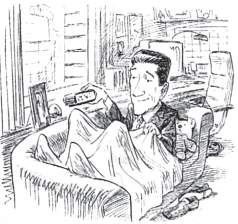
Power napping is good for the I.Q.
Health professionals increasingly recognize the
importance of eight hours’ sleep a night. Scientists
now believe that sleep is the single most important
factor for general health, more important than diet or
[5] exercise. Sleep is the only treatment that can claim to
restore, rejuvenate, and energize both the body and
the brain. The third of our lives that we spend asleep
has a profound effect on the two-thirds that we spend
awake – affecting our mood, memory, alertness, and
[10] performance.
Studies show that people in the developed
world increasingly spend less time asleep and more
time at work or traveling to and from work. Dr. Karine
Spiegel, at the University of Chicago, has found that
[15] the average length of sleep in developed nations has
declined from nine hours in 1910 to seven-and-a-half
hours today. However, we are biologically ill-equipped
to function on little sleep; and losing just one or two
hours’ sleep a night over a long period of time can
[20] have a serious effect on someone’s health.
According to Canadian scientist Dr. Stanley
Coren, every hour of sleep lost in a night also causes
us to drop one I.Q. point the next day. In a week of
five- or six-hour nights, the average person’s I.Q. could
[25] drop 15 points; thus, a normally intelligent person
starts to have a hard time functioning at all.
Most sleep experts agree that humans are
designed to sleep for at least eight hours, but this
should be in two stages: a long sleep at night and a
[30] shorter nap in the afternoon. American companies are
paying attention to this and are reporting increased
levels of alertness in employees who “power nap” at
some point during the afternoon, if only for 20 minutes.
The argument is that those who are not sleep-deprived
[35] are much more efficient at work.
The test used to determine sleep deprivation is
called the Multiple Sleep Latency Test, or MSLT. In
an MSLT, an individual remains in a darkened, quiet
room during the day. According to the theory, the
[40] more sleep-deprived the individual is, the less time it
takes that person to fall asleep. If it takes ten minutes
or longer to fall into a light sleep, the participant is
probably getting enough sleep; anything less shows
moderate sleep deprivation. However, the time of year
[45] seems to affect how much sleep an individual requires.
People tend to sleep as long as 14 hours in the winter
and as little as six hours in summer, without ill effects.
RICHARDS, Jack; ECKSTUT-DIDIER, Samuela. Strategic reading 1: building effective reading skills. Cambridge, 2003. p 122.
It’s correct to say that
06