


![[Marketing] Questao Topo - deslogado](https://storage.estuda.com.br/banners/0_6b7ebee90b03af1c560c73bb8bcce34a_banner_deslogado_70_dias.png)
Questões de Inglês
19.971 Questões
Questão 37 14727936
UPE SSA 2ª Fase - 1° Dia 2020What Migratory Birds Tell Us About Sustainability
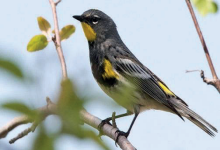
Yellow-rumped warblers are a common sight in the fall – Central Oregon, US.
1 A sign of the passing seasons which many of us have come to expect is, increasingly, under threat. Each year, flocks of migratory birds arrive and leave in dazzling displays, landing in trees and on lakes, ponds and beaches, foraging for food in fields and marshes. They provide both sustenance and delight for billions of people around the world. But many migratory birds, like people, are struggling amid unsustainable conditions.
2 Migratory birds are indispensable to healthy ecosystems and to the well-being of people in every region of the world. They provide food and income. They consume billions of insects. They help to disperse crop seeds and are capable of stimulating primary productivity, for instance while foraging in marshes. But their numbers have been falling due to a lethal combination of factors, including pollution, climate change, unsustainable hunting practices, habitat losses, and the impact of human settlements and infrastructure.
3 One dramatic example can be seen in the Sahelian Wetlands, which cover several countries in Africa and provide food and livelihoods for nearly a billion people. Since 1960, the population of water birds has plummeted by some 40 percent.
4 These wetlands, including the Senegal River Delta, the Inner Niger Delta, Lake Chad Basin and parts of the Nile River Valley, typically experience long and harsh dry seasons. The presence of migratory wild birds, especially water birds, is critically important to the well-being of rural people in the region and ongoing efforts to address hunger and malnutrition.
5 Every year, World Migratory Bird Day is observed in May and October as part of an annual campaign designed to raise public awareness of migratory birds and the need for international cooperation to protect them. This year‘s events take place on May 11 and October 10.
6 This global campaign also reflects a growing understanding that major challenges like hunger and poverty are frequently linked to the state of the natural environment and the ways in which we manage our land and water resources. The long-term well-being of migratory birds is closely interconnected with our own prospects for a sustainable future. As a consequence, the World Migratory Bird Day actively contributes to the 2030 Agenda for Sustainable Development and SDG 15 (life on land). It also contributes to SDG 1 (no poverty), SDG 2 (zero hunger) and this year, in particular, to SDG 12 (responsible consumption and production) by focusing on the devastating effects of plastic pollution.
7 In response to the challenges facing migratory birds in the Sahelian Wetlands, five countries in the region (Chad, Egypt, Mali, Senegal and Sudan), together with international organizations and communities, are pooling their efforts to develop ways to protect the wetlands and their bird populations, while taking into account the daily needs of the people who share these habitats. [...]
8 Making sure that migratory birds find healthy and welcoming places to settle on their repeated journeys across continents and waterways is not the only path towards a sustainable future but it is a fundamental step towards their conservation, a goal whose importance can no longer be ignored.
Bruno Portier, FAO Forestry Officer May 9, 2019
Disponível em: https://sdg.iisd.org/commentary/guest-articles/what-migratory-birds-tell-us-about-sustainability/ Texto adapted. Acesso em: ago., 2019.
Da leitura do texto, NÃO é correto afirmar que
Questão 36 14727910
UPE SSA 2ª Fase - 1° Dia 2020What Migratory Birds Tell Us About Sustainability
Yellow-rumped warblers are a common sight in the fall – Central Oregon, US.
1 A sign of the passing seasons which many of us have come to expect is, increasingly, under threat. Each year, flocks of migratory birds arrive and leave in dazzling displays, landing in trees and on lakes, ponds and beaches, foraging for food in fields and marshes. They provide both sustenance and delight for billions of people around the world. But many migratory birds, like people, are struggling amid unsustainable conditions.
2 Migratory birds are indispensable to healthy ecosystems and to the well-being of people in every region of the world. They provide food and income. They consume billions of insects. They help to disperse crop seeds and are capable of stimulating primary productivity, for instance while foraging in marshes. But their numbers have been falling due to a lethal combination of factors, including pollution, climate change, unsustainable hunting practices, habitat losses, and the impact of human settlements and infrastructure.
3 One dramatic example can be seen in the Sahelian Wetlands, which cover several countries in Africa and provide food and livelihoods for nearly a billion people. Since 1960, the population of water birds has plummeted by some 40 percent.
4 These wetlands, including the Senegal River Delta, the Inner Niger Delta, Lake Chad Basin and parts of the Nile River Valley, typically experience long and harsh dry seasons. The presence of migratory wild birds, especially water birds, is critically important to the well-being of rural people in the region and ongoing efforts to address hunger and malnutrition.
5 Every year, World Migratory Bird Day is observed in May and October as part of an annual campaign designed to raise public awareness of migratory birds and the need for international cooperation to protect them. This year‘s events take place on May 11 and October 10.
6 This global campaign also reflects a growing understanding that major challenges like hunger and poverty are frequently linked to the state of the natural environment and the ways in which we manage our land and water resources. The long-term well-being of migratory birds is closely interconnected with our own prospects for a sustainable future. As a consequence, the World Migratory Bird Day actively contributes to the 2030 Agenda for Sustainable Development and SDG 15 (life on land). It also contributes to SDG 1 (no poverty), SDG 2 (zero hunger) and this year, in particular, to SDG 12 (responsible consumption and production) by focusing on the devastating effects of plastic pollution.
7 In response to the challenges facing migratory birds in the Sahelian Wetlands, five countries in the region (Chad, Egypt, Mali, Senegal and Sudan), together with international organizations and communities, are pooling their efforts to develop ways to protect the wetlands and their bird populations, while taking into account the daily needs of the people who share these habitats. [...]
8 Making sure that migratory birds find healthy and welcoming places to settle on their repeated journeys across continents and waterways is not the only path towards a sustainable future but it is a fundamental step towards their conservation, a goal whose importance can no longer be ignored.
Bruno Portier, FAO Forestry Officer May 9, 2019
Disponível em: https://sdg.iisd.org/commentary/guest-articles/what-migratory-birds-tell-us-about-sustainability/ Texto adapted. Acesso em: ago., 2019.
De acordo com o texto,
I. o número de aves migratórias vem declinando devido a uma combinação de fatores que inclui mudança climática, práticas insustentáveis de caça e o impacto de assentamentos humanos e infraestrutura, entre outros.
II. o Dia Mundial das Aves Migratórias contribui com a Agenda 2030 para o Desenvolvimento Sustentável de nosso planeta em vários de seus objetivos e, especialmente este ano, com o ODS Consumo e Produção Responsáveis.
III. na África, sobretudo nas áreas pantanosas que cobrem vários países, a população de aves aquáticas vem oscilando constantemente, a cada estação, chegando a 40% de diferença entre a chegada e a partida, desde o início deste milênio.
IV. as aves migratórias vêm recebendo atenção crescente de algumas agências prósustentabilidade, desde que o Dia Mundial das Aves Migratórias notificou os impactos causados nos ambientes urbanos, onde elas têm seu habitat.
V. a principal contribuição do Dia Mundial das Aves Migratórias é promover a união de vários países situados na região mais árida do continente africano, para combater a fome e as doenças tropicais, com o apoio dos fazendeiros locais.
Estão CORRETOS, apenas, os itens
Questão 34 14727906
UPE SSA 2ª Fase - 1° Dia 2020
Tokyo, Japan — Japanese car rental companies have learned something interesting about their customers – many people in Japan don‘t rent cars to drive somewhere, they rent because they‘re looking for a quiet, private space.
The Japanese newspaper Asahi Shimbum says that in the summer of 2018, a car-sharing company called Orix Auto discovered that quite a few of its cars ―traveled no distance‖ when they were rented. The people at Orix couldn‘t explain it. ―The only thing we can say is that…a number of people rent cars without driving them,‖ they said.
Other car sharing and rental companies soon noticed the same thing. One car rental company learned that one out of every eight customers said they didn‘t rent their cars for driving.
The companies were curious. If customers weren‘t renting cars to drive them, then why were they renting? They began to ask their customers some questions to learn more about what was going on.
It turned out that customers were using the cars in many unexpected ways.
Besides driving, the most common use for rental cars was napping. It‘s likely that many Japanese people could use a nap. The Guardian newspaper points out that Japanese people report sleeping about 45 minutes less each day than the worldwide average. In one group of Japanese adults who were questioned, nearly 93% said they did not get enough sleep.
Disponível em: https://www.theguardian.com/world/2019/jul/15/asleep-at-wheel-japanese-rental-cars-used-anything-butdriving. Adapted. Acesso em: ago., 2019.
Note this sentence: “Japanese car rental companies have learned something interesting about their customers […]”. The underlined verb structure is in the
Questão 63 12506652
UECE 2ª Fase - 1º Dia 2020/2TEXTO
Los últimos gigantes
Federico Kukso
Hace cinco años Martín Hechenleitner
salió de cacería y regresó con las manos
vacías. Movido por la curiosidad y el
entusiasmo de la primera campaña a su
[5] cargo, este paleontólogo argentino
especialista en titanosaurios viajó horas con
un grupo de colegas hasta acceder a un
ambiente extremo cerca de la cordillera de
los Andes: la Quebrada de Santo Domingo,
[10] una zona inhóspita ubicada a 3.200 metros
de altura en la provincia de La Rioja en el
noroeste argentino.
“No teníamos ningún dato preciso
donde excavar”, recuerda. “Solo contábamos
[15] con unos pequeños y gastados fósiles de una
vértebra, hallados por un geólogo australiano
que estaban guardados en una cajita en la
universidad a la que nadie prestaba
atención”. Con problemas para respirar y
[20] agobiados por el cansancio, los
investigadores caminaron durante 10 días
por el valle, luchando para acostumbrarse a
la altura. Hasta que, frustrados por no haber
hallado nada, dieron por terminada la
[25] campaña.
Meses después, regresaron. Al sexto
día, la perseverancia al fin dio sus frutos:
encontraron un huevo fosilizado. “Saltamos
de la alegría”, cuenta el paleontólogo de 34
[30] años. “Las rocas están inclinadas y ahí
empezaron a aparecer cascaritas por todos
lados. Logramos sacar un nido con cinco
huevos”.
Pero aún el tesoro mayor que habían
[35] ido a buscar ―los restos de un gigante― les
era esquivo. Hasta que en la tercera
campaña en marzo de 2016 la geóloga suiza
Léa Leuzinger advirtió algo extraño. “Me
llamó la atención lo que parecía ser un tubo
[40] blanco que resaltaba en la roca roja. Nunca
hubiera pensado que se trataba de un fémur
de un dinosaurio”.
Para Hechenleitner, que lleva ocho
años estudiando titanosaurios y hasta
[45] entonces había participado en campañas
ajenas como la excavación del Patagotitan
mayorum en 2013 en la provincia de Chubut,
fue un alivio. “Tenía que aparecer algo que
valiera todo aquel esfuerzo”.
[50 ] Empezaron a remover la piedra con
una mezcla de euforia y cautela, hallaron las
costillas. Luego, a 100 metros, divisaron otro
ejemplar, más completo. Y después otro: en
total, los restos de tres animales ocultos del
[55] mundo durante 70 millones de años.
Estas dos especies -Punatitan y
Bravasaurus- habrían convivido en el mismo
ambiente hace 70 millones de años en el
noroeste de lo que hoy es Argentina.
[60] Las vértebras caudales les indicaron
que se trataban de dos especies de
titanosaurios, hasta ahora desconocidas, que
habrían vivido durante los últimos momentos
del Cretácico. Es decir, habrían sido los
[65] últimos de su tipo.
Como cuentan en
un estudio publicado en la
revista Communications Biology, al más
grande, que habría alcanzado los 20 metros
[70] de largo, lo llamaron Punatitan coughlini en
referencia a la sensación de apunamiento,
mal agudo de montaña o falta de aire que da
en la zona y en honor al geólogo Tim
Coughlin, quien informó sobre los primeros
[75] fósiles de dinosaurios en aquel lugar. Y a los
dos más pequeños, de alrededor de tres
toneladas y siete metros de
largo, Bravasaurus arrierosorum, por la
Laguna Brava ― un lugar muy conocido en la
[80] provincia ― y los arrieros que cruzaron los
Andes con ganado durante el siglo XIX.
Los titanosaurios fueron los animales
de mayor tamaño que caminaron sobre el
planeta: un grupo diverso de dinosaurios
[85] herbívoros colosales, de cuello largo y con
una compleja historia evolutiva. Vivieron
hace entre 145 millones y 66 millones de
años. Los restos fosilizados de sus cuerpos se
han encontrado en todos los continentes,
[90] incluyendo la Antártida.
Periódico El País, 18/11/2020.Texto adaptado.
One of the factors that contributes to the huge amount of plastic waste is the fact that
Questão 62 12506645
UECE 2ª Fase - 1º Dia 2020/2TEXT
Americans May Add Five Times More Plastic to the Oceans Than Thought
The United States is using more
plastic than ever, and waste exported for
recycling is often mishandled, according
to a new study.
[5] The United States contribution
to coastal plastic pollution worldwide is
significantly larger than previously
thought, possibly by as much as five
times, according to a study published
[10] Friday. The research, published in Science
Advances, is the sequel to a 2015 paper
by the same authors. Two factors
contributed to the sharp increase:
Americans are using more plastic than
[15] ever and the current study included
pollution generated by United States
exports of plastic waste, while the earlier
one did not.
The United States, which does
[20] not have sufficient infrastructure to
handle its recycling demands at home,
exports about half of its recyclable waste.
Of the total exported, about 88 percent
ends up in countries considered to have
[25] inadequate waste management.
“When you consider how much
of our plastic waste isn’t actually
recyclable because it is low-value,
contaminated or difficult to process, it’s
[30] not surprising that a lot of it ends up
polluting the environment,” said the
study’s lead author, Kara Lavender Law,
research professor of oceanography at
Sea Education Association, in a
[35] statement.
The study estimates that in
2016, the United States contributed
between 1.1 and 2.2 million metric tons of
plastic waste to the oceans through a
[40] combination of littering, dumping and
mismanaged exports. At a minimum,
that’s almost double the total estimated
waste in the team’s previous study. At the
high end, it would be a fivefold increase
[45] over the earlier estimate.
Nicholas Mallos, a senior
director at the Ocean Conservancy and an
author of the study, said the upper
estimate would be equal to a pile of
[50] plastic covering the area of the White
House Lawn and reaching as high as the
Empire State Building.
The ranges are wide partly
because “there’s no real standard for
[55] being able to provide good quality data on
collection and disposal of waste in
general,” said Ted Siegler, a resource
economist at DSM Environmental
Solutions, a consulting firm, and an
[60] author of the study. Mr. Siegler said the
researchers had evaluated waste-disposal
practices in countries around the world
and used their “best professional
judgment” to determine the lowest and
[65] highest amounts of plastic waste likely to
escape into the environment. They settled
on a range of 25 percent to 75 percent.
Tony Walker, an associate
professor at the Dalhousie University
[70] School for Resource and Environmental
Studies in Halifax, Nova Scotia, said that
analyzing waste data can amount to a
“data minefield” because there are no
data standards across municipalities.
[75] Moreover, once plastic waste is shipped
overseas, he said, data is often not
recorded at all.
Nonetheless, Dr. Walker, who
was not involved in the study, said it
[80] could offer a more accurate accounting of
plastic pollution than the previous study,
which likely underestimated the United
States’ contribution. “They’ve put their
best estimate, as accurate as they can be
[85] with this data,” he said, and used ranges,
which underscores that the figures are
estimates.
Of the plastics that go into the
United States recycling system, about 9
[90] percent of the country’s total plastic
waste, there is no guarantee that they’ll
be remade into new consumer goods. New
plastic is so inexpensive to manufacture
that only certain expensive, high-grade
[95] plastics are profitable to recycle within the
United States, which is why roughly half
of the country’s plastic waste was shipped
abroad in 2016, the most recent year for
which data is available.
[100] Since 2016, however, the
recycling landscape has changed. China
and many countries in Southeast Asia
have stopped accepting plastic waste
imports. And lower oil prices have further
[105] reduced the market for recycled plastic.
“What the new study really underscores is
we have to get a handle on source
reduction at home,” Mr. Mallos said. “That
starts with eliminating unnecessary and
[110] problematic single-use plastics.”
From: https://www.nytimes.com/2020/10/30/
According to the text, the United States
Questão 80 12412879
UECE 2ª Fase - 1º Dia 2020/1TEXTO
The Future Of Work: 5 Important Ways Jobs Will Change In The 4th Industrial Revolution
In many respects, the future of
work is already here. Amid the headlines
exclaiming the predicted loss of jobs due
to automation and other changes brought
[5] by artificial intelligence (AI), machine
learning and autonomous systems, it’s
clear that the way we work and live is
transforming. This evolution can be
unnerving. Since we know change is
[10] inevitable, let’s look at how work will
likely change and some ideas for how to
prepare for it.
At least 30% of the activities
associated with the majority of
[15] occupations in the United States could be
automated, which includes even
knowledge tasks that were previously
thought to be safe according to a
McKinsey Global Institute report. This
[20] echoes what executives see as well and
prompted Rick Jensen, Chief Talent
Officer at Intuit to say, “The workforce is
changing massively.” Here are just a few
of the ways:
[25] Within an organization, positions
will be more fluid, and a strict
organizational chart will likely be tossed
in favor of more project-based teams.
This is especially appealing to Generation
[30] Z employees since 75% of Generation Z
employees would be interested in having
multiple roles in one place of
employment. The “gig” economy will
continue to expand where professionals
[35] sign on as contractors or freelancers and
then move on to the next gig.
Thanks to mobile technology and
readily available internet access, remote
workers are already common. Employees
[40] won’t need to be in the same location.
This will make it easier for the next
generation workers to choose to live
anywhere, rather than find a job and then
move to a city with that job.
[45] People will need something more
than a paycheck as a motivation to work.
Many want to work for an organization
with a mission and purpose they believe
in. They will also want different incentives
[50] such as personal development
opportunities, the latest tech gadgets to
facilitate their work-from-anywhere
ambitions, and more.
Not only will employees want to
[55] learn throughout their career, but they
will also need to learn new skills.
Technology will continue to evolve the
role humans play in the workforce, so
everyone will be required to adapt their
[60] skills throughout their working lives.
Artificial intelligence algorithms
and intelligent machines will be co-
workers to humans. The human workforce
will need to develop a level of comfort
[65] and acceptance for how man and machine
can collaborate using the best that both
bring to the workplace.
Even though we can’t predict all
the changes that will occur in the future,
[70] we do have a fair amount of certainty that
there are some things people can do to
prepare for it. Rather than succumb to the
doomsday predictions that “robots will
take over all the jobs,” a more optimistic
[75] outlook is one where humans get the
opportunity to do work that demands
their creativity, imagination, social and
emotional intelligence, and passion.
Individuals will need to act and
[80] engage in lifelong learning, so they are
adaptable when the changes happen. The
lifespan for any given skill set is
shrinking, so it will be imperative for
individuals to continue to invest in
[85] acquiring new skills. The shift to lifelong
learning needs to happen now because
the changes are already happening.
In addition, employees will need
to shape their own career path. Gone are
[90] the days when a career trajectory is
outlined at one company with predictable
climbs up the corporate ladder. Therefore,
employees should pursue a diverse set of
work experiences and take the initiative
[95] to shape their own career paths.
Individuals will need to step into
the opportunity that pursuing your
passion provides rather than shrink back
to what had resulted in success in the
[100] past. This shift in work opens the
possibility to achieve more of our
potential. We need to begin to think of
work as more than a paycheck.
Employers need to think
[105] differently about how they recruit and
hire new employees. Companies need to
review a prospective employee’s potential
and assess skills that are less likely to be
automated any time soon, including
[110] emotional intelligence, critical thinking,
creativity, and problem-solving skills.
Another way employers will need
to adjust operations is to create a
structure and culture that honors lifelong
[115] learning, and that celebrates creativity.
It's time for employers to assess their
benefit and incentive programs to ensure
they are providing the motivation the
next generation of employees will want in
[120] order to attract the best talent.
While nothing is certain, it's
important for every human to begin
taking steps in the direction to prepare
for a future where machines become
[125] colleagues. If we don't begin to adapt to
the changes today, it will be challenging
to catch up later.
Fonte: https://www.forbes.com/2019/07/15
The text includes the ing-words “learning” (line 06), “transforming” (line 08), “unnerving” (line 09), “working” (line 60), and “thinking” (line 110) whose grammatical functions are respectively
06