


![[Marketing] Questao Topo - deslogado](https://storage.estuda.com.br/banners/0_6b7ebee90b03af1c560c73bb8bcce34a_banner_deslogado_70_dias.png)
Questões de Inglês
19.971 Questões
Questão 34 15417229
UENP 1 Dia 2020If I Had My Life to Live over Again
If I had my life to live over again,
I’d dare to make more mistakes next time.
I’d relax.
I’d limber up.
I’d be sillier than I’ve been this trip.
I would take fewer things seriously.
I would take more chances,
I would eat more ice cream and less beans.
I would, perhaps, have more actual troubles but fewer imaginary ones.
you see, I’m one of those people who was sensible and sane,
hour after hour,
day after day.
Oh, I’ve had my moments.
If I had to do it over again,
I’d have more of them.
In fact, I’d try to have nothing else – just moments,
one after another, instead of living so many years ahead of each day.
I’ve been one of those persons who never goes anywhere without a thermometer, a hot-water bottle, a
raincoat, and a parachute.
If I could do it again, I would travel lighter than I have.
If I had to live my life over,
I would start barefoot earlier in the spring
and stay that way later in the fall.
I would go to more dances,
I would ride more merry-go-rounds, I would pick more daisies.
– Nadine Stair
(Disponível em: https://mrsmindfulness.com/if-i-had-my-life-to-live-over-again. Acesso em: 3 set. 2019.)
Considere o trecho a seguir.
I would, perhaps, have more actual troubles but fewer imaginary ones.
You see, I’m one of those people who was sensible and sane
Assinale a alternativa que apresenta, correta e respectivamente, as palavras que podem substituir os trechos sublinhados sem alteração de sentido.
Questão 33 15417228
UENP 1 Dia 2020De acordo com o texto, considere as afirmativas a seguir.
I. No verso, “I’d dare to make more mistakes next time”, o termo grifado é a abreviação de “could”.
II. No verso “I’d have more of them”, o termo grifado refere-se a “moments”.
III. No verso “I would travel lighter than I have”, há uma omissão do verbo “travel”.
IV. No verso “I’ve been one of those persons who never goes anywhere...”, o termo grifado refere-se a “one of those persons”.
Assinale a alternativa correta.
Questão 32 15417227
UENP 1 Dia 2020If I Had My Life to Live over Again
If I had my life to live over again,
I’d dare to make more mistakes next time.
I’d relax.
I’d limber up.
I’d be sillier than I’ve been this trip.
I would take fewer things seriously.
I would take more chances,
I would eat more ice cream and less beans.
I would, perhaps, have more actual troubles but fewer imaginary ones.
you see, I’m one of those people who was sensible and sane,
hour after hour,
day after day.
Oh, I’ve had my moments.
If I had to do it over again,
I’d have more of them.
In fact, I’d try to have nothing else – just moments,
one after another, instead of living so many years ahead of each day.
I’ve been one of those persons who never goes anywhere without a thermometer, a hot-water bottle, a
raincoat, and a parachute.
If I could do it again, I would travel lighter than I have.
If I had to live my life over,
I would start barefoot earlier in the spring
and stay that way later in the fall.
I would go to more dances,
I would ride more merry-go-rounds, I would pick more daisies.
– Nadine Stair
(Disponível em: https://mrsmindfulness.com/if-i-had-my-life-to-live-over-again. Acesso em: 3 set. 2019.)
Sobre os versos “In fact, I’d try to have nothing else – just moments,/ one after another, instead of living so many years ahead of each day”, assinale a alternativa correta.
Questão 31 15417225
UENP 1 Dia 2020If I Had My Life to Live over Again
If I had my life to live over again,
I’d dare to make more mistakes next time.
I’d relax.
I’d limber up.
I’d be sillier than I’ve been this trip.
I would take fewer things seriously.
I would take more chances,
I would eat more ice cream and less beans.
I would, perhaps, have more actual troubles but fewer imaginary ones.
you see, I’m one of those people who was sensible and sane,
hour after hour,
day after day.
Oh, I’ve had my moments.
If I had to do it over again,
I’d have more of them.
In fact, I’d try to have nothing else – just moments,
one after another, instead of living so many years ahead of each day.
I’ve been one of those persons who never goes anywhere without a thermometer, a hot-water bottle, a
raincoat, and a parachute.
If I could do it again, I would travel lighter than I have.
If I had to live my life over,
I would start barefoot earlier in the spring
and stay that way later in the fall.
I would go to more dances,
I would ride more merry-go-rounds, I would pick more daisies.
– Nadine Stair
(Disponível em: https://mrsmindfulness.com/if-i-had-my-life-to-live-over-again. Acesso em: 3 set. 2019.)
Assinale a alternativa que apresenta, corretamente, o tema central do poema.
Questão 19 15298987
FCMSCSP - Santa Casa Conhecimento Gerais 2020Breaking down barriers
Shuffling feet and the general buzz of conversation made lectures a trial for Gemma Long during her first degree. She suffers from sensory overload connected to her autism, which was only diagnosed after she graduated. But when she started a teacher-training course years later, she received access to software to help her cope with dyslexia and found it transformative.
“I struggled to understand the point of lectures until I got that software,” recalls Long. “I didn’t realise how much useful information was in them. As someone who is hypersensitive to noise I spend most of my time in lectures trying to filter out the background noise, which means I miss much of what the lecturer is saying. Being able to audio record the lectures and listen back to them in a silent room meant I was finally able to digest the content.”
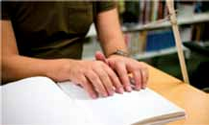
Technology is breaking down barriers faced by students with disabilities. Online journal articles now mean that those with visual impairments can zoom in to read printed text or convert it to easier-to-read formats such as braille. Universities are also increasingly recording lectures which students can replay at their own pace, which benefits students with dyslexia or attention deficit disorder too.
According to Alistair McNaught, a digital learning consultant, universities are increasingly tracking how students learn, and then directing them to the accessible resources most suited to their personal needs. McNaught appreciates the way assistive technologies can help all students — whether they have a disability or not — but stresses that it’s important for universities to get the basics right first. “Many higher and further institutions have inaccessible websites or inaccessible digital content. If the content is inaccessible, investments in assistive technology can be undermined at a stroke.”
“Universities just need to get better at promoting the support that’s already there,” says Gemma Long. “Making specialist software and training generally available, rather than confining it to disabled students, makes it more widely known, as well as removes stigma.” For someone like her, who received her diagnoses late, it would have been particularly helpful. To this end, the assistive technology network she founded to represent staff who support their disabled students with tech, will hold its first awards ceremony next month.
Universities are slowly tackling the barriers for disabled students. There’s more yet to come: the prospect of virtual reality – particularly when it comes to fieldwork. “It can be incredibly difficult for a disabled student to get a wheelchair on to a salt marsh,” says Piers Wilkinson, a researcher in the area. “But if the learning aims are being immersed in an environment, and making discoveries, virtual reality can achieve that.”
(www.theguardian.com, 03.06.2019. Adaptado.)
In the context of the last paragraph, the fragment “when it comes to fieldwork” is closest in meaning to:
Questão 18 15298835
FCMSCSP - Santa Casa Conhecimento Gerais 2020Breaking down barriers
Shuffling feet and the general buzz of conversation made lectures a trial for Gemma Long during her first degree. She suffers from sensory overload connected to her autism, which was only diagnosed after she graduated. But when she started a teacher-training course years later, she received access to software to help her cope with dyslexia and found it transformative.
“I struggled to understand the point of lectures until I got that software,” recalls Long. “I didn’t realise how much useful information was in them. As someone who is hypersensitive to noise I spend most of my time in lectures trying to filter out the background noise, which means I miss much of what the lecturer is saying. Being able to audio record the lectures and listen back to them in a silent room meant I was finally able to digest the content.”
Technology is breaking down barriers faced by students with disabilities. Online journal articles now mean that those with visual impairments can zoom in to read printed text or convert it to easier-to-read formats such as braille. Universities are also increasingly recording lectures which students can replay at their own pace, which benefits students with dyslexia or attention deficit disorder too.
According to Alistair McNaught, a digital learning consultant, universities are increasingly tracking how students learn, and then directing them to the accessible resources most suited to their personal needs. McNaught appreciates the way assistive technologies can help all students — whether they have a disability or not — but stresses that it’s important for universities to get the basics right first. “Many higher and further institutions have inaccessible websites or inaccessible digital content. If the content is inaccessible, investments in assistive technology can be undermined at a stroke.”
“Universities just need to get better at promoting the support that’s already there,” says Gemma Long. “Making specialist software and training generally available, rather than confining it to disabled students, makes it more widely known, as well as removes stigma.” For someone like her, who received her diagnoses late, it would have been particularly helpful. To this end, the assistive technology network she founded to represent staff who support their disabled students with tech, will hold its first awards ceremony next month.
Universities are slowly tackling the barriers for disabled students. There’s more yet to come: the prospect of virtual reality – particularly when it comes to fieldwork. “It can be incredibly difficult for a disabled student to get a wheelchair on to a salt marsh,” says Piers Wilkinson, a researcher in the area. “But if the learning aims are being immersed in an environment, and making discoveries, virtual reality can achieve that.”
(www.theguardian.com, 03.06.2019. Adaptado.)
The term “tackling”, in the first sentence of the last paragraph, means
06